

Report
- +8
Salman Ahmed, Wendy Cutler, Rozlyn C. Engel, …
{
  "authors": [
    "Christopher Smart"
  ],
  "type": "legacyinthemedia",
  "centerAffiliationAll": "dc",
  "centers": [
    "Carnegie Endowment for International Peace"
  ],
  "collections": [],
  "englishNewsletterAll": "americanStatecraft",
  "nonEnglishNewsletterAll": "",
  "primaryCenter": "Carnegie Endowment for International Peace",
  "programAffiliation": "ASP",
  "programs": [
    "American Statecraft"
  ],
  "projects": [],
  "regions": [
    "Western Europe"
  ],
  "topics": [
    "Economy"
  ]
}
Source: Getty
While the European economy is much stronger and the political calendar shows fewer potential landmines, investors may not yet fully appreciate that even greater political challenges lie ahead.
Source: Public Finance International
If Europe ended last year unsure of its growth prospects and anxious about populists running for office, today’s buoyant currency and financial markets suggest a much sunnier outlook for 2018.
Indeed, the economy is much stronger and the political calendar shows fewer potential landmines, but investors may not yet fully appreciate that even greater political challenges lie ahead.
Europe, after all, remains the central battleground in the global struggle between the stalwart defense of state prerogatives and the inexorable integration of modern commerce.
Emotions are still running high and it can’t possibly get better without getting worse.
European voters and their leaders, like their counterparts almost everywhere, worry about the erosion of national identity and the loss of sovereignty.
Meanwhile, large and small businesses alike are chomping at the bit to find customers beyond their borders, especially now that communication and data technology offer vast economies of scale if only rulebooks could be more aligned.
The next time you read a mind-numbing account of Britain’s exit negotiations or European regulations for vacuum cleaners, remember that crucial global principles are at stake.
Moreover, if Europe cannot resolve them, for all its shared history and current incentives to bulk up, there is little hope for the rest of us.
The mathematical logic of the European Union is that the whole is worth more than the sum of its parts, rather than the winner-take-all presumption underlying the Trump Administration’s renegotiation of key agreements.
The Slovak Prime Minister must put “Slovakia First,” of course, but the reigning presumption is that conceding some control over, say, auto safety or pharmaceutical regulations makes Slovakia itself grow bigger through its share in a more prosperous Europe than it would alone. (Indeed, until last January, this was the bipartisan consensus behind US trade negotiations.)
European populists calling for a claw-back of powers to the national level didn’t make it into government in this year’s Dutch, French or even German elections, but their persistent voices have spooked the establishment.
Those who are in power will face knotty decisions next year and will likely be hamstrung to deliver substantive progress.
First up, will be the Brexit negotiations themselves, which have created a rare moment of unity on the continent around the importance of exacting a significant cost from any departing state.
It’s all the easier to hand a big bill to a country that has always behaved as slightly too good for the rest of the club.
Member states will press different industrial interests, either preserving access to the British market or limiting British access to Europe where they have potential advantage.
There will also be the contentious matter of how to fill the 13% hole in the EU budget that Britain will leave behind.
Second, even in this promising current leg of the economic cycle, European fiscal policy needs more flexibility and coordination.
Overall results are encouraging, with the OECD upgrading euro area growth to a whopping 2.4% this year, including 2.5% for Germany.
At the same time, unemployment seems unlikely to fall meaningfully without some more thoughtful fiscal support.
This leaves the euro area divided across traditional fiscal fault lines, between those who insist on more rules and those who stress the need for more solidarity.
(Note to newcomers: “rules” is a code word for less spending; “solidarity” is a code word for more.)
The stronger economies that could provide fiscal support like Germany and the Netherlands refuse.
Meanwhile, laggards like France and Italy have very little fiscal room to support domestic demand.
Third, the post-crisis reform agenda remains far from finished.
French President Macron has sketched out an ambitious vision of a Europe with much more sharing of finances and rules and institutions.
In Germany, even if Chancellor Merkel believed in anything resembling this, her country looks increasingly splintered no matter what governing coalition may emerge.
Oh, and there’s a complicated election due in Italy, too, and who knows what distracting emotional headlines that may appear on immigration, Turkish politics and terrorism.
Europe will not fall apart.
Its institutions have shown remarkable resilience through recent crises and its economy is too interconnected to unravel.
But European leaders are poorly positioned to make the crucial decisions they need to on trade, fiscal and financial policy before the next cycle turns, which may extinguish the recovery sooner than current financial markets seem to believe.
Worse still, it will mean a setback for their ability to set a template for the rest of the world that is struggling to strike the right balance between pooling sovereignty and protecting national prerogative.
This article was originally published in the Public Finance International.
Former Nonresident Fellow, Geoeconomics and Strategy Program
Christopher Smart was a nonresident fellow at the Carnegie Endowment for International Peace, where he focuses on the interaction of global financial markets and international economic policy.
Recent Work

Salman Ahmed, Wendy Cutler, Rozlyn C. Engel, …
Salman Ahmed, Allison Gelman, Tarik Abdel-Monem, …
Carnegie does not take institutional positions on public policy issues; the views represented herein are those of the author(s) and do not necessarily reflect the views of Carnegie, its staff, or its trustees.

Are Germany’s economic, industrial, and political struggles becoming a liability for the EU’s ability to rise to the geopolitical moment?

Rym Momtaz, ed.
The Bureau of Industry and Security needs to adjust its focus and practices to maintain its position as the U.S. government’s primary champion of international technological competition.

Geoffrey Irving

Depleted financial reserves and a shrinking tax base mean it is no longer possible to simultaneously deliver high defense spending, price stability, and economic growth.

Alexandra Prokopenko
U.S. trading partners in Asia are closely watching the dispute for signs of how it may affect their own interests.

Barbara Weisel
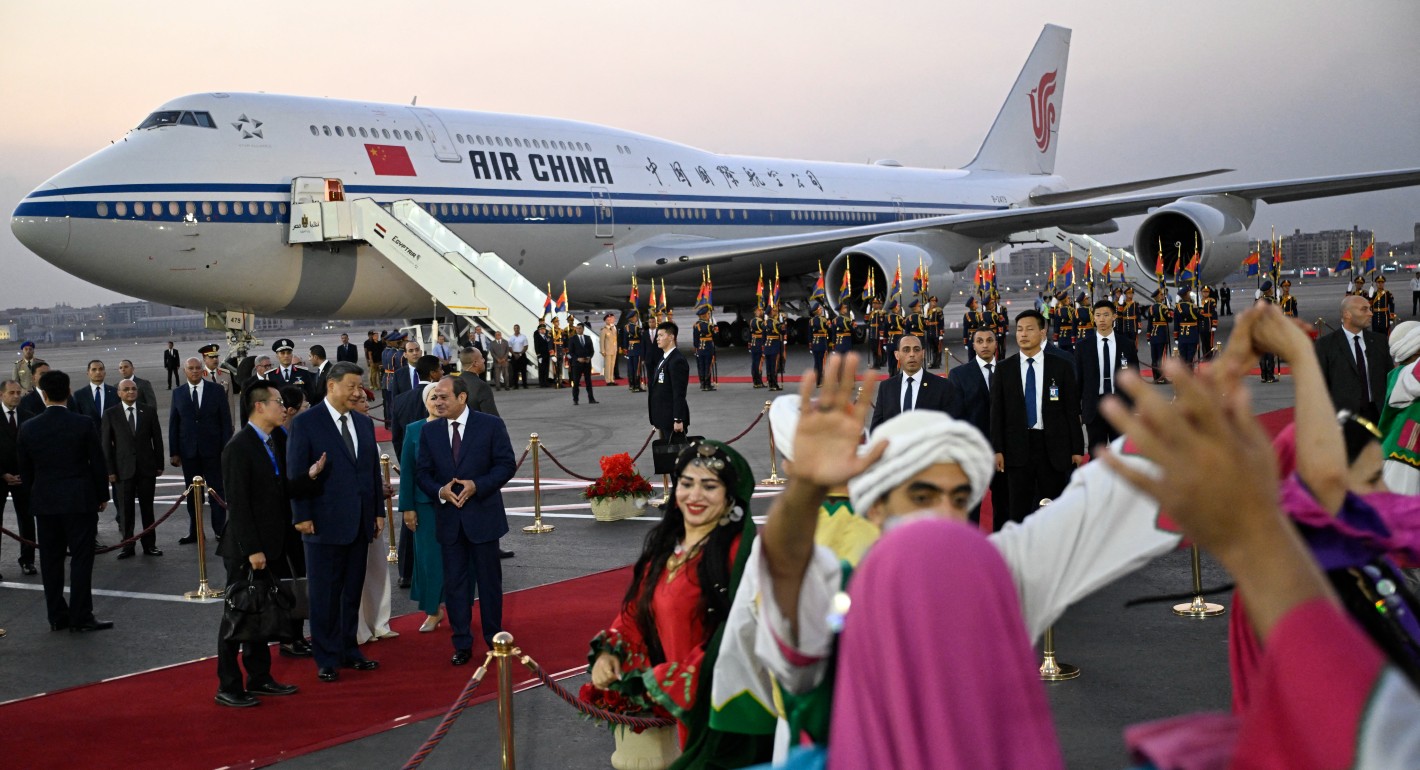
Amid celebrations of bilateral ties was a deeper focus on stability in the Middle East.

Amr Hamzawy