

Report
- +8
Salman Ahmed, Wendy Cutler, Rozlyn C. Engel, …
{
  "authors": [
    "Jake Sullivan"
  ],
  "type": "legacyinthemedia",
  "centerAffiliationAll": "dc",
  "centers": [
    "Carnegie Endowment for International Peace"
  ],
  "collections": [],
  "englishNewsletterAll": "americanStatecraft",
  "nonEnglishNewsletterAll": "",
  "primaryCenter": "Carnegie Endowment for International Peace",
  "programAffiliation": "ASP",
  "programs": [
    "American Statecraft"
  ],
  "projects": [],
  "regions": [
    "East Asia",
    "North Korea"
  ],
  "topics": [
    "Security",
    "Foreign Policy",
    "Nuclear Policy",
    "Arms Control"
  ]
}
Source: Getty
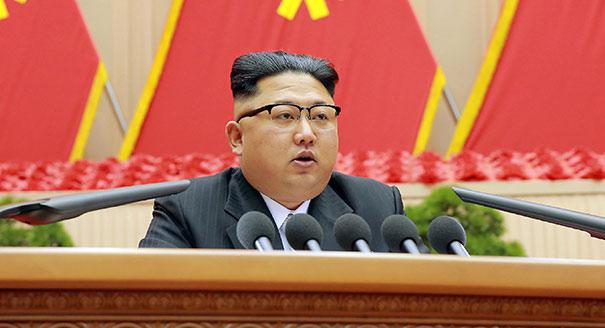
North Korea has a history of promising big and then working in secret to advance its program. Since the Trump administration has deliberately degraded the U.S. diplomatic capacity and nonproliferation expertise, Pyongyang would enjoy an advantage in the period following a summit.
Source: Washington Post
What will happen if President Trump and North Korean leader Kim Jong Un meet? Many experts believe that a rushed and ill-prepared summit is likely to fail, prematurely discrediting diplomacy and putting us on a path to war.
This is a plausible, and frightening, scenario, especially given the impending arrival of the notoriously hawkish John Bolton. But another scenario is just as plausible: Trump and Kim move quickly to strike a barest-of-bones “grand bargain” that commits Washington to address North Korea’s concerns in return for Pyongyang’s promise to pursue denuclearization, with the details to be worked out later. An all-sizzle-and-no-steak deal of this kind would be classic Trump, giving him the optics of a diplomatic “win” while doing little to reduce the threat posed by Kim’s nuclear program. This could prove a trap for the United States, but Trump may well fall into it.
Why is such an outcome plausible?
First, in any high-stakes summit, the laws of diplomatic physics create momentum that drives leaders to reach a “declaration” or “accord,” even if it means defining down success. And Trump has always shown that he’s keen to trumpet “wins” even when the substance doesn’t bear out the claims. For him, it’s the choreography and drama that matter; he can leave the real substance for later, and for others.
Then consider the zone of possible agreement. Like his father and grandfather, Kim has apparently signaled that he is open to mouthing the word “denuclearization,” at least as a bargaining maneuver to alleviate sanctions pressure. Meanwhile, Trump has shown that, for him, there are no sacred cows in U.S. foreign policy, in Asia or anywhere. So there is every reason to believe that he would be prepared to make a sweeping offer — including a peace treaty, normalization, an end to sanctions and a reduction in military exercises — if he got a denuclearization pledge in return.(He might even put the U.S. troop presence in South Korea on the table.)
The fact is, establishing the outlines of a “grand bargain” has never been the hard part. Indeed, the George W. Bush administration negotiated a joint statement in 2005 containing some of the key elements. The hard part has always been nailing down the specifics and enforcing them. Trump and Kim would just leave that to their respective teams, a process that would inevitably involve years of motion with little movement, and ample opportunities for deadlock, breakdown and North Korean cheating.
Finally, consider the politics. Trump’s supporters, starting with Fox News, would rapturously applaud the outcome, without pausing to remember that they relentlessly attacked President Barack Obama for far more rigorous agreements. Trump’s critics would undoubtedly temper their opposition, because the alternative is catastrophic war. And while Bolton would hate this approach under a different president, he may like the politics of it for Trump for now — and figure that he can press for military action later.
But here’s the rub: There is a real risk that this kind of outcome would work much more to Pyongyang’s advantage than Washington’s.
Our partners would take their foot off the sanctions gas, even if our concessions were meant to come later. After a grand, but premature, Trump announcement that he has “solved” the North Korea nuclear issue, South Korea would naturally accelerate its engagement with the North, including its economic ties. China, fearing that U.S.-North Korean engagement would weaken its hand, would scramble (even more than it already has) to offer incentives to increase Beijing’s influence with Kim.
Meanwhile, we might not even get the full benefits of a freeze on North Korea’s capability. We know North Korea has a history of promising big and then working in secret to advance its program. And since the Trump administration has deliberately degraded our diplomatic capacity and nonproliferation expertise — and Trump won’t be paying attention to what happens after the cameras are turned off — Pyongyang would enjoy an advantage in the period following a summit.
North Korea, in this scenario, would be implementing a new version of its old playbook: Make a series of promises in exchange for economic breathing room — and break them later. This could easily raise the risk of war in the medium term.
Whether a bold gambit up front is nonetheless worth the risk is a fair question, given that North Korea is the land of lousy options. This is not an argument against diplomacy, or even against a summit. It’s an argument against approaching the summit with politics and pageantry in mind, rather than hardheaded practical concerns.
That is why Congress should press Mike Pompeo during his confirmation hearing for secretary of state to acknowledge these risks and account for how he would intend to deal with them, if confirmed. And it is why our allies should demand rigorous and thorough consultations before the summit proceeds.
Trump won’t be thinking about the risks, only about the political reward. It is up to the rest of us to hold him accountable to deal with the reality, and not just the reality show.
This article was originally published in the Washington Post.

Former U.S. National Security Advisor to Former President Joe Biden
Jake Sullivan, a senior fellow at the University of New Hampshire's Carsey School of Public Policy, served as the United States national security advisor to former President Joe Biden from 2021 to 2025. Sullivan previously served as deputy assistant to former President Barack Obama, national security advisor to former Vice President Biden, director of policy planning in the State Department, and as deputy chief of staff to former U.S. Secretary of State Hillary Clinton.
Recent Work

Salman Ahmed, Wendy Cutler, Rozlyn C. Engel, …
Salman Ahmed, Allison Gelman, Tarik Abdel-Monem, …
Carnegie does not take institutional positions on public policy issues; the views represented herein are those of the author(s) and do not necessarily reflect the views of Carnegie, its staff, or its trustees.
The acknowledgment has sparked fears of a new arms race with China and Russia.

Chris O’Meara

Smaller powers cannot go it alone, but Canadian history shows that integration with the United States will not always be benign.
Paul Samson

The European Commissioner for Trade is headed to China. But after President Xi’s bridge-building visit to Washington, can a more isolated EU overcome Beijing’s stranglehold on critical raw materials? Who will blink first?

Rym Momtaz, ed.
The summit may be remembered as a fatal blunder, when Washington, Beijing, and the AI industry collectively chose ceremony over action.

Jeffrey Prescott

European NATO countries are wrestling with the possibility of U.S. disengagement from the alliance. With the continent’s security increasingly uncertain, governments must restore the credibility of their collective defense.



Hans-Dieter Lucas, Adam Thomson, Pierre Vimont