

Other
Kim Ghattas
{
  "authors": [
    "Kim Ghattas"
  ],
  "type": "legacyinthemedia",
  "centerAffiliationAll": "",
  "centers": [
    "Carnegie Endowment for International Peace"
  ],
  "collections": [],
  "englishNewsletterAll": "",
  "nonEnglishNewsletterAll": "",
  "primaryCenter": "Carnegie Endowment for International Peace",
  "programAffiliation": "",
  "programs": [],
  "projects": [],
  "regions": [
    "Middle East",
    "Saudi Arabia"
  ],
  "topics": [
    "Foreign Policy",
    "Global Governance"
  ]
}
Source: Getty
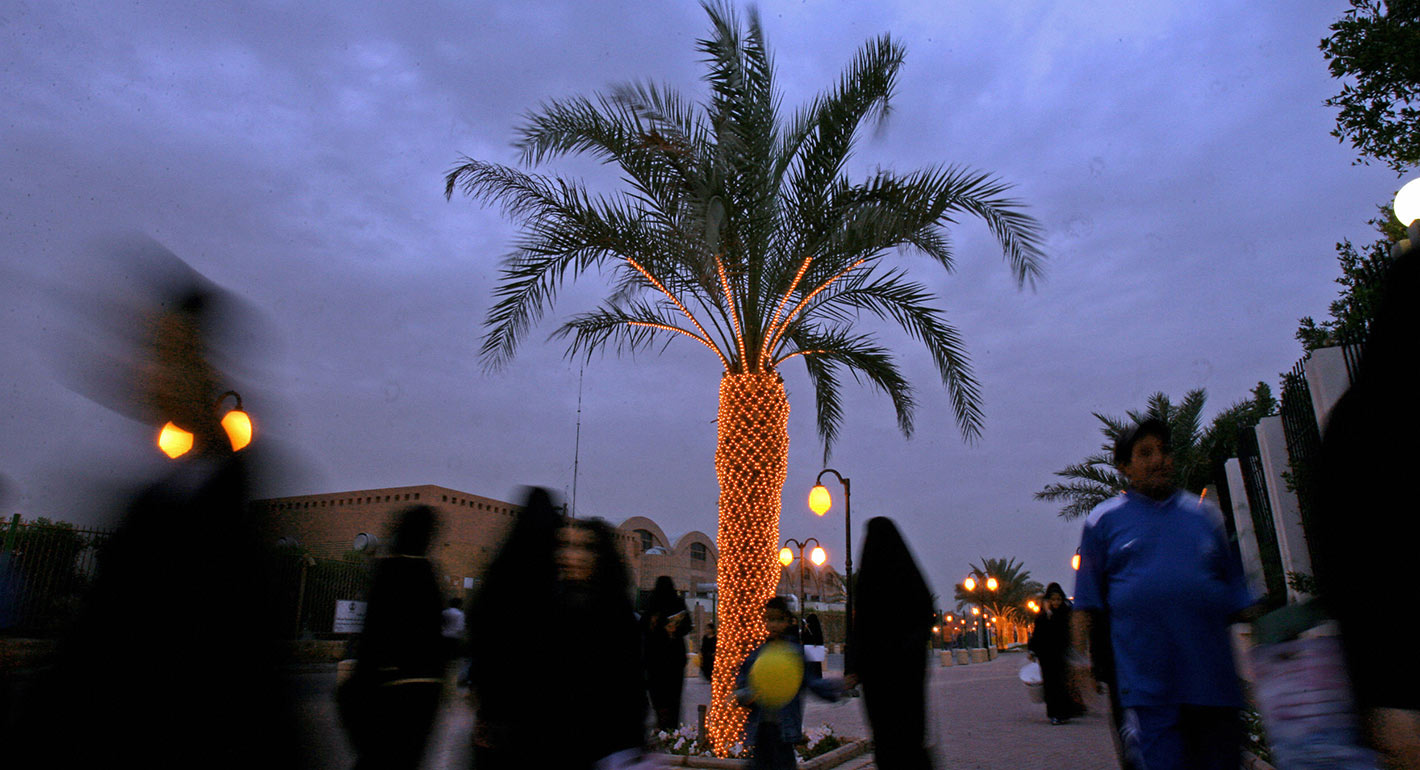
As Saudi Arabia’s Crown Prince Mohammed bin Salman tries to reduce religion’s role in his country, they appear to be only economic and social reforms, not political changes.
Source: Atlantic
For a time, traitor was the go-to accusation across much of the Arab world. During the heyday of Arab nationalism in the 1950s and 1960s, government officials in Egypt or Syria would often brand dissidents as traitors. The term is still used to this day, but with the rise of Islamist fervor in the 1980s and 1990s, when Saudi Arabia set the religious tone for much of the region, it was overtaken by the deadly charge of kafir—“apostate” or “heretic.” It was brought against anyone who strayed from religious norms, secularists, intellectuals or inconvenient critics. Now, as the kingdom’s Crown Prince Mohammed bin Salman tries to reduce religion’s role in his country, Saudi Arabia seems ready bring back the label of traitor.
Two weeks ago, Saudi authorities detained at least 11 prominent activists, including seven trailblazing women, young and old, who for decades have been fighting for the right of women to drive. The arrests came only weeks before June 24, the day Saudi Arabia will finally lift the driving ban. The authorities have since released four of the older arrested women, but have said nothing more about those still in detention.
Much of the analysis of the crackdown, particularly in Washington, centered on three arguments: that it exposed the crown prince’s much-touted reforms as nothing more than a sham; that it was motivated by his fear that the women would claim credit for the end of the ban, paving the way for further activism in an absolute monarchy where rights are granted, not fought for; and that it would assuage the orthodox clerics incensed by the expansion of social liberties. There is some truth to all three—after all, Mohammed bin Salman never promised political changes, only economic and social reforms.
Yet, the arrests served a different function for Mohammed bin Salman. He appears bent on instilling a new sense of purpose in his people, a national cohesion no longer driven by religious ideology but by nationalism. The Saudi-led war in Yemen and the diplomatic standoff with Qatar have helped feed that swelling patriotic pride. (Opening new movie theaters and allowing concerts certainly won’t do it.) Such nationalism thrives when there’s an external enemy—real or perceived.
In the days since the arrests, the outraged reactions from the rest of the world have subsided somewhat. Already, the headlines are shifting back to the kingdom’s moves towards social change. Princess Hayfa, the daughter of the late King Abdullah, graces the cover of this month’s Vogue Arabia. Loosely veiled and dressed in white, she poses seductively behind the wheel of a red convertible. Ahead of the end of the driving ban, Saudi Arabia also just passed a groundbreaking law criminalizing sexual harassment. More glowing press coverage is sure to follow.
Mohammed bin Salman also has little to fear from the West. The Trump administration is largely unconcerned with human rights. Even the Europeans are unlikely to mount much of a protest—they’re too busy assessing the fallout of Trump’s exit from the nuclear deal and imposition of additional sanctions on Tehran. European nations, especially France and Britain, will no doubt look to Saudi Arabia for new business opportunities.
Soon after the arrests, a government-affiliated news site tweeted a picture of a poster with the headline “No room for traitors among us,” followed with a one-line explanation: Those arrested had conspired with foreign entities to undermine Saudi Arabia’s creed and religion and stoke public opposition. The faces of those arrested were stamped with the word traitor, in red. Several newspapers parroted the accusations and published similar graphics, but offered no details or evidence—this was trial by media. Rarely, if ever, has the word traitor been bandied about so publicly in Saudi Arabia, a country more accustomed to judging people by religious, rather than nationalistic, standards.
Inside and outside the kingdom, Saudis speculated that the smear campaign received the government’s official blessings—an ominous sign for the detainees. Their loyalty to the country is now in question, and the word traitor is a hard stain to lose. Neither the rich Saudis rounded up in Riyadh’s Ritz-Carlton Hotel last year, nor the hardline clerics arrested during the same period, received such branding.
What caught my attention was a hashtag that began trending on Twitter in the hours after news of the arrests became public, promoted by hundreds if not thousands of users in Saudi Arabia, a country with over 5 million very active Twitter users: umala’ al safarat—or “agents of the embassies,” in Arabic. The phrase echoed an epithet used by Hezbollah, the Shia militant group in Lebanon: shia al safarat, or “Shia of the embassies.” Hezbollah uses the term to discredit, undermine, or, on some occasions, sanction violent mobs against progressive, usually secular Shias, who refuse to submit to the group’s politics and worldview. The implication is that these Shias cavort with Westerners and undermine the resistance against imperial designs. It’s a bizarre twist when Saudis adopt—knowingly or by happenstance—an epithet favored by Iran’s ally in Lebanon.
So far, Saudi officials have provided few details about the case against those arrested, other than to say that their work went beyond women’s rights, and that they had passed on classified information to foreign entities. Western diplomats have told me that “initially the accusations seemed to be directed at the women’s alleged contact with Western embassies, but the authorities now seem to be changing tack to try to show a connection to Iran or Qatar.” They also told me that Saudi Arabia’s accusations are baseless.
In Saudi Arabia, vocal supporters of the crown prince’s reforms have publicly described the arrests as a mistake. In a tweet, Mohammed el Yehya, a Saudi analyst who knows how Saudi officials think, called for the evidence against the activists to be made public. “These individuals have been known for nothing but their social activism for years. The massive social and economic changes in Saudi will be markedly tainted in the absence of not only economic transparency, but also legal clarity,” he added.
Whatever the proof and whoever the alleged enemy, the arrests seem to have served their purpose for Mohammed bin Salman. Critics and activists have gone silent, and the patriotic masses have been mobilized. But the kingdom would do well to remember that labeling perceived enemies as kafir or traitor has never contributed much to building a sustainable future in this region.

Author of Black Wave and FT contributing editor
Kim Ghattas is an Author of Black Wave and FT contributing editor.
Recent Work
Kim Ghattas
Carnegie does not take institutional positions on public policy issues; the views represented herein are those of the author(s) and do not necessarily reflect the views of Carnegie, its staff, or its trustees.
Washington needs to recognize that influence in the Western Hemisphere comes from presence, delivery, and reliability. It also must recognize that while the United States remains the key external actor, it no longer operates in a permissive environment and cannot presume deference from regional players who have other options, namely China.
Juan S. Gonzalez

Minsk clearly expected the dialogue with Washington to yield more results, in particular the lifting of EU sanctions and permission to export potash.

Artyom Shraibman

A summer of escalation in the Black Sea has hurt Ukraine economically and is exacerbating world food security. A truce is needed—as is a broader reframing of Europe’s Ukraine strategy.

Thomas de Waal

As the U.S. stumbles in its war with Iran, we are likely to see an acceleration of its disengagement from the region.

Michael Young
Why governance of rapidly evolving technology will be distributed and complex.


Stewart Patrick, Scott Singer