

Commentary
Minsk clearly expected the dialogue with Washington to yield more results, in particular the lifting of EU sanctions and permission to export potash.
Artyom Shraibman
{
  "authors": [
    "Richard Sokolsky",
    "Aaron David Miller"
  ],
  "type": "legacyinthemedia",
  "centerAffiliationAll": "",
  "centers": [
    "Carnegie Endowment for International Peace",
    "Malcolm H. Kerr Carnegie Middle East Center"
  ],
  "collections": [],
  "englishNewsletterAll": "",
  "nonEnglishNewsletterAll": "",
  "primaryCenter": "Carnegie Endowment for International Peace",
  "programAffiliation": "",
  "programs": [],
  "projects": [],
  "regions": [
    "North America",
    "United States",
    "Middle East",
    "North Africa",
    "Syria",
    "Levant"
  ],
  "topics": [
    "Political Reform",
    "Democracy",
    "Foreign Policy"
  ]
}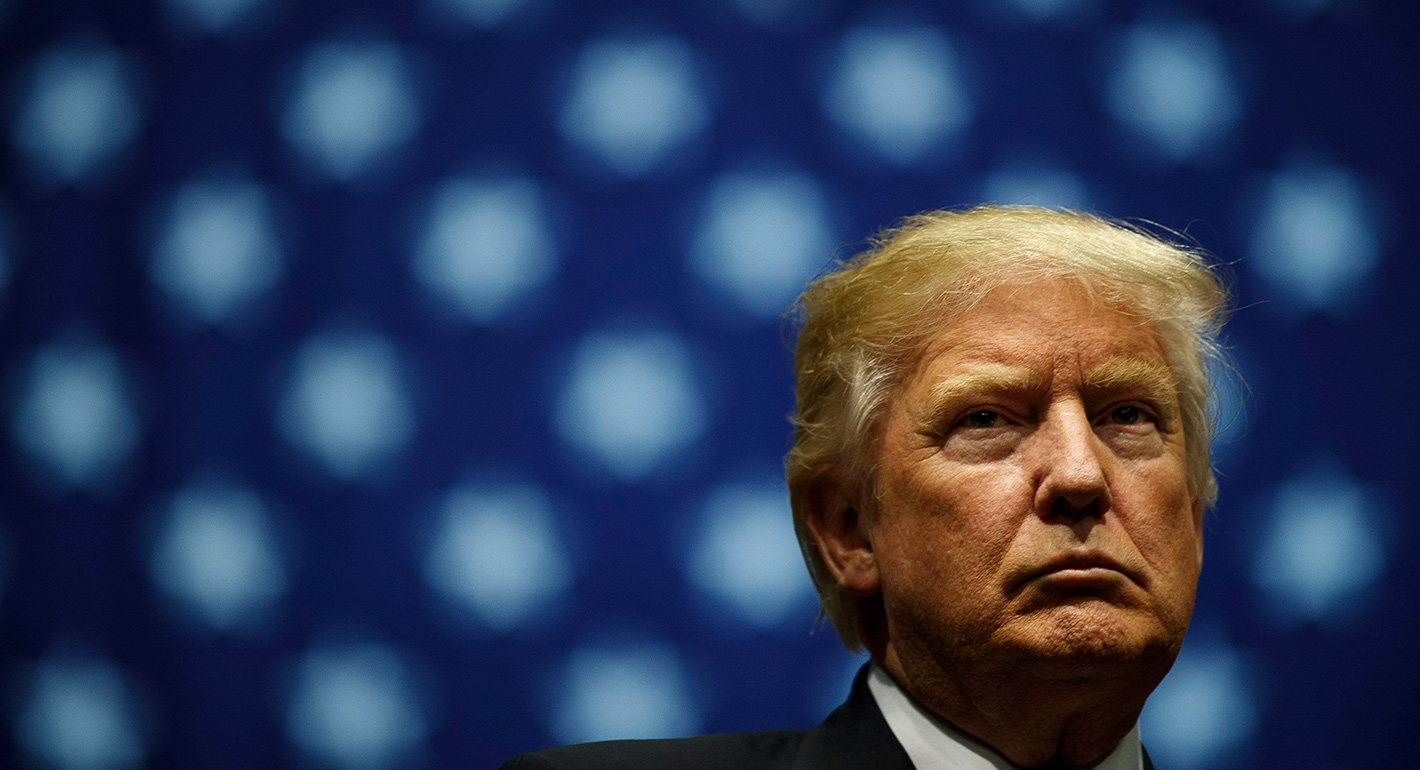
Source: Getty
The best hope for Trump’s Middle East policy is that his administration continues to avoid getting America into new conflicts and to think about how to disentangle it from old, unwinnable ones.
Source: CNN
This week Donald Trump's two senior foreign policy advisers --Secretary of State Mike Pompeo and national security adviser John Bolton -- will be in the Middle East trying to explain US policy, particularly on Syria, while reassuring the Arabs and Israel that the US isn't abandoning the region.
It won't be an easy lift. By most accounts, Trump's Middle East policy has made a messy Middle East even messier. Trump's announcement on December 19 of a unilateral withdrawal from Syria, which prompted in part the resignation of Secretary of Defense James Mattis (perhaps the most prudent and sober member of his Cabinet) has now been contradicted by his hawkish national security adviser, John Bolton, who has laid out conditions that could leave US forces in Syria for years to come. Indeed, the way the Trump administration makes decisions -- hastily, without coordination, often impulsively -- via phone call or tweet, as Trump's decision to withdraw from Syria attests, leaves both allies and adversaries confused and US policy muddy and contradictory.
It's safe to say that the jumble of instincts, campaign commitments and biases that animate Trump's approach toward the Middle East have produced decidedly mixed results.
Most of the Trump administration's actions have harmed America's reputation and interests in the region, like his kowtowing to Israel and Saudi Arabia, his misguided decision to withdraw the US from the nuclear agreement with Iran, the re-imposition of US sanctions and unrealistic and dangerous aspirations to change the regime. The President's approach is unlikely to alter Iran's regional behavior and has sown the seeds of future instability.
The foreign policy establishment is rightly horrified by the way Trump makes decisions. But politically inconvenient as it may be, when it comes to a dysfunctional Middle East, some of his instincts are right on target. His own risk aversion has wisely led him away from nation-building and new military engagements and toward the difficult but necessary process of disengaging from old and unwinnable ones.
Here's our balance sheet midway through his first term.
The President would never admit it, but he shares his predecessor's view that the US has no vital interests in Syria and should not go to war there or anywhere else in the region in a futile effort to solve complicated problems over which America has little influence. The violence, conflict, and terrorism that wrack the region are not the result of inter-state aggression, but rather of governments that are too weak to resist outside powers from waging proxy wars on their territory.
Trump wants to head quickly for the exits in Syria and perhaps in Afghanistan too. But it's clear that neither of these withdrawals will happen quickly. Indeed they need to be carefully calibrated and organized. And in the case of Afghanistan the withdrawal process has not yet been authorized.
From the beginning, Trump has rightly focused narrowly on counterterrorism. He has ramped up his predecessor's policy of dismantling the ISIS proto-state in Syria and Iraq, and a spokesman for the American-led military coalition in Baghdad told the New York Times that the jihadis' territory has now been reduced to 1% of what it once held.
Indeed, Trump has made it unmistakably clear that the US has no business intervening with military force in nation-building processes and that Arab governments need to own and solve these problems for themselves.
Still, when it comes to dealing with ISIS or al-Qaeda we need to understand that the US will not fully and permanently defeat these forces (as we did with Germany and Japan) by breaking their will to fight, destroying their military capabilities, or helping to create new political structures in countries where they operate. ISIS in Syria or Iraq will not be defeated until the underlying political, sectarian and economic grievances that fuel their movements are addressed; and this is well beyond America's capacity.
Deploying US diplomats and soldiers in large numbers to do nation-building only fuels the jihadi and terrorist narrative, recruitment and propaganda mills. The application of US military power will not eradicate jihadist terrorism, but it can, when combined with improved law enforcement, intelligence, and international cooperation, contain, limit and mitigate this threat.
Promoting human rights and democracy have rarely been the top priorities in any administration -- Republican or Democratic. But the Trump administration has relentlessly emptied US foreign policy of almost any trace of moral or ethical leadership.
Trump has said that he doesn't think that the US has the right to lecture other countries. And with rare exception he has not called out human rights abuses, even on the part of US adversaries. He has failed to criticize North Korea's Kim Jung Un for his massive repression at home; and in fact has flattered him. Trump's version of "what happens in Vegas stays in Vegas" has given any number of authoritarians free range to repress and oppress without any opposition from Washington.
Trump seems particularly keen on turning a blind eye to strongmen such as Egyptian President Abdel Fattah el-Sisi and Turkish President Recep Tayyip Erdogan. He seems to be enamored with Saudi Arabia's Crown Prince Mohammed bin Salman as well. Trump refused to take action against the crown prince even after the CIA assessed that he was involved in the horrific murder of Washington Post journalist Jamal Khashoggi.
Every administration factors domestic politics into its foreign policy. But rarely has any President allowed those politics -- particularly political commitments made during an election campaign, or personal opposition to the policies of his predecessor -- to outweigh national security and foreign policy considerations. Trump's unilateral withdrawal from the 2015 Iran's nuclear accord -- a flawed but functional arms-control agreement -- isolated the US, strained relations with allies and removed constraints on Tehran's nuclear weapons program without offering any alternative approach.
Likewise, his decisions to recognize Jerusalem as Israel's capital, open a US embassy there, put financial pressure on the Palestinians and acquiescence on Israeli settlement construction -- all moves driven by domestic politics -- undermined US credibility and its role as a mediator in any negotiations.
The conundrum for US policy in the Middle East is that most of the problems in the region are driven by internal forces and conflicts beyond America's capacity to repair. And Washington faces further problems from allies and adversaries alike who pursue policies that undermine US interests. Trump has only made matters worse with a decision-making process that's akin to diplomatic and political malpractice.
The good news is that at least until now, despite his blunders, oil still flows freely from the region; terrorists are on the defensive; Iran isn't yet ramping up its nuclear program and Russia and Iran, contrary to the inflated rhetoric one hears, aren't poised to swallow the region whole.
The best hope for Trump's Middle East policy is that his administration continues to avoid getting America into new conflicts and -- as in Syria and Afghanistan -- to think about how to disentangle it from old, unwinnable ones.
Indeed, Trump's overall approach, much like his predecessor's, reflects the reality that this broken and angry region just isn't as important to the US as it used to be. And even if it were, it's so battered there's not a whole lot America can do to make it much better.

Nonresident Senior Fellow, Russia and Eurasia Program
Richard Sokolsky is a nonresident senior fellow in Carnegie’s Russia and Eurasia Program. His work focuses on U.S. policy toward Russia in the wake of the Ukraine crisis.

Senior Fellow, American Statecraft Program
Aaron David Miller is a senior fellow at the Carnegie Endowment for International Peace, focusing on U.S. foreign policy.
Carnegie does not take institutional positions on public policy issues; the views represented herein are those of the author(s) and do not necessarily reflect the views of Carnegie, its staff, or its trustees.

Minsk clearly expected the dialogue with Washington to yield more results, in particular the lifting of EU sanctions and permission to export potash.

Artyom Shraibman

A summer of escalation in the Black Sea has hurt Ukraine economically and is exacerbating world food security. A truce is needed—as is a broader reframing of Europe’s Ukraine strategy.

Thomas de Waal

As the U.S. stumbles in its war with Iran, we are likely to see an acceleration of its disengagement from the region.

Michael Young
Why governance of rapidly evolving technology will be distributed and complex.


Stewart Patrick, Scott Singer

In Egypt’s dense cities, the disappearance of foliage has health implications and punishes daily commuters.

Angie Omar