

Article
C. Raja Mohan, Darshana M. Baruah
{
  "authors": [
    "C. Raja Mohan"
  ],
  "type": "legacyinthemedia",
  "centerAffiliationAll": "",
  "centers": [
    "Carnegie Endowment for International Peace",
    "Carnegie India",
    "Malcolm H. Kerr Carnegie Middle East Center"
  ],
  "collections": [],
  "englishNewsletterAll": "",
  "nonEnglishNewsletterAll": "",
  "primaryCenter": "Carnegie India",
  "programAffiliation": "",
  "programs": [],
  "projects": [],
  "regions": [
    "Middle East",
    "Gulf",
    "Saudi Arabia"
  ],
  "topics": [
    "Foreign Policy",
    "Political Reform"
  ]
}
Source: Getty
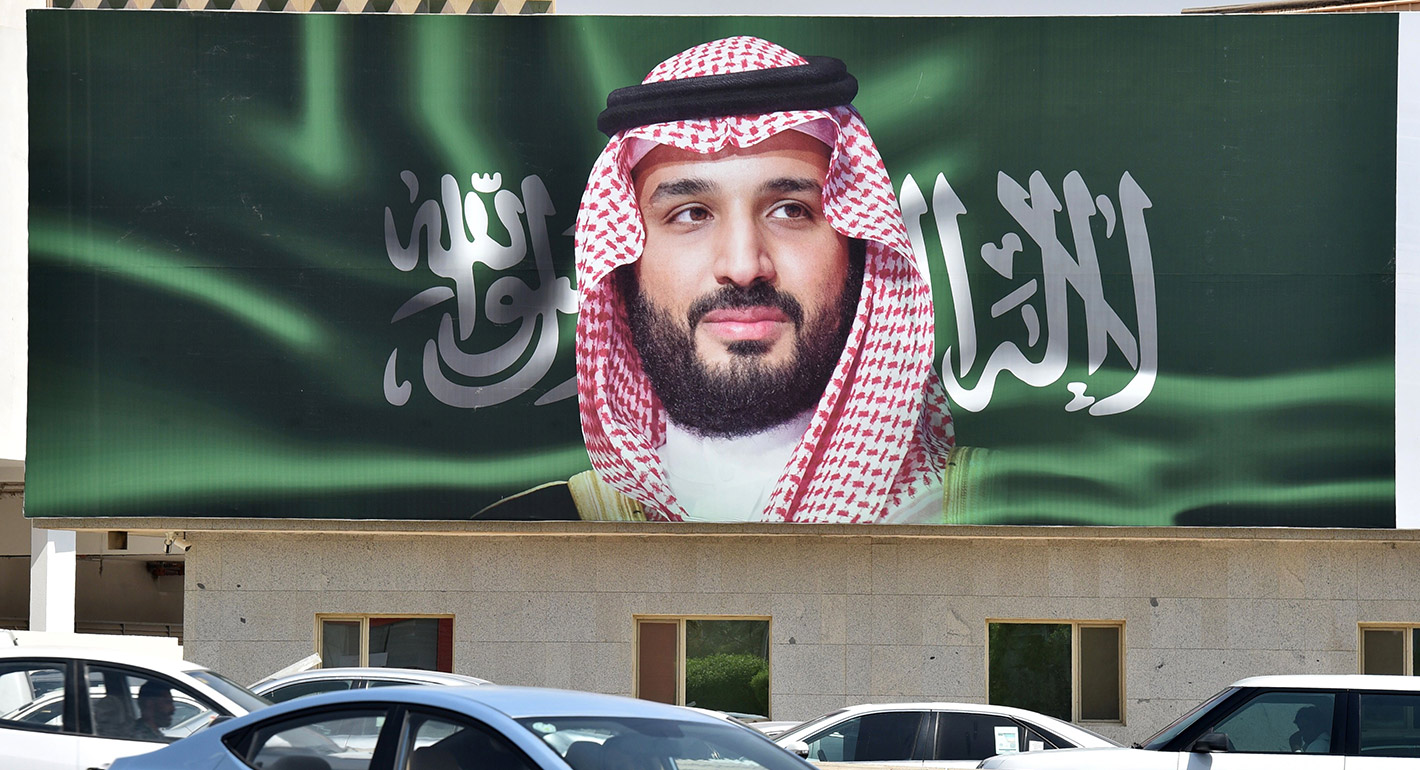
As New Delhi prepares to host the Saudi Crown Prince Mohammed bin Salman, India must come to terms with an unfamiliar idea—“nationalism in Arabia”.
Source: Indian Express
When we think of nationalism in the Middle East, we recall “Arab nationalism” that animated Indian engagement with the region over the last several decades. But as Delhi prepares to host the Saudi Crown Prince Mohammed bin Salman this week, India must come to terms with an unfamiliar idea — “nationalism in Arabia”.
Promoting nationalism and downplaying pan-Arabism and pan-Islamism is at the very heart of Crown Prince Salman’s effort to reorient Saudi Arabia’s internal and external policies. And he is not the only one. Others, especially the United Arab Emirates, are also trying to construct a national identity to cope with the turbulence in the Middle East.
The kingdoms of the Arabian Peninsula did not have to fight for their “national” independence from colonial rulers. Nor did they inherit a clear and continuous territorial entity on which to found a nation. The Arabian monarchies, naturally, chose to rely on tribal and religious identities for their political legitimacy. The Arabian monarchies were also quite happy to go with the regional flow on supra-national politics. Today, as the Gulf monarchies review the growing threat of transcendental ethnic and religious movements, they are turning to nationalism as an insurance.
The rulers of the Arabian peninsula are also acknowledging that the construction of coherent communities out of their societies — overflowing with expatriates of different faiths and denominations — will need more than shared religion, sect, tribe or ethnicity. That is where “nationalism in Arabia” comes in. It is very different from “Arab nationalism”, which was supposed to transcend national boundaries. Nationalism in Arabia is about defining the interests of separate sovereign states. In the past, Arab nationalism was seen, especially in India, as a progressive force countering conservative religious impulses. Today “nationalism in Arabia” has risen out of the debris of Arab unity and Islamic solidarity. That the old illusions are irrelevant is reflected in the fact that the Arab League and the Organisation of Islamic Cooperation are both in a shambles.
For newly-independent India, “Arab nationalism” had a special appeal. It resonated with the ideas of anti-imperialism as well as the slogans of state socialism and non-alignment. The issues that dominated the region — the conflict between the Arabs and Israel, the Palestinian struggle for nationhood and the joint initiatives by the Arabs — reinforced India’s decision to frame the politics of the region in those terms.
As Arab nationalism went on the backfoot after the stinging defeat suffered by the Arabs in the 1967 war with Israel, the Saudis took the lead in launching the Organisation of Islamic Conference in 1969.
With the emergence of political Islam as the dominant discourse in the Middle East came the concerns in Delhi at OIC’s meddling in India’s disputes with Pakistan, including Kashmir. In cultural terms, the Indian foreign policy elite and political classes were more comfortable with the pan-Arab Baathists in suits rather than the Gulf Sheikhs in their white thawbs or the Iranian mullahs in black. Neither India’s traditional enthusiasm for Arab solidarity nor Delhi’s fears about Islamic unity are of little policy consequence in the region.
That Saudi Arabia is ranged against the political Islam of Turkey and Iran and is confronting groups like the Muslim Brotherhood says something about the unfolding structural shift in the region’s politics. The House of Saud, which let religion play an ever larger role in its domestic politics and foreign policy since the late 1970s, woke up to existential threats after 9/11 attacks, the Arab Spring beyond its borders and the challenge, from within, of the extremist groups that championed political Islam.
The attempts to strengthen nationalism in Saudi Arabia began under King Abdullah during his long years as the crown prince. The annual Janadriyah festival, that he began, celebrates the Arabian peninsula’s heritage and culture. In 2005, he declared the Saudi National Day — September 23 — as a national holiday. This is the only non-religious holiday in the kingdom.
Crown Prince Salman is taking forward this agenda. Being a “Saudi” is slowly, but certainly, becoming as important as being a “Muslim” or an “Arab”. The word “traitor” is increasingly being preferred over “infidel” to describe the enemies of the state. Sports, especially football, have begun to forge a new secular bond among the Saudis. “Patriotism” has also become the trope to mobilise popular sentiment behind the Saudi armed forces participating in the civil war in Yemen.
Prince Salman’s nationalism is not all about symbols and vocabulary. In a land that has not known freedom of religion for non-Sunni Islamic denominations and non-Muslim faiths, he is taking some tentative steps. There is a conscious effort to strengthen the outreach to the long-sullen Shia minority in the kingdom’s eastern part. There is mounting speculation that Riyadh might have its first Shia mosque in the not too distant future. The first ever mass of Coptic Christians was held on December 1 last year at a private home in Riyadh and Prince Salman has received delegations of American Christian evangelicals.
These are but small steps in one of the world’s most conservative societies. Salman’s nationalism is also, without question, a top-down project. It will surely run into many a problem. But that does not take anything away from the fact that the kingdom is experimenting with long overdue change at home. Reorienting foreign policy has been much easier for Salman, who now talks of putting “Saudi Arabia First”. As the importance of religion begins to decline in the conduct of Riyadh’s foreign policy, India will have much to benefit from a closer strategic partnership between Prince Salman and other votaries of “nationalism in Arabia”.
This article was originally published in the Indian Express.
Former Nonresident Senior Fellow, Carnegie India
A leading analyst of India’s foreign policy, Mohan is also an expert on South Asian security, great-power relations in Asia, and arms control.
Recent Work

C. Raja Mohan, Darshana M. Baruah


Alexander Gabuev, Paul Haenle, C. Raja Mohan, …
Carnegie does not take institutional positions on public policy issues; the views represented herein are those of the author(s) and do not necessarily reflect the views of Carnegie, its staff, or its trustees.

Ahead of a tough winter for Ukraine, Donald Trump’s swing back toward Russia bodes ill. But instead of panicking, Kyiv’s European allies are focusing on action.

Rym Momtaz

Without a ceasefire with Ukraine on attacking each other’s energy infrastructure—to which the Kremlin is unlikely to agree—the diesel agreement between Putin and Trump is largely for show, rather than representing a genuine increase in the volumes of Russian diesel on the global market.

Sergey Vakulenko

Funding Ukraine remains a priority for European leaders. As Russia’s war of aggression heads into another winter, two feasible options to mobilize support for Kyiv should be fast-tracked.


Vladyslav Rashkovan, Gregory P. Wilson

While the EU and European governments are embracing the much-lauded middle-power moment, this entails three difficult conundrums.

Richard Youngs
The middle power moment will not be defined by sovereign states alone, and California stands out for its potential contributions to international cooperation.


Ian Klaus, Stewart Patrick