

Report
- +8
Salman Ahmed, Wendy Cutler, Rozlyn C. Engel, …
{
  "authors": [
    "Christopher Smart"
  ],
  "type": "legacyinthemedia",
  "centerAffiliationAll": "dc",
  "centers": [
    "Carnegie Endowment for International Peace"
  ],
  "collections": [],
  "englishNewsletterAll": "americanStatecraft",
  "nonEnglishNewsletterAll": "",
  "primaryCenter": "Carnegie Endowment for International Peace",
  "programAffiliation": "ASP",
  "programs": [
    "American Statecraft"
  ],
  "projects": [],
  "regions": [
    "North America",
    "United States"
  ],
  "topics": [
    "Economy",
    "Global Governance",
    "Technology"
  ]
}
REQUIRED IMAGE
The global financial system is like a giant swimming pool and turbulent waters are tossing around the swimmers. Moreover, undercurrents that have been keeping the U.S. dollar stronger for longer are likely to be disrupted as relative growth expectations.
Source: Project Syndicate
Respectable investors aren’t supposed to say, “This time is different.” But, given the market gyrations in recent months, they would do well to keep an eye on what really is different from the last time the business cycle turned.
The last time, of course, was the 2008 global financial crisis. Unlike then, today’s underlying economic data remain strong, suggesting that a looming recession could come and go before we have even had time to measure it. But that won’t help investors looking to assess the potential risks and rewards of the next cycle, which will likely be shaped by unpredictable shifts in liquidity, politics, and technology.
While academics convene conferences to analyze the legacy of quantitative easing (QE) by central banks over the past decade, investors want to know what the policy’s reversal will mean for future financial conditions. The major central banks have essentially stopped providing massive liquidity injections through bond purchases, and are now unwinding their balance sheets, albeit at varying rates.
Regardless of whether the US Federal Reserve ignores market jitters and defies President Donald Trump to resume interest-rate hikes, its balance sheet is, for now, still shrinking by $50 billion per month. The European Central Bank halted its bond purchases in December 2018. And the Bank of Japan may be approaching the beginning of the end of its QE program – though it is an open question when the “end of the end” will be. All told, the tapering of QE programs has left an enormous amount of liquidity draining through pipes of different sizes, and at different times.
Insofar as the global financial system is like a giant swimming pool, turbulent waters are tossing around the swimmers. Moreover, undercurrents that have been keeping the US dollar stronger for longer are likely to be disrupted as relative growth expectations may shift toward the euro and key emerging markets. Don’t be surprised if an unexpected vortex suddenly swallows up a mid-size bank or hedge fund as the QE tapering continues.
Complicating matters further, new sources of political uncertainty have called into question the assumption that globalization and economic integration will continue apace into the next cycle. True, Trump’s import tariffs on aluminum, steel, and an array of Chinese goods have so far resulted in relatively small direct costs for a few targeted industries. But the potential for further disruptions to global value chains has forced multinational firms to reconsider where and when they should invest.
This is what business leaders mean when they say they’re worried about “political risk.” Even if the United States and China agree to extend their current trade-war truce beyond the first half of March, the potential for continued friction will remain. That means careful investors will have to price in the possible costs of additional tariffs and redesigned supplier networks – perhaps indefinitely.
Likewise, as the clock ticks down to Brexit Day on March 29, firms that have planned on goods and services still being able to move freely between Britain and the European Union now find themselves in a state of deep uncertainty. To be sure, world trade is not shutting down. But in the next cycle, investors will have to account for the potential costs of new tariffs, border checks, and other effects of resurgent populism and nationalism in the world’s major economies.
Finally, around the world, revolutionary new technologies and disruptive business models are increasingly threatening incumbents’ profit margins. During the last cycle, the cheap connectivity of the Internet drove commercial innovation and integration. But looking ahead, businesses will need to grapple with mobile networks, cheap digital storage, and increasingly sophisticated algorithms in order to make sense of vast streams of data.
It is not just shopping malls and taxi fleets that are falling to the likes of Amazon and Uber; almost all businesses are facing challenges from leaner, tech-driven business models. Manufacturing, health care, and (gasp) investment management are just a few of the sectors now vulnerable to technological disruption – and that is before one even considers the potential long-term benefits of “distributed-ledger” or blockchain technologies.
Unlike the automation of tasks once performed by humans, which will likely play out over many years and across multiple economic cycles, the upending of longstanding business models can happen almost instantly. Just ask Blockbuster Video.
Business cycles wouldn’t be cycles if there weren’t fundamental similarities in how firms capture profits, manage competition and rising interest costs, and then oust weaker players over the course of time. There will always be shrewd investors who can pick out the ripest fruit at each stage of the cycle. And yet the task ahead looks more complicated than usual. As the current cycle nears its end, investors must account for the uncertainties associated with lower liquidity, rising populism, and revolutionary new technologies.
This time really is different, and not necessarily in a good way.
Former Nonresident Fellow, Geoeconomics and Strategy Program
Christopher Smart was a nonresident fellow at the Carnegie Endowment for International Peace, where he focuses on the interaction of global financial markets and international economic policy.
Recent Work

Salman Ahmed, Wendy Cutler, Rozlyn C. Engel, …
Salman Ahmed, Allison Gelman, Tarik Abdel-Monem, …
Carnegie does not take institutional positions on public policy issues; the views represented herein are those of the author(s) and do not necessarily reflect the views of Carnegie, its staff, or its trustees.

Despite public disputes over trade and immigration, the strategic partnership’s foundations remain sturdy.

Sameer Lalwani
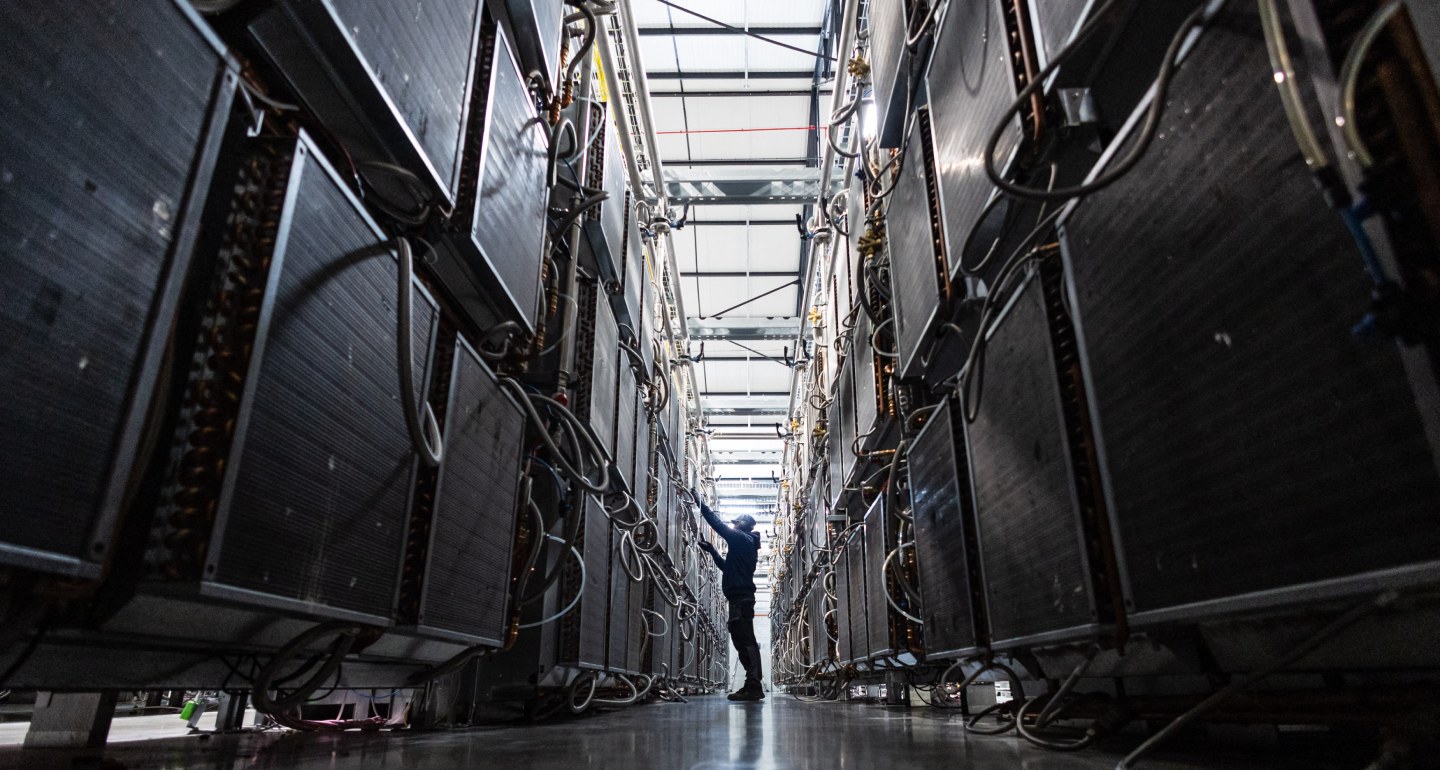
Russia spent years building a “sovereign internet,” concentrating web infrastructure exclusively within Russian territory. Ukrainian drone attacks have shown how vulnerable that approach has left the Russian internet.

Maria Kolomychenko

It signals a new era of tech diffusion and warfare.

Steve Feldstein

With its public finances in shambles, the far right polling at 35 percent ahead of the 2027 presidential election, and a growing protest movement, is France’s crisis a threat to the EU’s geopolitical awakening?

Rym Momtaz, ed.

International law has a PR problem.


Federica Du Pasquier, Oona A. Hathaway, Stewart Patrick