

Article
C. Raja Mohan, Darshana M. Baruah
{
  "authors": [
    "C. Raja Mohan"
  ],
  "type": "legacyinthemedia",
  "centerAffiliationAll": "",
  "centers": [
    "Carnegie Endowment for International Peace",
    "Carnegie India"
  ],
  "collections": [],
  "englishNewsletterAll": "",
  "nonEnglishNewsletterAll": "",
  "primaryCenter": "Carnegie India",
  "programAffiliation": "",
  "programs": [],
  "projects": [
    "Security Studies"
  ],
  "regions": [
    "India",
    "China",
    "South Asia",
    "East Asia"
  ],
  "topics": [
    "Foreign Policy",
    "Security"
  ]
}
Source: Getty
That China and India compete for foreign military bases is not merely an extension of their very familiar rivalry, but a definitive moment in their overall political evolution as modern states.
Source: Indian Express
In the annual report to the US Congress on Chinese military power released last week, the US Defence Department has pointed to China’s vigorous quest for foreign military bases, including in Pakistan. This should not surprise Delhi, which closely tracks the expansion of China’s military footprint in the Subcontinent and beyond in the Indian Ocean.
India’s response so far has developed along three axes. One is to counter potential threats from China’s military bases in its immediate neighbourhood. Second, to strengthen military partnerships with its friends and partners to balance China. The third is to emulate Beijing’s quest for foreign military presence.
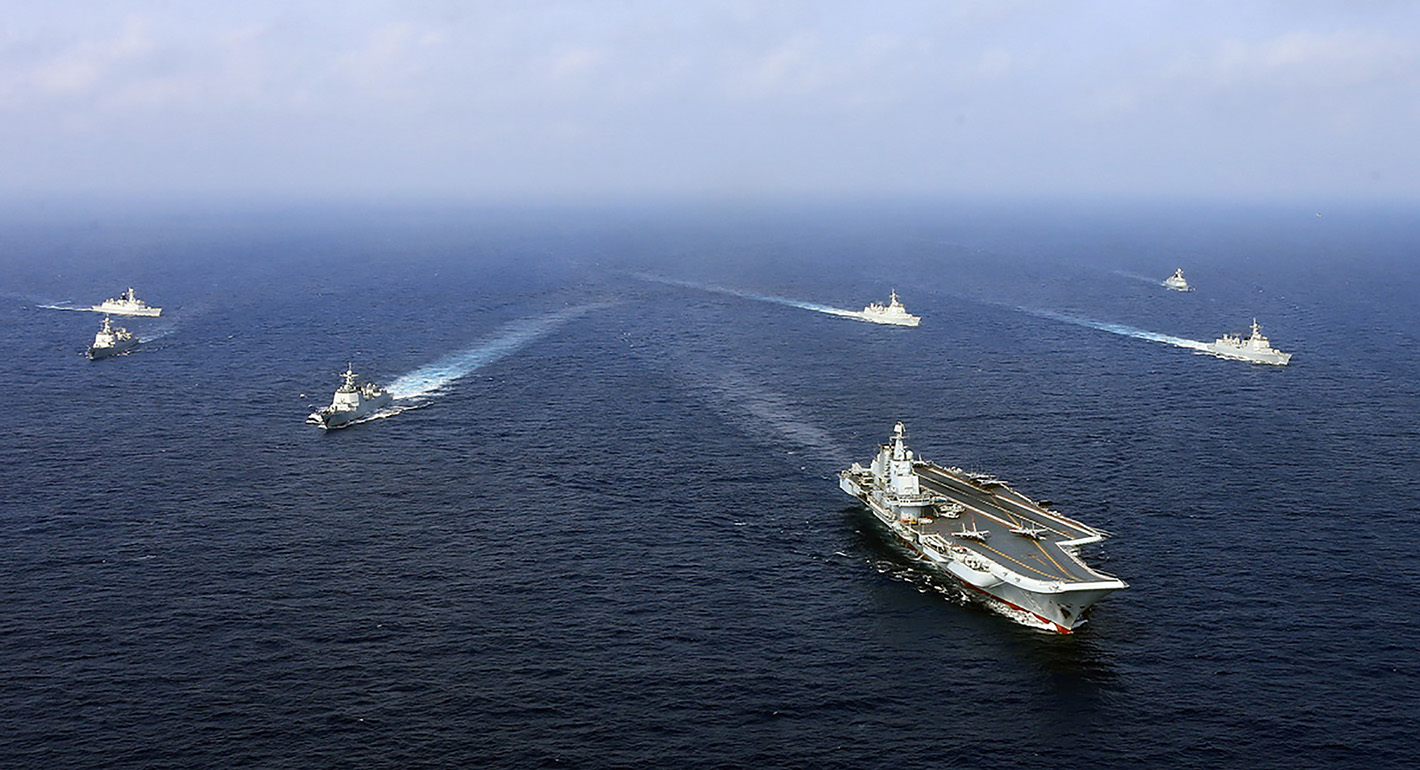
That China and India compete for foreign military bases is not merely an extension of their very familiar rivalry but a definitive moment in their overall political evolution as modern states. Few nations have been so vehement in their opposition to foreign military bases. Few nations, now, appear under as much compulsion as China and India to seek them. While Beijing is racing ahead in the search for foreign military presence, Delhi has some catching up to do.
Demanding that the Western powers withdraw from their military bases in Asia and the Indian Ocean was very much part of the anti-colonial and anti-imperial framework of Chinese and Indian foreign policies. Soon enough, they began to adapt to the realities of international life. They began to see the question of foreign military bases not through the lens of ideology but of security interests.
As it fought with fellow communists in the Soviet Union in the 1960s and 1970s, Mao’s China turned to the US for regional balance and stopped making a big deal of American military bases in Asia. Beijing began to justify American forward military presence necessary to counter the “Soviet social imperialism” and constrain the potential for “Japanese militarism”.
India, which vigorously objected to US military alliances in Asia and Pakistan’s participation in them, eventually built an alliance-like relationship with the Soviet Union. The objective was to balance the US and Chinese alliances with Pakistan. Today, China is already a great power and India is rising, slowly but certainly. One of the big changes in their strategic outlooks has been the quiet change in their attitudes towards foreign military bases.
As China’s economic interests begin to span the entire globe, it was inevitable that Beijing would try and secure them eventually through its own military means. That is what all great powers do. As the world’s second-largest economy (aggregate GDP of $13 trillion) and the second-largest annual defence budget ($250 billion), China has both the motivation and the means to acquire foreign military bases.
China’s transition follows the familiar dictum that flag follows trade. As the Pentagon’s annual report put it: “China’s advancement of projects such as the ‘One Belt, One Road’ Initiative (OBOR) will probably drive military overseas basing through a perceived need to provide security for OBOR projects”
Over the last decade, Chinese media outlets associated with the People’s Liberation Army have openly debated the need for foreign military bases as well as the potential challenges in seeking and sustaining them. That debate was settled with China establishing its first military base in Djibouti in 2017. There will be more.
The Pentagon report argues that “China will seek to establish additional military bases in countries with which it has a longstanding friendly relationship and similar strategic interests”. No surprise that Pakistan fits the bill perfectly. The Pentagon notes, Pakistan has the precedent of hosting foreign military bases. Pakistan is undoubtedly China’s closest political and military partner. While there is no formal “base”, the integration of Pakistan into China’s military strategy and operations has steadily advanced.
The Pakistan army’s determination to limit India’s power means there is little political opposition to hosting Chinese bases and facilities. The depth of the anti-India alliance between the two “iron brothers” means Delhi can’t prevent Beijing developing bases and strategic military facilities — that perform a number of functions ranging from hosting PLA Navy warships to China’s satellite tracking.
What it can’t stop, Delhi must deal with. That Chinese warships and submarines might soon be based on a permanent basis in Karachi or Gwadar is surely part of India’s military planning for the future. In other places where it has some political influence — say Sri Lanka and Maldives — India has indeed sought to contest and limit the nature and scope of Chinese military activities.
Unlike in the past, when India operated as a lone ranger in the Indian Ocean, Delhi is now making its armed forces interoperable with its friends and partners. After prolonged reluctance, India has signed agreements with the US and France for mutual peacetime use of military bases. It is a matter of time before it signs such agreements with other powers like Japan and Australia.
In the third leg of India’s strategy, Delhi is seeking access to military facilities in a number of countries. The logic of Delhi’s quest for foreign military bases is very similar to that of China. India’s growing and globalised economy is now close to $3 trillion and Delhi’s political ambition is to raise it to $5 trillion in the next five years. Delhi’s security imperatives are no longer limited to its borders and it needs to secure its widely dispersed interests with forward military presence in the Indo-Pacific. Where Delhi lags behind Beijing is in the structuring of a purposeful policy on foreign military bases and the creation of organisational structures to implement it.
This article was originally published by the Indian Express.
Former Nonresident Senior Fellow, Carnegie India
A leading analyst of India’s foreign policy, Mohan is also an expert on South Asian security, great-power relations in Asia, and arms control.
Recent Work

C. Raja Mohan, Darshana M. Baruah


Alexander Gabuev, Paul Haenle, C. Raja Mohan, …
Carnegie does not take institutional positions on public policy issues; the views represented herein are those of the author(s) and do not necessarily reflect the views of Carnegie, its staff, or its trustees.

In an interview, Ian Lustick and Eli Clifton discuss their new book on why a prominent ally has so much influence in America.

Michael Young

Germany, India, and other middle powers can’t build frontier AI alone, and they risk being cut off if they depend on the United States or China. The way through is to build the capacity for a frontier sprint while hoping never to use it.


Anton Leicht, Sam Winter-Levy

The Plaza Accord was not an externally imposed punishment of Japan but part of a broader restructuring that Japanese economists and policymakers themselves recognized was necessary. Its effects were undermined, however, when Tokyo responded to the resulting slowdown with policies that exacerbated investment, credit expansion, and the very imbalances the adjustment was intended to resolve.

Michael Pettis

The real test may come after the leaders leave the room.



Sheena Chestnut Greitens, Oriana Skylar Mastro, Yukon Huang, …

The Horn of Africa countries are among those facing a new security calculus.


Andrew Leber, Lesley Anne Warner