

Research
- +10
Rosa Balfour, Frances Z. Brown, Yasmine Farouk, …
{
  "authors": [
    "Moisés Naím"
  ],
  "type": "legacyinthemedia",
  "centerAffiliationAll": "",
  "centers": [
    "Carnegie Endowment for International Peace"
  ],
  "collections": [],
  "englishNewsletterAll": "",
  "nonEnglishNewsletterAll": "",
  "primaryCenter": "Carnegie Endowment for International Peace",
  "programAffiliation": "",
  "programs": [],
  "projects": [],
  "regions": [
    "North America",
    "United States",
    "East Asia",
    "China"
  ],
  "topics": [
    "Political Reform",
    "Democracy",
    "Foreign Policy",
    "Civil Society"
  ]
}
Source: Getty
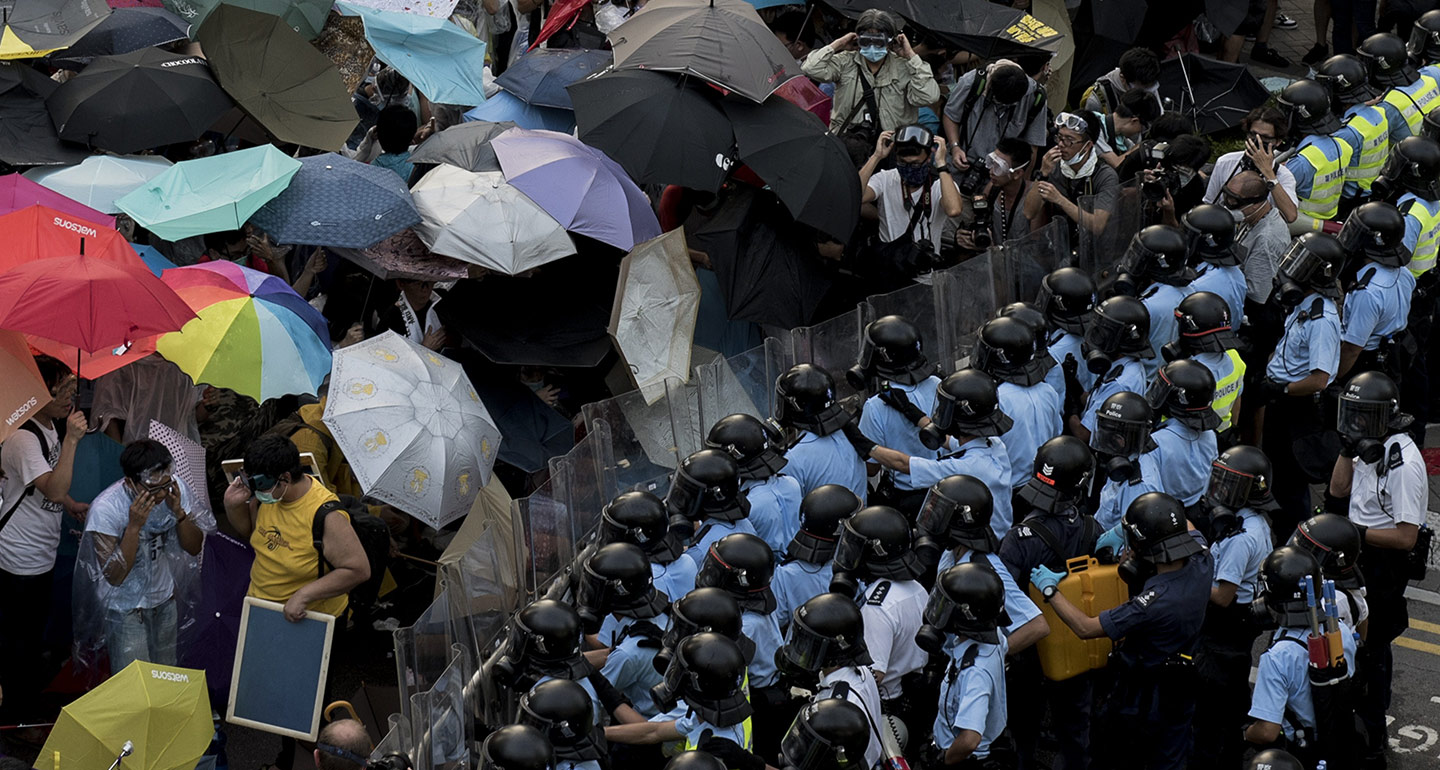
Holding elections and referendums has become more frequent in both democracies and dictatorships. But another form of political expression is becoming much more frequent than elections: street protests.
Source: El País
What do North Korea and Cuba have in common? The obvious answer is that both are dictatorships. Less obvious is that both recently held elections. On March 12, the North Koreans reported that 99.99% of their citizens had gone to the polls and that 100% of the votes were for the 687 candidates put forward by the regime. There were no others. Weeks earlier, Cubans voted in a referendum in which they were asked if they approved of a new constitution. Ninety-one percent of them said yes.
This propensity for dictatorships to carry out fraudulent elections is odd. It is based on the assumption that an election, even if it is only theater, can somehow compensate for the illegitimacy of an autocratic government.
Holding elections and referendums has become more frequent in both democracies and dictatorships. There are now more elections than ever before. This year, for example, 33 countries will have presidential elections and 76 nations will hold parliamentary votes.
This propensity for dictatorships to carry out fraudulent elections is odd
But another form of political expression is becoming much more frequent than elections: street protests. In addition to marches and rallies, blocking traffic has also become a common form of political expression.
Only last week there were massive popular protests in several countries. In Moscow, for example, police arrested more than 400 demonstrators who were protesting the arrest of Ivan Golunov, a journalist who investigates corruption in the Kremlin. The police accused him of drug possession and trafficking, charges that other journalists and politicians denounced as spurious. At the same time, in Hong Kong, more than a million people took to the streets to protest an extradition law that would have facilitated Beijing’s repression of one of its most important territories. Thanks to the protests, Golunov has been released, and in Hong Kong the passing of the extradition law was postponed. While this was happening, tens of thousands of Swiss women took to the streets of Zurich and other cities in protest against gender discrimination.
In Sudan there were also protests. The government brutally suppressed them and more than a hundred protesters lost their lives. The Khartoum government also blocked cellphones and internet access throughout the country. Since December, the Sudanese have been demanding an end to autocratic rule, fair elections, and democratic freedoms. Which is exactly what the Venezuelans – led by Juan Guaidó – are asking for on the other side of the world.
To be successful, protests must involve a large part of society and not only through the internet
This is nothing new. Politics and street protests have always gone hand in hand. But in their current 21st-century form, they have several peculiarities.
The first is their frequency. Thomas Carothers and Richard Youngs, two of the world’s leading experts on political protests, have thoroughly investigated this and concluded that they have increased in both frequency and size. As we know, the use of mobile phones and social networks facilitates the organizing of political gatherings and other forms of public protest. It also helps that, in many countries, a new, more numerous, connected, and energized middle class has awoken politically.
The reasons for this wave of protests are many: some of them have broad objectives, such as ending corruption or economic inequality. Others, such as those in Hong Kong, are specific: to prevent the approval of the extradition law. Still others start with specific claims but quickly evolve into more wide-ranging demands. In France, the increase in fuel taxes triggered the protests of the “yellow vests,” but soon enough their list of demands included an increase in the minimum wage, the dissolution of the National Assembly, and the resignation of President Emmanuel Macron. There are also protests focused on removing the president, as in the case of Egypt’s Hosni Mubarak, Guatemala’s Otto Pérez Molina, and Brazil’s Dilma Rousseff.
The big question is whether protests work. This is not so clear. Most protests achieve minor concessions or fail completely. But some have caused substantial political changes. What characterizes those that succeed? Clearly, the combination of new communication technologies with old methods of political organization is indispensable. Social networks, by themselves, are not enough. To be successful, protests must involve a large part of society and not only through the internet. In some cases, international pressure and the involvement of the armed forces have been decisive. But, as always, the most important thing is leadership. Success requires leaders who take charge. The illusion of a political movement based on collective decisions and without clearly identifiable leaders usually ends up being just that: an illusion.

Distinguished Fellow
Moisés Naím is a distinguished fellow at the Carnegie Endowment for International Peace, a best-selling author, and an internationally syndicated columnist.
Recent Work



Rosa Balfour, Frances Z. Brown, Yasmine Farouk, …
Moisés Naím
Carnegie does not take institutional positions on public policy issues; the views represented herein are those of the author(s) and do not necessarily reflect the views of Carnegie, its staff, or its trustees.

Minsk clearly expected the dialogue with Washington to yield more results, in particular the lifting of EU sanctions and permission to export potash.

Artyom Shraibman

A summer of escalation in the Black Sea has hurt Ukraine economically and is exacerbating world food security. A truce is needed—as is a broader reframing of Europe’s Ukraine strategy.

Thomas de Waal

As the U.S. stumbles in its war with Iran, we are likely to see an acceleration of its disengagement from the region.

Michael Young
Why governance of rapidly evolving technology will be distributed and complex.


Stewart Patrick, Scott Singer

It should address the shortcomings of previous crisis communication efforts and adapt to the demands of frontier AI.

Lucy Luo