

Q&A
Dara Massicot, Aaron David Miller, Andrew S. Weiss
{
  "authors": [
    "Aaron David Miller"
  ],
  "type": "legacyinthemedia",
  "centerAffiliationAll": "",
  "centers": [
    "Carnegie Endowment for International Peace"
  ],
  "collections": [],
  "englishNewsletterAll": "",
  "nonEnglishNewsletterAll": "",
  "primaryCenter": "Carnegie Endowment for International Peace",
  "programAffiliation": "",
  "programs": [],
  "projects": [],
  "regions": [
    "North America",
    "United States",
    "Middle East",
    "Israel"
  ],
  "topics": [
    "Political Reform",
    "Democracy",
    "Foreign Policy"
  ]
}
Source: Getty
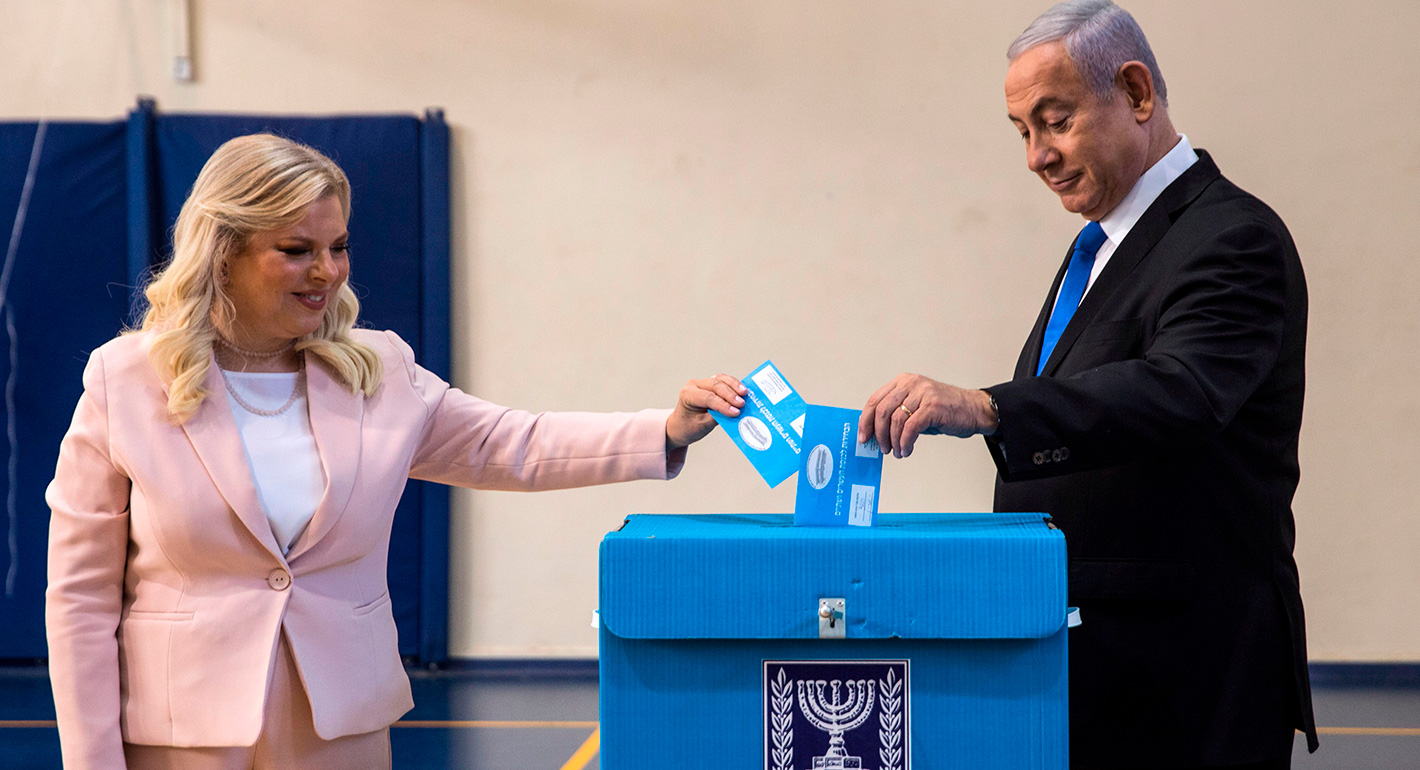
This election marks a major defeat for Netanyahu, who has pulled so many rabbits out of so many hats as the longest governing Prime Minister in Israel's history.
Source: CNN
With the vast majority of the votes counted, Israel's political future is uncertain with neither current Israeli Prime Minister Benjamin Netanyahu nor his opponent Benny Gantz currently holding enough seats to form a governing coalition. Far from being what some Israeli pundits thought would be a useless Seinfeld-like show about nothing, the so-called September 17 do-over elections may well be remembered as one of the most confusing and turbulent in Israel's history. But it may also prove to be an election that could usher in changes that could over time reshape Israel's political landscape.
The answers to several key questions may well go a long way in determining whether Israel moves forward or back into political stalemate.
Probably. But no one should ever count the wily and willful Israeli Prime Minister out of the game. We'd be foolish to do so given the fact that he's fighting not just for his political life but for his freedom as well.
He's still Prime Minister with command of resources of the state and head of one of the two largest parties; and even though he could face charges of bribery and breach of trust (he has one final hearing to defend himself early next month, after which the Attorney General must decide whether or not to indict, a decision that could take several months), an Israeli prime minister does not have to leave office until convicted. Netanyahu has repeatedly denied any wrongdoing.
This election marks a major defeat for Netanyahu, who has pulled so many rabbits out of so many hats as the longest governing Prime Minister in Israel's history. Yet he failed not only to gain a Knesset majority but failed to secure a win for his Likud party which now reportedly trails Gantz's Blue and White party 33-31, though official figures are still pending.
And it's possible -- despite Netanyahu's desire to lead a unity government -- the president of Israel will turn to Gantz first to form a government even though he will almost certainly be unable to do so. Right now, Netanyahu and Gantz have both publicly called for a national unity government, even though Gantz has said he would not form a coalition with Netanyahu.
Netanyahu is desperately trying to demonstrate his indispensability. But he's rightly worried that the Likud's elite might jettison him if they believe his presence could drag down the party or prevent it from governing.
Yes, but that needs to be qualified. Gantz, a former Israel Defense Forces Chief of Staff, strikes me as a kind of Israeli Clint Eastwood -- the strong and silent type. He almost outpolled Netanyahu in April and succeeded in doing so this time around. But we shouldn't conclude that Gantz and the center-right is now triumphant or that the hard right has been repudiated.
Indeed, rightist parties did extremely well, according to preliminary results. And Gantz himself is no lefty and in many ways represents the old Likud party -- tough-minded on security and peace but strongly supportive of the rule of law, anti-corruption and focusing on unity and civility in Israeli politics.
Practically speaking, Gantz has no realistic path to forming a government. Allying with the Arab Joint List (which is projected to claim 13 seats) -- either by bringing them into the Government or relying on their support from outside -- is highly unlikely. Still, if Israel does move to a National Unity Government, with a rotation arrangement with the head of Likud, Gantz would have first dibs given his party out-polled Netanyahu's.
It's worth pointing out that the right has dominated politics in Israel in the last four decades. When they lost, it was often to center or center-left parties that had put forward former army chiefs of staff as candidates, like Yitzhak Rabin in 1992 or Ehud Barak in 1999. Gantz has a good chance of being the third to become prime minister.
Too early to tell. Once the official vote tally is in, the President of Israel will meet with the parties, most likely on Sunday, to obtain recommendations on who should form the next Government. Right now, neither Netanyahu nor Gantz appear to be able to cross the 61-seat threshold. And the odds would seem to favor a National Unity Government comprised of Likud, Blue and White and Avigdor Lieberman's Yisrael Beiteinu party, though the former two together have enough seats so they could govern without the third. But it will likely take weeks of maneuvering, negotiating, and all sorts of political tick-tock to determine which outcome becomes a reality.
Israel has had six National Unity governments in its history -- the longest lasted a full four years, the shortest about a year and a half. But even that option isn't guaranteed, despite the majority of the Israeli public favoring a system without the ultra-orthodox parties, according to the Jerusalem Post. But a third election -- most likely early next year -- cannot be ruled out. The President of Israel seems determined to work to avoid such an outcome. And it's easy to see why
If that comes to pass, Israel would have been without a government for nearly a year. Israel has no written constitution. But if Israelis are forced to go to the polls a third time they will confront their own brand of constitutional crisis and face the very serious perils of a highly functional state with a sadly dysfunctional political system.
Yes. Israel is a deeply divided country and national unity governments traditionally are constrained by their differences -- especially on foreign policy -- and are risk-averse as a consequence unless confronted with a hot crisis that requires immediate action.
Netanyahu has been, in many respects, an effective Prime Minister -- broadening Israel's diplomatic reach and avoiding reckless wars. But his tenure has also been deeply polarizing and disruptive to the national discourse, threatening democratic norms and rule of law, comity with Israel's Arab citizens, and lowering standards of good governance and civility.
A government of national unity would certainly not be transformative in foreign policy or domestic affairs. But it would definitely put the brakes on and limit the dangerous impact of Netanyahu's narrow right-wing approach in at least two areas. There would be no annexation of the Jordan Valley or West Bank settlements, and no campaign to subvert the rule of law by passing immunity laws or neutering Israel's Supreme Court and undermining its justice system. Israel was headed into a deep hole on both counts. And a National Unity Government, especially one without Netanyahu at all offers a possible way out. Indeed, as the old saying goes, when you're in a hole, the first order of business is to stop digging.

Senior Fellow, American Statecraft Program
Aaron David Miller is a senior fellow at the Carnegie Endowment for International Peace, focusing on U.S. foreign policy.
Recent Work


Dara Massicot, Aaron David Miller, Andrew S. Weiss


Sophia Besch, Eric Ciaramella, Steve Feldstein, …
Carnegie does not take institutional positions on public policy issues; the views represented herein are those of the author(s) and do not necessarily reflect the views of Carnegie, its staff, or its trustees.

The conflict has sent economic and political shock waves through a country with no representation at the negotiating table—and Kenya is not alone.
Georgia Schaefer-Brown, Jane Munga

In the discussions made possible by the State Duma election campaign, one question is being asked more and more loudly. “What next?”

Andrey Pertsev
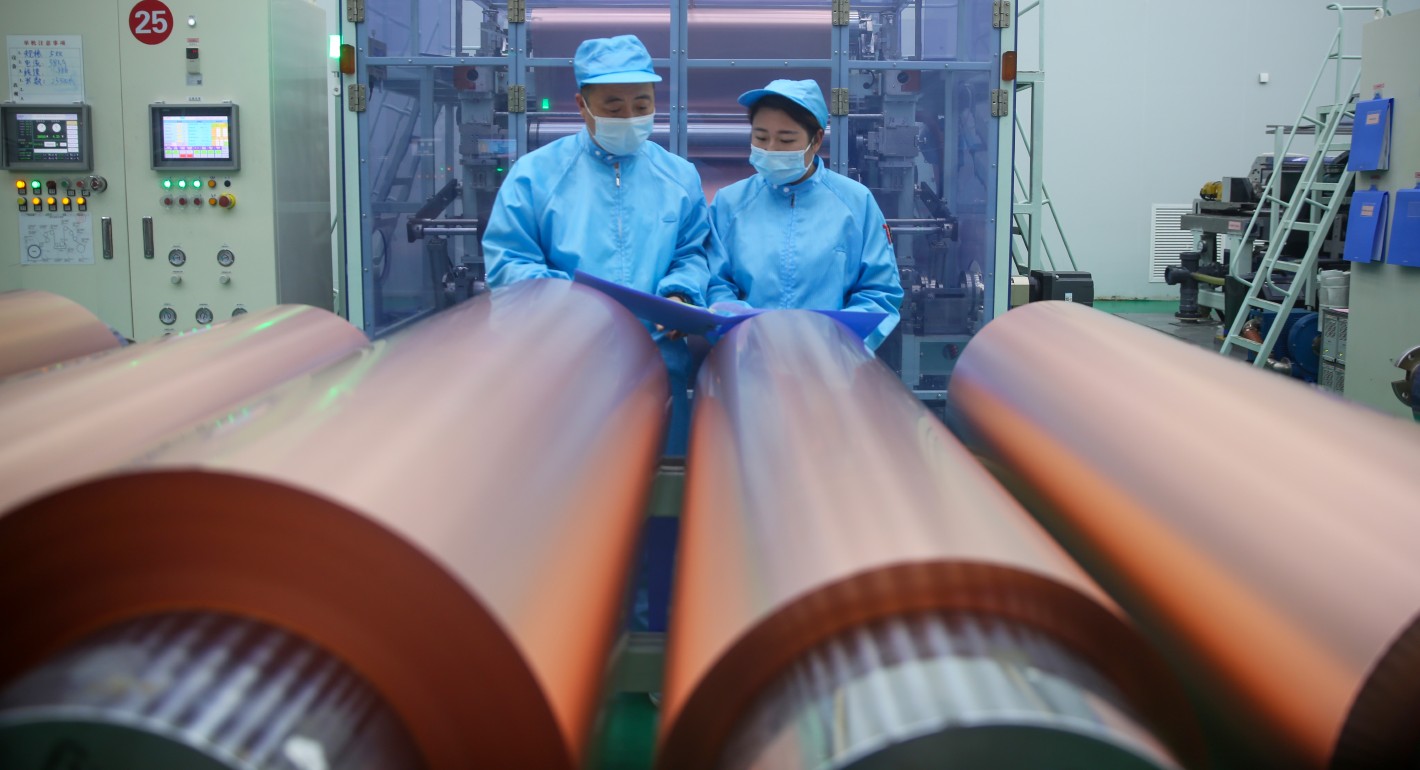
Over the past decade, China has moved from marginal player to major producer of all things batteries. The United States, Europe, and others are aiming to balance the market.

Milo McBride

The DFC should focus on advanced, low-carbon energy sources, prioritizing areas where the United States has comparative advantages.
Noah Gordon, Liana Schmitter-Emerson
Lee’s tour shows how Seoul is reorganizing its diplomacy away from Pyongyang and toward industrial networks and the geography of the compute economy.

Darcie Draudt-Véjares