

Paper
James M. Acton, Ankit Panda
{
  "authors": [
    "James M. Acton"
  ],
  "type": "legacyinthemedia",
  "centerAffiliationAll": "dc",
  "centers": [
    "Carnegie Endowment for International Peace"
  ],
  "collections": [
    "U.S. Nuclear Policy",
    "Hypersonic Weapons"
  ],
  "englishNewsletterAll": "ctw",
  "nonEnglishNewsletterAll": "",
  "primaryCenter": "Carnegie Endowment for International Peace",
  "programAffiliation": "NPP",
  "programs": [
    "Nuclear Policy"
  ],
  "projects": [],
  "regions": [
    "North America",
    "United States",
    "East Asia",
    "China"
  ],
  "topics": [
    "Political Reform",
    "Security",
    "Global Governance"
  ]
}
Source: Getty
There are good reasons to question how much additional capability the DF-17 will provide. Chinese propaganda, by contrast, is the only unclassified source for the accuracy of the first-of-its-kind DF-17.
Source: Washington Post
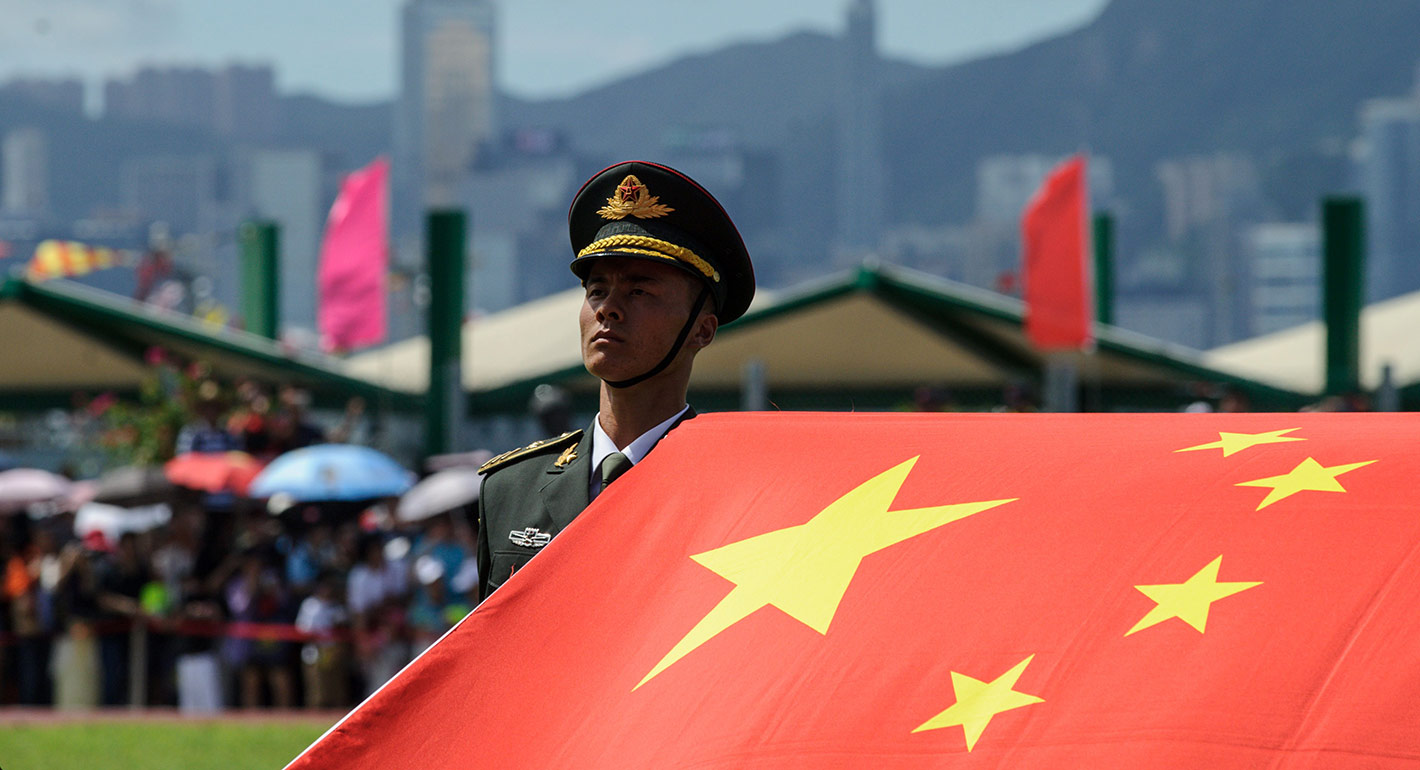
In the show of military might Tuesday to celebrate the 70th anniversary of the People’s Republic of China, one of the highlights among the weapons trundling through Tiananmen Square in Beijing was a hypersonic boost-glide missile. The exhibition of 16 DF-17 missiles (or possibly models of the real thing), displayed in public for the first time, will probably add to disquiet in the United States about a growing military imbalance, but that unease should be tempered by a few practical considerations.
For the past few years, scientists, Pentagon officials and uniformed military leaders have warned about China’s apparent lead in hypersonic technology, which they often describe as a “game changer.” Over the long term, hypersonic missiles could indeed provide China (and Russia, too) with a uniquely threatening capability, but there is time for a considered response: The DF-17 and its immediate successors are unlikely to add much, if anything, to China’s already impressive military forces.
To be sure, the DF-17 is a powerful weapon, even armed with a conventional warhead, as it will be, according to the parade announcer in Beijing. The missile consists of a rocket that launches a glider, presumably at more than five times the speed of sound. (That’s what “hypersonic” means.) The U.S. intelligence community reportedly estimates the missile’s range at 1,100 to 1,550 miles, and Chinese state media has described it as being capable of conducting “precision strikes.” Not on the U.S. mainland, though; Beijing is nearly 6,000 miles from San Francisco.
But the important question isn’t whether the DF-17 poses a danger to U.S. and allied forces in the western Pacific. It does. Better to ask whether the DF-17 significantly enhances the threat from China’s formidable arsenal of existing weapons, in particular its force of between 900 and 1,950 ballistic missiles, most of them conventionally armed, with ranges of less than 1,850 miles.
There are good reasons to question how much additional capability the DF-17 will provide. Chinese ballistic missiles are based on mature technology, and the Pentagon has determined that they are able to strike their targets precisely. Chinese propaganda, by contrast, is the only unclassified source for the accuracy of the first-of-its-kind DF-17.
Moreover, hypersonic gliders are actually at a speed disadvantage compared with ballistic missiles of the same range. Ballistic missiles are also boosted to high speed by large rockets, before arcing through the vacuum of space. A glider, by contrast, spends most of its trajectory in the atmosphere, using aerodynamic lift to extend its range. The increased range comes at the cost of faster deceleration caused by atmospheric friction. One implication of this reduced speed is that hypersonic gliders may be more vulnerable to interception by U.S. “point” missile defenses (especially after such defenses have been optimized for that purpose). Like cornerbacks in football, point missile defenses are intended to protect small but important areas — such as U.S. military bases in the western Pacific.
The main advantage claimed for hypersonic gliders is their ability to maneuver during flight. If capable of adjusting their heading rapidly enough, these gliders could indeed defeat defenses by dodging interceptors. But executing rapid maneuvers without sacrificing the accuracy necessary for military effectiveness presents a significant technical challenge. There is no evidence that China, or any other state, has yet surmounted it.
That said, hypersonic weapons do present a serious challenge for the United States — but the threat is likely to emerge slowly.
Over time, China will probably develop accurate, conventionally armed gliders capable of reaching ever deeper into the United States itself. This development would create new threats for critical military infrastructure, such as communication systems for transmitting data to and from satellites, that is not currently vulnerable to non-nuclear attack. An appropriate U.S. response — hardening and burying critical systems, enhancing redundancy and deploying defenses — is likely to be expensive and time-consuming. (China could also arm intercontinental-range gliders with nuclear weapons, but since it can already reduce U.S. cities to smoking radioactive ash, this terrifying prospect would not actually represent an increase in the threat to the United States.)
Yet Washington’s response to the exhibition of the DF-17 will almost inevitably focus on closing the “hypersonics gap.” That might make sense if the United States could use gliders to destroy Chinese hypersonic weapons preemptively. But, like the DF-17, intercontinental Chinese gliders would almost certainly be deployed on trucks that are extremely difficult to track and destroy. Thus, hypersonic weapons in U.S. hands would not actually offset whatever advantages China seeks by deploying them.
The Pentagon’s budget request for fiscal 2020 included $2.6 billion for hypersonic-related research, and there is a strong appetite in Washington for deploying hypersonic weapons as soon as possible. But the Defense Department would be wise to move cautiously. Hypersonic weapons may ultimately find their niche in U.S. military strategy, but first the Pentagon must define their role and analyze potential alternatives. For now, defending against current – and particularly future – Chinese hypersonic weapons is a more urgent task.
This article was originally published by the Washington Post.

Jessica T. Mathews Chair, Co-director, Nuclear Policy Program
Acton holds the Jessica T. Mathews Chair and is co-director of the Nuclear Policy Program at the Carnegie Endowment for International Peace.
Recent Work

James M. Acton, Ankit Panda
James M. Acton
Carnegie does not take institutional positions on public policy issues; the views represented herein are those of the author(s) and do not necessarily reflect the views of Carnegie, its staff, or its trustees.

A leak of Russian gas price data helps establish that China is paying Russia far less than Central Asian countries and Gazprom’s former European customers.

Sergey Vakulenko

China’s political future will be shaped between now and next October. As the Communist Party enters its intense “campaign season” to prepare for a major political transition in 2027, reading Beijing's actions and responses may become more difficult as domestic politics weigh on its behavior more than usual.

Damien Ma

The EU can impose sanctions but struggles to enforce them without the United States. With Washington increasingly disinterested in backing European interests, the bloc must now fend for itself.


Nicu Popescu, Tiago Antunes

Rubio’s recent visit brought welcome attention, but more capital requires governance changes that may be a hard sell for regional governments.

Jennifer B. Murtazashvili

America’s foreign-policy objectives have grown more demanding while Americans have demanded greater focus on their own affairs.

Stephen Wertheim