

Paper
Ahmed Nagi
{
  "authors": [
    "Ahmed Nagi"
  ],
  "type": "other",
  "centerAffiliationAll": "",
  "centers": [
    "Carnegie Endowment for International Peace",
    "Malcolm H. Kerr Carnegie Middle East Center"
  ],
  "collections": [],
  "englishNewsletterAll": "",
  "nonEnglishNewsletterAll": "",
  "primaryCenter": "Malcolm H. Kerr Carnegie Middle East Center",
  "programAffiliation": "",
  "programs": [],
  "projects": [
    "X-Border Local Research Network"
  ],
  "regions": [
    "Gulf",
    "Yemen",
    "Middle East"
  ],
  "topics": [
    "Political Reform"
  ]
}
Source: Getty
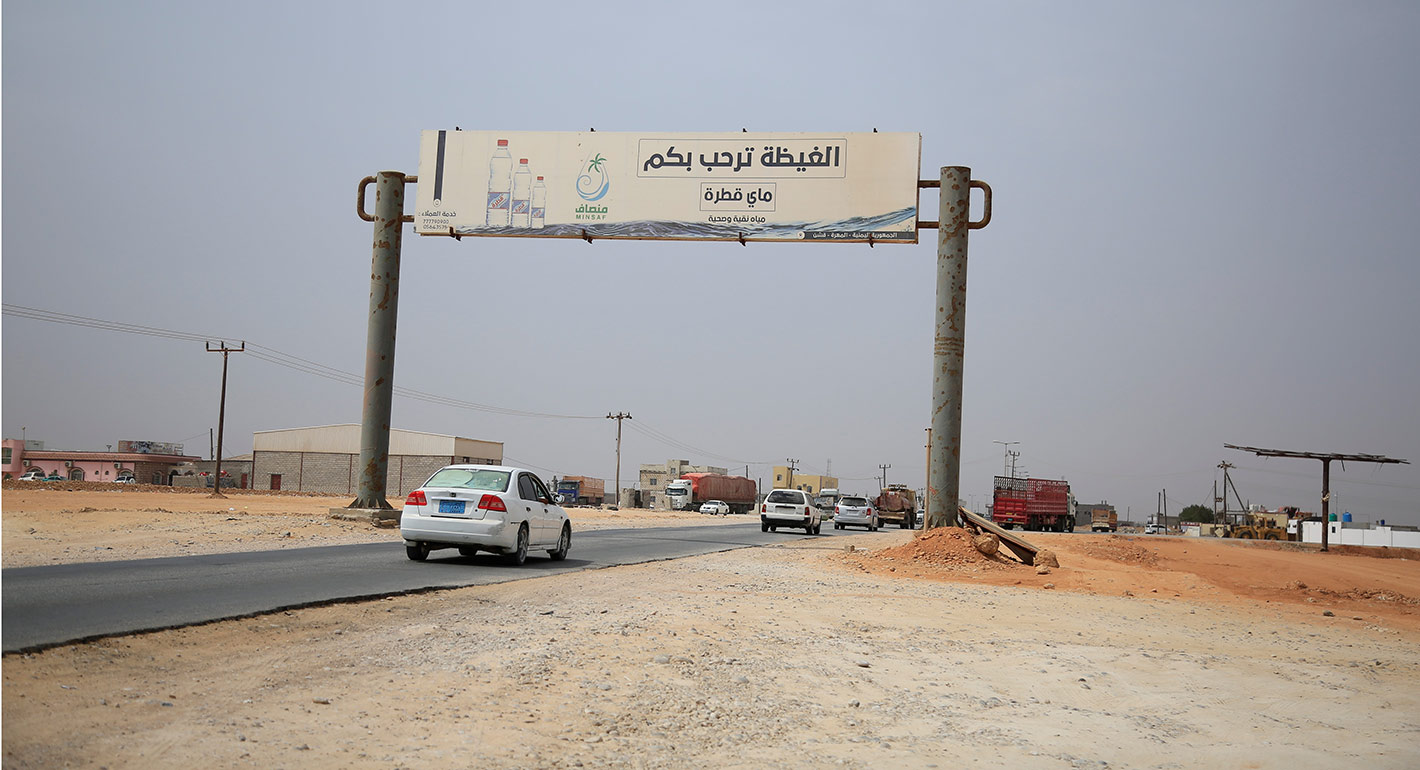
Mahra governorate has become the location of a proxy struggle among nearby countries.
Source: Peripheral Vision
Since November 2017, tensions have risen in Yemen’s border governorate of Mahra. On the one side are the military forces of Saudi Arabia and the local authorities that they support; on the other, Oman-backed border tribes opposed to the Saudi military deployment.The Saudis have deployed to Mahra for several reasons. They regard the territory as a passage for weapons being sent by Iran, through Oman, to Houthi forces in Yemen. They also each have other interests. Saudi Arabia appears to want to build a pipeline from the kingdom to the Arabian Sea, in order to export its oil and circumvent the Strait of Hormuz, which is vulnerable to attack from Iran.
The tensions have led to clashes in some parts of the governorate. However, it is remarkable that despite increasing militarization among the parties, the violence has been relatively contained until now, with only four people killed. Regardless, the situation appears to be escalating.
For the time being, Saudi Arabia is controlling Mahra, using its military forces, certain tribal elites, and the local authorities, including a governor who was appointed at the request of the Saudis. The tribes opposed to the Saudis, in turn, are using their tribal connections to mobilize the Mahri community against the Saudi-led forces by organizing protests and marches, while also benefiting from the support of Oman. In effect, Mahra Governorate has become the location of a proxy struggle among nearby countries.
Given the weakness of Yemen’s central government, the tribes in Mahra, whether pro-Saudi or anti-Saudi, remain an important factor in the standoff. The Mahri community is spread across the borders of Yemen, Oman, and Saudi Arabia (and even beyond), so that Oman and Saudi Arabia have used the communities in their own territory to widen their influence over the governorate in Yemen.
Both neighbours have invested in Mahra as part of this competition for influence, altering its previously marginalized status and implementing dozens of development projects to improve their image in the governorate. Moreover, there is increasing recruitment among local tribes, and many tribesmen now receive salaries and remuneration from the contending states. Also, because of its proximity to the border community in a relatively peaceful part of Yemen, several markets have opened in Mahra, especially near the border zone. This has pushed many Yemenis to move to Mahra in search of a better livelihood.
The future will be shaped significantly by tribal traditions and relations. To some extent all the Mahri tribes adhere to similar tribal customs, which will help to overcome divisions—this has helped them in the past when the communities have found themselves buffeted by regional tensions. It may also be a rare hopeful light in a governorate that has suddenly taken on an uneasy proxy role in Yemen’s ongoing civil war.

Under the X-Border project, Carnegie Middle East Center (CMEC)’s Yemen scholar Ahmed Nagi conducted fieldwork to further examine the social, cultural, economic, and security dynamics along the Yemen-Oman border. He visited several governorates, including Marib, Mahra and the island of Socotra. He published the first of a series of photo essays on his recent trip to Yemen—in this case on the city and governorate of Marib.1
1 Ahmed Nagi, ‘Marib, Yemen: Rising Above the Conflict’, Carnegie Middle East Center: Beirut, July 2019. Essay can be accessed via www.carnegie-mec.org
This article was originally published in Peripheral Vision.

Senior Analyst at the International Crisis Group
Ahmed Nagi is a senior Analyst at the International Crisis Group.
Recent Work
Ahmed Nagi
Carnegie does not take institutional positions on public policy issues; the views represented herein are those of the author(s) and do not necessarily reflect the views of Carnegie, its staff, or its trustees.

If the Russian-speaking community in Latvia cannot articulate their interests without being seen as disloyal, they could end up embracing a pro-Kremlin agenda.

Sergejs Potapkins

Russia’s ruling party would have benefited from Putin appearing as its distant patron, but as an active frontman imposing his views on the public, he has done nothing but harm both the party’s election campaign and the ruling system overall.

Andrey Pertsev

Understanding the climatic pain points is necessary for policymakers hoping to minimize the war’s negative environmental consequences.



Alejandro Martin Rodriguez, Joy Arkeh, Sarah Yerkes

Huawei pushed hard to enter the Egyptian data centers market, until the Americans made a better offer.

Angie Omar

The books, podcasts, and films that explain the world it made.

Andrew Leber