

Paper
Christopher S. Chivvis, Rohan Mukherjee, Milan Vaishnav
{
  "authors": [
    "Milan Vaishnav"
  ],
  "type": "legacyinthemedia",
  "centerAffiliationAll": "dc",
  "centers": [
    "Carnegie Endowment for International Peace"
  ],
  "collections": [],
  "englishNewsletterAll": "ctw",
  "nonEnglishNewsletterAll": "",
  "primaryCenter": "Carnegie Endowment for International Peace",
  "programAffiliation": "SAP",
  "programs": [
    "South Asia"
  ],
  "projects": [],
  "regions": [
    "South Asia",
    "India"
  ],
  "topics": [
    "Political Reform"
  ]
}
Source: Getty
India must think hard before uprooting the framework that makes it the envy of the world
Source: Hindustan Times
Is India a “nation-state” or a “state-nation”? This may seem like semantics, but the answer will determine India’s democratic future. In their 2011 book, Crafting State-Nations: India and other Multinational Democracies, political scientists Juan Linz, Alfred Stepan, and Yogendra Yadav argued that ethnically diverse societies have one of two options when balancing the twin objectives of nation-building and democracy-building.
One route is the construction of a nation-state in which the political boundaries of the State mirror the cultural boundaries of the nation. The historian Eugen Weber famously described how French leaders in the wake of the Revolution transformed “peasants into Frenchmen” by moulding a common cultural, linguistic, and national identity that was uniquely — and exclusively — French.
But for societies that possess strong cultural diversity, at least some of which is territorially based and backed by strong sub-national identities, the nation-state model is ineffective at best and counterproductive at worst. For these complex cases, Linz, Stepan, and Yadav suggest an alternative path — what they term a “state-nation”. Whereas a nation-state insists on alignment between the boundaries of the State and nation, a state-nation allows for a multiplicity of “imagined communities” to coexist beneath a single democratic roof. It recognises that citizens can have multiple, overlapping identities that need not detract from a larger sense of national unity.
Although the Constituent Assembly debates did not frame arguments in precisely these terms, India’s founders grappled with this choice between a unitary Indian nation-state or a flexible state-nation. They shied away from the prevailing European model not out of weakness, but rather a conviction that India’s unprecedented diversity could not be corralled into such a hegemonic framework.
The power and force of this idea of India was that there was, in fact, no single idea of India. Citizens could belong to an Indian “nation” but also express their pride as Tamils, Urdu-speakers, Hindus or Yadavs. The ability to possess multiple, complementary identities was a key element of the state-nation model, but not the only one. Asymmetric federalism, an embrace of individual rights and collective recognition, and a belief in political integration without cultural assimilation were also critical.
Most of India’s social cleavages — caste, region, and language — do not pose an existential threat to democratic balancing, thanks to their cross-cutting nature. The only cleavage that can be reduced to a bipolar majority-minority contest is religion. Indeed, advocates of Hindu nationalism have consistently expressed unease with the state-nation model. VD Savarkar’s maxim of “Hindu, Hindi, Hindustan” mirrored European-style nationalism based on religious identity, common language, and racial unity. Loyalty to the nation — in this case, the Hindu nation — was paramount.
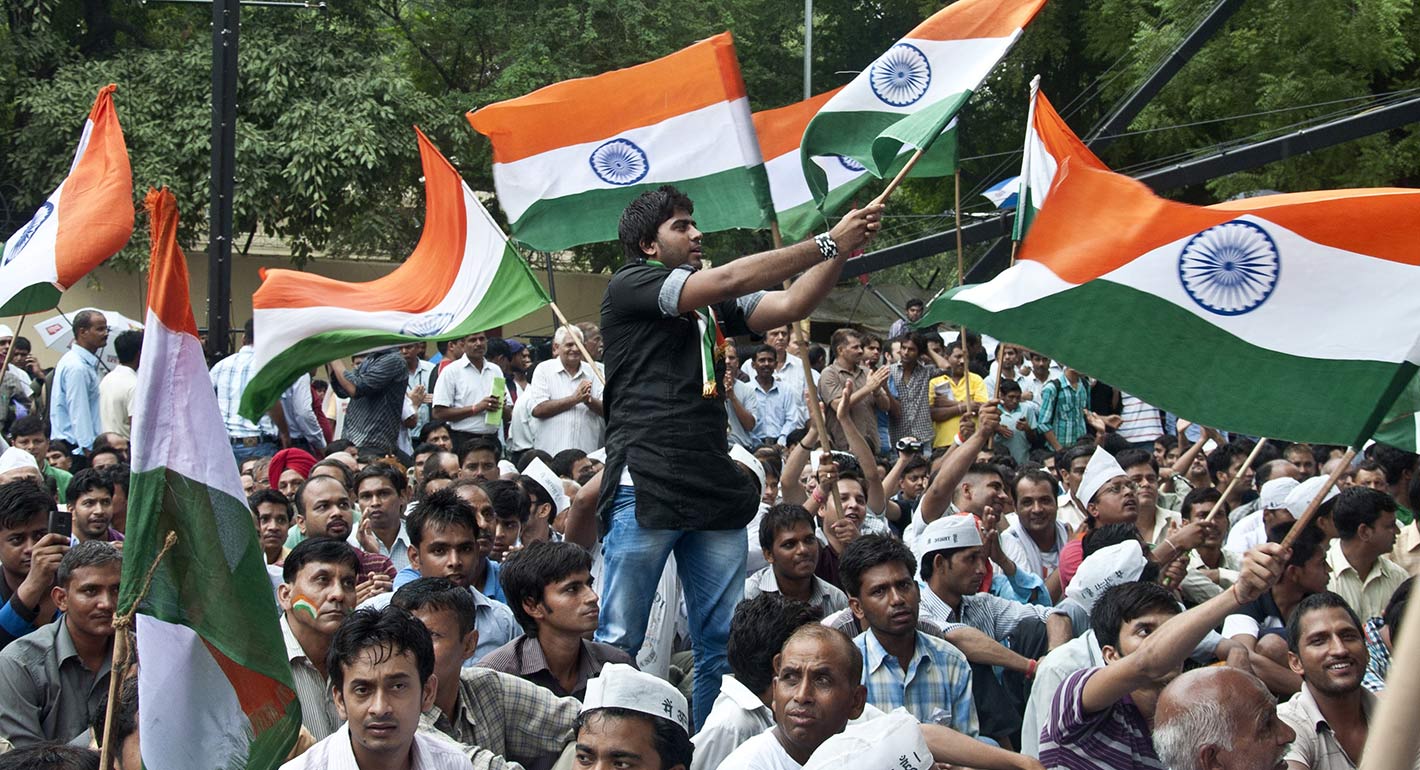
The Bharatiya Janata Party’s (BJP) 2014 electoral triumph laid the groundwork for Hindu nationalism’s resurgence and its present ideological hegemony. In the eyes of Hindu nationalists, India’s Hindu identity is not only important on its own terms, but also because it has the potential to foster the kind of coherent national community needed for stability at home and recognition abroad.
Since being re-elected in 2019, the BJP has moved with an impressive clarity of purpose in implementing this vision. The abrogation of Article 370 undermines the promise of asymmetric federalism. The fact that asymmetric arrangements in India’s Northeast remain untouched creates the perception that such an accommodation was verboten in Jammu and Kashmir because it was India’s only Muslim-majority state.
In November, the Supreme Court delivered a second longstanding BJP objective in its Babri Masjid judgment. Although the verdict was the product of judicial, not executive, action, the ruling was widely seen as a foregone conclusion. This feeling of inevitability had little to do with the legal merits of the case, but rather the political context in which it was adjudicated.
And last week, Parliament passed the Citizenship Amendment Act (CAA), which grants expedited citizenship to non-Muslim religious minorities originating from three of India’s neighbours. It is impossible to view this legislation without recognising its connection to the National Register of Citizens (NRC) in Assam. Frustrated by the fact that a large proportion of the 1.9 million residents left off the NRC rolls are Hindus, the BJP has pledged to move the CAB in order to end their purgatory. In fact, the party has campaigned on implementing an NRC on a nation-wide basis.
These moves suggest a departure from the state-nation model. But India’s political leadership should think long and hard before uprooting the negotiated framework that has made India the envy of the democratic world. Of the handful of longstanding multinational federal democracies, only India lacks an advanced industrial economy.
This does not mean India’s model is flawless. The unusual definition of Indian secularism — whereby the State maintains a principled distance from all religious faiths, as opposed to a clear firewall — may have run its course. The opportunistic violation of this doctrine by secular politicians has hollowed out its core. Similarly, it might be time to revisit the idea of separate personal laws for different religious faiths. While one option is to usher in a uniform civil code, another possibility — as Yadav has recently argued — is retaining separate family laws while removing their illiberal provisions.
In 1947, if forced to wager, political analysts would have bet that Sri Lanka — not India — would emerge as South Asia’s democratic success story. It boasted better human development indicators, higher per capita income, and fewer politically sensitive social cleavages. As India was busy building its state-nation, Linz, Stepan and Yadav note that Sri Lanka was lured down the nation-state path by the siren song of religious hegemony, linguistic uniformity, and cultural assimilation. Sri Lanka’s majoritarian experiment is a protracted tragedy that still haunts the island nation. The push to redefine India as a nation-state could lead the country down a similarly precarious road, one whose enduring consequences Indians only need to look southward to grasp.
This article was originally published by the Hindustan Times.

Director and Senior Fellow, South Asia Program
Milan Vaishnav is a senior fellow and director of the South Asia Program and the host of the Grand Tamasha podcast at the Carnegie Endowment for International Peace. His primary research focus is the political economy of India, and he examines issues such as corruption and governance, state capacity, federalism, and electoral behavior. He also conducts research on the Indian diaspora.
Recent Work

Christopher S. Chivvis, Rohan Mukherjee, Milan Vaishnav



Sophia Besch, Eric Ciaramella, Steve Feldstein, …
Carnegie does not take institutional positions on public policy issues; the views represented herein are those of the author(s) and do not necessarily reflect the views of Carnegie, its staff, or its trustees.

China’s political future will be shaped between now and next October. As the Communist Party enters its intense “campaign season” to prepare for a major political transition in 2027, reading Beijing's actions and responses may become more difficult as domestic politics weigh on its behavior more than usual.

Damien Ma

Despite public disputes over trade and immigration, the strategic partnership’s foundations remain sturdy.

Sameer Lalwani

Putin’s conservative staffing policies and search for ever greater control have cemented parliament’s transformation into a bureaucratic appendage of the executive branch.

Andrey Pertsev

Ex-president Gurbanguly Berdimuhamedov remains interested in politics, but his son Serdar, Turkmenistan’s current president, is becoming increasingly independent and willing to break with his father’s legacy. If their covert rivalry goes too far, both risk losing power.

Galiya Ibragimova

A notable degree of participative democracy has firmly arrived in Europe. But to have more far-reaching impact, democratic deliberation needs to move into a radically new phase.

Richard Youngs