

Commentary
With its public finances in shambles, the far right polling at 35 percent ahead of the 2027 presidential election, and a growing protest movement, is France’s crisis a threat to the EU’s geopolitical awakening?
Rym Momtaz, ed.
{
  "authors": [
    "Christophe Jaffrelot",
    "Utsav Shah"
  ],
  "type": "legacyinthemedia",
  "centerAffiliationAll": "dc",
  "centers": [
    "Carnegie Endowment for International Peace"
  ],
  "collections": [],
  "englishNewsletterAll": "ctw",
  "nonEnglishNewsletterAll": "",
  "primaryCenter": "Carnegie Endowment for International Peace",
  "programAffiliation": "SAP",
  "programs": [
    "South Asia"
  ],
  "projects": [],
  "regions": [
    "South Asia",
    "India"
  ],
  "topics": [
    "Economy",
    "Trade",
    "Foreign Policy",
    "Civil Society"
  ]
}
Source: Getty
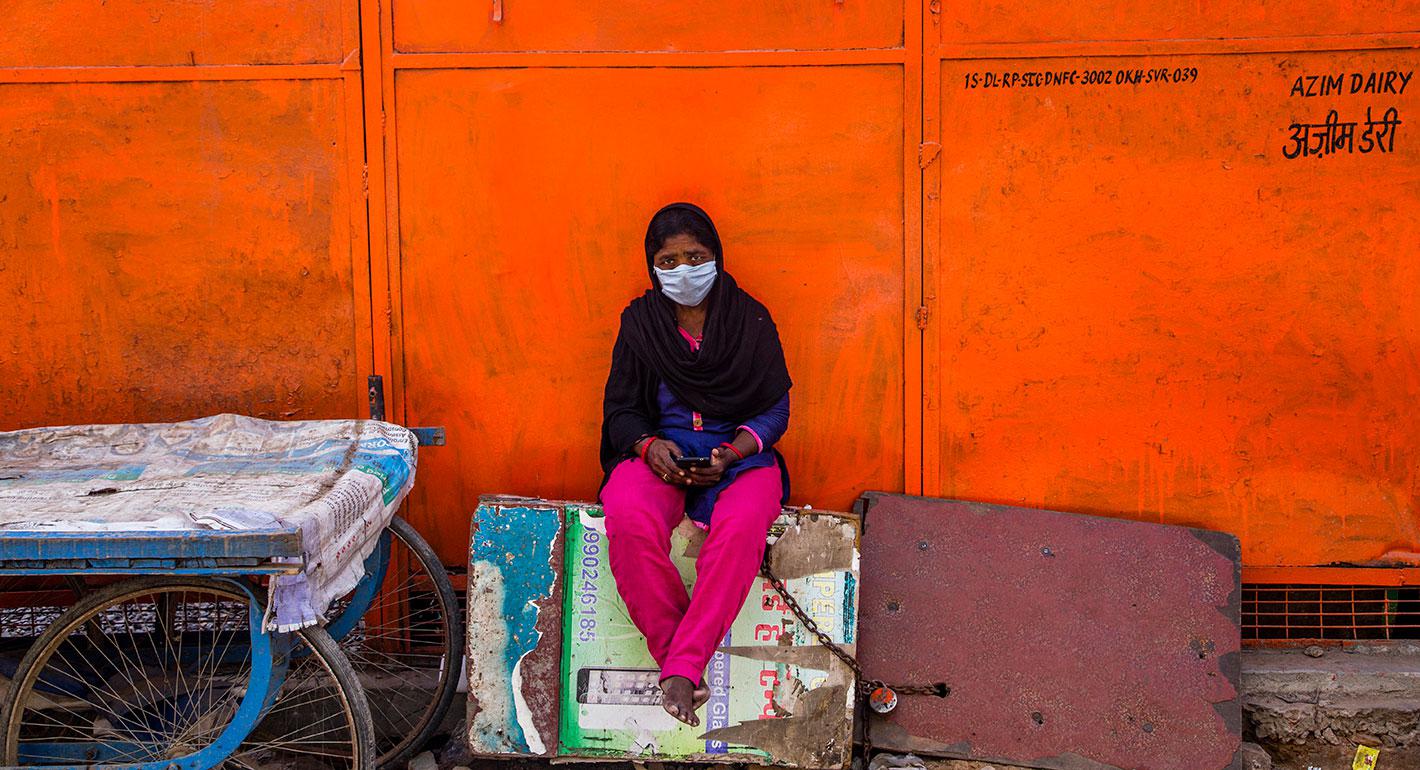
The nation-wide lockdown was a sudden decision announced by the Prime Minister. It has huge implications for society, the poor in particular.
Source: Indian Express
The ongoing lockdown across India has been compared to the demonetisation episode of 2016. And for good reason. The nation-wide lockdown was a sudden decision announced by the Prime Minister. It has huge implications for society, the poor in particular. This style of governance was evident in the implementation of GST also. It reflects a concentration of power at the highest level in the government, recalling the premiership of Indira Gandhi. But in contrast to government-functioning in the 1970s, the current order has seen a shrinking of the state.
Prime Minister Narendra Modi’s 2014 motto — “minimum government, maximum governance” — is materialising in an unexpected manner. Today, it finds expression in three different ways. First, the society has been requested to take care of itself. In his last speech, PM Modi invited the rich to take care of the poor and asked each well-off family to support nine poor families during the lockdown. This approach is well in tune with the traditional RSS view, in which the society prevails over the state apparatus. RSS ideologue Deendayal Upadhyaya had started fighting the Nehruvian state-building paradigm in the 1950s itself, when the first post-Independence public hospitals were being built by the Centre. The social welfare-oriented activities of the Sangh Parivar, including Seva Bharati, follow this perspective and assume that charities can make the welfare state partly redundant.
Second, the Sangh Parivar believes the society also has to take care of itself through self-regulation. A soft version of this idea has been epitomised by the “Janata Curfew”. But self-regulation can also mean self-policing. The practice of naming and shaming initiated by the UP government against anti-CAA activists and the facilitation of vigilantism reflect this vision. Vigilantes are not only looking for cows that some Muslims are suspected to take to slaughter-houses, they also, now, seem to be involved in enforcing the lockdown.
Third, the state has retreated from critical domains such as public education and public health — this is a function of the liberalisation. India spends less than 1.2 per cent of its GDP on public health. The country has 0.7 bed per 1,000 inhabitants — Indonesia, Mexico, Columbia etc fare better. Unsurprisingly, the under-funding of public healthcare has created a demand for private hospitals among the middle class. Private hospitals have mushroomed in the last two decades so much so that they provide 51 per cent of the hospital beds available in India today. Most of them are unaffordable for the poor, of course.
The shrinking of the welfare state also has to do with financial constraints. India’s fiscal deficit has been growing and today adds up to about 9 per cent of the GDP (when the deficits of the Centre, states and the public units are added). This deficit is partly due to the recent slowdown (the growth rate dropped from 7 per cent to 4.5 per cent over the past two years), which has resulted in a fall in tax collections.
Today, the government of India is not in a position to execute a massive relief programme for this very reason. The Rs 1.7 lakh-crore package announced by the finance minister for helping the economically endangered is a mere 0.8 per cent of the GDP, not much more than the MGNREGA programme at its peak under the UPA government. Though the finance minister’s package involves a number of direct cash transfers, the amounts announced are disappointing. The transfer of Rs 500 to women Jan Dhan account holders or a minimal increase in MGNREGA wages from Rs 182 to Rs 202 a day, are unlikely to help, especially since jobs are unavailable at the moment for a majority of MGNREGA workers. In fact, the FM’s economic package suggests that the government either is yet to understand the enormity and scale of the problem or does not have the needed resources.
The SMEs (small and medium-sized enterprises), which employ over 40 per cent of the Indian workforce, are facing the biggest hit due to the lockdown. The relief package does not cover their fixed costs, which make up to 30-40 per cent of the total cost. This has resulted in enterprises cutting costs by dismissing workers, who in any case are redundant during a lockdown. Ninety-four per cent of India’s 500 million-plus non-agricultural labour force is employed in the unorganised sector. They work without contracts and do not have the protective cover of trade unions. Hence, it is easy to lay off these workers, a process that has already started. In fact, most of the unorganised labour were asked to leave the accommodation provided to them, under the pretext that they posed a health hazard.
Clearly, the distress of the most vulnerable sections of the society is not just financial. The lockdown has been implemented in such a way that it has already resulted in their disempowerment. The quantity of additional food that needs to be distributed under the PDS has been underestimated in many states — Kerala is an exception and a model for other states.
Keeping the poor and vulnerable safe is a matter of responsibility for the state and the private sector, not an act of charity. Leaving migrant workers to fend for themselves and forcing them to return to their villages will only enable the spread of coronavirus. In this regard, a clear distinction in the provision of aid for the urban and the rural poor must be made so that resources are better allocated amongst the poor.
The financial situation of India is precarious, of course. The banks are still burdened by NPAs, an issue that governments have let grow over the years. India’s debt-to-GDP ratio is already high. At 69 per cent, it is higher than that of most of the emerging countries (except Brazil) — a clear indication that fiscal discipline was on par with other forms of indiscipline. But these are unprecedented times — as the RBI governor Shaktikanta Das said last week — and therefore, India may have to borrow more money for making the welfare state work.
The time has come for the government to revive vital functions of the welfare state. And, it needs to minimise the concentration of power at the Centre in the name of maximum governance and maximise aid to the poor and vulnerable, instead of minimising government.
Former Nonresident Scholar, South Asia Program
Jaffrelot’s core research focuses on theories of nationalism and democracy, mobilization of the lower castes and Dalits (ex-untouchables) in India, the Hindu nationalist movement, and ethnic conflicts in Pakistan.
Utsav Shah
Carnegie does not take institutional positions on public policy issues; the views represented herein are those of the author(s) and do not necessarily reflect the views of Carnegie, its staff, or its trustees.

With its public finances in shambles, the far right polling at 35 percent ahead of the 2027 presidential election, and a growing protest movement, is France’s crisis a threat to the EU’s geopolitical awakening?

Rym Momtaz, ed.

Ahead of a tough winter for Ukraine, Donald Trump’s swing back toward Russia bodes ill. But instead of panicking, Kyiv’s European allies are focusing on action.
Rym Momtaz

Without a ceasefire with Ukraine on attacking each other’s energy infrastructure—to which the Kremlin is unlikely to agree—the diesel agreement between Putin and Trump is largely for show, rather than representing a genuine increase in the volumes of Russian diesel on the global market.

Sergey Vakulenko
Despite its flop at the box office, the film raises important questions for the climate community to answer.
Leonardo Martinez-Diaz

Funding Ukraine remains a priority for European leaders. As Russia’s war of aggression heads into another winter, two feasible options to mobilize support for Kyiv should be fast-tracked.


Vladyslav Rashkovan, Gregory P. Wilson