

Q&A
- +1
Sheena Chestnut Greitens, Oriana Skylar Mastro, Yukon Huang, …
{
  "authors": [
    "Tong Zhao"
  ],
  "type": "legacyinthemedia",
  "centerAffiliationAll": "",
  "centers": [
    "Carnegie Endowment for International Peace",
    "Carnegie China"
  ],
  "collections": [
    "Future of Arms Control"
  ],
  "englishNewsletterAll": "",
  "nonEnglishNewsletterAll": "",
  "primaryCenter": "Carnegie China",
  "programAffiliation": "",
  "programs": [],
  "projects": [],
  "regions": [],
  "topics": [
    "Arms Control",
    "Security"
  ]
}
Source: Getty
The Nuclear Weapons States (NWS) are under-utilizing the P5 Process, endangering global efforts to promote disarmament through transparency and confidence-building measures. If reinvigorated, however, the Process has the potential to make greater contributions to arms control.
The once-every-five-years review conference of the 191-member Nuclear Non-Proliferation Treaty (NPT) will start in April in New York. One of the most divisive issues at the conference will be the lack of sufficient progress by Nuclear Weapons States (NWS) toward fulfilling their legal obligation on nuclear disarmament. Against the background of an increasingly intensive nuclear arms competition among the major powers, the collapsing of existing arms control treaties, and the simmering crises around North Korea and Iran, the five NWS, who are also the permanent members of the U.N. Security Council, must exercise leadership to safeguard a stable nuclear order.
The NWS has created the P5 Process in 2009 to discuss steps to implement their NPT obligations, and especially to promote disarmament through transparency and confidence-building measures. This mechanism is being under-used, but has potential to make greater contribution to arms control.
NWS have generally argued that it is the responsibility of all countries to improve the international security environment so as to create necessary conditions for nuclear disarmament. But Non-Nuclear Weapons States (NNWS) also have a point in noting that the existence of nuclear weapons has continued to poison the international security environment. The 2017 deployment of a THAAD missile defense system in South Korea caused serious Chinese concern about this system’s potential capability to undermine China’s nuclear deterrent against the United States, and subsequently led to the most serious crisis in Beijing-Seoul bilateral relationship in decades. This example demonstrates how international struggles over nuclear issues can spill over into non-nuclear security domains and derail relations not only between NWS but also between NWS and NNWS. Therefore, in addition to an effort by all to improve the international security environment, NWS need to work simultaneously on reducing the salience of nuclear weapons in national security.
As a first step to do so and to address the potential humanitarian consequences of nuclear weapon use, NWS should discuss how they can align their nuclear policies with the law of armed conflict at P5 meetings. They should seek to apply the basic principles of discrimination, proportionality, and military necessity, in order to prevent excessive targeting policies from legitimizing oversized arsenals and escalatory employment strategies. NNWS, especially those under the nuclear umbrella of NWS, also have homework to do. They need to reexamine and readjust their defense strategies to ensure their national security is not dependent on the first use of nuclear weapons by their nuclear allies in conventional conflicts. By creating the conditions for the universal adoption of no first use policy, NNWS can help create a world with less nuclear risk.
NWS deserve some credit for trying to reach out to the rest of the international community, including to host a P5 side event at the upcoming NPT review conference. NNWS should use these opportunities to drive home the point that, although short of complete disarmament, to continue scaling down existing nuclear arsenals is important. Countries like South Korea and Japan, despite their reliance on the U.S. extended nuclear deterrence, would benefit from global nuclear reductions and thus can play a special role in calling for the maintenance of deterrence and security with smaller arsenals.
Due to the largely dysfunctional bilateral strategic security talks between NWS and the lack of multilateral arms control dialogues, the P5 Process has a unique responsibility to address the growing risk of nuclear arms race. The recently concluded P5 meeting in London committed the NWS to advancing the goal of ending the global production of fissile materials which are indispensable for building nuclear bombs. If the five NWS can take the lead by declaring a joint moratorium on fissile material production, that would impose a cap on their future potential to build up nuclear forces and thus serve as a concrete first step toward containing an arms race.
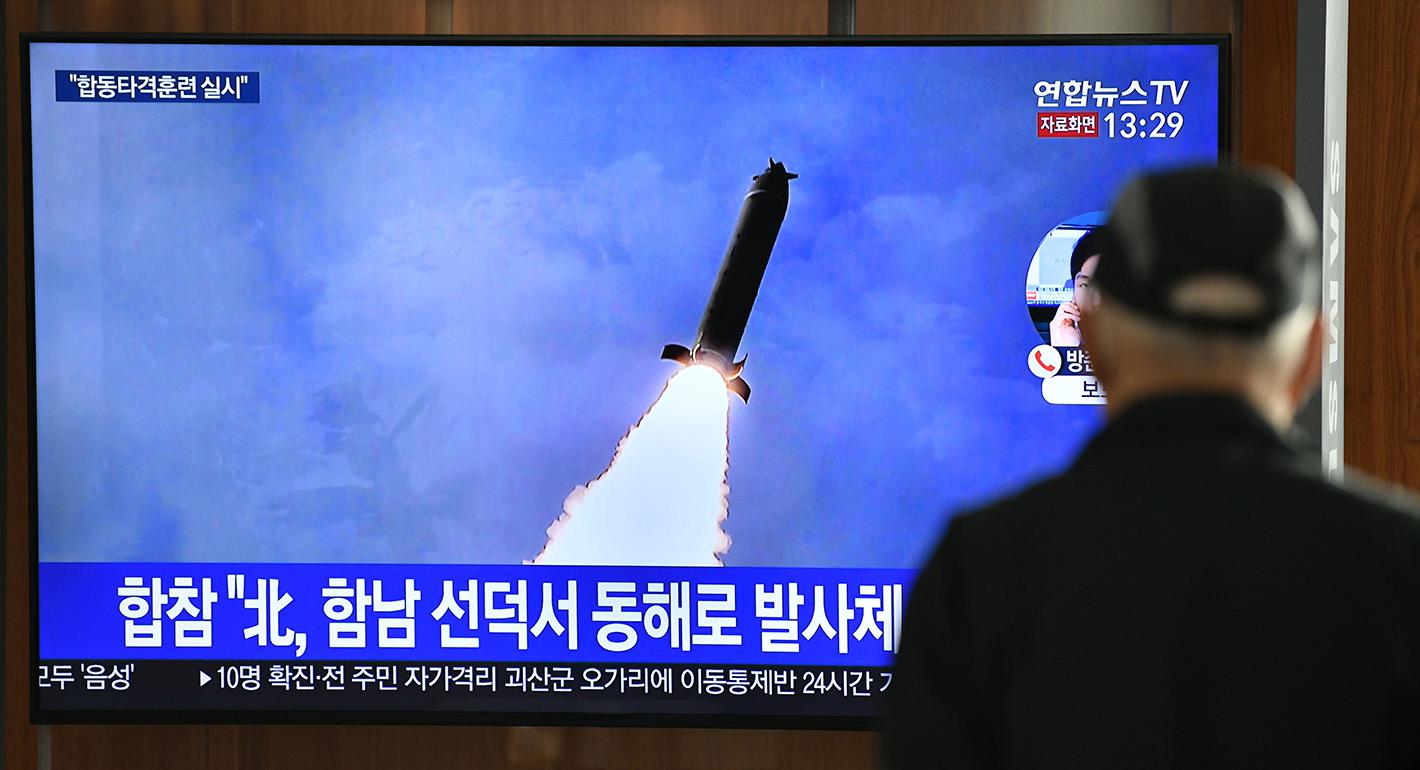
Northeast Asia is an area of particular concern regarding nuclear stability. North Korea is leveraging the growing great power competition to advance its nuclear agenda. The five permanent members of the Security Council have a special responsibility to prevent their divergent geopolitical interests from obstructing an international united front against North Korea’s nuclear ambition. The P5 meetings can serve as a less formal and less political platform than the Security Council for the leading powers to coordinate policy. They should start substantive discussions on maintaining pressure on Pyongyang, building consensus on key elements of a denuclearization roadmap, and establishing conditions and mechanisms to reciprocate North Korean cooperation. As U.S.-North Korea bilateral talks stall, it is time for the major nuclear powers to collectively assert their leadership.

Senior Fellow with the Nuclear Policy Program and Carnegie China
Tong Zhao is a senior fellow with the Nuclear Policy Program and Carnegie China, Carnegie’s East Asia-based research center on contemporary China. Formerly based in Beijing, he now conducts research in Washington on strategic security issues.
Recent Work



Sheena Chestnut Greitens, Oriana Skylar Mastro, Yukon Huang, …
Carnegie does not take institutional positions on public policy issues; the views represented herein are those of the author(s) and do not necessarily reflect the views of Carnegie, its staff, or its trustees.

The Horn of Africa countries are among those facing a new security calculus.


Andrew Leber, Lesley Anne Warner

The European far right might fail to steer EU policy in the direction Russia wants, but they will create enough chaos inside Europe to benefit the Kremlin.

Dimitar Bechev

The new U.S.–Denmark–Greenland agreement will help Washington exert political, economic, and financial dominance under the guise of security. Yet, it acknowledged Copenhagen’s and Nuuk’s sovereignty on the island.

Marc Pierini

A summer of escalation in the Black Sea has hurt Ukraine economically and is exacerbating world food security. A truce is needed—as is a broader reframing of Europe’s Ukraine strategy.

Thomas de Waal

Are Germany’s economic, industrial, and political struggles becoming a liability for the EU’s ability to rise to the geopolitical moment?

Rym Momtaz, ed.