

Commentary
Before the next wave of EU enlargement takes place, the union needs to grapple with thorny questions of how power is distributed among its members.
Emil Sondaj Hansen, Ditte Brasso Sørensen
{
  "authors": [
    "Marisa von Bülow"
  ],
  "type": "commentary",
  "centerAffiliationAll": "dc",
  "centers": [
    "Carnegie Endowment for International Peace"
  ],
  "collections": [
    "Coronavirus"
  ],
  "englishNewsletterAll": "democracy",
  "nonEnglishNewsletterAll": "",
  "primaryCenter": "Carnegie Endowment for International Peace",
  "programAffiliation": "DCG",
  "programs": [
    "Democracy, Conflict, and Governance"
  ],
  "projects": [
    "Civic Research Network"
  ],
  "regions": [
    "North America",
    "South America"
  ],
  "topics": [
    "Political Reform",
    "Democracy",
    "Civil Society"
  ]
}
Source: Getty
As Brazilian politicians argue over how to respond to the coronavirus pandemic, civil society organizations from the country’s slums have come together to educate and advocate for their communities. But they cannot do it alone.
The new coronavirus is a universal threat, but not a universal equalizer.
In Rio de Janeiro, Brazil, the first victim of the coronavirus was a sixty-three-year-old house cleaner who was infected after her employer came back from Italy and refused to self-isolate. The employer is well, while her maid, who suffered from diabetes and other health issues but could not afford to miss work, died shortly after showing symptoms.
This case is a stark reminder that the virus affects everyone, but not in the same ways. It’s not only the old and sick who are especially vulnerable—the world’s poor are too. For them, current directives on how to avoid contamination are detached from the reality of their experience. They often do not have access to clean water and soap, because of decades of sanitary neglect. A lack of urban planning in overcrowded neighborhoods makes the prospect of social isolation a bad joke, and a home office is something out of a science fiction movie, in a galaxy far, far away. . . .
As the pandemic reaches the poorest corners of the planet, from refugee camps to the overpopulated slums of Brazil and other countries with large numbers of people who live in poverty, it is urgent for policymakers to listen to what those on the ground are proposing and to support their efforts.
One of the trending topics on Twitter in Brazil these days is “tsunami.” This is what most Brazilians are feeling: a major catastrophe is coming to their doorstep, and they cannot stop it. Ill-disguised among sardonic tweets is the fact that most people are extremely anxious or simply terrified, feelings that are, of course, shared by many people around the world. For those who have been historically marginalized, these feelings run even deeper. They need to know that they are not alone.
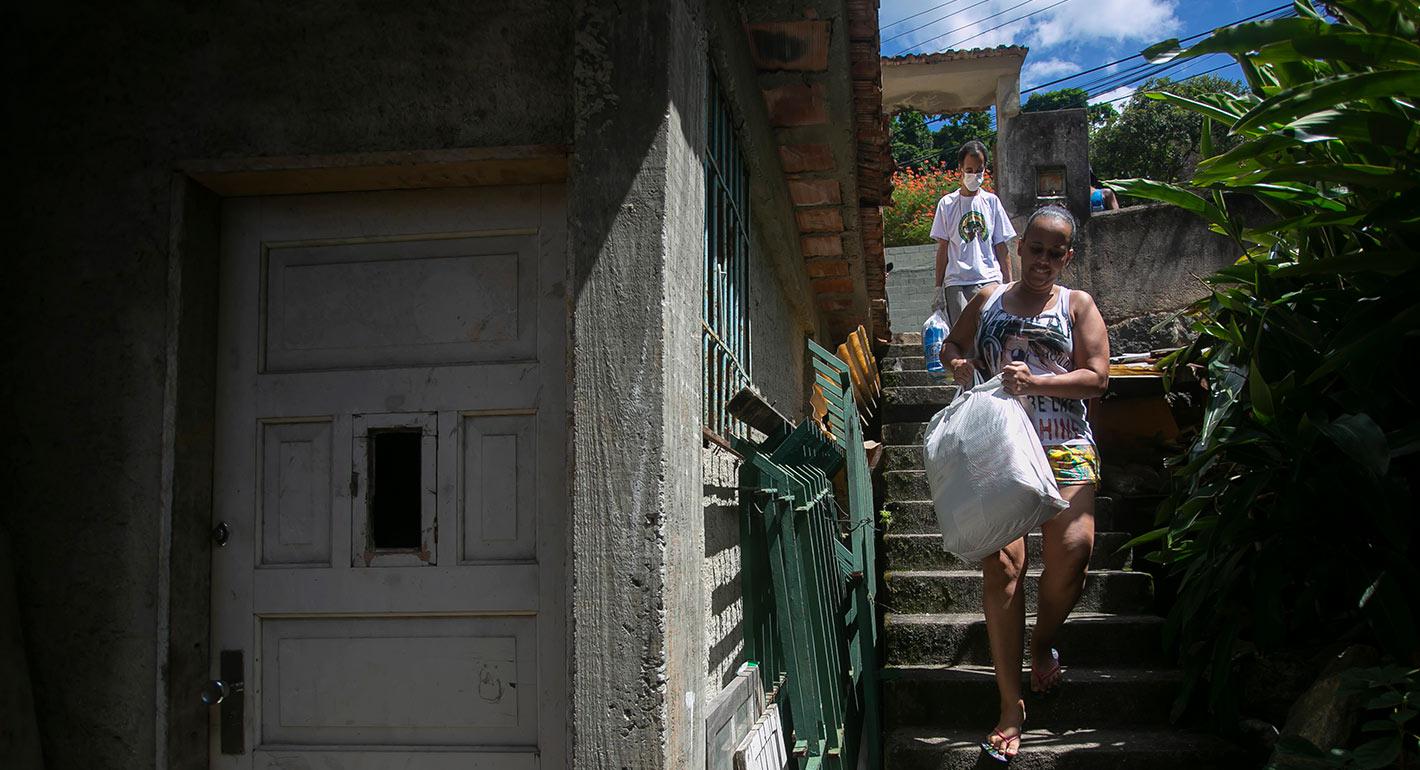
In the historical void left by the state, civil society organizations in Brazilian slums are stepping in to call for action and mobilize their communities. According to the Instituto Data Favela, which regularly conducts surveys of slum residents, over half of them are self-employed and do not have access to benefits such as paid vacation time. Many of those residents are women who work as maids and are finding themselves forced to choose between risking their health and losing their jobs. A group of people who are the children of maids launched an online campaign, appealing to the “politics of the common good, whereby individual actions are key to the collective well-being.” They pleaded with employers to give their mothers paid leave.
This is one of many initiatives that community groups based in slums have launched since mid-March, as the country has slowly and unevenly implemented social isolation measures. According to Wikifavelas, an online platform that organizes and circulates information about slums, dozens of calls for donations have been launched by civil society groups that are actively working against the pandemic in poor communities.
The Coletivo Papo Reto (roughly translated as Collective Straight Talk) provides another example of local action. This group of community-based activists uses social media to counter mainstream narratives, document abuses, and report police violence in the Complexo do Alemão, a group of sixteen slums in northern Rio de Janeiro. Through its social media channels, the group has denounced fake news related to the virus, called for the donation of alcohol disinfectants and medical supplies, and kept the population informed. In the second-largest slum in Sao Paulo, Paraisópolis (“Paradise City,” an ironic name), residents are organizing a network of 420 volunteers, each of whom will become a “street president” responsible for distributing donations and raising awareness among about fifty families.
These groups know that information is key to containing the virus and that it must be communicated in ways that relate to poor people’s lived realities. With this goal in mind, media activist groups created a coalition to fight the pandemic, brought together on social media platforms through the hashtags #Coronanasperiferias (#Coronaintheperipheries) and #COVID19NasFavelas (#COVID19intheslums). In their manifesto, the coalition explains, “We, media activists from the peripheries of various corners of the country, are joining efforts to collaborate with precise information that can really reach our own people. We need to know how to inform our children, our teenagers, our elders, our parents and family members. From us to our own!”
Brazilian slum-based groups teach at least three relevant lessons. First, people living in poverty need a differentiated strategy to face the pandemic, one that takes account of their specific needs and that puts front and center social isolation and social protection measures. Second, information is key, but it must be based on a communications strategy adapted to the realities of its audience. Third, local organizations play a critical role in diffusing information, fighting fake news, and raising awareness within poor communities.
Taking local realities into account in fighting the pandemic does not mean lowering the bar for social isolation. The groups mentioned above do not advocate such a move, despite the punishing social and economic costs of isolation for such communities. Quite the contrary: They are launching communication campaigns that explain to people why, in spite of its huge costs, social isolation is necessary and urgent. They are arguing that “staying home is an act of love and respect.” However, they are also making the case that social isolation will succeed only if it works hand in hand with social protection.
In a country in which the president himself has questioned social isolation policies, organizations led by and for poor people are offering a bottom-up master class on citizenship and responsibility. Yet they cannot do it alone. National and global relief efforts need to support and complement local civil society initiatives. According to the Instituto Data Favela, 75 percent of respondents to a survey conducted in mid-March said that having their kids home (instead of in school) makes it harder for them to earn their living. Moreover, 84 percent reported that their expenses have increased, likely because their kids are eating at home instead of at school.
There are already several relief proposals on the table. At a global level, some are pushing for national debt relief, while others are asking for emergency fund donations. Others still are pushing for the implementation of national minimum-income programs that can protect the poorest. In Brazil, a wide spectrum of civil society organizations called for such a program as a temporary safety net; that program has now been passed but not yet implemented.
As major donors, international organizations, and national officials move forward with larger-scale responses, they should work closely with the poor and heed the lessons they have already learned and applied themselves.

Marisa von Bülow
Marisa von Bülow is the director of the Political Science Institute of the University of Brasília, Brazil. She is the author or co-author of six books on democracy and social movements, transnational networks, and digital activism in Latin America. Her articles have been published in the American Political Science Review, Mobilization, Government & Opposition, and Latin American Politics and Society, among other journals. She is a member of the Carnegie Civic Research Network.
Carnegie does not take institutional positions on public policy issues; the views represented herein are those of the author(s) and do not necessarily reflect the views of Carnegie, its staff, or its trustees.

Before the next wave of EU enlargement takes place, the union needs to grapple with thorny questions of how power is distributed among its members.


Emil Sondaj Hansen, Ditte Brasso Sørensen

The European far right might fail to steer EU policy in the direction Russia wants, but they will create enough chaos inside Europe to benefit the Kremlin.

Dimitar Bechev
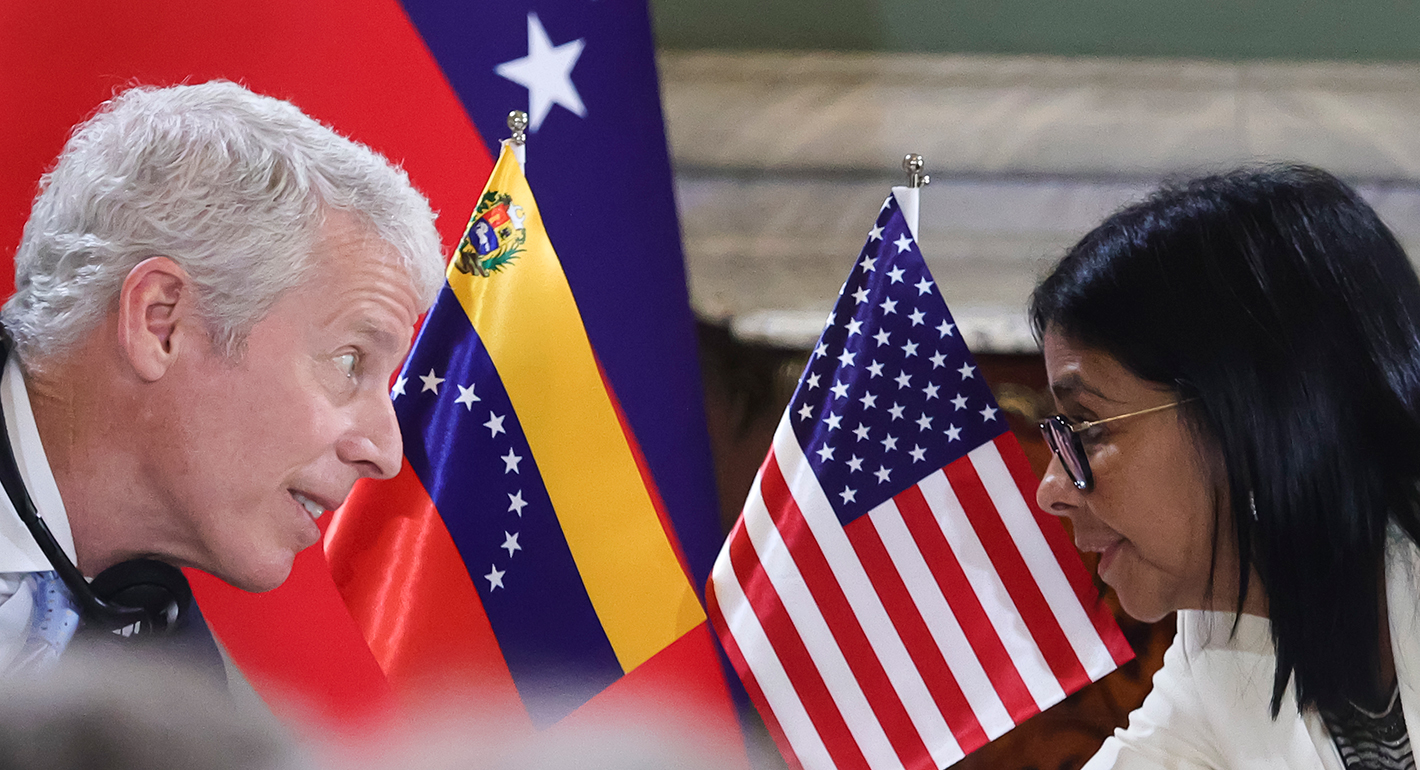
Washington needs to recognize that influence in the Western Hemisphere comes from presence, delivery, and reliability. It also must recognize that while the United States remains the key external actor, it no longer operates in a permissive environment and cannot presume deference from regional players who have other options, namely China.
Juan S. Gonzalez

If the Russian-speaking community in Latvia cannot articulate their interests without being seen as disloyal, they could end up embracing a pro-Kremlin agenda.

Sergejs Potapkins

Russia’s ruling party would have benefited from Putin appearing as its distant patron, but as an active frontman imposing his views on the public, he has done nothing but harm both the party’s election campaign and the ruling system overall.

Andrey Pertsev