

Article
Erik Brattberg, David Whineray
{
  "authors": [
    "David Whineray"
  ],
  "type": "other",
  "centerAffiliationAll": "dc",
  "centers": [
    "Carnegie Endowment for International Peace"
  ],
  "collections": [],
  "englishNewsletterAll": "ctw",
  "nonEnglishNewsletterAll": "",
  "primaryCenter": "Carnegie Endowment for International Peace",
  "programAffiliation": "EP",
  "programs": [
    "Europe"
  ],
  "projects": [],
  "regions": [
    "North America",
    "United States",
    "East Asia",
    "China",
    "Iran"
  ],
  "topics": [
    "Political Reform",
    "Democracy",
    "Foreign Policy"
  ]
}
Source: Getty
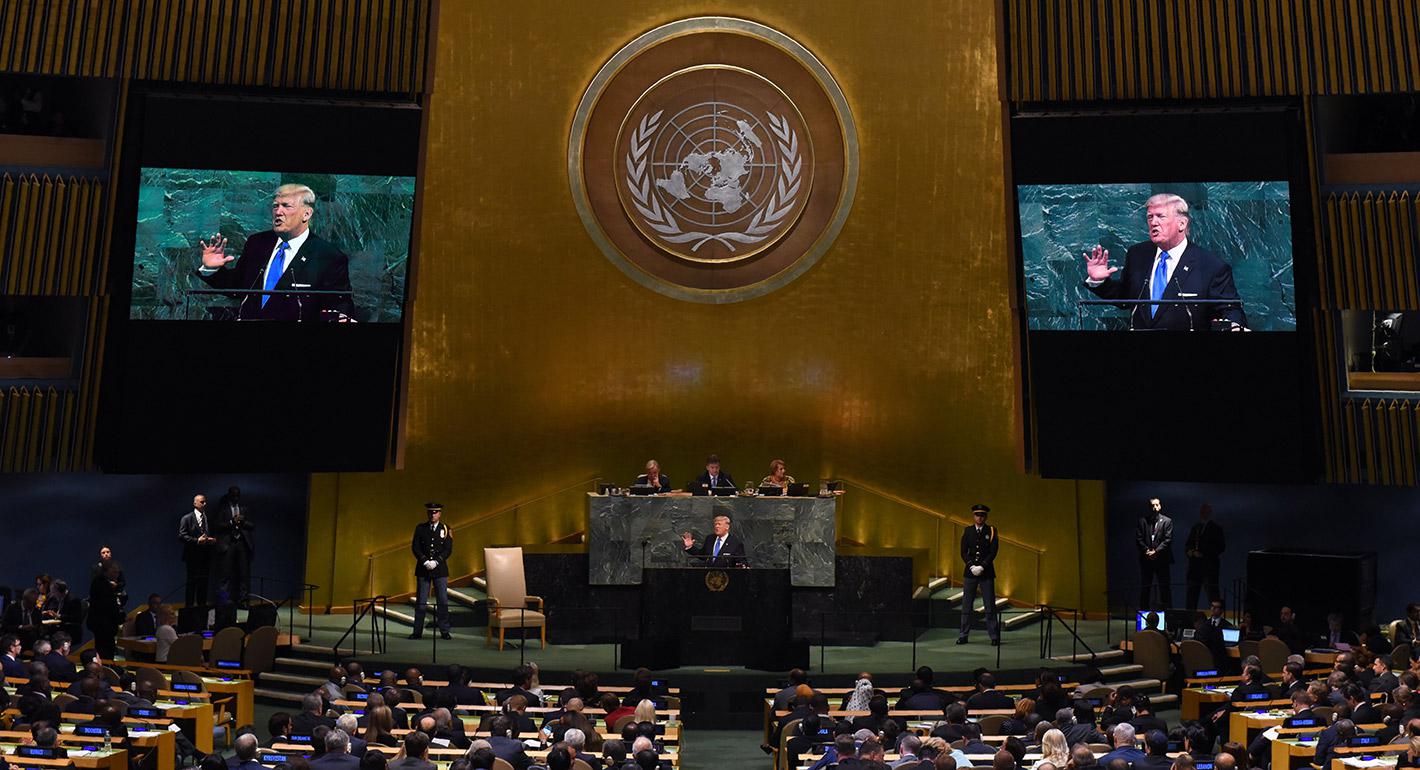
The role and powers of the World Health Organization (WHO), for example, have emerged as a canvas onto which a variety of actors have projected their visions of the future of multilateralism.
Source: United Nations Center for Policy Research
Events surrounding the COVID-19 crisis have brought into focus the extent to which multilateralism generally, and the United Nations specifically, will be a central theatre for engagement between the United States and China in the years ahead. The role and powers of the World Health Organization (WHO), for example, have emerged as a canvas onto which a variety of actors have projected their visions of the future of multilateralism. However, to see how these engagements will play out, it is important to first have an understanding of the deeper, longerterm trendlines regarding US-China engagement at the UN before COVID-19 hit. This study aims to assist in providing that context.
This article was originally published by the Financial Times.
Former Nonresident Fellow, Europe Program
David Whineray was a nonresident fellow in the Europe Program at the Carnegie Endowment for International Peace in Washington, DC.
Recent Work
Erik Brattberg, David Whineray
David Whineray
Carnegie does not take institutional positions on public policy issues; the views represented herein are those of the author(s) and do not necessarily reflect the views of Carnegie, its staff, or its trustees.
Fatima El Mansouri is the country’s first female prime minister. She’s also a privileged insider in a largely ceremonial position.

Sarah Yerkes

The acknowledgment has sparked fears of a new arms race with China and Russia.

Chris O’Meara
Smaller powers cannot go it alone, but Canadian history shows that integration with the United States will not always be benign.
Paul Samson

The European Commissioner for Trade is headed to China. But after President Xi’s bridge-building visit to Washington, can a more isolated EU overcome Beijing’s stranglehold on critical raw materials? Who will blink first?

Rym Momtaz, ed.

The summit may be remembered as a fatal blunder, when Washington, Beijing, and the AI industry collectively chose ceremony over action.

Jeffrey Prescott