

Commentary
Rubio’s recent visit brought welcome attention, but more capital requires governance changes that may be a hard sell for regional governments.
Jennifer B. Murtazashvili
{
  "authors": [
    "Intissar Fakir",
    "Isabelle Werenfels"
  ],
  "type": "commentary",
  "centerAffiliationAll": "dc",
  "centers": [
    "Carnegie Endowment for International Peace"
  ],
  "collections": [],
  "englishNewsletterAll": "menaTransitions",
  "nonEnglishNewsletterAll": "",
  "primaryCenter": "Carnegie Endowment for International Peace",
  "programAffiliation": "MEP",
  "programs": [
    "Middle East"
  ],
  "projects": [],
  "regions": [
    "North Africa",
    "Morocco"
  ],
  "topics": [
    "Political Reform",
    "Democracy",
    "Global Governance",
    "Foreign Policy"
  ]
}
Source: Getty
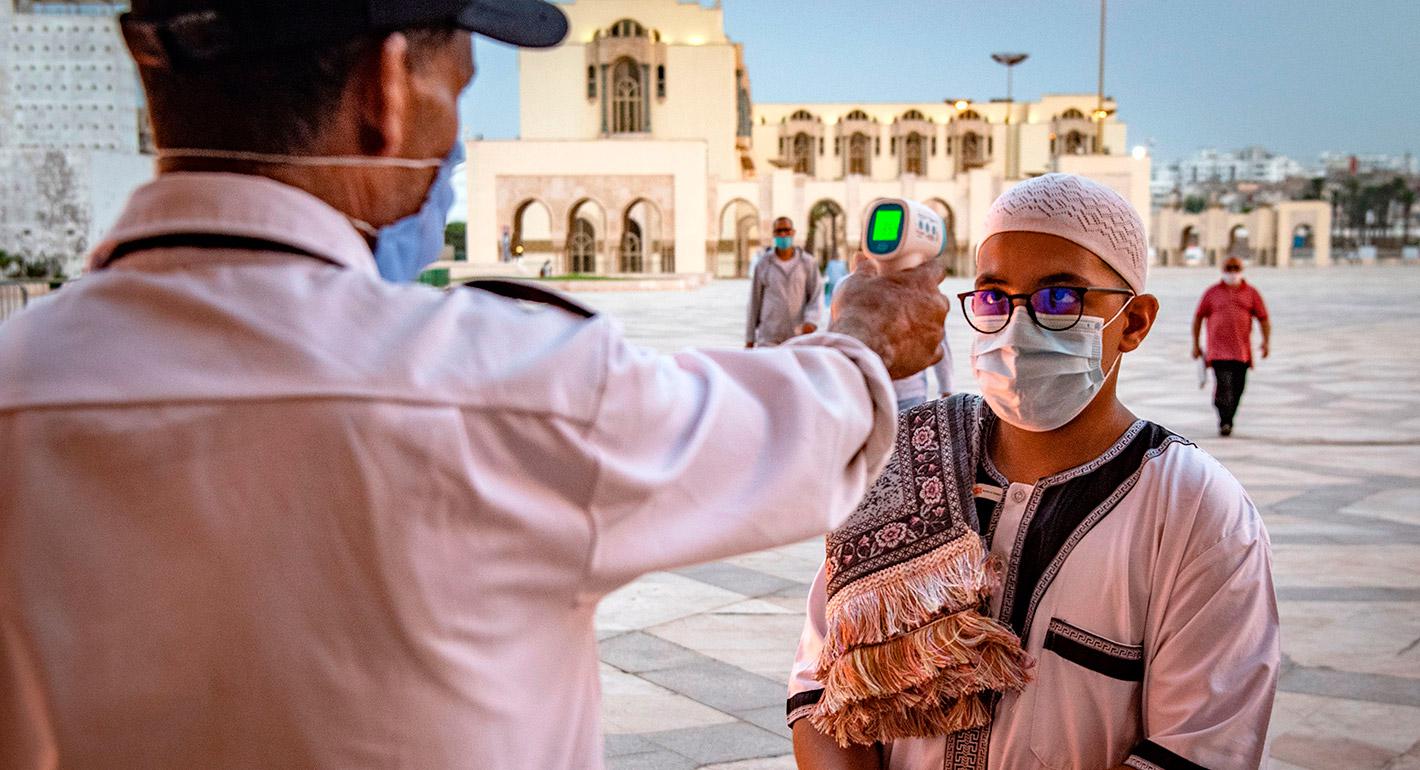
The coronavirus has highlighted deeply ingrained inequality in Morocco, bringing its society to a crunch point. Much will depend on what its leader does next.
The Moroccan monarchy’s strategy for managing the pandemic reflects its ideal model of governance—an efficient state that delivers to its citizens and does not tolerate dissent. Long failing on efficiency, the state has struggled to consistently provide services and economic growth. Now, the effects of the coronavirus pandemic also risk diminishing the monarchy’s capacity to subdue the population and limit political dissent. The post-pandemic period, while fraught with hardship, is a chance for the monarchy and ruling elite to shift course toward a more sustainable and inclusive model. Whether they will seize this opportunity is unclear.
Many authoritarian regimes have experimented with strategies to keep demands for political and governance reform at bay by promising and even delivering socioeconomic development and modernization—a model of benevolent authoritarianism. In Morocco, King Mohammed VI initially set the country’s course on a model of both political opening and socioeconomic development. Yet, promises of political reform gradually faded away, giving way to more repression and closing space for dissent. At the same time, the monarchy pursued ambitious infrastructure modernization (such high-speed trains, modern airports, and large seaports), created an impressive renewable energy strategy and infrastructure, and aggressively invested in Sub-Saharan Africa. These developments have added to Morocco’s image as a modernizing, enterprising, and reliable international partner, standing out in a sea of regional instability.
The country’s overall handling of the coronavirus pandemic supports this narrative as well. However, the next phase of crisis management is likely to expose a central paradox: the monarchy drives the country’s development model but is often the greatest obstacle to its success.
The government’s response, led by the king, united the country by mobilizing state institutions to address both short- and long-term challenges. For example, to facilitate a national lockdown, the government effectively moved education, healthcare, and other services online. The king established an emergency fund that reached a staggering total of $3.2 billion about a month after its launch. To show off his benevolence, the king himself contributed a substantial sum from his own private funds. Investing in digital infrastructure, the country created one health ministry digital application that allows medical personnel to share real-time information about the coronavirus and another that connects the public with the private sector. The state also began distributing cash to those most affected by the economic hardship. The population’s initial reaction was relief and bewilderment that their leadership had managed the situation so effectively.
However, politically, the health crisis has reinforced the regime’s authoritarianism. The increased digitalization that supported the lockdown reflects a tendency toward more state surveillance. The government tried to pass a highly restrictive law on online speech (supposedly to reign in disinformation) that was immediately condemned after an online opposition campaign forced the government’s hand. There have even been allegations of spyware being installed on a journalist’s phone.
In 2019, after a few politically fraught years with protest movements in marginalized regions, the king called for an urgent “new development model.” With an implicit admission that previous efforts had failed, the king assigned a special commission to study and propose substantial and transformative fixes. Initially, the commission’s proposals were to be unveiled by mid 2020, but the pandemic pushed this deadline to January 2021.
Over the years before this recent initiative, Morocco’s various development efforts had not offset authoritarianism with enough economic gain for most citizens. Two distinctly different worlds in the country remain. First, there is the glitzy, glamorous, and ambitious Morocco. This Morocco is brimming with lofty initiatives such as Casablanca Finance City and Tangier Med Port, as well as the endless Morocco Malls sprawled on the edges of cities like Casablanca, Marrakesh, and Rabat. These have brought the trappings of luxury to places that still struggle to provide essential healthcare services, transportation, and adequate housing to most of their population, leaving the second Morocco—the lower middle class and the poorest segments of society—largely excluded.
In terms of hard economic data, Morocco has been unable to generate consistent GDP growth similar to other emerging economies. For instance, GDP growth reached 5.2 percent in 2011, fell to 1.06 percent in 2016, rose up to 4.24 percent in 2017, only to drop back down to 2.99 in 2018 and decline further to 2.30 percent in 2019. With the outbreak of the coronavirus pandemic, IMF projections indicate a GDP growth rate of -3.70 percent in 2020. As Morocco’s GDP growth remains volatile, state output including provision of public services—particularly education, healthcare, housing, transportation, and even access to drinking water and electricity—fails to meet the needs of large parts of the population. Furthermore, Morocco remains below the regional average for development, well behind its neighbors Algeria and Tunisia. Such shortfalls show Morocco’s haphazard approach to development and economic growth and its limited trickle-down effect.
As a result, the other Morocco is made up of many poor and underserved communities that lack access to drinking water and sanitation, let alone education, healthcare, and housing. The contrast between these two worlds is stark—the highly globalized Morocco belongs to the foreign-educated sons and daughters of the elite while the other Morocco is defined by acute poverty. And these parallel universes are growing further apart, exacerbating anger and despair.
Such inequality has been exacerbated by the monarchy’s pursuit of wealth. This particular issue has also stood in the way of bolder economic reforms. When the regime attempted to liberalize the economy throughout the late 1990s and early 2000s, their reforms enabled the growth of a private sector that pays out to the royal family. The monarchy’s holding company, Al Mada, is involved in—and in some cases dominates—certain sectors, such as the agro-food business, telecommunications, banking and insurance, and extractive industries.
Generally, government-owned businesses can serve a public interest, though at the risk of stifling private sector competition. Conversely private businesses contribute to building a dynamic economy, but are vulnerable to economic volatility. Morocco, however, has the worst of both worlds. The palace’s businesses privileged position allow them to function as state-owned businesses preventing effective competition, but behave as private businesses in their profit motivation at the expense of the country's economic wellbeing.
Despite development challenges and inequality, the state has shown that it can perform and innovate in crisis. This moment of challenges carries with it an opportunity for the monarchy and the elite to rethink their approach. They could focus a more inclusive economic reform agenda and design development plans that prioritize ailing sectors. For such reforms to be successful, dissenting voices must be allowed to evaluate the initiatives and criticize them freely—and more importantly, to hold those in charge accountable. This would require the palace to rethink its political and economic supremacy. Otherwise, the impact of the pandemic is likely to increase anger and make Morocco less stable for years to come.
Intissar Fakir is a fellow and editor in chief of Sada at the Carnegie Endowment for International Peace. Isabelle Werenfels is a senior fellow in the Middle East and Africa Division of the German Institute for International and Security Affairs (SWP) in Berlin.
Intissar Fakir
Former Fellow, Middle East Program, Editor in Chief, Sada
Intissar Fakir was a fellow and editor in chief of Sada in Carnegie’s Middle East Program.
Isabelle Werenfels
Isabelle Werenfels is a senior fellow in the Middle East and Africa Division of the German Institute for International and Security Affairs (SWP) in Berlin.
Carnegie does not take institutional positions on public policy issues; the views represented herein are those of the author(s) and do not necessarily reflect the views of Carnegie, its staff, or its trustees.
Rubio’s recent visit brought welcome attention, but more capital requires governance changes that may be a hard sell for regional governments.

Jennifer B. Murtazashvili

America’s foreign-policy objectives have grown more demanding while Americans have demanded greater focus on their own affairs.
Stephen Wertheim

Japan’s long-term security policy is driven by concerns about China, and there is little appetite for (or interest in) pursuing a confrontation with Moscow.

James D.J. Brown

Russia is testing the waters of NATO’s mutual defense clause. What do strikes in Romanian territorial waters mean for the alliance’s posture toward Moscow?

Dimitar Bechev
Why Pakistan, Saudi Arabia, and Turkey are joining forces on regional security.


Alper Coşkun, Amr Hamzawy