

Commentary
Maksim Samorukov
{
  "authors": [
    "Maksim Samorukov"
  ],
  "type": "legacyinthemedia",
  "centerAffiliationAll": "",
  "centers": [
    "Carnegie Endowment for International Peace",
    "Carnegie Russia Eurasia Center"
  ],
  "collections": [],
  "englishNewsletterAll": "",
  "nonEnglishNewsletterAll": "",
  "primaryCenter": "Carnegie Endowment for International Peace",
  "programAffiliation": "",
  "programs": [],
  "projects": [],
  "regions": [
    "Eastern Europe",
    "Belarus"
  ],
  "topics": [
    "Political Reform"
  ]
}
Source: Getty
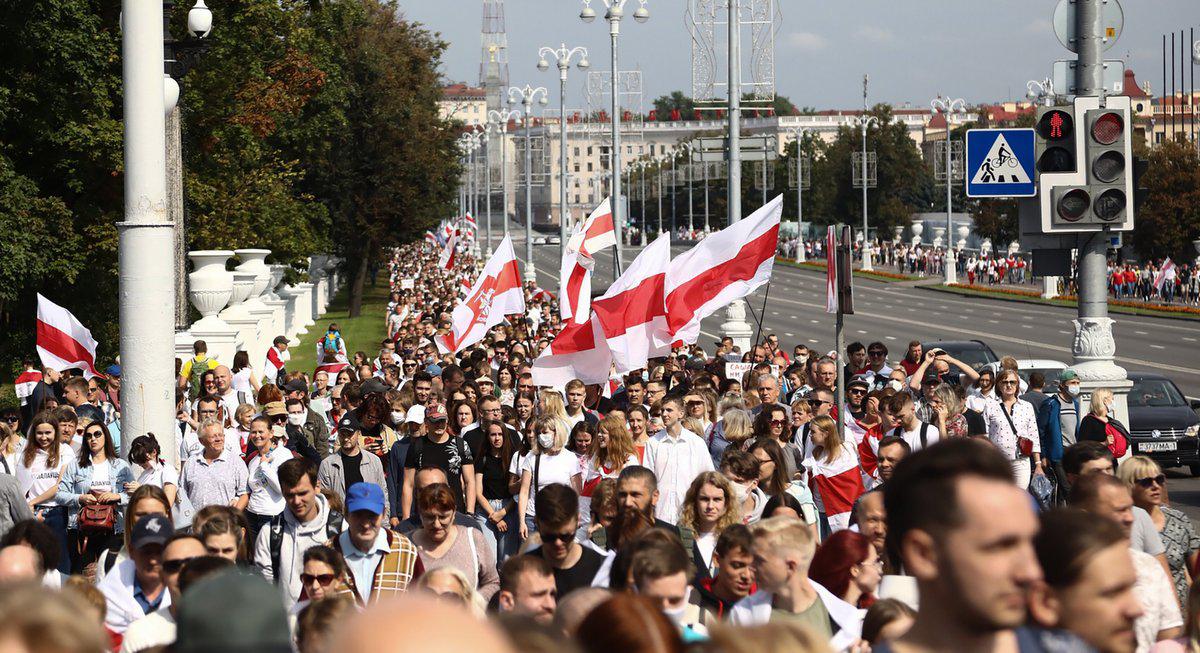
Massive and persistent, protests in the usually quiet country of Belarus have taken the world by surprise and suddenly brought the country to the centre of Europe's attention.
Source: Institut für Sicherheitspolitik
A rigged presidential election and a violent crackdown on the opposition unleashed deep-rooted popular discontent, which had grown mostly undetected over President Alexander Lukashenko’s 26 uninterrupted years in office. Unprecedentedly, 200.000 Belarusians took to the streets in Minsk and other cities to protest police abuses and demand Lukashenko’s immediate resignation.
Unlike in the past, many erstwhile supporters of the regime from the ranks of teachers, doctors, and state factory employees, apparently disenchanted with the country’s long-serving leader, joined the protests. The gravity of the situation has led many observers to question Lukashenko’s ability to survive the turmoil absent a rescue operation by Belarus’s main ally, Russia. However, there is little love left in the Kremlin for the Belarusian leader, and Moscow is in no hurry to reveal its strategy for handling the unfolding crisis.
This working paper was originally published by the Institut für Sicherheitspolitik
Fellow, Carnegie Russia Eurasia Center
Samorukov is a fellow at the Carnegie Russia Eurasia Center.
Recent Work
Maksim Samorukov
Maksim Samorukov
Carnegie does not take institutional positions on public policy issues; the views represented herein are those of the author(s) and do not necessarily reflect the views of Carnegie, its staff, or its trustees.

Sergei Kiriyenko used Russia’s parliamentary vote to further hone his strategy of corporate mobilization that is designed to maximize votes for United Russia.

Andrey Pertsev

Trump has promised Belarus a massive potash deal. But Minsk is seeking something greater: restored Western transit and greater room for maneuver from Russia.

Balázs Jarábik

Before the next wave of EU enlargement takes place, the union needs to grapple with thorny questions of how power is distributed among its members.


Emil Sondaj Hansen, Ditte Brasso Sørensen

The European far right might fail to steer EU policy in the direction Russia wants, but they will create enough chaos inside Europe to benefit the Kremlin.

Dimitar Bechev

Minsk clearly expected the dialogue with Washington to yield more results, in particular the lifting of EU sanctions and permission to export potash.

Artyom Shraibman