• Research
  • Emissary
  • About
  • Experts
Carnegie Global logoCarnegie lettermark logo
DemocracyIran
  • Donate
{
  "authors": [
    "Ashley J. Tellis"
  ],
  "type": "other",
  "centerAffiliationAll": "dc",
  "centers": [
    "Carnegie Endowment for International Peace"
  ],
  "collections": [],
  "englishNewsletterAll": "ctw",
  "nonEnglishNewsletterAll": "",
  "primaryCenter": "Carnegie Endowment for International Peace",
  "programAffiliation": "SAP",
  "programs": [
    "South Asia"
  ],
  "projects": [],
  "regions": [
    "South Asia",
    "India"
  ],
  "topics": [
    "Security",
    "Military"
  ]
}
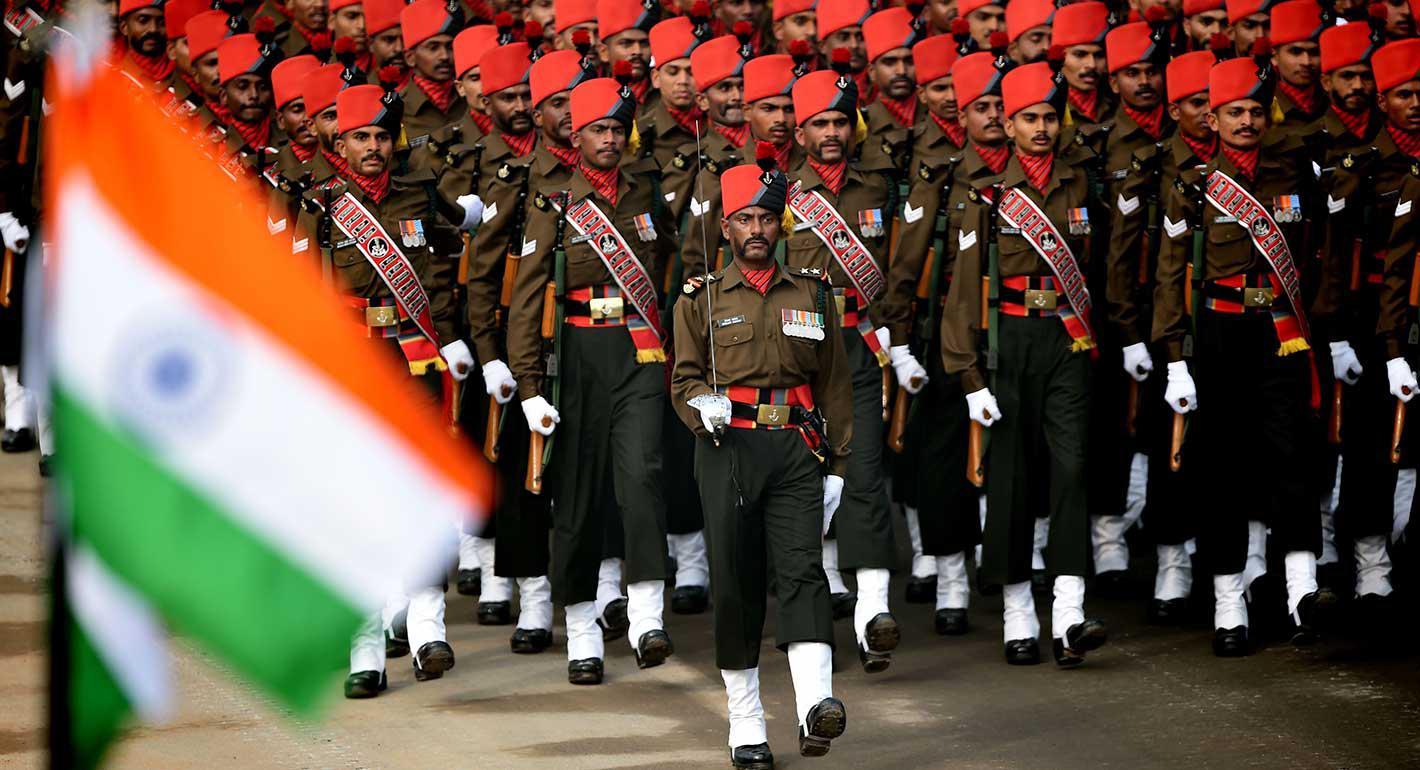
Source: Getty

Other

India: Capable but Constrained

The Indian Armed Forces are large and competent, but they face significant internal security challenges as well as major external dangers from China and Pakistan.

Link Copied
By Ashley J. Tellis
Published on Oct 30, 2020
Program mobile hero image

Program

South Asia

The South Asia Program informs policy debates relating to the region’s security, economy, and political development. From strategic competition in the Indo-Pacific to India’s internal dynamics and U.S. engagement with the region, the program offers in-depth, rigorous research and analysis on South Asia’s most critical challenges.

Learn More

Source: United States Army War College Press

Key Points

  • The Indian Armed Forces are large and competent, but they face significant internal security challenges as well as major external dangers from China and Pakistan.
  • An underperforming economy has constrained military budgets and largely confined the Indian military to ensuring internal security and protecting the country’s frontiers.
  • Indian policy makers have expressed an interest in the country playing a more significant role in the wider Indo-Pacific region, but they still eschew the kind of strategic partnerships that would make enhanced power projection possible.

Read Full Text

This chapter was originally published in A Hard Look at Hard Power: Assessing the Defense Capabilities of Key US Allies and Security Partners—Second Edition, by the United States Army War College Press.

About the Author

Ashley J. Tellis

Former Senior Fellow

Ashley J. Tellis was a senior fellow at the Carnegie Endowment for International Peace.

    Recent Work

  • Paper
    Multipolar Dreams, Bipolar Realities: India’s Great Power Future

      Ashley J. Tellis

  • Commentary
    India Sees Opportunity in Trump’s Global Turbulence. That Could Backfire.

      Ashley J. Tellis

Ashley J. Tellis
Former Senior Fellow
SecurityMilitarySouth AsiaIndia

Carnegie does not take institutional positions on public policy issues; the views represented herein are those of the author(s) and do not necessarily reflect the views of Carnegie, its staff, or its trustees.

More Work from Carnegie Endowment for International Peace

  • Commentary
    Strategic Europe
    The EU Equivocating on Turkey Is Bad Geopolitics

    Following Ursula von der Leyen’s gaffe equating Turkey to Russia and China, relations with Ankara risk deteriorating even further. Without better, more consistent diplomatic messaging, how can the EU pretend to be a geopolitical power?

      Sinan Ülgen

  • Crowd On Mumbai city street At night
    Article
    India’s Demographic Dividend Is a Test of Governance

    India’s demographic transition is underway, but its economic payoff remains far from guaranteed.

      • Apoorva Jadhav

      Apoorva Jadhav

  • Article
    India’s Press Note 3 Gamble: Opening the FDI Door to China

    On March 10, 2026, India’s Union Cabinet approved amendments to Press Note 3, a regulation that mandated government approval on all foreign direct investment (FDI) from countries sharing a land border with India. This amendment raises questions primarily about whether its stated benefits will materialize and if the risks have been adequately weighed. This piece will address the same.

      Konark Bhandari

  • Commentary
    Carnegie Politika
    What Does Nuclear Proliferation in East Asia Mean for Russia?

    Troubled by the growing salience of nuclear debates in East Asia, Moscow has responded in its usual way: with condemnation and threats. But by exacerbating insecurity, Russia is forcing South Korea and Japan to consider radical security options.

      James D.J. Brown

  • Commentary
    The Coming of Age of India’s Nuclear Triad

    The induction of INS Aridhaman, which features several technological enhancements, now gives India the third nuclear ballistic missile submarine to ensure continuous at-sea deterrent.

      Dinakar Peri

Get more news and analysis from
Carnegie Endowment for International Peace
Carnegie global logo, stacked
1779 Massachusetts Avenue NWWashington, DC, 20036-2103Phone: 202 483 7600
  • Research
  • Emissary
  • About
  • Experts
  • Donate
  • Programs
  • Events
  • Blogs
  • Podcasts
  • Contact
  • Annual Reports
  • Careers
  • Privacy
  • For Media
  • Government Resources
Get more news and analysis from
Carnegie Endowment for International Peace
© 2026 Carnegie Endowment for International Peace. All rights reserved.