

Commentary
It would provide a golden opportunity to reconsider what success looks like.
Michael Mazarr
{
  "authors": [
    "Yasmine Farouk",
    "Georges Fahmi"
  ],
  "type": "commentary",
  "centerAffiliationAll": "dc",
  "centers": [
    "Carnegie Endowment for International Peace"
  ],
  "collections": [],
  "englishNewsletterAll": "menaTransitions",
  "nonEnglishNewsletterAll": "",
  "primaryCenter": "Carnegie Endowment for International Peace",
  "programAffiliation": "MEP",
  "programs": [
    "Middle East"
  ],
  "projects": [],
  "regions": [
    "North America",
    "United States",
    "South Asia",
    "Afghanistan"
  ],
  "topics": [
    "Political Reform",
    "Foreign Policy"
  ]
}
Source: Getty
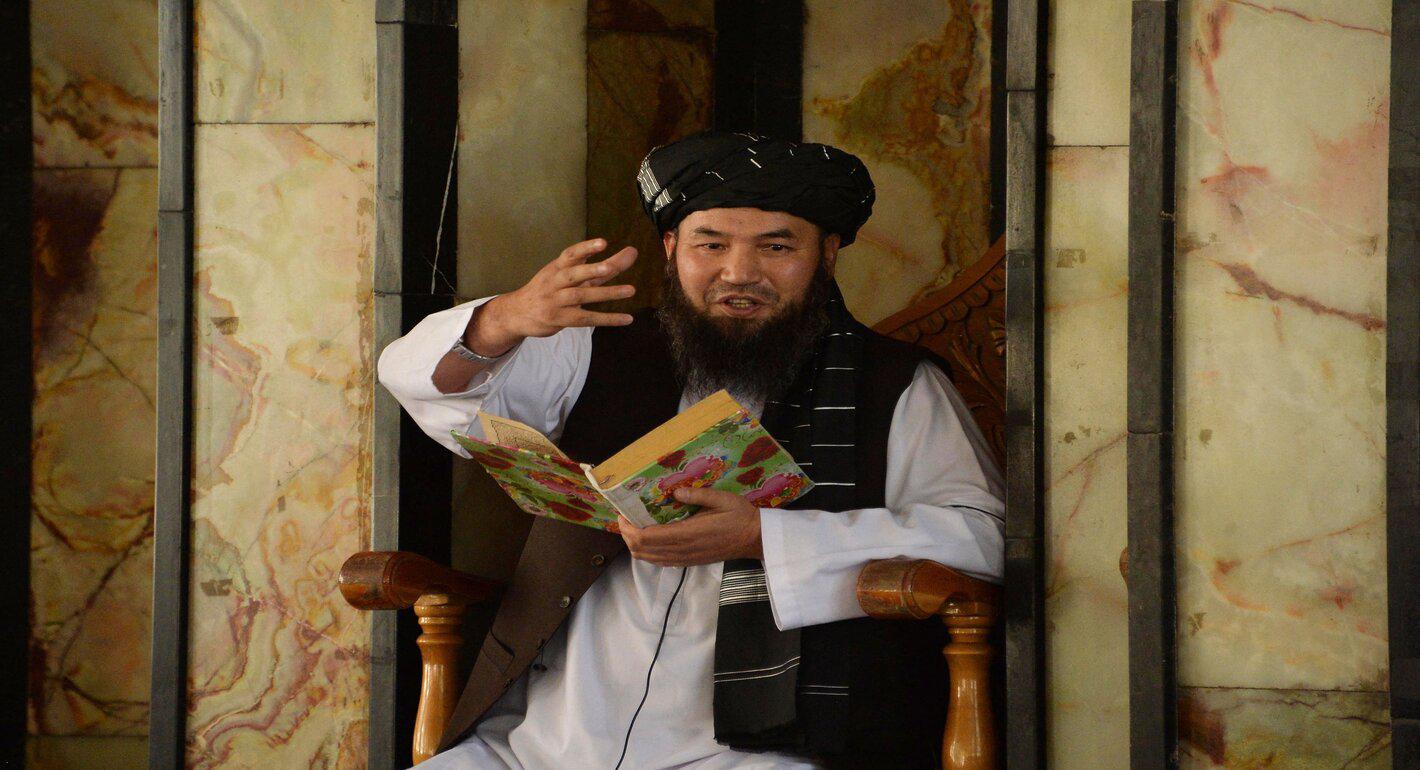
The United States and its Arab partners overemphasize political Islam to the detriment of other anti-authoritarian trends in the Arab world. The Taliban’s return in Afghanistan shouldn’t further entrench this belief.
Though some Islamist youth celebrated the Taliban’s return to power in Afghanistan, Islam’s role in politics—including official Islam and political Islamism in particular—has been gradually receding in the Arab world. But neither regional countries nor the United States have found adaptive new policies, instead overfocusing on a false dilemma—authoritarian governments versus anti-American Islamist dissent—while undermining the potential of democratic, nonviolent, and non-Islamist movements.
The Taliban’s rise in Afghanistan is already resonating throughout the Arab world. But how should the Taliban’s victory inform U.S. policies toward Islamist politics in the Arab region?
Since 2001, religious actors have had a waning influence in politics in the Arab world. Five specific trends show this decline.
The first trend was the growth of political initiatives that were led by secular civil society voices rather than Islamist ones. These initiatives took place as violent and nonviolent Islamists alike were rethinking their tools and strategies after the United States launched the war on terror in 2001. While opposing U.S. interventions, secular civil society organizations in countries like Egypt, Tunisia, Saudi Arabia, and even Syria started developing anti-authoritarian reformist coalitions that integrated nonviolent political Islamists with liberal and leftist actors. And in the early 2000s, those coalitions extracted concessions from some incumbent regimes—such as introducing municipal elections in Saudi Arabia and opening limited space for the Kefaya movement in Egypt. Arab societies were entering a post-Islamist era where personal piety took precedent over political projects.
Several elements, including the ills of Arab civil societies themselves, contributed to the weakening of those third way coalitions—but not to their demise. Many members of those cross-ideological coalitions were at the forefront of the Arab Spring, which was initiated and led by secular opposition groups before being taken over, often violently, by Islamists.
The second trend came with the waning influence of political Islam in the aftermath of the 2011 Arab revolutions. The end of Islamist public influence was violent in some countries, like Egypt and Saudi Arabia. In other cases, dominant Islamist groups—like Ennahda in Tunisia and the Justice and Development Party in Morocco—decided to readjust their Islamist projects to the changing political climate. For still other Islamist parties, movements, militias, and extremists, popular or electoral contestation signaled Islamism’s backslide. By 2019, a second wave of regional mobilization had begun that was neither led nor overtaken by Islamists; in fact, it actually targeted political Islamists.
The third trend has been political authorities’ attempts to push back against already contested official religious establishments. In Egypt, President Abdel Fattah el-Sisi has questioned official interpretations of Islamic laws that regulate Egyptians’ personal and everyday lives. In Saudi Arabia, the state is unprecedently taming the religious establishment and restricting its presence and influence over the public space. Post-2011 Tunisia adopted equality laws that counter predominant Sunni interpretations of inheritance and marriage, and Sudan’s post-2019 transitional government scrapped Islamist laws that governed some personal freedoms.
The fourth trend is the backlash against violent Islamist movements—like the self-proclaimed Islamic State—that hijacked Arab uprisings. Arab regimes and their local allies used the Islamic State’s ruthless and bloody governance style to further terrorize the wider public from any form of alternative government, particularly an Islamist one. Yet in the end, it was the Islamic State’s ruthless targeting of its own Muslim communities, its negative impact on the international image of Islam and Muslims, and its feeding into Islamophobia that prompted independent thought leaders and wider Arab public opinion to repudiate it.
A fifth, more recent, trend is currently contributing to the pushback against political Islam in the Arab world: the diminishing political support from regional states like Qatar and Turkey to Islamist groups in the region, such as the Muslim Brotherhood. This shift is driven by two main factors. First, it comes as a result of the failure of political Islamist groups, such as the Egyptian Muslim Brotherhood, to maintain their political significance. Second, it allows these regional states and other regional anti-Islamist regimes to reconcile, as is the case with the Qatari-Egyptian reconciliation.
The answer to this question is complex, and local contexts play a primary role in each country’s relationship with Islamism. However, one thing is sure: current Middle Eastern and U.S. policies do not support a constructive and peaceful recalibration of Islam in politics in the long run, for two reasons.
First, the policies don’t foster or even tolerate the kind of critical debates that would produce an ideological project capable of filling the void that religion leaves in politics. Second, they don’t disqualify violence as a political tool.
Ideologically, regional states are imposing a state-sponsored politicized and coercive version of Islam, damaging the legitimacy of official religious establishments and offering radical actors an opportunity to assert religious credibility and increase their underground influence. And by blocking all ideological movements from joining any venue for political debate, including the one between international powers and local actors, violence is the only way dissident groups can be heard, including by the United States and other Western governments.
Furthermore, regional states as well as the United States are nurturing the use of violence via an arsenal of laws that legalize excessively violent state repression. The United States’ refusal to accept full accountability for the use of brutal and illegitimate violence in the name of the war on terror and in its military interventions leaves legitimate grievances unanswered. To legitimize the use of counterviolence against both regional governments and the United States, many Islamists turn to distorted ideological interpretations, including religious ones.
In this context, the celebration of the Taliban among Islamist youth in the region is an illustration of the political vacuum that the failures of Islam in politics over the last two decades has left. And, due in part to regional and U.S. policy failures, no new political project—whether Islamist, non-Islamist, or even state-led—has so far been able to replace it.
For starters, U.S. policymakers shouldn’t underestimate non- and even anti-Islamist popular trends as weak and inconsequential and shouldn’t focus on Islamists as the only probable alternative to authoritarian regimes in the greater Middle East. Elsewhere, the United States has attempted to shift its policy, turning the page on a foreign policy that sees the world through the lens of the war on terror and instead “defending against authoritarianism, fighting corruption, and promoting respect for human rights.” U.S. policymakers should also apply this framework to their engagements with the Arab world.
Second, the U.S. fickleness with state and nonstate allies—from allies in Afghanistan and Syria to Gulf countries to France—while negotiating with the Taliban and Iran sends the wrong message to non-Islamist actors in the Middle East: that the United States only listens to force. In parallel to such negotiations, the United States should open and double down on channels of dialogue with non-Islamist pacifist actors in the region and on public diplomacy, instead of allocating the majority of its resources in the region to security cooperation to counter so-called Islamist terrorists.
Most importantly, the United States should deepen its main takeaway from the Taliban takeover of Afghanistan: it shouldn’t only assume that Islamists remain the main alternative to corrupt regimes or the gravest threat in the greater Middle East. Using Afghanistan as a case in point of Islamism’s resurgence would be to selectively look at the evolution of Islam in the region’s politics over the past two decades. It would deny the U.S. role in promoting Islamists by overly focusing on ways to combat or deal with them—while empowering regimes that kill any other alternative to them.

Former Nonresident Scholar, Middle East Program
Yasmine Farouk was a nonresident scholar in the Middle East Program at the Carnegie Endowment for International Peace.

Former Nonresident Scholar, Middle East Center
Fahmi was a nonresident scholar at the Carnegie Middle East Center, where his research focused on religious actors in democratic transition, the interplay between state and religion, and religious minorities and citizenship.
Carnegie does not take institutional positions on public policy issues; the views represented herein are those of the author(s) and do not necessarily reflect the views of Carnegie, its staff, or its trustees.
It would provide a golden opportunity to reconsider what success looks like.

Michael Mazarr
The pressures of war are gradually warping Russia’s system of governance, making it more vulnerable to a future crisis.

Tatiana Stanovaya
The U.S. midterm elections signal the opening of a narrow window for bold Saudi diplomacy on Palestine.

Andrew Leber, Zaha Hassan

China’s political future will be shaped between now and next October. As the Communist Party enters its intense “campaign season” to prepare for a major political transition in 2027, reading Beijing's actions and responses may become more difficult as domestic politics weigh on its behavior more than usual.

Damien Ma

The EU can impose sanctions but struggles to enforce them without the United States. With Washington increasingly disinterested in backing European interests, the bloc must now fend for itself.


Nicu Popescu, Tiago Antunes