

Paper
Stephen Wertheim
{
  "authors": [
    "Stephen Wertheim"
  ],
  "type": "other",
  "centerAffiliationAll": "dc",
  "centers": [
    "Carnegie Endowment for International Peace"
  ],
  "englishNewsletterAll": "americanStatecraft",
  "nonEnglishNewsletterAll": "",
  "primaryCenter": "Carnegie Endowment for International Peace",
  "programAffiliation": "ASP",
  "programs": [
    "American Statecraft"
  ],
  "projects": [],
  "regions": [
    "Ukraine",
    "Europe",
    "Russia",
    "Russia and Eurasia",
    "United States"
  ],
  "topics": [
    "Foreign Policy"
  ]
}
Source: Getty
If anything, U.S. security guarantees risk promising too much to be credible.
This interview was originally published in Danish by RÆSON on December 16, 2025, and appears here in English translation.
Interview by August Østergaard Nilsson
RÆSON: The twenty-eight-point peace plan, proposed last month by the Trump administration, has been denounced by members of the U.S. Congress on both sides of the aisle and by most European countries as a concession to Russia. Is it a concession to Russia?
WERTHEIM: The proposal certainly made many concessions to Russia, including painful ones and some that hopefully could be reversed in a negotiation. Now Ukraine and Europe have proposed revisions, while Russia has also insisted on changes. So the twenty-eight-point plan has to some extent been overtaken by events, although it seems to continue to provide the basic framework from which the parties are working.
But the reaction to the plan troubled me. Many people in the United States and Europe denounced it as an outright “capitulation” to Russia, as if it offered nothing to Ukraine. Some of those criticisms were so extreme that they implied that there should be no significant concessions to Russia and therefore no peace deal that Russia might possibly accept. That would leave Ukraine to fight the war indefinitely, presumably to achieve some sort of total victory.
If so, tell me how this war will end? Is Ukraine really going to improve on its battlefield performance in the coming years, while support from the United States diminishes? If there’s a strong case for continuing the war indefinitely in the pursuit of a specific endgame, I am eager to hear what that is. But counting on Ukraine to do more with less is not persuasive.
Despite the proposal’s flaws, it would have given Ukraine a remarkable strategic outcome—which is precisely why Russia may not accept it. There are three crucial aspects of the plan:
First, the proposal imposed almost no meaningful cap on Ukraine’s military forces, except that it envisioned a maximum of 600,000 personnel in peacetime. That is more than Ukraine needs and should have. If Russia were to accept, Ukraine would have a much stronger military than it did before the full-scale invasion, when the Ukrainian armed forces numbered only 209,000. The last time Russia and Ukraine negotiated in earnest, back in the spring of 2022, Russia demanded far steeper limits on Ukraine’s military, at one point insisting that Kyiv have no more than 85,000 personnel under arms.
Second, as I read the document, the proposal permitted Ukraine to receive unlimited military supplies and training from its Western partners, so long as NATO countries’ troops were not stationed on Ukrainian soil. This provision would mark a huge Russian concession relative to the draconian limits Moscow tried to set on a wide range of Ukrainian military capabilities in 2022.
Third, the proposal would have given Ukraine by far the strongest security guarantee the West has ever offered it, and a much stronger guarantee than the one Russia contemplated in 2022. Under the draft put forward last month, the United States and NATO allies would come to Ukraine’s assistance if Russia launched a “significant, deliberate, and sustained armed attack” across the armistice line. This language comes close to the language of NATO’s Article 5. It actually gets more specific than Article 5 about the measures that NATO countries might employ; these include, according to the text, “armed force, intelligence and logistical assistance, economic and diplomatic actions, and other steps judged appropriate.” And since the twenty-eight-point plan came out, reports indicate that at Ukraine’s request the Trump administration may strengthen the guarantee in some ways, such as by agreeing to seek Congressional approval for it.
True, the guarantee does not ensure that the NATO allies will automatically use military force against a Russian attack. But nothing can guarantee that, practically speaking. And legally speaking, not even Article 5 is automatic: it leaves the means of enforcement up to the discretion of each member state, although there is a political understanding that allies would resort to military force.
Are you saying that, if the peace plan goes through, Ukraine would in fact have stronger security commitments than, say, Denmark has through NATO?
Not quite. The wordings are fairly similar, but NATO’s guarantee is stronger, mainly because of the widespread political understanding that member states will use military force if another member is attacked. In addition, NATO’s Article 5 commitment comes in the form of a treaty, unlike Trump’s proposal from November. The NATO guarantee is unlimited in duration, whereas Trump envisioned a ten-year sunset with the possibility of renewal. And Article 5 covers any armed attack; by contrast, Trump limited his guarantee to an attack that is “significant, deliberate, and sustained,” although that same requirement might well apply in practice within NATO.
But look: the bottom line is that Trump’s guarantee was quite strong on paper. It may be getting stronger still as Ukraine and Europe push for revisions. And what it really means—what it is politically understood to guarantee—will be constructed in real time by all the relevant parties. For example, if NATO countries were to state, as the eventual guarantee is announced, that if Russia invades again on any significant scale they would go to war against Russian forces, that would give the commitment sharp teeth and end up being similar to a NATO guarantee.
Now, I don’t think it’s a good idea to give that level of security guarantee to Ukraine. Deterrence relies on credibility. I don’t think it’s credible enough that NATO countries would do for Ukraine what they have declined to do—wage war—ever since Russia began to invade Ukraine in 2014 and fully invaded in 2022. Speaking for my country, the United States does not have an interest sufficient to warrant fighting Russian forces over Ukraine. I’m not alone: President Biden said even before the full-scale invasion began that the United States would not fight World War III in Ukraine. The consensus in this regard, among Americans, is wide and deep. I wouldn’t count on a piece of paper to change that consensus.
That’s why it’s strange that the nature of the guarantee to Ukraine was roundly criticized in Washington and European capitals for being so weak that it amounted to capitulation, whereas in fact it is so strong that I doubt the pledge is credible.
So to what do you ascribe that criticism from the European capitals and Kyiv?
Fundamentally, I fear, Ukrainian and European leaders have developed inflated expectations about how the war will end and inflated standards about how the war must end. In other words, they haven’t formed a consensus about the realistic terms on which the war should end. So the default position is to keep going and stay (superficially) unified.
More defensibly, they are bargaining with Washington, and thereby Moscow, to obtain better terms for Europe and Ukraine. That is totally fair, although when criticism becomes excessive, it risks conveying the wrong message to the Trump administration, namely that Europeans seek to obstruct a peace deal rather than improve it.
Of course, Ukraine and European countries have plenty to criticize in Trump’s proposal. That proposal called for Ukraine to give up some land in Donetsk that Russia has proved incapable of seizing. It’s one thing make a pragmatic peace and stop attempting to reclaim territory that Russia already occupies; it’s another to give the aggressor even more land than it has stolen.
In addition, Trump’s proposal would have both Ukraine and NATO renounce the possibility that Ukraine would join the alliance. It also states that NATO will not expand further. I think those propositions are very much worth considering for both Ukraine and Europe, but they are tough pills to swallow. NATO would need to find a way to reconcile a non-expansion pledge with the “open door” clause, Article 10, of the North Atlantic Treaty.
A bunch of other provisions of Trump’s proposal were questionable. For instance, half of the profits from a fund to reconstruct Ukraine is supposed to go into Washington’s coffers. This isn’t the first time the Trump administration has taken mercenary positions toward Ukraine. Hopefully they can be rolled back.
Today all of these provisions are in flux as Ukraine and Europe negotiate with the United States and the United States negotiates with Russia. But if Europeans complain that they are on the outside looking in, they bear some of the blame. European governments have ceded the diplomatic field to Washington. They’ve put themselves in the position of having to react.
But if we have both a relatively fair deal with security guarantees and a situation on the battlefield that is favorable to Russia in the long run, then why aren’t Europe and Kyiv happy about this?
I wouldn’t say it’s a fair deal. It is certainly not just. But it is, pragmatically, a deal worth working with—because it gives Ukraine viable prospects for remaining secure—and hopefully the result will be a deal worth taking.
Then the question is whether Russia would sign on to a plan that really secures Ukraine. I am skeptical—despite the charges that Trump’s twenty-eight-point plan was written in Moscow—that in fact Vladimir Putin was prepared to accept that proposal, let alone that he will accept one that’s better for Ukraine. But we won’t know unless we try in earnest. Even if Putin comes in with little intention of stopping his war, he could conceivably change his mind if presented with a package of provisions whose sum total he hadn’t considered before or had assumed was unavailable.
There seem to be two scholarly positions on Putin’s end goals for this war. One side describes his aim as the total subjugation of Ukraine. Another says he seeks to break Ukraine’s alignment with the West. Neither one nor the other of Putin’s purported end goals would be fulfilled with Trump’s twenty-eight-point proposal, so is it at all acceptable for Putin?
We don’t fully know. I agree that the proposal falls short of breaking Ukraine’s alignment with the West. That’s mainly because Putin’s invasion has fundamentally failed, increasing Ukraine’s hostility toward Russia. For the foreseeable future, Ukraine will face west, not east—culturally, economically, politically, militarily. Nothing Russia can do will prevent that outcome, unless Russia conquers all of Ukraine, as it has proved unable to do. Moreover, the proposal would enshrine Ukraine’s eligibility to join the EU and permit Western countries to supply and train Ukraine’s military.
Even so, Putin could conceivably see and sell such a result as a win for Russia. In geostrategic terms, he would have kept Ukraine out of NATO and NATO out of Ukraine. He would have halted the further expansion of NATO (after, of course, his own invasion spurred Finland and Sweden to join). He would have established a path to get sanctions lifted, improve relations with the United States, and open a broader dialogue about European security, even after he had established a “no limits” partnership with China. With respect to Ukraine specifically, he would have taken roughly one-fifth of the country’s territory, gotten de facto recognition of his ill-gotten gains, and forced Ukraine to adopt new rules on the treatment of Russian minorities and language.
Could Putin successfully present this outcome as victory, even though Ukraine would be neither fully neutralized nor truly neutered? I think so. Will Putin accept it? I am skeptical, but we’ve never come closer to finding out.
The recently announced U.S. National Security Strategy stated that the United States is keen to establish better and closer relations with Russia. Do you think that the current push to get a deal done is informed merely by a realist analysis of the power positions on the battlefield, or is it informed more by a geopolitical strategy of aligning with Russia?
Some of both. Trump made clear, in his campaign in 2024 and from the beginning of this administration, that his priority is to stop the violence. And he’s willing to do that on basically any terms. But he does seem to recognize that he has an interest in Ukraine not being overrun completely by Russian forces in the way that the Taliban took over all of Afghanistan when U.S. troops left.
Trump, it seems to me, has three basic considerations that determine his approach to the war in Ukraine. First, end the war as quickly as possible without regard for what’s fair. Second, make sure that Ukraine can survive. Third, keep Donald Trump from seeming to “own” the war politically. That is, he wants to avoid being perceived as responsible for Ukraine’s performance; the war is instead supposed to be Biden’s war and Europe’s war. Trump presents himself almost as an impartial negotiator even as the United States continues to provide crucial aid and intelligence to Ukraine. Those are the three through-lines in Trump’s stance, and even if Ukraine seemed to be faring better on the battlefield, Trump would still have the same calculus.
Now, Ukraine’s fortunes on the battlefield have gotten worse in recent months, although the front lines don’t seem to face the prospect of imminent collapse. Trump and other U.S. officials appear to believe, rightly in my view, that time is not on Ukraine’s side and so Ukraine has an interest in coming to a settlement. But I think the battlefield situation is a supplemental factor in Trump’s calculus, not a primary element.
You are right that some members of the Trump administration seek a broader reset of U.S. relations with Russia. But the administration is also aware that without ending the war on Ukraine, it will be very difficult to establish a new stability between Washington and Moscow. In fact, dangling the prospect of a new bilateral relationship, without taking steps to achieve it until the war is settled, puts leverage on Putin to end the war.
So far, the Trump administration has stuck to plan A, that first the war in Ukraine must end and then that can unlock benefits for Russia from the United States. An important question moving forward is whether the administration concludes that there is no deal to be made between Moscow and Kyiv and it’s time to move to plan B, which is to improve U.S.-Russia relations even though the war in Ukraine continues.
With a skeptical Europe, a skeptical Kyiv, and a plan we don’t know how Russia will respond to, how likely is it that a peace deal will be agreed upon in the near future?
A near-term deal doesn’t look terribly likely. The reactions to the proposals by both sides, Ukraine and Russia, suggest there’s little room to find a compromise. But making an assessment almost requires being on the inside of these conversations and probing exactly where and how brightly the red lines are being drawn. We do seem to be getting closer to a peace deal than any other point in the war since the spring of 2022.
Even if a deal isn’t reached soon, it is a positive thing for the sides to have this discussion and signal what they might be willing to compromise on and what their bottom lines are. Talks today could bear fruit in the future and hasten the end of the war.
I’d also like to hear your thoughts more broadly on the recently announced U.S. National Security Strategy. On the one hand, it seems to endorse a very transactional foreign policy, insisting that U.S. allies “must assume primary responsibility for their regions and contribute far more to our collective defense.” But then on the other hand the document states that Europe faces the “stark prospect of civilizational erasure” and the United States will “cultivate resistance to Europe’s current trajectory within European nations.” Do you see a paradox here in the United States having a transactional strategy but at the same time an extremely normative and idealistic foreign policy when it comes to Europe?
There’s absolutely a contradiction, and I’ll amplify it. At its best, this administration says it wants strong, capable allies that can take over defense burdens from the United States, and that burden-shifting will serve the mutual interests of the United States and its allies. I support that. Yet the administration also calls for U.S. intervention in the domestic affairs of European countries to support precisely those political forces that favor European disunity or at least seek to do less to deter and defend against threats from Russia. To me, it’s a massive contradiction.
But let’s appreciate why it may not seem like a contradiction to the Trump administration. As the National Security Strategy notes, Europe’s economic growth is slowing. If European countries are to become true defense partners, and not dependents, then those countries need to be economically robust as well as politically cohesive. In the abstract, that point is logical. But the argument goes off the rails for me when the administration claims that European “civilization” is faltering and the main culprit is migration, enabled by the anti-national bureaucrats in Brussels and weak national leaders who don’t have the support of their people. Nonsense. Why then have pro-EU governments, and the EU itself, imposed severe restrictions on migration in recent years?
In addition, rhetoric about cultivating political resistance in Europe performs some useful functions for the Trump administration. Ironically, it justifies the United States remaining in NATO and Europe, allowing the administration to claim that American power is inciting transformation in European societies. Otherwise one might ask why the United States isn’t leaving Europe, if the Trump administration thinks European allies are wealthy and can take care of themselves and wants to establish better relations with Russia. In this very strange way, “promoting European greatness,” as the National Security Strategy puts it, serves to keep the transatlantic defense relationship going, at least in the short term.
It also helps to address another contradiction that American foreign policy elites care about. The big problem with European defense autonomy, in the mind of Washington, has always been that it would threaten U.S. influence in Europe. U.S. presidents have long wanted allies to pay more for their defense, but still defer to American leadership—and if doing more on defense meant heeding Washington less, the United States said no. Now the Trump administration has come up with a new way to square the circle. By telling itself it is remaking Europe to become ideologically aligned with the MAGA-led United States, the Trump administration can tell itself it will back away from European security but still enjoy European cooperation and perhaps deference. So we can have our cake and eat it, too.
If my analysis is correct, then the Trump administration is failing to come to a clear decision about the direction of European defense. I would rather have a militarily stronger and more autonomous Europe that can more easily say no to the United States sometimes. But the Trump administration seems to be in denial about the trade-off or internally divided about whether to promote European independence or another form of European dependence.
Just to clarify, are you saying Trump’s approach is all transactionalism, in that he wants a stronger, more strategically autonomous Europe to reduce the costs America bears but at the same time still wants to retain Europe as a subordinate by aligning Europe ideologically with the United States?
Yes. The Trump administration, I think, aims to back away from European security but retain a friendly Europe on the grounds that Europe will be remade along MAGA-friendly lines.
It seems extremely unlikely that the administration will get what it hopes for. If I were in Europe, I would say: “I get the message that this administration doesn’t like the EU, doesn’t like liberal Europeans, and doesn’t like liberal Americans, either. But what is it actually going to do to meddle in the political affairs of Europe?” Now, the United States has capabilities to intervene in European politics and a history of doing that during the Cold War. But so far, the Trump administration has been long on rhetorical intervention and short on sustained, material action. Perhaps the National Security Strategy will be translated into major steps to boost European far-right parties. That kind of conduct shouldn’t shock anyone at this point, but I’m not sure how likely it is to materialize, either.
So my suggestion is to think instead about what purpose is served by claiming that the United States wants to transform Europe. I’ve mentioned a few possibilities, and here is another: attacking European ruling parties and institutions scares the pants off of Europeans and makes them move as quickly as possible to take their destiny into their own hands. To a Trump administration that thus far has failed to end the war in Ukraine, establish a better relationship with Russia, or reduce U.S. military commitments in Europe, offending Europe may look like a freebie: Frighten the Europeans, show them that the United States isn’t their friend, and spur their defense buildup without having to take the risky step of actually withdrawing U.S. forces from the continent.

Senior Fellow, American Statecraft Program
Stephen Wertheim is a senior fellow in the American Statecraft Program at the Carnegie Endowment for International Peace.
Recent Work
Stephen Wertheim
Carnegie does not take institutional positions on public policy issues; the views represented herein are those of the author(s) and do not necessarily reflect the views of Carnegie, its staff, or its trustees.
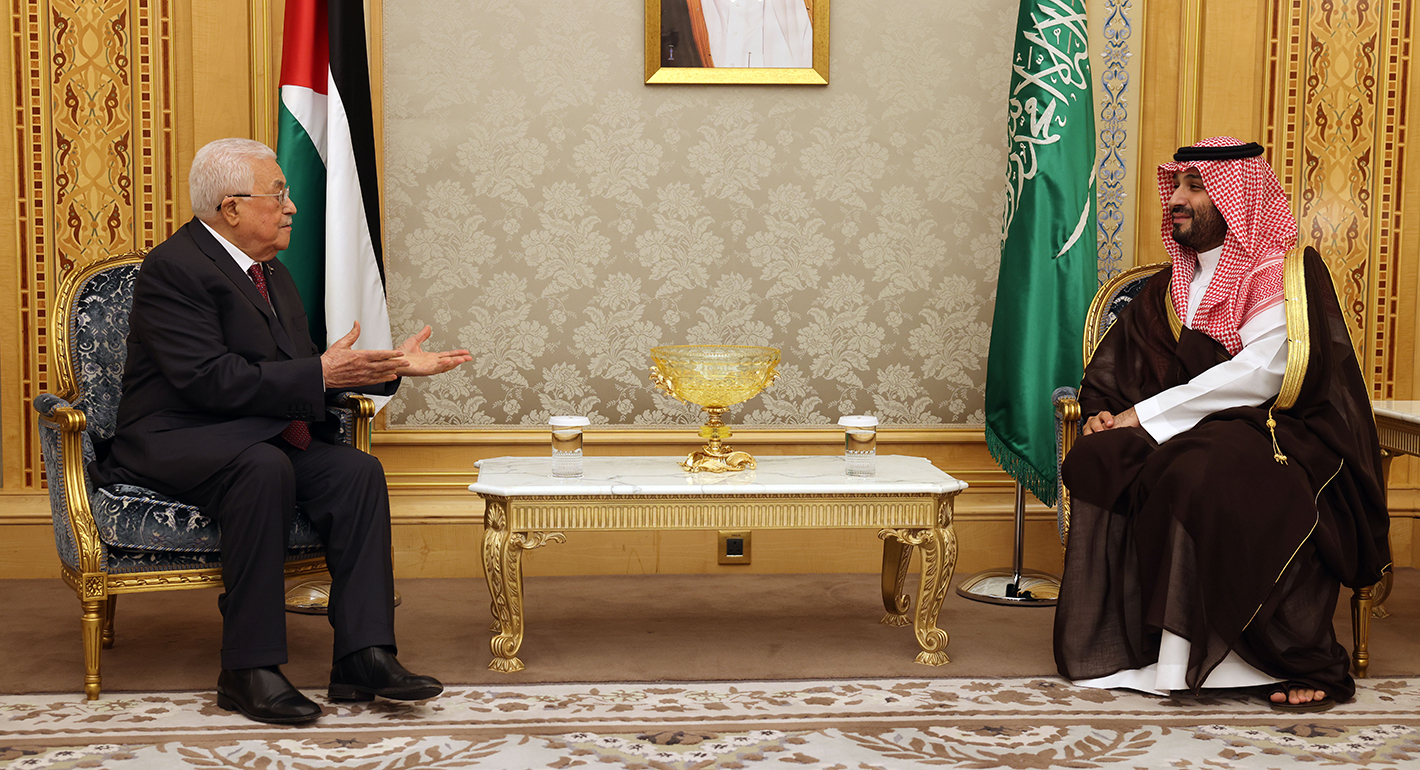
The U.S. midterm elections signal the opening of a narrow window for bold Saudi diplomacy on Palestine.


Andrew Leber, Zaha Hassan
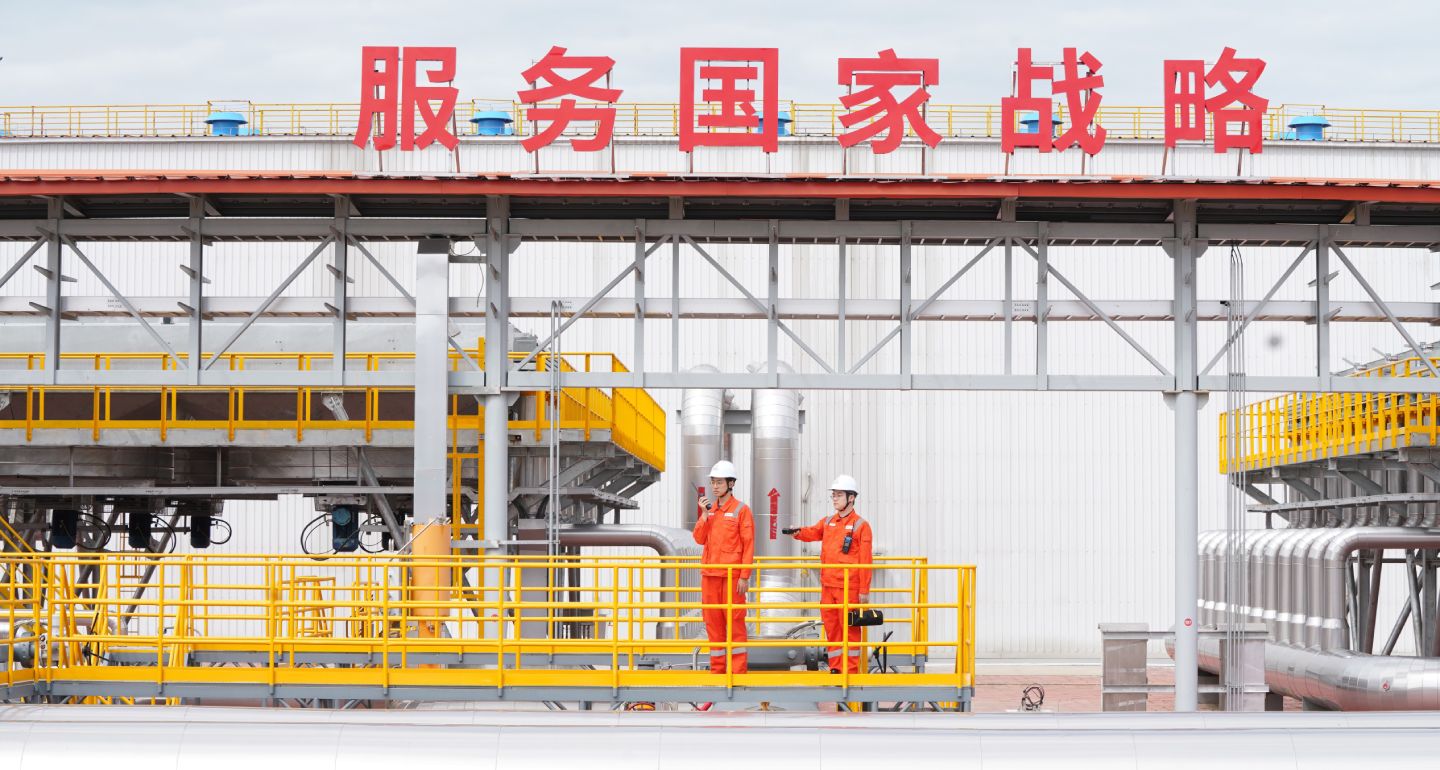
A leak of Russian gas price data helps establish that China is paying Russia far less than Central Asian countries and Gazprom’s former European customers.

Sergey Vakulenko

The EU can impose sanctions but struggles to enforce them without the United States. With Washington increasingly disinterested in backing European interests, the bloc must now fend for itself.


Nicu Popescu, Tiago Antunes
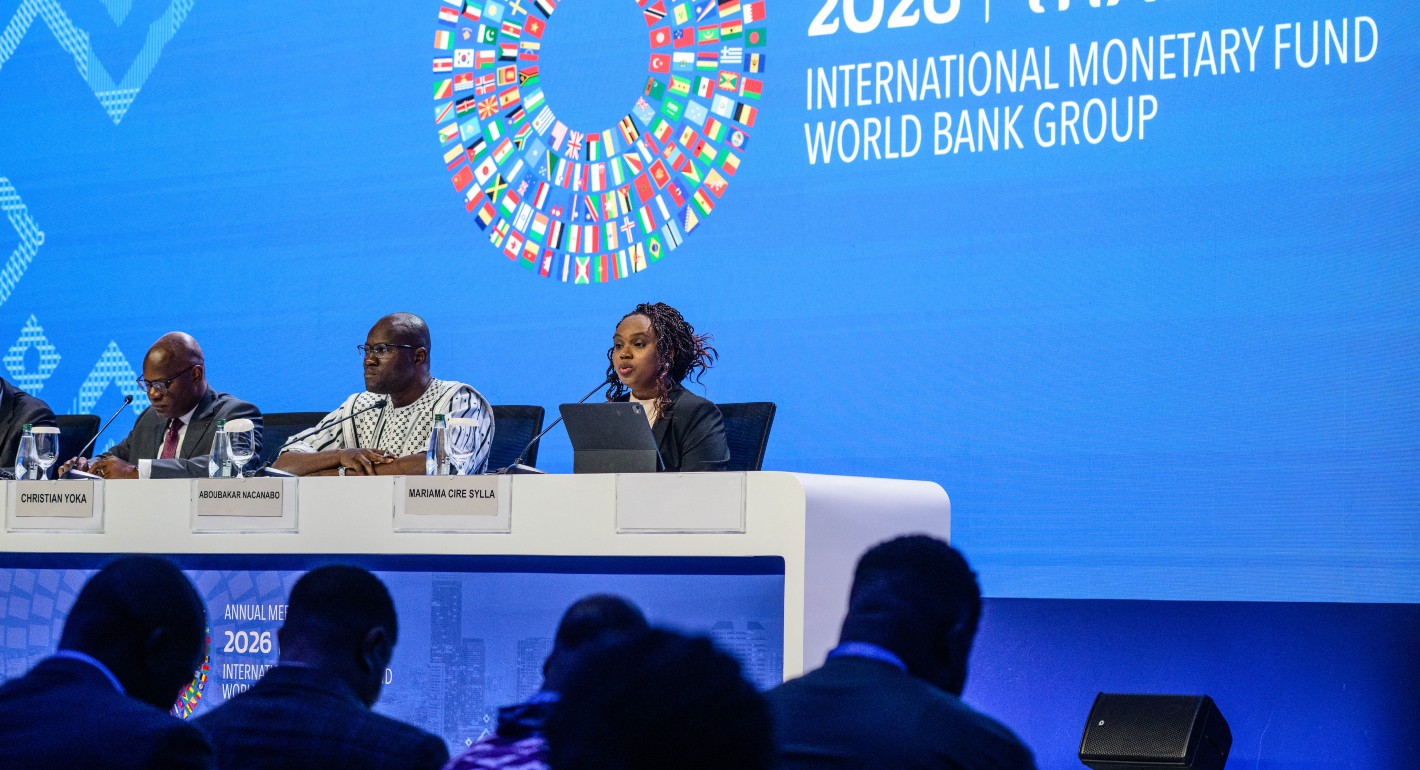
Global and rising powers will need to engage with Africa’s priorities and agency in order to secure the continent’s increasingly attractive partnerships.

Fonteh Akum

Rubio’s recent visit brought welcome attention, but more capital requires governance changes that may be a hard sell for regional governments.

Jennifer B. Murtazashvili