

Paper
Louise Tillin, Milan Vaishnav, Andy Robaina
{
  "authors": [
    "Milan Vaishnav"
  ],
  "type": "legacyinthemedia",
  "centerAffiliationAll": "dc",
  "centers": [
    "Carnegie Endowment for International Peace"
  ],
  "collections": [],
  "englishNewsletterAll": "ctw",
  "nonEnglishNewsletterAll": "",
  "primaryCenter": "Carnegie Endowment for International Peace",
  "programAffiliation": "SAP",
  "programs": [
    "South Asia"
  ],
  "projects": [],
  "regions": [
    "North America",
    "United States",
    "South Asia",
    "India"
  ],
  "topics": [
    "Political Reform",
    "Democracy",
    "Economy",
    "Foreign Policy",
    "Global Governance",
    "Civil Society"
  ]
}
Source: Getty
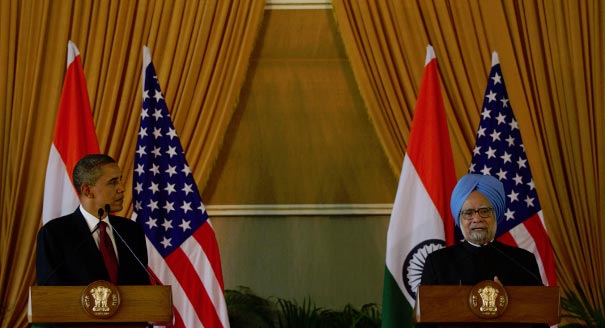
A more realistic understanding of domestic politics in both the United States and India could help alleviate the cycles of unrealistic expectations and disappointment in the U.S.-India bilateral relationship.
Source: Indian Express
There is an old adage in America that “politics stops at the water’s edge.” The phrase, coined by US Senator Arthur Vandenberg in 1945, today speaks to the informal norm that senior representatives of the government shall refrain from criticising the opposition when outside the country. Yet the phrase also carries another, unintended connotation, revealing a strangely pervasive temptation in Washington to treat domestic politics as a uniquely American phenomenon.
In Washington, from K-Street to the White House to the think tanks along Massachusetts Avenue, Americans instinctively see politics in everything. Political discourse is mesmerised by the politics of tax reform, engaging Iran, eliminating sugary sodas in schools and even of presidential birth certificates. Given this reality, it is puzzling that Americans often lose sight of the domestic political equations that define the quotidian policy debates in other democracies. This lack of awareness — combined with a sort of amnesia about our own foibles — is exemplified by a kind of “boom-and-bust” cycle in the Washington discourse on India. One day, the US celebrates India as the linchpin to America’s “pivot” to Asia, but the next it questions whether India’s dysfunctional politics make it an imprudent partner. India’s recent economic downturn has once again given rise to such grumblings. The truth, however, is that Washington and New Delhi have more in common than is usually acknowledged: their politics are proving markedly unsuccessful at effectively managing day-to-day governance. Take, for example, the current debates taking place on either side of the Atlantic on economic reform.From nearly 7,500 miles away, Americans are watching with increasing heartburn as the Indian growth miracle seems to be collapsing. An inhospitable external environment compounded by self-inflicted policy missteps and poor governance have done the unthinkable: dragged India’s GDP growth rate below five percent. In the wake of this economic crisis, the government has belatedly struck a reformist tone. It has achieved significant progress in the past six months, but the recent budget presentation indicates just how much further it must travel. Even sympathetic voices admit that many of the finance minister’s projections are the result of smoke and mirrors — optimistic growth estimates have swept many problems under the rug in the run-up to the national elections. Politically, there is still a tension between the reformist wing of the Congress party and the intellectual heirs to its socialist past. A forceful articulation of a liberal-minded Indian growth narrative is up for the taking, but has few takers. To compound matters, the UPA government is attempting an image makeover that conflates urban middle class voters and the aam aadmi. The principal opposition, on the other hand, has been engaging in a series of opportunistic flip-flops on economic policy. From policies governing natural resource extraction to FDI in retail, the BJP seems to find itself in the awkward position of having supported many UPA policies before they were against them. Many regional parties view the budget as an exercise in asking Delhi, “what have you done for me lately?” In Washington, Americans fail to understand why India’s political class can’t slash populist welfare expenditures, ram through further liberalisation of FDI or revamp its labyrinthine system of taxation.
Why, Americans ask, can’t the UPA government articulate a convincing case for why economic growth is the sine qua non for reducing poverty and inequality?
As Washington wrings its hands over India’s economic malaise, observers in New Delhi have their own questions about the fate of the world’s largest economy. Eighteen months ago, global rating agency Standard & Poor’s downgraded the US credit rating on account of the diminished “effectiveness, stability and predictability of American policymaking and political institutions” (the agency’s admonition was uncannily similar to the one it lobbed at India last June). It has now been 1,400 days since the US Senate has passed a budget. Congressional inaction on reducing the deficit has triggered automatic, across-the-board spending cuts (known as the “sequester”), which politicians of all stripes charitably describe as “dumb” and “stupid.” The proposed cuts were intended as a “poison pill” — a fate so unpleasant that Congress would be compelled to strike a compromise. Alas, Democrats and Republicans have instead decided to swallow this revolting capsule. To add insult to injury, the left and the right seem farther away than just months ago in terms of forging a deal to resolve the deficit conundrum. While Democrats seem unable to coalesce around a reasonable series of cuts to entitlement spending, the Republican leadership has taken the prospect of raising a single new dollar of revenue completely off the table.
Why, Indians ask, can’t America’s political leaders articulate a convincing case for why entitlement cuts and new tax revenues are the sine qua non for sustainable fiscal policy?
Whether it is corruption, lagging growth or parliamentary gridlock, India’s current struggles need to be placed in their proper context: its democratic politics are at an inflection point. Old notions about governance are being rendered obsolete in the wake of new aspirations and deteriorating trust in the political class. Ironically, the same could be said about the United States — all the more reason for Washington to occasionally turn a mirror onto itself, recognising that politics in the world’s oldest democracy — as in the world’s largest democracy — is struggling to keep pace with complex social, economic and political transformations. This realisation, in turn, can help to smooth over the vacillating cycles of unrealistic expectations followed by eventual disappointment.
This article was originally published in the Indian Express.

Director and Senior Fellow, South Asia Program
Milan Vaishnav is a senior fellow and director of the South Asia Program and the host of the Grand Tamasha podcast at the Carnegie Endowment for International Peace. His primary research focus is the political economy of India, and he examines issues such as corruption and governance, state capacity, distributive politics, and electoral behavior. He also conducts research on the Indian diaspora.
Recent Work


Louise Tillin, Milan Vaishnav, Andy Robaina


Milan Vaishnav, Sameer Lalwani, Tanvi Madan, …
Carnegie does not take institutional positions on public policy issues; the views represented herein are those of the author(s) and do not necessarily reflect the views of Carnegie, its staff, or its trustees.

A partnership between India, a country of subcontinental size, and Africa, a continent of fifty-four countries, may seem asymmetric until one notes that both are home to nearly the same number of people—1.4 billion. This essay spells out the existing challenges to the partnership, its optimal potential, and the possible pathways to realize it over the next quarter-century.

Rajiv Bhatia
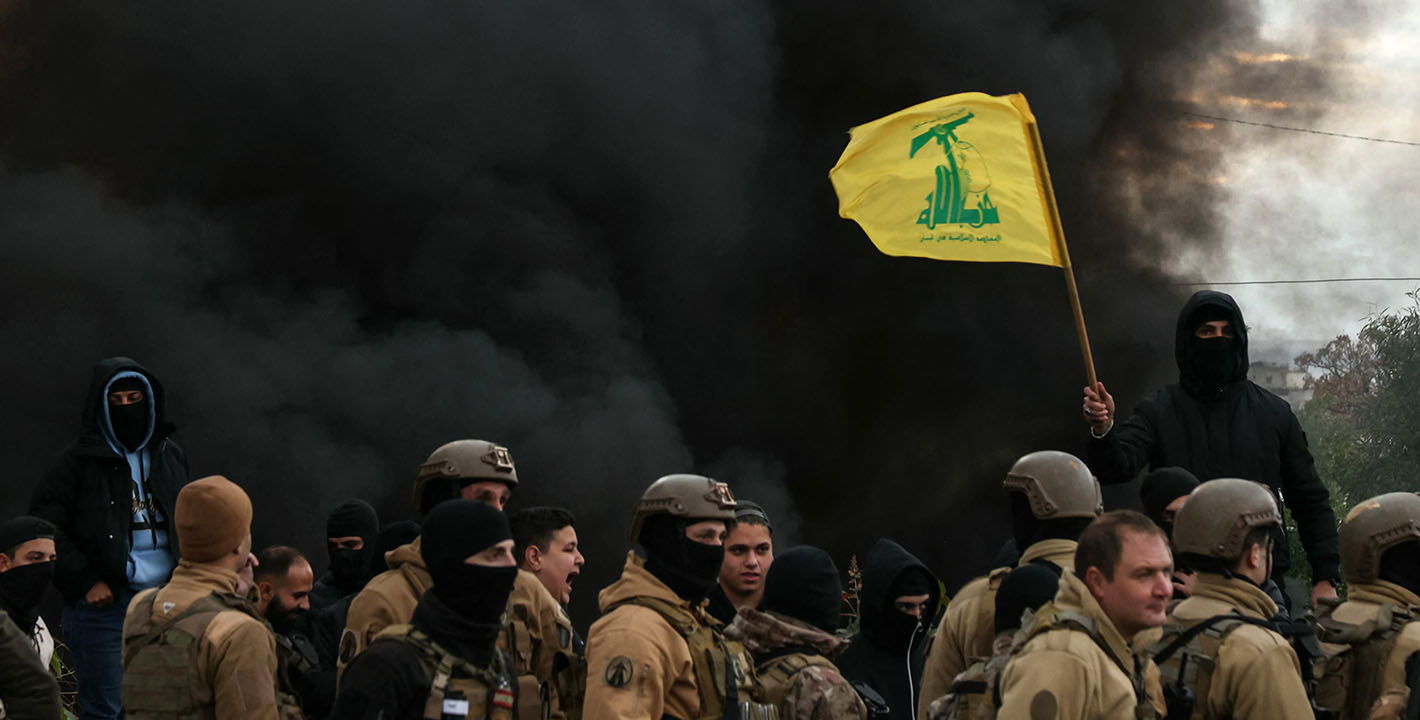
The party’s domestic and regional roles have changed, so Lebanon should devise a disarmament strategy that encompasses this.

Michael Young
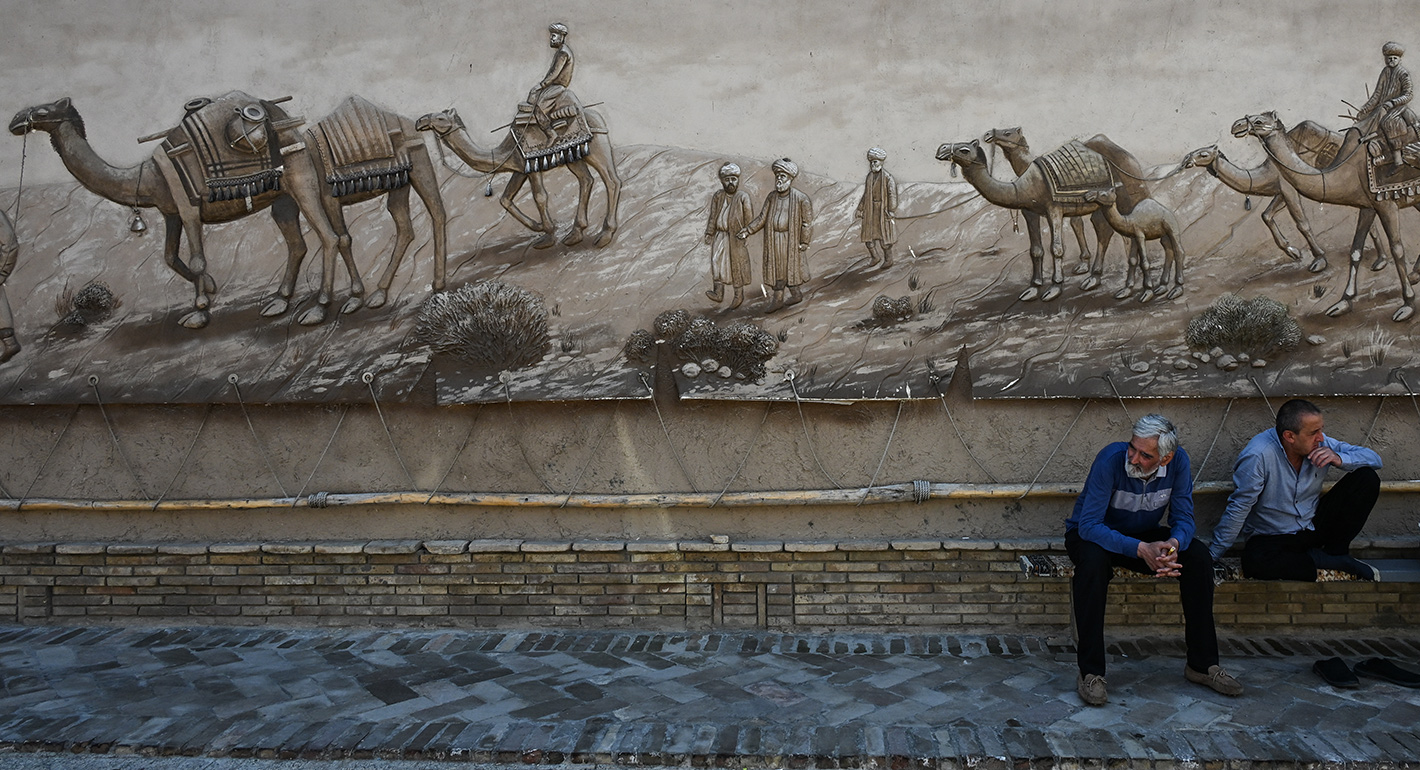
“Central Asia” as an analytical category is itself part of the problem. The term is a Soviet administrative inheritance, drawn along lines that served the convenience of Moscow. The Central Asian states the Soviets named no longer see themselves through this category alone and are not aligning across political blocs but are instead building external partnerships sector by sector, assigning different partners to different functions.

Jennifer B. Murtazashvili
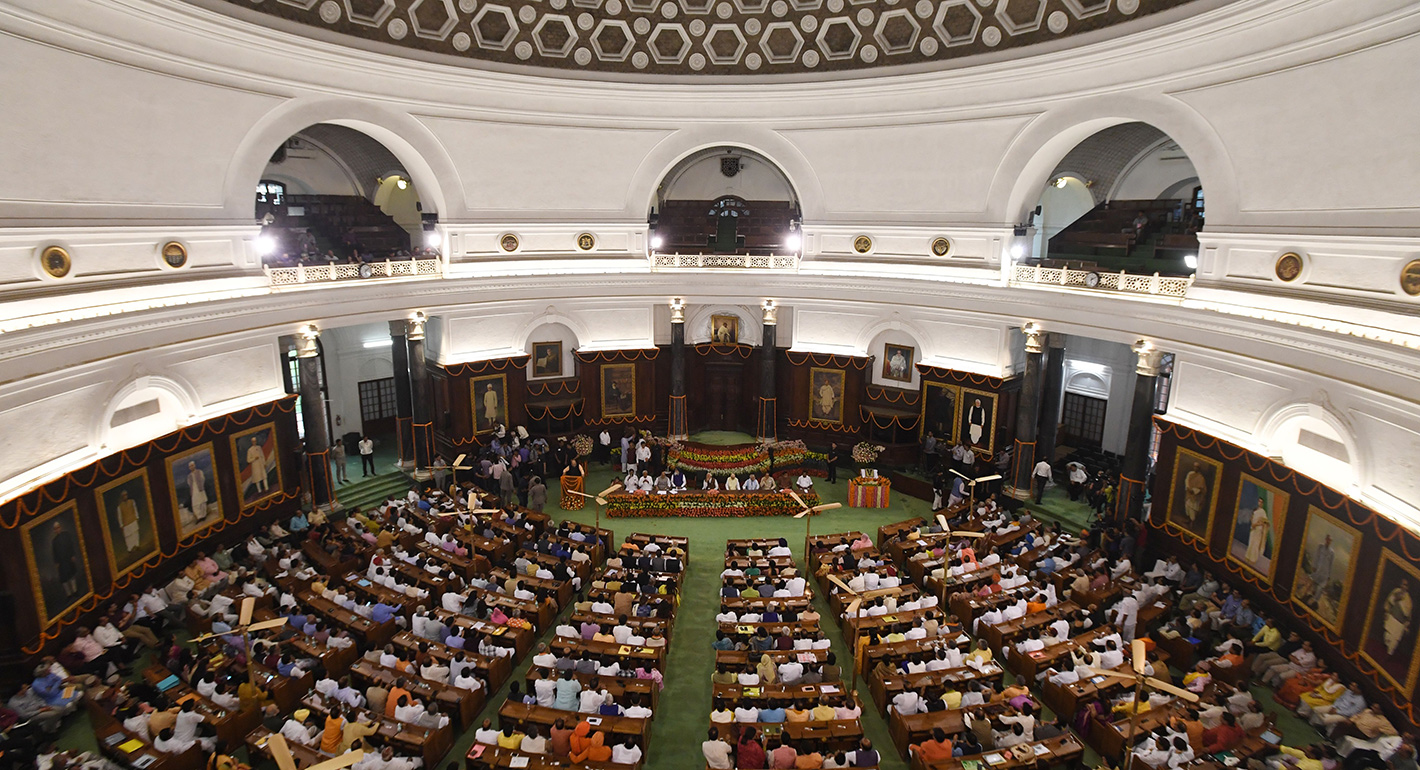
The battle over representation and regional power has been delayed—not resolved—and will shape the future of India’s federal balance.
Louise Tillin, Milan Vaishnav, Andy Robaina

The cost of air defense has become an unregistered tax on revenue for businesses. While military rents are consolidated in the federal budget, the costs of defense are being spread across the balance sheets of companies and regional governments.

Alexandra Prokopenko