

Commentary
If the Russian-speaking community in Latvia cannot articulate their interests without being seen as disloyal, they could end up embracing a pro-Kremlin agenda.
Sergejs Potapkins

REQUIRED IMAGE
Source: Carnegie
Summary
Since the end of the Cold War, Eastern Europe and Eurasia have been host to a virtual army of Western non-governmental organizations (NGOs)-from the United States, Britain, Germany, and elsewhere in Europe-all working on various aspects of institutional development, such as helping to establish competitive political parties and elections, independent media, and civic advocacy groups, as well as trying to reduce ethnic conflict. Little is known-although much good and bad is believed-about the impact of this assistance, carried out on a transnational level in cooperation with local political and social activists. This study, based at Columbia University, was designed to address this gap.
Funded by the Carnegie Corporation, the project involved seventeen investigators with social science and regional expertise who followed a common research design for sixteen case studies in twelve countries. Many of them had worked in or previously evaluated democracy assistance projects. The case studies they examined included: political parties and elections in Russia, Ukraine, the Czech Republic, and Slovakia; independent media in Russia, Ukraine, the Czech Republic, and Slovakia; women's NGOs in Russia, Poland, and Hungary; environmental NGOs in Russia and Kazakhstan; civic education NGOs in Romania, Uzbekistan, and Kyrgyzstan; and the reduction of ethnic conflict in Bosnia, Estonia, and the states that are home to the ethnic Hungarian and Roma diasporas.
To assess the impact of Western NGO strategies, investigators interviewed both Western NGO and local activists, as well as activists who had not received direct outside assistance. The investigators compared developments in specific sectors, such as political parties, in the late 1990s with what the sector looked like when the communist regime in the country fell out of power. Case selection included strategically important regions, such as Russia, as well as parts of Central Europe widely viewed as successfully democratizing. The cases also address the types of institutions-parties and elections, media, and civic advocacy groups-that are commonly thought to be integral to democratic states and that received considerable attention from Western NGOs. Research for the project was carried out in 1997 and 1998.
The study finds that the impact of the strategies used by Western NGOs on developments in specific sectors in these regions has been mixed. With a relatively small amount of money, these NGOs have played a large and important role in many formerly communist states helping to design and build institutions associated with democratic states. They have done little as yet to affect how these institutions actually function.
Political parties, regular elections, independent media, and local NGOs are all now part of the political landscape in many states across East-Central Europe and Eurasia, and their links with foreign groups are robust. In Russia and Ukraine, Western NGOs have had an impressive impact in presenting practical menus of problem-solving skills for elections (such as how to use research in designing a campaign). In the Czech Republic, Slovakia, and Russia, foreign assistance has helped launch self-sustaining media organizations and support the creation of local commercially independent television stations. In Poland, Hungary, and Russia, Western groups have been central to forming networks of women's organizations.
In every case examined, however, these very institutions function poorly with weak links to their own societies. For example, in Russia and Ukraine, Western NGOs have influenced the electoral activities of new political parties and the organization of media watch groups, but they have done little to help make parties responsive to constituents or major media outlets in any way independent from the narrow political interests of owners. In Poland, Hungary, and Russia, women's groups have mushroomed at the same time they have grown increasingly "ghettoized"-closer to their transnational partners than the constituents they are meant to represent or the governments they claim to be influencing. In terms of ethnic conflict, Western NGOs have been limited at best in their ability to affect conditions inside states with high amounts of strife, especially when they fail to coordinate with governmental and international organizations.
Historical legacies left by decades of communist rule account in part for the poor functioning of these institutions, but this study finds that these results are also, in part, a consequence of the strategies of Western NGOs. Western groups have tended to rely on practitioners with little knowledge of the region (social activists from the American Midwest, parliamentary staffers from Europe, political campaigners from Britain) to implement strategies-blueprints for building democratic institutions-developed in Western capitals. These technicians are poorly prepared for anticipating the reception of their recommendations by local activists given historical legacy. In short, the political culture of different local organizations determines how they have responded to Western assistance.
The study's recommendations-that Western NGO strategies be driven more by local context and that funders create incentives for NGOs to do so-point to policy choices: adjust NGO strategies and increase funding for democracy assistance or stay home. Business as usual will support the development of institutions that are not sustainable. Donors should let Western NGOs do their job, but they can also help them be more responsive to the conditions in which they are working. An important way to do this is to provide adequate funding to hire regional and local experts as well as foreign practitioners.
The introduction to this report lays out the method of evaluation. The report then summarizes the findings of the sixteen cases and draws general lessons about how ideas and practices took hold and under what conditions. After a synopsis of the cases, the final section of the report makes a series of recommendations geared toward donors and NGOs working in these regions on issues relating to democratization and the reduction of ethnic conflict.

Click on link above for full text of this Carnegie Paper.
John Glenn
Carnegie does not take institutional positions on public policy issues; the views represented herein are those of the author(s) and do not necessarily reflect the views of Carnegie, its staff, or its trustees.

If the Russian-speaking community in Latvia cannot articulate their interests without being seen as disloyal, they could end up embracing a pro-Kremlin agenda.

Sergejs Potapkins

Russia’s ruling party would have benefited from Putin appearing as its distant patron, but as an active frontman imposing his views on the public, he has done nothing but harm both the party’s election campaign and the ruling system overall.

Andrey Pertsev

In the tenth year of his presidency, President Mirziyoyev’s system is becoming even more personalized than that of his predecessor Karimov.

Galiya Ibragimova

The greater threat to Zelensky comes not from Fedorov alone, but from the convergence between the former defense minister’s political campaign and the anti-corruption investigations moving ever closer to the presidential administration.

Balázs Jarábik
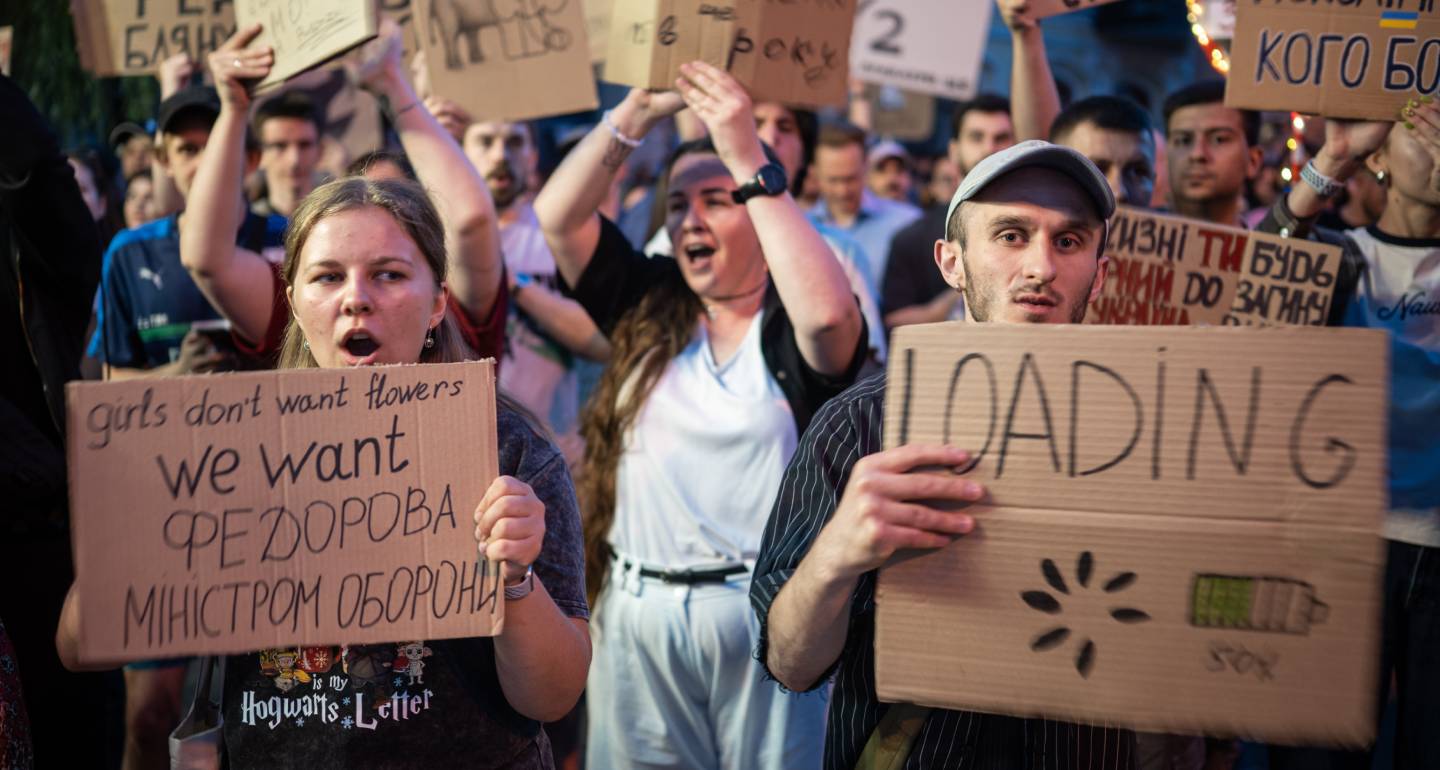
With his public call for new elections in Ukraine, ex-defense minister Mykhailo Fedorov has opened Pandora’s box.

Konstantin Skorkin