• Research
  • Emissary
  • About
  • Experts
Carnegie Global logoCarnegie lettermark logo
DemocracyIran
  • Donate
Strategic Asia 2006–07: Trade, Interdependence, and Security
Book

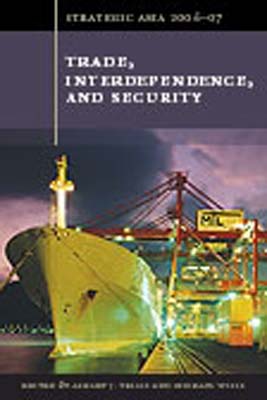
Strategic Asia 2006–07: Trade, Interdependence, and Security

This book examines the strategic balance in Asia and the increasing levels of trade and interdependence in the region, assessing the implications for the United States.

Link Copied
By Ashley J. Tellis and Michael Wills
Published on Oct 25, 2006

Additional Links

The National Bureau of Asian Research
Program mobile hero image

Program

Asia

The Asia Program in Washington studies disruptive security, governance, and technological risks that threaten peace, growth, and opportunity in the Asia-Pacific region, including a focus on China, Japan, and the Korean peninsula.

Learn More
Program mobile hero image

Program

South Asia

The South Asia Program informs policy debates relating to the region’s security, economy, and political development. From strategic competition in the Indo-Pacific to India’s internal dynamics and U.S. engagement with the region, the program offers in-depth, rigorous research and analysis on South Asia’s most critical challenges.

Learn More

The National Bureau of Asian Research

Edited by Ashley J. Tellis and Michael Wills, and written by some of America’s leading specialists including Minxin Pei, senior associate at the Carnegie Endowment for International Peace, this book examines the strategic balance in Asia and the increasing levels of trade and interdependence in the region, assessing the implications for the United States.

Strategic Asia 2006–07: Trade, Interdependence, and Security, the sixth volume in NBR’s Strategic Asia series, examines how trade and interdependence fit into the grand strategies of various Asian states and how changing economic relationships could affect regional stability in Asia. Through a combination of country, regional, and topical studies, the book assesses trade and investment dynamics in the region, the rise of new powers, the ongoing processes of globalization, and the impact of economic interdependence on security, and evaluates how these trends are altering Asia's strategic environment.

Order this book, or read the introduction by Ashley J. Tellis for free.

About the Authors

Ashley J. Tellis, Senior Associate at the Carnegie Endowment for International Peace, served in the U.S. Department of State as senior advisor to the Ambassador at the U.S. embassy in India and on the National Security Council staff as special assistant to the president and senior director, strategic planning and Southwest Asia. He is the author of India’s Emerging Nuclear Posture and co-author of Interpreting China’s Grand Strategy. He has co-edited Strategic Asia 2005-06: Military Modernization in an Era of Uncertainty and Strategic Asia 2004-05: Confronting Terrorism in the Pursuit of Power.

Michael Wills is the Strategic Asia program director at the National Bureau of Asian Research.

About the Authors

Ashley J. Tellis

Former Senior Fellow

Ashley J. Tellis was a senior fellow at the Carnegie Endowment for International Peace.

Michael Wills

Authors

Ashley J. Tellis
Former Senior Fellow
Michael Wills
South AsiaIndiaPakistanChinaCaucasusRussiaEconomyTradeForeign Policy

Carnegie does not take institutional positions on public policy issues; the views represented herein are those of the author(s) and do not necessarily reflect the views of Carnegie, its staff, or its trustees.

More Work from Carnegie Endowment for International Peace

  • Article
    India’s Oil Security Strategy: Structural Vulnerabilities and Strategic Choices

    This piece argues that the present Indian strategy, based on opportunistic diversification and utilization of limited strategic reserves, remains inadequate when confronting supply disruptions. It evaluates India’s options in the short, medium, and long terms.

      Vrinda Sahai

  • Article
    Leveraging Internal Security Cooperation with Vietnam Offers a Glimpse of Future Chinese Diplomacy with Southeast Asia

    Despite long-standing differences, China and Vietnam are reinforcing common ground for collaboration, especially in public security. This internal security–centered diplomacy offers a strengthened road map for how China moves forward with Southeast Asia.

      Sophie Zhuang

  • Aerial shot of island community
    Commentary
    One Year After the Great Aid Recession, Investments in Climate Mobility Offer Cost-Effective Returns

    Climate mobility interventions can vary, but they all present opportunities to unlock transformative results that mitigate costs associated with inaction.

      • Alejandro Rodriguez

      Alejandro Martin Rodriguez

  • Commentary
    Carnegie Politika
    Is There a Place for Russia in the New Race Back to the Moon?

    Despite having the resources and expertise, the Russian space industry missed the opportunity to offer the United States or China a mutually rewarding partnership in the lunar race.

      Georgy Trishkin

  • Man standing next to a pile of burned cars
    Commentary
    Emissary
    The Myriad Problems With the Iran Ceasefire

    Four Middle East experts analyze the region’s reactions and next steps.

      • Andrew Leber
      • Eric Lob
      • +1

      Amr Hamzawy, Andrew Leber, Eric Lob, …

Get more news and analysis from
Carnegie Endowment for International Peace
Carnegie global logo, stacked
1779 Massachusetts Avenue NWWashington, DC, 20036-2103Phone: 202 483 7600Fax: 202 483 1840
  • Research
  • Emissary
  • About
  • Experts
  • Donate
  • Programs
  • Events
  • Blogs
  • Podcasts
  • Contact
  • Annual Reports
  • Careers
  • Privacy
  • For Media
  • Government Resources
Get more news and analysis from
Carnegie Endowment for International Peace
© 2026 Carnegie Endowment for International Peace. All rights reserved.