• Research
  • Emissary
  • About
  • Experts
Carnegie Global logoCarnegie lettermark logo
DemocracyIran
  • Donate
India in Asian Geopolitics
Book

India in Asian Geopolitics

Asia will produce close to, if not, half of the world’s economic product by 2025. This is the real emergent change in international politics, but despite this fact the United States will remain the dominant power in the international system for the foreseeable future.

Link Copied
By Ashley J. Tellis
Published on Jun 1, 2007

Additional Links

Full Text (PDF)
Program mobile hero image

Program

South Asia

The South Asia Program informs policy debates relating to the region’s security, economy, and political development. From strategic competition in the Indo-Pacific to India’s internal dynamics and U.S. engagement with the region, the program offers in-depth, rigorous research and analysis on South Asia’s most critical challenges.

Learn More

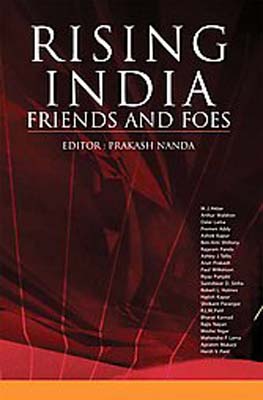
Source: Rising India: Friends and Foes

The international political system is likely to stay, quite durably, a unipolar system for along time to come: that is, for at least another twenty years or so, if the statisticians are to be believed. But this reality is going to manifest itself in a world where the centre of gravity is shifting from where it has traditionally been for the last 500 years—Europe—to Asia. Asia will produce close to, if not, half of the world’s economic product by 2025. This is the real emergent change in international politics, but despite this fact the United States will remain the dominant power in the international system for the foreseeable future.

About the Author

Ashley J. Tellis

Former Senior Fellow

Ashley J. Tellis was a senior fellow at the Carnegie Endowment for International Peace.

    Recent Work

  • Paper
    Multipolar Dreams, Bipolar Realities: India’s Great Power Future

      Ashley J. Tellis

  • Commentary
    India Sees Opportunity in Trump’s Global Turbulence. That Could Backfire.

      Ashley J. Tellis

Ashley J. Tellis
Former Senior Fellow
North AmericaUnited StatesSouth AsiaIndiaEast AsiaChinaEconomyTrade

Carnegie does not take institutional positions on public policy issues; the views represented herein are those of the author(s) and do not necessarily reflect the views of Carnegie, its staff, or its trustees.

More Work from Carnegie Endowment for International Peace

  • Commentary
    Emerging From the “Zombie State” of Trade Agreements: The India-EU FTA

    The India–EU Free Trade Agreement (FTA) is shaping up to be one of the most consequential trade negotiations, both economically and strategically. But, what’s in the agreement, what’s missing, and what will determine its success in the years ahead

      Vrinda Sahai, Nicolas Köhler-Suzuki

  • Construction site
    Commentary
    Emissary
    The Iran War Isn’t the Only Challenge Facing Saudi Arabia’s Vision 2030

    As the monarchy appears to question its grandest projects, the state could do with more critical debate than rote cheerleading.

      • Andrew Leber

      Andrew Leber

  • Commentary
    Strategic Europe
    Taking the Pulse: Is it Worth it for Europeans to Placate Trump?

    After spending much of 2025 trying to placate Donald Trump, some European leaders are starting to change posture. But is even a hostile Washington still so important to Europe that the U.S. president’s outbursts are worth putting up with?

      • Rym Momtaz

      Rym Momtaz, ed.

  • Article
    Outlooks on Open-Source Innovation at the India AI Impact Summit 2026

    Drawing on ten public discussions from the India AI Impact Summit 2026, this article highlights key outlooks on open source in AI that are likely to shape policy and governance conversations going forward.

      Shruti Mittal

  • Servers
    Article
    The Geopolitical Debates Over Controlling Cloud Compute

    If U.S. policymakers continue down the path of restricting China’s access to frontier AI, they will eventually have to implement some sort of restriction on cloud access.

      Noah Tan

Get more news and analysis from
Carnegie Endowment for International Peace
Carnegie global logo, stacked
1779 Massachusetts Avenue NWWashington, DC, 20036-2103Phone: 202 483 7600
  • Research
  • Emissary
  • About
  • Experts
  • Donate
  • Programs
  • Events
  • Blogs
  • Podcasts
  • Contact
  • Annual Reports
  • Careers
  • Privacy
  • For Media
  • Government Resources
Get more news and analysis from
Carnegie Endowment for International Peace
© 2026 Carnegie Endowment for International Peace. All rights reserved.