

Article
Pierre Goldschmidt
Source: Getty
Those who favor a diplomatic solution to the present crisis over Iran's nuclear ambitions should nevertheless realize that to ignore Iran’s defiance of UN Security Council resolutions is to tacitly support it, and doing so weakens the credibility of the non-proliferation regime and, in the end, increases the risk of nuclear proliferation, tensions, and violence in the region and beyond.
This week in Vienna the International Atomic Energy Agency (IAEA) Board of Governors discussed the deterioration of “the Agency's level of knowledge of certain aspects of Iran's nuclear related activities.” Contributing to this concern, Iran has unilaterally suspended its agreement to provide the IAEA with early design information for new facilities, and it has denied the IAEA access (for design verification) to the heavy water research reactor under construction at Arak. Notwithstanding these developments, the Board refrained from making a clear statement that Iran’s actions were in breach of its safeguards agreement yet again. Why? Is the Board of Governor’s silence on this issue for some obscure legal reason or because it is an inconvenient truth?
“An inconvenient truth”?
In his film on climate change “An Inconvenient Truth,” Al Gore remarks that quite often the same people who initially denied that there is any proof that the greenhouse effect is due to human activities, now say that global warming is inevitable and that it is too late to take corrective actions. A similar attitude is being adopted by some people with regard to the Iranian nuclear program. On the one hand they claim that all the incriminating indications gathered so far by the IAEA, Iran’s lack of cooperation with the Agency, and its refusal to comply with UN Security Council resolutions do not prove that Iran intends to manufacture nuclear weapons; on the other hand they say that it is in any case impossible to stop Iran in its quest to master the processes that are needed to fabricate and deliver nuclear devices.
In his film Al Gore insists that between denial and despair there is room for corrective actions. The same applies to Iran.
Right now, those who seek to avoid or defer strong diplomatic measures to peacefully enforce rules that Iran has broken appear to believe that:
Iran’s decision, in the middle of its war against Iraq, to launch an uranium enrichment program even though it had no foreseeable commercial use does not matter, because it cannot be proven that it had a military objective;
the 2003 International Atomic Energy Agency (IAEA) finding that for two decades Iran had illegally engaged in undeclared nuclear activities does not matter, because Iran allegedly has not committed any additional major violations since then;
Iran’s illegal possession of documents related to the fabrication of nuclear weapons components does not matter, because Iran asserts that it received these documents in 1987 without requesting them and has not yet used them;
Iran’s refusal to suspend all its uranium enrichment activities, as requested by the IAEA Board of Governors and three legally binding United Nations Security Council resolutions does not matter, because Iran would still need years to manufacture a nuclear arsenal;
the IAEA’s inability, after four years of investigation, to verify the absence of undeclared nuclear material and activities in Iran, or the exclusively peaceful nature of its nuclear program, does not matter, because the presence of such material, or a military dimension of its program has also not yet been proven;
the Security Council’s failure to adopt a binding resolution prohibiting all sales of sophisticated conventional weapons to Iran does not matter, because the benefits to weapons suppliers outweigh the risks of an arms race in the region;
the failure of the non-proliferation regime does not matter, because Ayatollah Ali Khamenei is said to have issued a fatwa stating that the production of nuclear weapons is forbidden under Islam (though this apparently does not apply in the Islamic Republic of Pakistan);
Yet, even if none of the above mattered enormously (quid non), and even if as has been claimed, Iran would still need 3 to 8 years to manufacture nuclear weapons, the international community cannot simply forget about the legally binding requests of the UN Security Council for Iran to suspend all enrichment-related activities, just because, so far, Iran is ignoring these requests. It creates a most damaging precedent and an encouragement for any state that is considering a similar path. Also, if Iran is now implicitly granted the right to operate a small scale enrichment plant, notwithstanding its violations of the NPT and its safeguards agreement, then there would be no legal basis to object to Iran’s operating a large scale enrichment facility and even producing a stockpile of weapons-grade high enriched uranium—even though there is no apparent civilian use for such material.
It is not enough to discuss what could possibly be negotiated, while Iran is forging full speed ahead with its nuclear program.
Those like me who favor a diplomatic solution to the present crisis should nevertheless realize that to ignore Iran’s defiance of UN Security Council resolutions is to tacitly support it, and doing so weakens the credibility of the non-proliferation regime and, in the end, increases the risk of nuclear proliferation, tensions, and potentially violence in the region and beyond.
Pierre Goldschmidt is a visiting scholar at the Carnegie Endowment for International Peace.
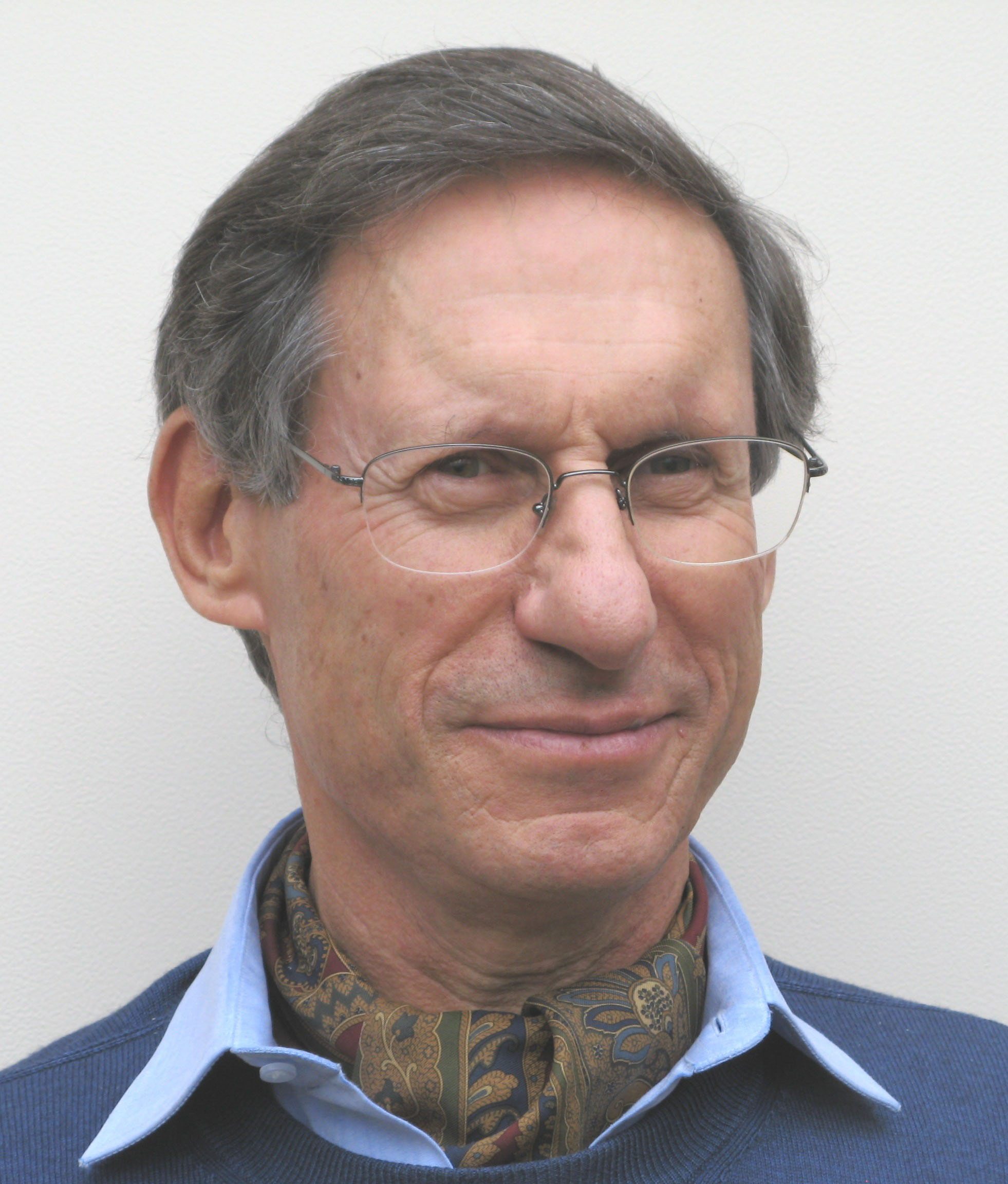
Former Nonresident Senior Associate, Nuclear Policy Program
Goldschmidt was a nonresident senior associate at the Carnegie Endowment.
Recent Work
Pierre Goldschmidt
Pierre Goldschmidt
Carnegie does not take institutional positions on public policy issues; the views represented herein are those of the author(s) and do not necessarily reflect the views of Carnegie, its staff, or its trustees.

Understanding the climatic pain points is necessary for policymakers hoping to minimize the war’s negative environmental consequences.



Alejandro Martin Rodriguez, Joy Arkeh, Sarah Yerkes

Huawei pushed hard to enter the Egyptian data centers market, until the Americans made a better offer.

Angie Omar

Radical-right parties are expected to do well in upcoming elections in four of the EU's biggest member states. If successful, they could prevent the union from addressing key challenges ahead.

Stefan Lehne

The books, podcasts, and films that explain the world it made.

Andrew Leber

Blurring the line between humans and animals is a long-standing tradition in social utopian prose. In his latest novel, Leonid Bershidsky reminds us that in social experiments, people are often treated no differently than animals.
Alexander Baunov