

Commentary
Despite public disputes over trade and immigration, the strategic partnership’s foundations remain sturdy.
Sameer Lalwani
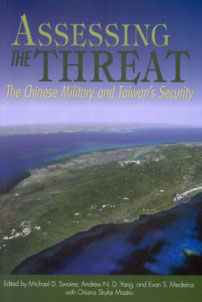
Bringing together experts from the U.S. and Taiwan, Assessing the Threat provides a comprehensive look at the dangers of military escalation in the Taiwan Strait, the latest advances in capabilities of the People’s Liberation Army, and China’s security relationship with the United States and the Asia-Pacific.
Source: Washington

Bringing together experts from the U.S. and Taiwan, Assessing the Threat provides a comprehensive look at the dangers of military escalation in the Taiwan Strait, the latest advances in capabilities of the People’s Liberation Army, and China’s security relationship with the United States and the Asia-Pacific. There is increasing concern that Beijing is steadily shifting the balance of power across the Taiwan Strait in its favor. Recent advances in Chinese air and naval power, along with changes in PLA doctrine, have the potential to weaken deterrence and destabilize the cross-strait military balance. At this critical juncture, there is no question that this issue requires sustained, detailed analysis, and that many measures can and should be taken to reduce the threat of conflict between China, Taiwan, and the United States. Assessing the Threat offers such analysis, as well as concrete suggestions and crisis management practices for government and military leaders in Washington, D.C., Beijing, and Taipei.
Michael D. Swaine is a senior associate in the Carnegie Endowment for International Peace’s China Program. His most recent book is Managing Sino-American Crises: Case Studies and Analysis (Carnegie Endowment, 2006).
Andrew N. D. Yang has been on faculty at National Sun Yat-sen University since 1986, and is the Secretary General of the Chinese Council of Advanced Policy Studies (CAPS).
Evan S. Medeiros is currently a senior political scientist at the RAND Corporation in the Washington, D.C. office.
Oriana Skylar Mastro was a junior fellow with the China Program at the Carnegie Endowment for International Peace from 2006-2007.
"Assessing the Threat has hit its target and should be a travelling companion to everyone contemplating to ply the rough waters of the Taiwan Strait issue."
—The China Quarterly
“Thorough, stimulating and often provocative, the chapters in this volume provide a unique assessment of the complexities surrounding Taiwan’s security. They examine the logic driving China’s security policy and emerging military capabilities, strategy and doctrine, Taiwan’s evolving defense capabilities and posture, the implications for U.S. military deployments in the west Pacific, issues of escalation control should war break out, and the potential future patterns of East Asia’s security environment. These chapters coalesce to form the most important book yet published on this critical security problem.”
—Paul Godwin, Professor of International Affairs, National War College (ret.)
“No recent development has aroused more concern among US policymakers and military officials than China's military buildup, which is viewed as a threat to Taiwan and which contains the potential for war between China and the US. But what is the nature of the threat? This multifaceted and in-depth examination by top experts provides the best available answer to one of the most critical issues today.”
—Ellis Joffe, Professor Emeritus of Chinese Studies, Hebrew University of Jerusalem

Former Senior Fellow, Asia Program
Swaine was a senior fellow at the Carnegie Endowment for International Peace and one of the most prominent American analysts in Chinese security studies.
Andrew Yang
Former Nonresident Senior Fellow, Asia Program
Evan S. Medeiros was a nonresident senior fellow in the Asia Program at the Carnegie Endowment for International Peace.

Nonresident Scholar, Asia Program
Oriana Skylar Mastro is a nonresident scholar at the Carnegie Endowment for International Peace where her research focuses on Chinese military and security policy, Asia-Pacific security issues, war termination, and coercive diplomacy.
Carnegie does not take institutional positions on public policy issues; the views represented herein are those of the author(s) and do not necessarily reflect the views of Carnegie, its staff, or its trustees.

Despite public disputes over trade and immigration, the strategic partnership’s foundations remain sturdy.

Sameer Lalwani
It signals a new era of tech diffusion and warfare.

Steve Feldstein

Ahead of a tough winter for Ukraine, Donald Trump’s swing back toward Russia bodes ill. But instead of panicking, Kyiv’s European allies are focusing on action.

Rym Momtaz

Despite its flop at the box office, the film raises important questions for the climate community to answer.

Leonardo Martinez-Diaz

In an interview, Rozina Ali discusses her new book on the rise and manifestations of Islamophobia in the United States.

Michael Young