• Research
  • Emissary
  • About
  • Experts
Carnegie Global logoCarnegie lettermark logo
Democracy
  • Donate
“Fixing Broken Windows”: Security Sector Reform in Palestine, Lebanon, and Yemen

Source: Getty

Paper

“Fixing Broken Windows”: Security Sector Reform in Palestine, Lebanon, and Yemen

The bulk of development security sector aid in Palestine, Lebanon, and Yemen has consisted of military training and equipment. The West should adopt a comprehensive approach to aid where security reform is only one part of a broader reform strategy.

Link Copied
By Yezid Sayigh
Published on Oct 27, 2009

Additional Links

Full Text
Program mobile hero image

Program

Middle East

The Middle East Program in Washington combines in-depth regional knowledge with incisive comparative analysis to provide deeply informed recommendations. With expertise in the Gulf, North Africa, Iran, and Israel/Palestine, we examine crosscutting themes of political, economic, and social change in both English and Arabic.

Learn More

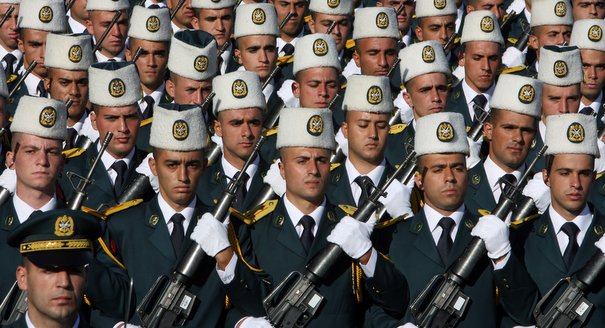
Although important, development assistance aimed at reforming the security sectors in Palestine, Lebanon, and Yemen has achieved only limited results. The bulk of such aid has consisted of military training and equipment, which does nothing to ensure that security forces answer to legitimate civilian leaders.

Whether by design or default, the United States and European countries have a narrow focus on counterterrorism in Palestine, Lebanon, and Yemen—all countries with weak and quasi-democratic governments. Without an integrated approach that includes support for democracy and the rule of law, security sector reforms are not sustainable and can reinforce local power struggles.
 
Five Lessons for the United States and Europe:

  • Emphasize reconciliation: Donors should help build consensus in Palestine, Lebanon, and Yemen.  
     
  • Don’t condition aid on the exclusion of opposition groups: National governments should take the lead in security sector reform, but domestic opposition groups should not be excluded.
     
  • All assistance alters the domestic balance of power: Donors need to recognize that security assistance always impacts power balances—it helps one group more than others—and distorts incentives.
     
  • Rhetoric about the importance of democracy and the rule of law should become reality: The West often talks about the necessity of democratic reforms and developing the rule of law, but most assistance goes to counterterrorism—more assistance should match the rhetoric and support better governance.
     
  • Security personnel need civilian leadership: Training, equipping, and building operational skills only goes so far if democratic oversight is missing. 


“To enable real reform, the West must adopt a comprehensive approach which treats security reform as only one part of a broader political strategy, and encourage governments and security commanders in Palestine, Lebanon, and Yemen to buy into such a strategy,” says Sayigh. “Pursuing counterterrorism in the absence of the rule of law perpetuates the undemocratic governance of the security sector and undermines state building and post-conflict reconstruction.”

 

About the Author

Yezid Sayigh

Senior Fellow, Malcolm H. Kerr Carnegie Middle East Center

Yezid Sayigh is a senior fellow at the Malcolm H. Kerr Carnegie Middle East Center in Beirut, where he leads the program on Civil-Military Relations in Arab States (CMRAS). His work focuses on the comparative political and economic roles of Arab armed forces, the impact of war on states and societies, the politics of postconflict reconstruction and security sector transformation in Arab transitions, and authoritarian resurgence.

    Recent Work

  • Commentary
    All or Nothing in Gaza

      Yezid Sayigh

  • Commentary
    Has Sisi Found a Competent Military Entrepreneur?

      Yezid Sayigh

Yezid Sayigh
Senior Fellow, Malcolm H. Kerr Carnegie Middle East Center
Yezid Sayigh
GulfLevantYemenLebanonPalestineNorth AmericaUnited StatesWestern EuropeMiddle EastSecurityPolitical ReformDemocracyForeign Policy

Carnegie does not take institutional positions on public policy issues; the views represented herein are those of the author(s) and do not necessarily reflect the views of Carnegie, its staff, or its trustees.

More Work from Carnegie Endowment for International Peace

  • Commentary
    Carnegie Politika
    How Far Can Russian Arms Help Iran?

    Arms supplies from Russia to Iran will not only continue, but could grow significantly if Russia gets the opportunity.

      Nikita Smagin

  • Front of a damaged apartment building
    Commentary
    Emissary
    Is a Conflict-Ending Solution Even Possible in Ukraine?

    On the fourth anniversary of Russia’s full-scale invasion, Carnegie experts discuss the war’s impacts and what might come next.

      • +1

      Eric Ciaramella, Aaron David Miller, Alexandra Prokopenko, …

  • Commentary
    Carnegie Politika
    The Kremlin Is Destroying Its Own System of Coerced Voting

    The use of technology to mobilize Russians to vote—a system tied to the relative material well-being of the electorate, its high dependence on the state, and a far-reaching system of digital control—is breaking down.

      Andrey Pertsev

  • People in voting booths
    Commentary
    Emissary
    Indian Americans Still Lean Left. Just Not as Reliably.

    New data from the 2026 Indian American Attitudes Survey show that Democratic support has not fully rebounded from 2020.

      • +1

      Sumitra Badrinathan, Devesh Kapur, Andy Robaina, …

  • Commentary
    Strategic Europe
    Taking the Pulse: Can European Defense Survive the Death of FCAS?

    France and Germany’s failure to agree on the Future Combat Air System (FCAS) raises questions about European defense. Amid industrial rivalries and competing strategic cultures, what does the future of European military industrial projects look like?

      • Rym Momtaz

      Rym Momtaz, ed.

Get more news and analysis from
Carnegie Endowment for International Peace
Carnegie global logo, stacked
1779 Massachusetts Avenue NWWashington, DC, 20036-2103Phone: 202 483 7600Fax: 202 483 1840
  • Research
  • Emissary
  • About
  • Experts
  • Donate
  • Programs
  • Events
  • Blogs
  • Podcasts
  • Contact
  • Annual Reports
  • Careers
  • Privacy
  • For Media
  • Government Resources
Get more news and analysis from
Carnegie Endowment for International Peace
© 2026 Carnegie Endowment for International Peace. All rights reserved.