• Research
  • Emissary
  • About
  • Experts
Carnegie Global logoCarnegie lettermark logo
DemocracyIran
  • Donate
At Last, Iraqi Lawmakers Agree on the 2010 Election Law

Source: Getty

Article

At Last, Iraqi Lawmakers Agree on the 2010 Election Law

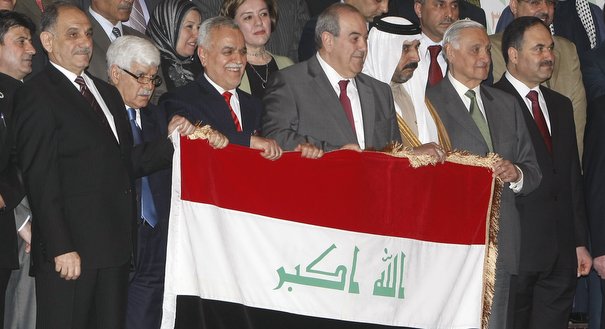
On December 6, 2009, the Iraqi parliament finally passed an election law for the 2010 elections. The law deals with the most controversial issues regarding the election.

Link Copied
Published on Dec 14, 2009
Program mobile hero image

Program

Middle East

The Middle East Program in Washington combines in-depth regional knowledge with incisive comparative analysis to provide deeply informed recommendations. With expertise in the Gulf, North Africa, Iran, and Israel/Palestine, we examine crosscutting themes of political, economic, and social change in both English and Arabic.

Learn More

On Sunday, December 6, 2009, the Iraqi parliament finally passed an election law for the 2010 elections. The Presidency Council swiftly approved the measure, the result of sensitive negotiations among Iraq’s top legislators.

 The most controversial issues were the distribution of parliamentary seats among provinces, and the number and distribution of minority and compensatory seats, which are apportioned to parties too small to win election in any single province, but that win a large enough share of the national vote to earn a seat in parliament.
  • The 325-seat parliament will consist of 310 seats for the provinces, eight seats for minority groups, and seven compensatory seats.
     
  • Provincial seats will be distributed on the basis of the 2005 Ministry of Trade’s population numbers (based on food ration cards), with 2.8% population growth added for all provinces. 
     
  • Iraqis living abroad will vote for representatives of their home provinces, with no special status attributed to them.
     
  • Minority seats will be distributed as follows: five Christian seats will be contested within a single national district reserved for Christians. In addition, Yazidis will have one reserved seat in Nineveh, Saibis one in Baghdad, and Shabakis one in Nineveh. 
     
  • The seven remaining compensatory seats will be distributed among parties that fare well on the national level but do not gain any seats on the provincial level
 
Province2005 Elections2010 Elections
Baghdad5968
Nineveh1931
Basra1624
Dhi Qar1218
Babil1116
Sulaymaniya 1517
Anbar 914
Irbil 1314
Diyala 1013
Kirkuk 912
Salahaddin 812
Najaf 812
Wasit 811
Qadisiyah 811
Maysan710
Dohuk 710
Karbala 610
Muthanna 57
Compensatory Seats4515
Total275325
IraqPolitical ReformDemocracy

Carnegie does not take institutional positions on public policy issues; the views represented herein are those of the author(s) and do not necessarily reflect the views of Carnegie, its staff, or its trustees.
More Work from Carnegie Endowment for International Peace

  • Heavily armed security personnel standing atop an armored vehicle
    Commentary
    Emissary
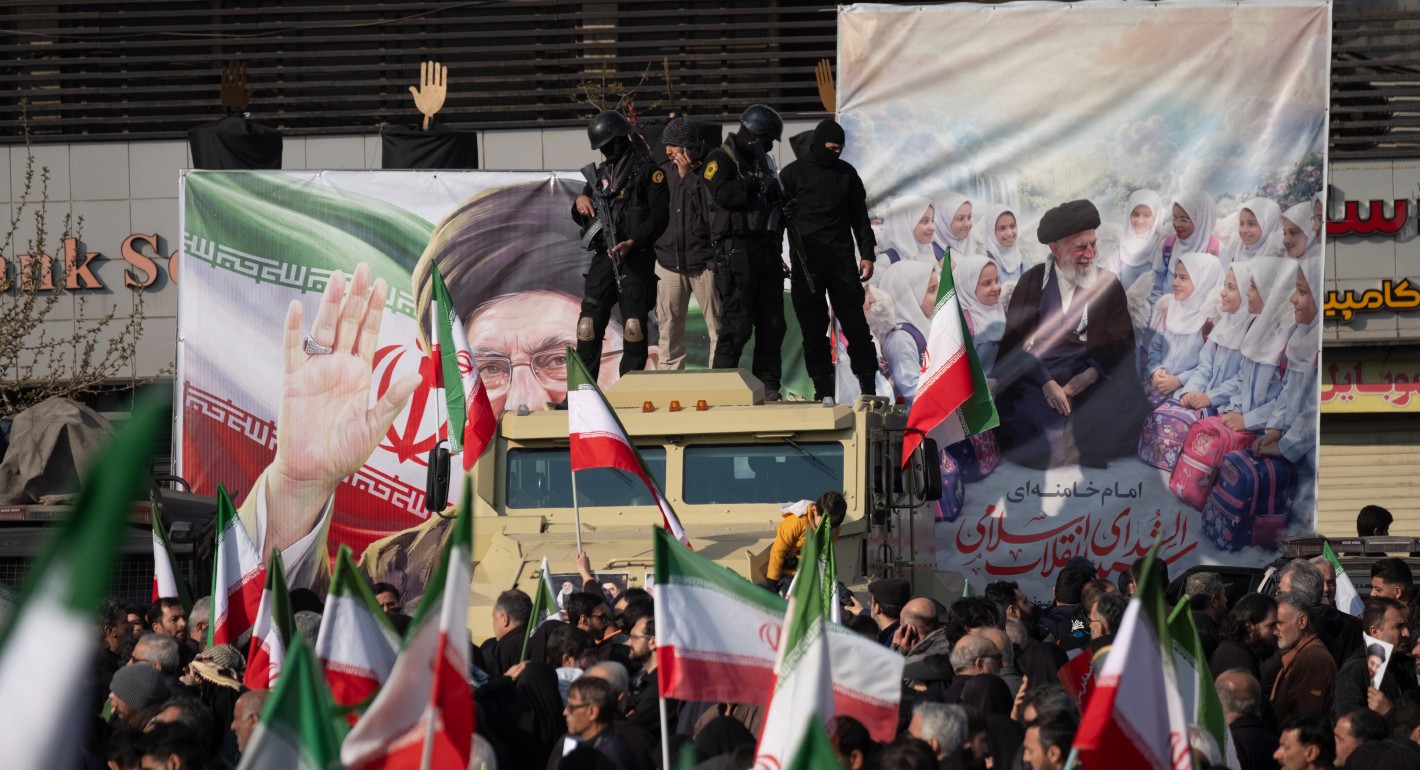
    When Do Mass Protests Topple Autocrats?

    The recent record of citizen uprisings in autocracies spells caution for the hope that a new wave of Iranian protests may break the regime’s hold on power.


      • McKenzie Carrier

      Thomas Carothers, McKenzie Carrier

  • Commentary
    Strategic Europe
    The EU Needs a Third Way in Iran

    European reactions to the war in Iran have lost sight of wider political dynamics. The EU must position itself for the next phase of the crisis without giving up on its principles.

      Richard Youngs

  • High-tech data center with server racks
    Article
    The Architecture of Digital Repression

    Internet service providers can facilitate internet access but also draconian control.
      Irene Poetranto
  • Commentary
    Carnegie Politika
    The Kremlin Is Destroying Its Own System of Coerced Voting

    The use of technology to mobilize Russians to vote—a system tied to the relative material well-being of the electorate, its high dependence on the state, and a far-reaching system of digital control—is breaking down.

      Andrey Pertsev
  • People in voting booths
    Commentary
    Emissary
    Indian Americans Still Lean Left. Just Not as Reliably.

    New data from the 2026 Indian American Attitudes Survey show that Democratic support has not fully rebounded from 2020.


      • +1

      Sumitra Badrinathan, Devesh Kapur, Andy Robaina, …

Get more news and analysis from
Carnegie Endowment for International Peace
Carnegie global logo, stacked
1779 Massachusetts Avenue NWWashington, DC, 20036-2103Phone: 202 483 7600Fax: 202 483 1840
  • Research
  • Emissary
  • About
  • Experts
  • Donate
  • Programs
  • Events
  • Blogs
  • Podcasts
  • Contact
  • Annual Reports
  • Careers
  • Privacy
  • For Media
  • Government Resources
Get more news and analysis from
Carnegie Endowment for International Peace
© 2026 Carnegie Endowment for International Peace. All rights reserved.