• Research
  • Emissary
  • About
  • Experts
Carnegie Global logoCarnegie lettermark logo
DemocracyIran
  • Donate
De-Baathification Saga Continues

Source: Getty

Article

De-Baathification Saga Continues

The saga of the banning and unbanning of alleged Baathists has cast a pall on the elections even before the campaign starts in earnest. Whatever the final decision on the banning issue, it is bound to be highly controversial.

Link Copied
Published on Feb 9, 2010
Program mobile hero image

Program

Middle East

The Middle East Program in Washington combines in-depth regional knowledge with incisive comparative analysis to provide deeply informed recommendations. With expertise in the Gulf, North Africa, Iran, and Israel/Palestine, we examine crosscutting themes of political, economic, and social change in both English and Arabic.

Learn More

Editor's Note: Read updates on the JAC ban: February 25, 2010.

In a continuation of an increasingly politicized and confusing saga, the decision of the ad hoc appeals committee that ordered the conditional unbanning of alleged former Baathists has been reversed. On February 3 the committee ruled that the banned individuals should be allowed to participate in the elections, but that all cases would be reviewed after the elections to determine whether the allegations were valid. This raised the possibility that some elected candidates would not be allowed to take their seats.

The unbanning provoked a storm of protest particularly by the predominant Shia parties, which insisted that Baathists could not be allowed to run. Prime Minister Nouri al-Maliki’s Dawa party in particular organized a number of demonstrations around Iraq to protest the decision. Responding to the outcry and to political pressures, the ad hoc committee backtracked. Claiming that it had originally misunderstood its mandate as requiring it to examine all banning cases, rather than just those of the 177 individuals who appealed the ban, it revoked the blanket unbanning and announced that it would review all appeals by February 11 to decide who is eligible to run. At the same time the election commission announced that the election campaign, originally scheduled to start on February 8, would start instead on February 12.

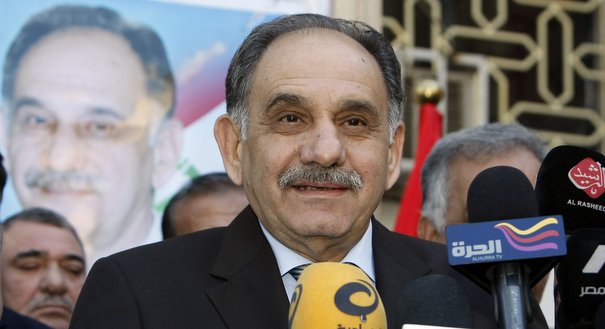
The saga of the banning and unbanning of alleged Baathists has cast a pall on the elections even before the campaign starts in earnest. The final ruling of the review committee will probably not put the issue to rest completely. It is bound to be highly controversial, no matter what it decides, particularly in the case of high profile candidates. Above all, a decision to maintain the ban on Saleh al-Mutlaq risks reviving threats of an election boycott by his allies in the Iraqi National Movement and by some Sunni parties. The decision to let him run would enrage Shia parties and possibly put Maliki at a disadvantage vis-à-vis his adversaries in the Iraqi National Alliance.

Middle EastIraqPolitical Reform

Carnegie does not take institutional positions on public policy issues; the views represented herein are those of the author(s) and do not necessarily reflect the views of Carnegie, its staff, or its trustees.

More Work from Carnegie Endowment for International Peace

  • Commentary
    Strategic Europe
    The EU Needs a Third Way in Iran

    European reactions to the war in Iran have lost sight of wider political dynamics. The EU must position itself for the next phase of the crisis without giving up on its principles.

      Richard Youngs

  • Crowds holding Iranian flags and photos of the late Khamenei
    Commentary
    Emissary
    Who Will Be Iran’s Next Supreme Leader?

    If the succession process can be carried out as Khamenei intended, it will likely bring a hardliner into power.

      • Eric Lob

      Eric Lob

  • people watching smoke rising at sunrise from rooftops
    Commentary
    Emissary
    Bombing Campaigns Do Not Bring About Democracy. Nor Does Regime Change Without a Plan.

    Just look at Iraq in 1991.

      Marwan Muasher

  • Satellite of a damaged oil refinery
    Commentary
    Emissary
    Iran Is Pushing Its Neighbors Toward the United States

    Tehran’s attacks are reshaping the security situation in the Middle East—and forcing the region’s clock to tick backward once again.

      Amr Hamzawy

  • A boat, with smoke in the background
    Commentary
    Emissary
    The Gulf Monarchies Are Caught Between Iran’s Desperation and the U.S.’s Recklessness

    Only collective security can protect fragile economic models.

      • Andrew Leber

      Andrew Leber

Get more news and analysis from
Carnegie Endowment for International Peace
Carnegie global logo, stacked
1779 Massachusetts Avenue NWWashington, DC, 20036-2103Phone: 202 483 7600Fax: 202 483 1840
  • Research
  • Emissary
  • About
  • Experts
  • Donate
  • Programs
  • Events
  • Blogs
  • Podcasts
  • Contact
  • Annual Reports
  • Careers
  • Privacy
  • For Media
  • Government Resources
Get more news and analysis from
Carnegie Endowment for International Peace
© 2026 Carnegie Endowment for International Peace. All rights reserved.