

Article
Faced with multiple complex conflicts, Arab states need to develop mechanisms of collective action that are not available to them today.
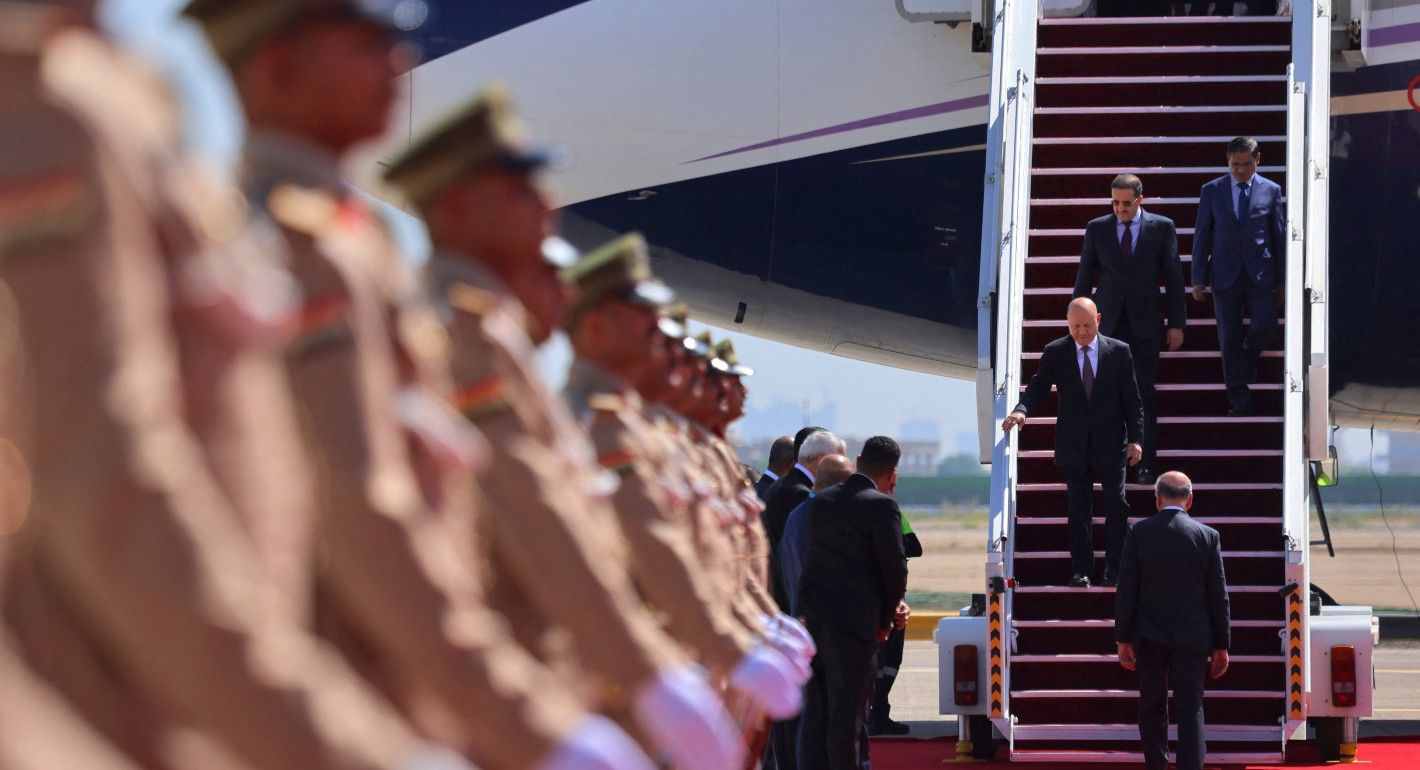
Arab leaders arrive at Baghdad International Airport ahead of the 34th Arab League summit on May 17, 2025. (Photo by AHMAD AL-RUBAYE/POOL/AFP via Getty Images)
Two big diplomatic wins from this year offer lessons for future Arab efforts toward constructive multilateral action.
The Arab world was already badly divided when recent wars and military conflicts broke out between state actors and between them and nonstate actors in 2023. But paradoxically, these tremors have created conditions that led to almost unprecedented coordination and diplomatic activism among key Arab states, along with a willingness to engage with non-Arab actors that were previously seen as rivals and even pariahs. The fruits of that coordination, activism, and engagement to date—which Egypt, Saudi Arabia, Qatar, Jordan, and the United Arab Emirates have led—have been more philosophically negative than positive; that is, they have averted worse outcomes more than they have secured decisive goals. Should the trend survive the current set of crises, however, there are possibilities for more constructive action. Is that likely or even possible? A review of the current situation in historical perspective suggests that sustained collective diplomacy is now more possible than in the past; while it cannot be described as likely, an attitudinal change on the part of key Arab leaders offers an unusual opening.
Divisions among key Arab actors are hardly new—there have been only a few times since they emerged as independent states in the middle of the twentieth century that Arab states have been able to act collectively in security and diplomatic terms (and the exceptions have been generally far more about obstructing threatening developments than advancing constructive initiatives).
But if the divisions are old, the challenges are new or more extreme: an Israel that has lurched toward an extremely assertive posture that abandons deterrence in favor of military action; a United States that acts unpredictably; Iran’s so-called axis of resistance that has not only been opportunistic and assertive but also linked conflicts in Lebanon, Yemen, Iraq, and Palestine.
So, the shock of October 7, 2023, created a multidimensional crisis that quickly overwhelmed the region’s existing diplomatic routines. Key Arab states struggled with how to react, and they often struggled separately. For two years the conflict that followed reshaped regional calculations: It triggered humanitarian collapse in Gaza, strained relations between many Arab capitals and Israel, intensified intra-Palestinian political contention, and forced Arab states to reevaluate the balance between normalization with Israel, deterrence, and solidarity with the Palestinian people. The war’s scale and humanitarian toll made it impossible for Arab diplomacy to remain in the background; public pressures, refugee dilemmas, and security fears compelled collective action of a kind and at a cadence not seen since previous rounds of Arab summits in the post-Oslo era.
But almost imperceptibly, key Arab states that had very different capabilities, relations with Israel, and domestic needs—as well as strong rivalries—have come together. They have moved beyond coordinating positions to strategizing; they are not only rejecting what they abhor (population transfer from Gaza, for instance) but also engaging and offering alternatives.
Those efforts have yielded limited fruits to date—and indeed they could not be expected to do more because they are new and coping with a rapidly shifting diplomatic environment. But to have any permanent effect, embryonic efforts must give way to sustainable structures and strategies. That is an enormous challenge, but not an impossible one.
We will proceed by examining the current moment and how it led to a perceived need for coordinated diplomatic activity among key Arab actors who were deeply divided—and acted on those divisions for more than a decade. But current diplomatic efforts do not meet the needs of this moment, necessitating an examination of why some past crises led, at best, to episodic coordination. We will then turn to the emergence of the current wave of coordination—which began with the Gaza war and developed into something broader as Arab states moved beyond coordinating positions to very active and engaged diplomacy. We will conclude by analyzing what might—or might not—make that surprising development more likely to be more sustained than past efforts.
Arab collective diplomacy did not develop in a vacuum. Its emergence after October 7, 2023, came out of necessity as key states grappled with three problematic new realities.
First, Israeli actions suggested an unprecedented challenge to the regional order. It was not merely the unmatched destruction, civilian casualties, and forced displacement that galvanized political elites. Even harsh counterterrorism and military campaigns in the past had been met by verbal denunciation and mediation. But fears grew that Israeli doctrine had changed in ways that threatened far broader upheaval as military operations spilled over into the West Bank, triggered repeated cross-border exchanges with Lebanon, and risked drawing Syria and Iraq into a wider confrontation.
Second, the period after October 2023 witnessed a marked acceleration of activity by Iran’s allies in Lebanon, Iraq, Syria, and Yemen. While Iran did not seek a full regional war, the network of allied, armed nonstate actors used the Gaza conflict as a strategic opportunity to pressure Israel and the United States, thereby widening conflict fronts. The proliferation of attacks on shipping lanes, rocket launches from multiple fronts, and militia mobilization threatened not only Israel but also Gulf energy infrastructure, Red Sea trade flows, and the internal security of several Arab states.
Third, Arab diplomatic activism was partly a reaction to the inconsistent and ultimately ineffective U.S. policy approach between October 2023 and early 2025. While the United States had made noises about decreasing its regional role for decades, it now appeared unreliable and ineffective as well. Despite Israel’s arms dependence on the United States, Washington failed to impose a durable ceasefire, curb excessive military operations, or articulate a credible end-state vision that integrated Palestinian self-determination. At the regional level, American security guarantees did not deter escalation, nor did they prevent maritime attacks in the Red Sea or rising tensions in Lebanon. For many Arab governments, this underscored the limits of a decades-long dependency on U.S. crisis management and highlighted the need for autonomous Arab policy frameworks.
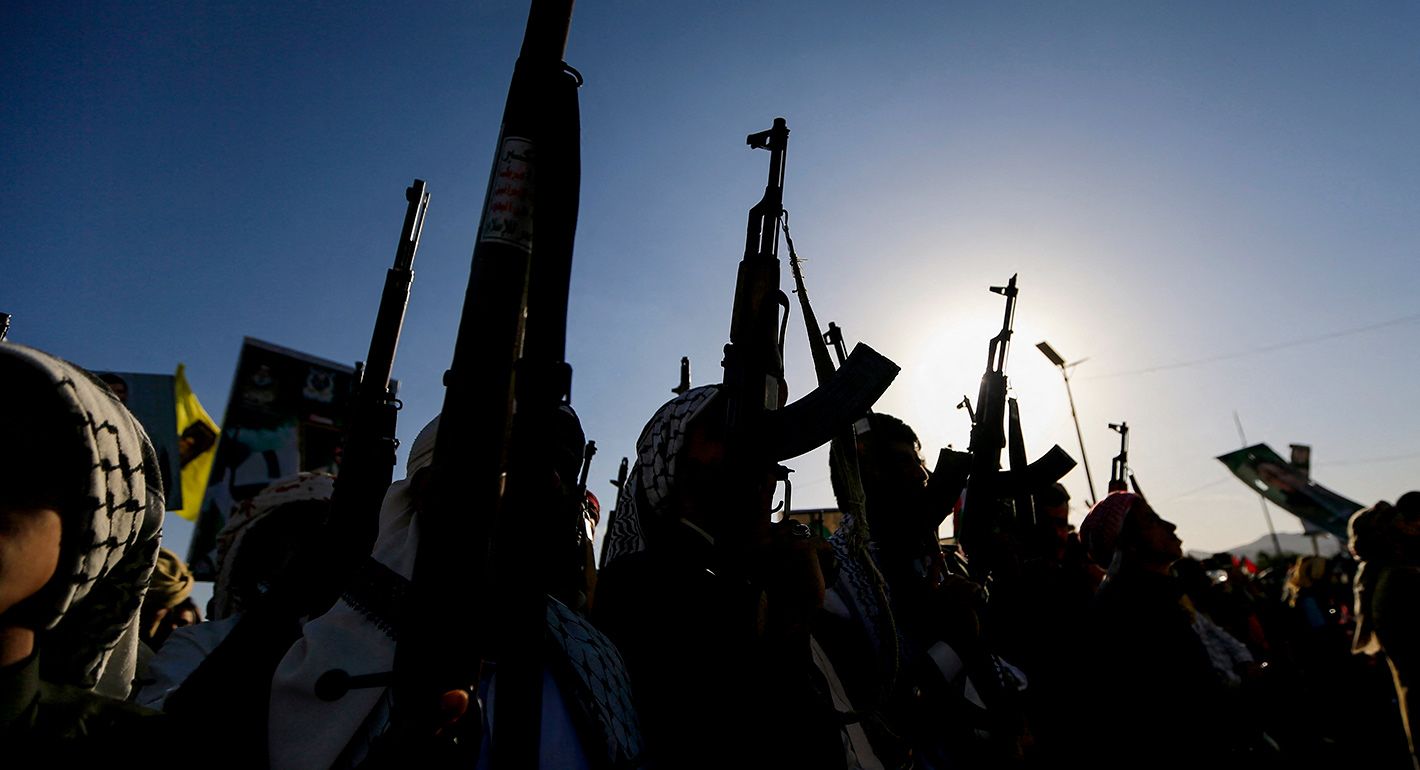
Faced with multiple complex conflicts, Arab states need to develop mechanisms of collective action that are not available to them today.
But however great the need, key Arab states had no real mechanisms to step into a vacuum left by ineffective American diplomacy. The Middle East is unusual in global terms for the poverty of formal structures for diplomatic dialogue and coordination. Almost any process that has emerged historically has been jerry-rigged for a particular issue, such as the civil wars that Syria, Libya, and Yemen suffered, or peace and security questions in Palestine and Lebanon. Much of the diplomatic effort has consisted of managing who can participate and how to conduct dialogue among actors that refuse to deal publicly with each other or even recognize each other’s legitimacy.
The obstacles to coordination over the decades are shifting but powerful. First, there have been strong ideological divisions, sometimes taking the form not merely of deep disagreements but of attempts to influence domestic politics in rival states—and even sponsor opposition movements. In the late 1950s and 1960s the divisions concerned nationalism, Arab unity ideas, monarchism, and socialism; since 2000, they have focused on political Islam and democratic reform. Second, rivalries focused on alignments with external powers, with Arab leaders denouncing each other for their ties with the United States, United Kingdom, Soviet Union, Iran, Türkiye, or simply imperialism. Third, the economic interests, political structures, diplomatic profiles, and demographic profiles of various states placed them in starkly different positions, especially after the 1970s—while not often in rivalry, the priorities of the United Arab Emirates or Qatar and those of Yemen or Egypt have been far different. And that led to far different conceptions of regime and national interest. Any effort to translate the conceptions into complementary activities ran afoul of the large number of actors, the dependence on the least common denominator (or “consensus”), and the implicit assumptions by several actors that they were the natural leader.
Those obstacles could be overcome on occasion, but the exceptions often proved the rule of disunity. In the wake of the Egyptian-Israeli peace treaty of 1979, other Arab states coordinated on isolating Egypt and supporting Palestinians in the West Bank and Gaza—a sort of unity against what was seen as an errant member of the Arab world that quickly decayed in the mid-1980s and then totally collapsed with the 1990 Iraqi invasion of Kuwait. The aftermath of the war over Kuwait saw the Damascus Declaration, which involved security coordination that quickly devolved into separate security relations with an external power (the United States). The 1989 Taif Agreement brought an end to the Lebanese civil war, but attempts to reconstruct the Lebanese political system quickly ran afoul of domestic divisions and regional rivalries. The Arab Peace Initiative of 2002 launched what seemed to be a very promising effort at regional conflict resolution and normalization, but diplomatic energy behind it evaporated in the face of Israeli rejection and a predicable lack of commitment from the United States.
Those exceptions betray clear patterns: They tended to be ad hoc efforts (sometimes through existing structures like the Arab League but focused around a single issue); they often hinged (or collapsed) not on active Arab diplomacy but on invoking the support of a powerful external actor; their target was often internal to the region (Egypt in 1979; Iraq in 1990); and they failed to engage non-Arab regional actors (such as Iran, Türkiye, and Israel). All of these characteristics were understandable in the individual circumstances that gave rise to the initiatives, but they set unsteady precedents.
All of these characteristics were understandable in the individual circumstances that gave rise to the initiatives, but they set unsteady precedents.
In the immediate aftermath of October 2023, it was unsurprising that two Arab states, Egypt and Qatar, reverted to their established crisis-management roles: back-channel mediation, logistical facilitation of aid, and pressure on armed actors to limit escalation. Given Egypt’s border with Gaza, institutional relationships with elements of the Palestinian polity, and influence in Washington, Cairo quickly became the primary regional interlocutor for ceasefire talks and humanitarian arrangements. Qatar, with ties to Hamas and a sustained mediation role before 2023, remained a critical facilitator for negotiations over hostages, temporary pauses in Israeli attacks, and ceasefire arrangements. Cairo and Doha, often in coordination with U.S. intermediation and European diplomatic backing, drove the day-to-day work that produced temporary truces, exchanges of captives, and incremental increases in aid corridors. At moments the combined Egypt-Qatar track produced tangible results; at other moments it stalled, reflecting the limits of regional leverage over the parties and the asymmetries of power and political willingness on the Israeli side. In late 2024, Qatar signaled it would pause mediation efforts pending renewed seriousness from the parties—a reminder that Arab mediation was influential but not omnipotent.
But on this occasion the challenges created a rudimentary consensus among key Arab actors who in 2024 began to coordinate more widely and strategically through informal but intensive diplomacy. They began with words, offering their own proposals for ceasefire sequencing, reconstruction governance, security arrangements, and pathways to political negotiations. But Arab capitals needed not simply to make statements but also to develop a more assertive, coordinated, sustained, and strategic diplomatic posture than in previous crises. And slowly they did.
Since late 2023, Arab diplomacy has mixed old practices (such as summits, collective communiqués, and shuttle diplomacy) with new operational moves (such as regional reconstruction pledges, working groups for Gaza, and proposals for international peacekeeping and trust funds). The diplomacy has been uneven, contentious, and at times contradictory, yet it marks a clear shift from transactional normalization politics toward an assertive, public Arab posture on Gaza and the Palestinian question. This year has shown two concrete expressions of that shift: the mediatory role Arab capitals played in the lead-up to a January 2025 ceasefire and the emergence of a high-profile, Arab-sponsored reconstruction plan in March 2025.
The first step was to manage and contain the war in Gaza; the second was to craft an Arab position on the longer-term issues of Palestinian self-determination; and the third was to revive or invent mechanisms of collective regional security that could mitigate spillovers, stabilize fragile states, and reduce the chance of multiple, simultaneous wars.
As several factors converged—the war endured, the open-ended nature of Israel’s military campaign became undeniable, and humanitarian needs grew—the diplomacy of key Arab states began to move beyond episodic mediation toward programmatic responses: concrete plans for reconstruction, governance arrangements for an interim Gaza administration, mechanisms for donor coordination, and proposals for security guarantees intended to prevent a reversion to war. The scale of destruction and displacement made reconstruction an unavoidable strategic question for Arab states that share borders with Gaza or with other Palestinian territories. And public opinion and domestic political dynamics—in Gulf capitals as well as in neighboring states like Egypt and Jordan—demanded visible solidarity with Palestinians, making quiet normalization deals politically costly in the face of sustained suffering. Significantly, key Arab states began to feel a need to present their own alternative—to shape what postwar Gaza would look like, rather than cede the agenda entirely to outside powers whose policy prescriptions not only excluded Palestinians but also raised the specter of massive population transfer and attendant domestic and international instability.
Diplomacy’s first near-term success was real but ephemeral. In January 2025, Israel and Hamas agreed to a ceasefire-and-hostage-exchange framework. That agreement—the product of lengthy trilateral mediation involving Egypt, Qatar, and the United States, with other parties contributing diplomatic energy—offered a phased model: an initial, time-limited ceasefire, phased hostage releases in exchange for Palestinian detainees, a drawdown of Israeli forces in Gaza, and a road map toward reconstruction and negotiated truce. Arab capitals were not the sole architects of the arrangement, which fell through as Israel turned against it and the United States abandoned it.
The departures from these two key parties left a vacuum that Arab actors struggled to fill. The March 2025 Arab League summit in Cairo represented the apex of that programmatic turn. Member states adopted an Egyptian-sponsored reconstruction plan that laid out multiyear funding, governance, and security proposals for Gaza—a plan presented publicly as an Arab alternative to external proposals that some Arab leaders saw as premised on displacement or on sidelining Palestinian institutions. The summit’s communiqué articulated an insistence that Palestinians should remain on their land, proposed international mechanisms for oversight of reconstruction funding, and called for arrangements to prevent forced population transfers. International reporting framed those decisions as a collective Arab endorsement of a $53 billion reconstruction vision and as a political rebuff to competing external ideas about Gaza’s future. The summit also linked the end of hostilities to subsequent steps that would re-center Palestinian agency and the two-state solution in regional diplomacy.
And as the United States resumed ceasefire efforts in the fall of 2025—broadening them to a twenty-point plan that suggested sustained diplomacy toward conflict resolution—Arab states faced an alternative: They could denounce the plan as problematic, full of holes, and unlikely to produce what it promised. Or they could engage with it, secure some changes, and hope that such measures would make the plan more consistent with their vision. They opted for the second path, helping to secure UN Security Council endorsement of U.S. President Donald Trump’s plan.

Past peace processes in Israel and Palestine showed what makes negotiations work. This time, Arab governments are uniquely positioned to broker a lasting peace.
One of the most striking features of the post–October 2023 Arab diplomatic trajectory is the rhetorical and programmatic re-centering of the Palestinian cause and a renewed invocation of the two-state solution as the legitimate horizon for regional policy. In one sense this was a return to the past: The 2002 Arab Peace Initiative committed the Arab League to support for a two-state solution and full normalization of relations between Israel and Arab states. But having taken that joint step a generation ago, Arab diplomacy depended on goading international action (and especially U.S. support) for implementation; when that proved anemic, the initiative seemed to fall into hibernation.
For much of the past decade the Arab diplomatic landscape had been characterized instead by a mix of bilateral normalization deals—with several Gulf states, Morocco, and Sudan choosing pragmatic engagement with Israel—and rhetorical commitments to Palestinian rights that often lacked operational follow-through. The catastrophic human toll in Gaza disrupted that pattern: Arab publics demanded stronger stands; some capitals found normalization agreements politically risky; and the politics of Arab solidarity converged with strategic calculations about regional stability.
That convergence produced a more assertive Arab diplomatic posture: Communiqués from ministerial and summit meetings explicitly tied reconstruction to Palestinian self-determination, linked normalization to progress on a Palestinian state, and sought to place Arab-led institutions—or internationally mediated Arab mechanisms—at the center of reconstruction governance. The logic was both normative and instrumental. Normatively, leaders of key Arab states framed Gaza reconstruction as not merely humanitarian but also tied to justice and the right of return/residence. Instrumentally, by proposing Arab-led oversight and donor coordination, capitals sought to retain leverage over the political architecture emerging in Gaza and to ensure that reconstruction would not be an occasion for erasing Palestinian presence or replacing Palestinian sovereignty with proxy arrangements.
In one sense, the activism paid off. Significant outcomes included the joint Saudi-French initiative to revive the two-state solution, the wave of international recognitions of the Palestinian state that followed the UN endorsement of the initiative, and the July 2025 New York Declaration that included a full vision of Palestinian statehood, reform, and a two-state outcome. The Security Council resolution endorsing Trump’s twenty-point plan included a reference to that declaration.
But in a longer-range sense, the attempt to revive two-state diplomacy may compensate with detail what it lacks in practical mechanisms. Increasingly, criticisms of the two-state approach focus not on its desirability but on its viability: Israeli settlements and systematic attempts to undermine the building blocks of a two-state solution, deepening despair among Palestinians about prospects for statehood, and the decay of Palestinian institutions have erected barriers to the solution that may not be surmountable.
Viable Arab diplomacy will have to either devise a new path to a two-state outcome—a daunting prospect indeed—or develop and pursue a different path to secure Palestinian national rights in a regional framework that is acceptable to all—an equally daunting task. Indeed, even seasoned observers and former advocates of the two-state solution have come to conclude that it simply cannot be realized—and worse that the phrase has become a placeholder for the lack of a viable plan to secure the national and human rights of Israelis and Palestinians. So insisting on the two-state solution and securing vague mention of a Palestinian state in the United Nations Security Council resolution may be a good tactical move for Arab states, but it is one that relies on unrealistic strategic outcomes—a problem we return to in the conclusion.
Arab diplomacy since October 2023 has not confined itself to Gaza policy. A broader strand of collective security thinking emerged: Policymakers and analysts in some Arab capitals began to argue publicly for cooperative security mechanisms that could prevent local conflicts from metastasizing into regional conflagrations. The logic driving this thinking was clear. The Gaza war risked drawing in Lebanon, Syria, Iraq, and maritime choke points; internal civil wars and state fragility in countries such as Libya, Yemen, and Sudan were generating refugee flows, militia spillovers, and opportunities for proxy competition. If the region were to avoid simultaneous, overlapping crises, it would need mechanisms that combined political dialogue, conflict management, and targeted stabilization assistance.
Arab proposals in this vein had several components. First, there was a call for international peacekeeping or stabilization forces in sensitive zones (including proposals for international observers or peacekeepers in parts of Gaza and the West Bank, with Arab endorsement of an international trust fund and oversight role for reconstruction). Second, there were proposals for regional security forums or working groups that would bring together security officials from Arab states to coordinate on arms interdiction, intelligence sharing on extremist threats, and common approaches to border management. Third, some Arab leaders advocated for stabilization packages that would pair security reforms with economic recovery—in effect, coupling short-term security measures with medium-term state-building and social resilience investments to reduce the likelihood of renewed conflict.
It is important to be precise about the ambition and limits of these ideas. By and large, Arab collective security thinking during this period has been programmatic rather than institutional: Key states proposed frameworks, principles, and ad hoc arrangements rather than creating a robust supranational Arab security architecture. There were good reasons for caution: Mutual distrust among the league’s member states, asymmetries in military capabilities, reluctance to cede sovereignty, and divergent threat perceptions all constrained how far cooperation could go. Yet the fact that Arab leaders placed security cooperation alongside reconstruction and political talks—treating it as part of a coherent strategy to prevent future conflagrations—was itself a noteworthy shift in regional policy discourse.
The fact that Arab leaders placed security cooperation alongside reconstruction and political talks . . . was itself a noteworthy shift in regional policy discourse.
Moving from ideas to implementation brought a set of formidable institutional challenges. Security arrangements posed their own knotty dilemmas. Proposals for international peacekeepers in Gaza and the West Bank raised questions about mandates, troop-contributing countries, the chain of command, and the consent of local authorities—especially given Hamas’s complex armed presence and Israel’s insistence on security prerogatives. Some Arab leaders conditioned international deployments on the protection of Palestinian rights and on the presence of Arab observers or training inputs, while Israel insisted on retaining certain security prerogatives. Bridging these positions required painstaking negotiations, and the January 2025 ceasefire’s phased structure attempted to reconcile the desire for immediate relief with long-run security guarantees. The ceasefire’s early implementation validated the principle that combined regional-international frameworks could hold temporarily.
Overall, the success of Arab diplomatic cooperation efforts thus far has been real but limited. They do show a remarkable contrast to the past in their ability not merely to coordinate among disparate (and often jealous) actors but also to devise initiatives, pursue diplomacy, and act rather than react. But in all three cases above, the achievements have still been short term. The war in Gaza has abated, but it has not stopped, and any movement toward reconstruction or resolution is completely stalled. Palestinian self-determination is no longer ignored, but no viable path has been proposed to return to past solutions or invent new ones. And collective security thinking is still ad hoc, devoid of any permanent structure or clear doctrine.
Yet the recent efforts have overcome some of the problems of the past in ways that suggest the possibility—but only the possibility—of a new mode of diplomacy. First, they have brought together key Arab states despite rivalries, ideological differences, and economic interests. Second, they have coupled coordinated positions with active diplomacy, showing tactical adroitness if not yet full strategic vision. Third, and most subtly, they have arranged an Arab position that neither aligns nor depends on a specific global actor but still engages with all the major ones. Rather than call on the United States to act or appeal to Russia to counter the United States, the new Arab approach has been to engage with all—for instance, Arab states worked to develop ideas about Palestinian governance with European powers and then coordinated successfully with other UN Security Council members to prevail on the United States to modify its draft.
So past patterns of division, passivity, and rivalry have been overcome for the moment, but they are hardly buried. Although there were striking moments of Arab collective action, unity has never been total. The post-2023 landscape reflected competing national interests and preferences about how to weigh normalization, leverage over Israel, relations with Iran, and the trade-offs between humanitarian solidarity and strategic pragmatism. Gulf states, which control most of the region’s financial reserves, were essential to any reconstruction plan’s viability. Yet Gulf capitals also had divergent views about the sequencing of political normalization with security guarantees for Israel and the pace of Palestinian institution-building. Some states wanted clear preconditions for any diplomatic or normalization steps; others were more willing to accept a phased political horizon in return for concrete security commitments.
These divisions showed up in both rhetoric and in the architecture of pledged support. Some Arab donor commitments were framed as conditional on governance reforms within the Palestinian Authority or on clear anti-corruption safeguards; others emphasized immediacy and scale without attaching strict political preconditions. The interplay between conditionality and speed mattered because reconstruction cannot wait forever, but ill-designed conditionality can impede the speed at which rubble is cleared and services restored. Arab diplomatic efforts therefore had to manage trade-offs: leveraging Gulf financial power while protecting Palestinian political agency and ensuring that funding did not become an instrument for external control.
A crucial insight is that Arab diplomacy gained leverage when it presented plausible, fundable, and publicly legitimate proposals. When Arab capitals proposed comprehensive plans with specifics—funding envelopes, governance structures, and monitoring arrangements—they forced external actors to take those proposals seriously. The political impact was twofold: First, it elevated Arab voices in international forums (making it harder for non-Arab actors to present unilateral plans without Arab buy-in); second, it created negotiation dynamics where Arab states could extract concessions or seek guarantees in exchange for financial commitments and political support.
Arab diplomacy gained leverage when it presented plausible, fundable, and publicly legitimate proposals.
But a second insight is that the central driver of Arab diplomatic activism was fear of contagion. A protracted Gaza war threatened to draw in Hezbollah in Lebanon, to inflame restive communities inside multiple states, and to entrench radicalization trends that would complicate stabilization across the Middle East. That strategic calculus animated calls for regional arrangements to contain conflict and to stabilize fragile states. Arab leaders proposed measures ranging from coordinated border controls and intelligence sharing to regional development packages aimed at confronting the socioeconomic drivers of instability.
Can the fear of a fearful moment grow into a new way of doing business in more normal times? Can tactical coordination give way to fuller strategic coordination?
At the end of 2025, only an uneven verdict can be offered. On one hand, Arab diplomacy has had notable successes: It forced the Palestinian cause back toward the center of regional policy discussions; it produced a visible, collective reconstruction plan with concrete funding targets and governance proposals; and it helped shape a negotiated ceasefire architecture that, at least temporarily, paused large-scale hostilities and facilitated hostage releases. These outcomes demonstrated that key Arab capitals could mobilize political capital and financial resources and translate public sentiments into policy, provided that international partners, foremost the United States, were in favor of Arab efforts. On the other hand, several critical gaps persisted. Intra-Arab divergences and external geopolitical rivalries sometimes undercut collective coherence, making it easier for spoilers to exploit seams in the diplomatic architecture.
The evolving Arab diplomacy since October 2023 offers several practical lessons. First, political sequencing matters. Successful reconstruction requires parallel advances on four tracks: ceasefire/security arrangements, credible governance and accountability, rapid humanitarian relief and infrastructure repair, and durable political negotiations on final status. Neglecting any track risks undermining the rest.
Second, security architectures must combine international guarantees with local ownership. Peacekeeping or stabilization deployments will be contested unless they are framed with clear mandates, legal bases, and sunset clauses tied to institution-building. To be sustainable, such deployments must also include training and integration components that help build Palestinian security institutions under accountable civilian control.
Third, Arab collective action—even when imperfect—is politically powerful. A coherent Arab position, especially when backed by realistic funding pledges, alters the bargaining environment with external powers. Maintaining and broadening that unity requires careful diplomacy and creating mechanisms for periodic consultation that can smooth intra-Arab tensions before they become public ruptures.
Arab collective action—even when imperfect—is politically powerful.
Fourth, Arab collective action in 2025 showed a surprising willingness to engage simultaneously with multiple actors without depending on any of them. On a regional level, Israel, Iran, and Türkiye have been treated as interlocutors rather than pariahs—deeply problematic and threatening ones to be sure, but ones that are to be engaged in part through diplomacy rather than total isolation or exclusion. And globally, key Arab states worked with a variety of actors (rather than simply one) proactively as much as reactively.
Fifth, the Arab agenda presented itself as positive and not merely negative: It rejected Israeli or Iranian hegemony, Palestinian radicalism, forced population transfer, and military action in Gaza designed to complete the destruction of Hamas. But it also offered normalization to Israel, Palestinian national self-determination, and cooperation with Gaza reconstruction. While of course unable to provide these things by itself (indeed, all three offers will be very difficult to realize), Arab states cobbled together positions that not only went beyond “no” but made it difficult for other actors to say “no.”
Those are limited achievements to be sure, and they might best be understood as obstructing even more disastrous outcomes rather than enhancing regional security. But the period since October 7, 2023, demonstrated that key Arab states can, under severe pressure, produce coordinated diplomatic initiatives that reshape the policy agenda. Whether this episodic collective action matures into a sustained regional compact depends on several variables: the durability of political will in Arab capitals; the ability to translate pledges into transparent, executable programs; and the willingness of external powers to accept Arab-proposed frameworks.
And those variables will be tested at least in part, whether Arab states like it or not (and many do not), on the territory of Palestinian politics. But the diplomacy of the past year suggests possibilities not so much for new solutions but for new strategies. In the past, Arab states have either been united by what they were against or divided in how they pursued negotiations with Israel. And when they did negotiate with Israel it was always with one (or both) eyes on the United States. In the past year, some have individually found that the road to the United States does not always need to lead through Israel. Even more, they have discovered an ability to act collectively and directly with other major international actors—they can coordinate with European and other permanent members of the Security Council, stake out strong positions but also make compromises, and block outcomes they do not desire while also showing openness to alternatives. They have not advanced a blueprint for a comprehensive settlement, but at this point nobody can do that. What they can do is forge a common strategy based on the insistence that the Palestinians are a national entity and need to be part of any negotiations about permanent arrangements—and that full normalization hinges on that.
Most of all, turning the tactical achievements of the past two and a quarter years into a new way of doing business depends on key Arab states and their leaders determining that (1) they have sufficient common interests to coordinate, (2) coordination must go beyond statements to sustained diplomacy, (3) only coordinated and active diplomacy will secure their interests, (4) a privileged bilateral relationship with Washington is no longer the best way to secure national interests, and (5) struggles over control of the Middle Eastern steering wheel are likely to lead the region into a deeper ditch.

Director, Middle East Program
Amr Hamzawy is a senior fellow and the director of the Carnegie Middle East Program. His research and writings focus on Egypt’s and other middle powers’ involvement in regional security in the Middle East, particularly through collective diplomacy and multilateral conflict resolution

Nonresident Senior Fellow, Middle East Program
Nathan J. Brown, a professor of political science and international affairs at George Washington University, is a distinguished scholar and author of nine books on Arab politics and governance, as well as editor of five books.
Carnegie does not take institutional positions on public policy issues; the views represented herein are those of the author(s) and do not necessarily reflect the views of Carnegie, its staff, or its trustees.

Understanding the climatic pain points is necessary for policymakers hoping to minimize the war’s negative environmental consequences.



Alejandro Martin Rodriguez, Joy Arkeh, Sarah Yerkes

Huawei pushed hard to enter the Egyptian data centers market, until the Americans made a better offer.

Angie Omar

The books, podcasts, and films that explain the world it made.

Andrew Leber

With the growth in points of friction between the great powers, organizations like the SCO will continue to play a role in the strategic adaptation of the smaller powers caught between them.

Temur Umarov
Amid celebrations of bilateral ties was a deeper focus on stability in the Middle East.
Amr Hamzawy