

In The Media
Lilia Shevtsova

Source: Getty
The second trial of Mikhail Khodorkovsky and Platon Lebedev is overtly political and aims not only to justify then-President Vladimir Putin's brand of Russian governance, but also to show that Putin is not ready to step down from power.
Certain events in a country’s and society’s history determine the track they take or reflect their essence. In modern Russia, one such event is the “Yukos affair,” and the corresponding fate of the founders of this most successful of Russian oil companies—Mikhail Khodorkovsky and Platon Lebedev. Khodorkovsky’s arrest in 2003 was a watershed moment, which showed Russia’s authorities had chosen bureaucratic capitalism with a repressive bent over liberal democracy.
Up to that point many observers, including those in Russia, had been unclear about then-President Vladimir Putin’s ideological philosophy as a leader. Many experts thought he was a market reformer and even a liberal, despite the fact that Putin’s Kremlin set in motion a steamroller that steadily destroyed independent television. But the optimists still hoped Putin would turn out to be a sort of “Pinochet-lite” and begin building an effective market economy to serve as the foundation for liberal institutions. “We first need to bring order for this to happen,” liberal-thinking people reassured themselves.
But Khodorkovsky’s arrest and the state seizure of Yukos’s assets—through blatantly criminal means—put an end to these hopes. It became clear a regime that seized assets and sent the company’s owners to prison under absurd pretexts did not favor liberal capitalism at all. Putin and his team had chosen, rather, a full merger between the power and property ownership, with everything concentrated in one set of hands. Russia had returned to its traditional matrix of personalized power and complete control of the economy by the authorities. The Khodorkovsky case thus sounded the death knell for hopes of a new and open Russia.
Why did Khodorkovsky and his colleague, Lebedev, become political prisoners? The authorities handpicked this role for them to play, because their trial and imprisonment served to confirm and remind everyone that the Kremlin’s course was “right,” and at the same time taught a lesson to Russian oligarchs and others about what happens to those who fail to obey and submit to authority.
Of course, the whole Khodorkovsky trial was also Putin’s personal vendetta against him. But it was about even more than animosity or economic benefits gained by those who took over the company. From the regime’s point of view, imprisoning Khodorkovsky demonstrated the system’s battle readiness and showed the power of its creator and his supporters. The possibility of freeing Khodorkovsky began to be perceived not only as a sign of liberalization, but of the decay of Putin and his regime, as well as of the destruction of this system’s core element—the merger between power and property. This is something the authorities would not let happen.
This power play led to the second trial of Khodorkovsky and Lebedev, and to a new absurd charge against them—this time they were accused of stealing the oil, on which, in the first trial, they were convicted of failing to pay taxes. It’s hardly a surprise that the Russian authorities refuse to acknowledge the absurdity of the whole Yukos case. The entire Russian system of governance is built on absurdity. While tightening the screws of repression on the one hand, the authorities hold forth on democracy and even get Western leaders to join in on the other.
In the case against Khodorkovsky, the prosecution is calling for fourteen more years of imprisonment for Khodorkovsky and Lebedev, in addition to the eight-year sentence they received in the first case. Even some murderers do not get sentences this long in Russia. What’s more, prosecutors have failed to prove the “guilt” of the accused.
I attended the trial and saw how the prosecutors failed to even attempt to prove their accusations, thus demonstrating the case was not about “economic crimes.” It was clear that this was a political trial, the aim of which is not only to prove that Putin was right to build a system based on bureaucratic capitalism and personal power, but also to show that he is not about to step down from this power. For Putin to let Khodorkovsky out of prison would be tantamount to political suicide.
And what about Russian President Dmitry Medvedev? The Yukos case and the trial of Khodorkovsky and Lebedev have become an unpleasant test for him, showing to what degree he is actually in charge and to what extent he is committed to the principles of rule of law.
Debate about which leader really runs Russia—Putin or Medvedev—has gone on in Russia and the West for almost two years now. During that time, people have tried to prove Medvedev’s liberalism, suggest he should remain in office for another term, and carry out his modernization policies. The West even began a reset in relations with Russia based on its faith in Medvedev’s liberalism and readiness to reform.
But the second trial of Khodorkovsky and Lebedev answers any questions that remain about Medvedev’s commitment to the rule of law or his role. His complete indifference to the case also gives away the game. He may talk every day about the rule of law, freedom, and justice, but the case is making a mockery of the law before his eyes.
The case either means that Medvedev has no levers of power and is simply keeping the seat warm for Putin or that he is not a liberal and not a true lawyer, as he likes to call himself. Whichever is true, he is taking part in a poor imitation of the legal process that hardly does him credit.
Opposition leader and former deputy prime minister Boris Nemtsov has written an open letter to Medvedev calling on him to do something “worthy of a president—a noble and honest act”: to pardon Khodorkovsky and Lebedev. But pardoning them would first require the court to hand down a verdict. To be honest, I do not believe that Medvedev is ready or able to carry out this act because freeing Khodorkovsky and Lebedev would be equal to challenging Putin. It’s hard to imagine that possibility.
But one will not have to wait long to see if Medvedev is ready to do so.
Perhaps the Kremlin’s strategists will display an ability to break from their standard practices and free their victims to prove that Russia is indeed changing, even if they don’t intend to change anything in reality. But I do not believe that they can or are willing to even imitate this “half-open window” by following this course.
Thus far, the second Yukos trial also convincingly answers the question about the future of Russia’s modernization and its reset in relations with the West. No successful modernization can occur as long as the authorities falsify trials and reject the rule of law. If modernization is just a bluff, the need will soon arise to blame for its miserable failure, and the West, as always, makes an ideal scapegoat.
For now, the fate of political prisoners Khodorkovsky and Lebedev is not just a sentence that applies to the Russian system but also to Russia’s “liberals” within the system, who claim to defend liberal principles while serving a regime that tramples these very same principles underfoot. It is a sentence passed, too, on the Western political community’s policies, which abet the Kremlin, and on the silence of Russian society.
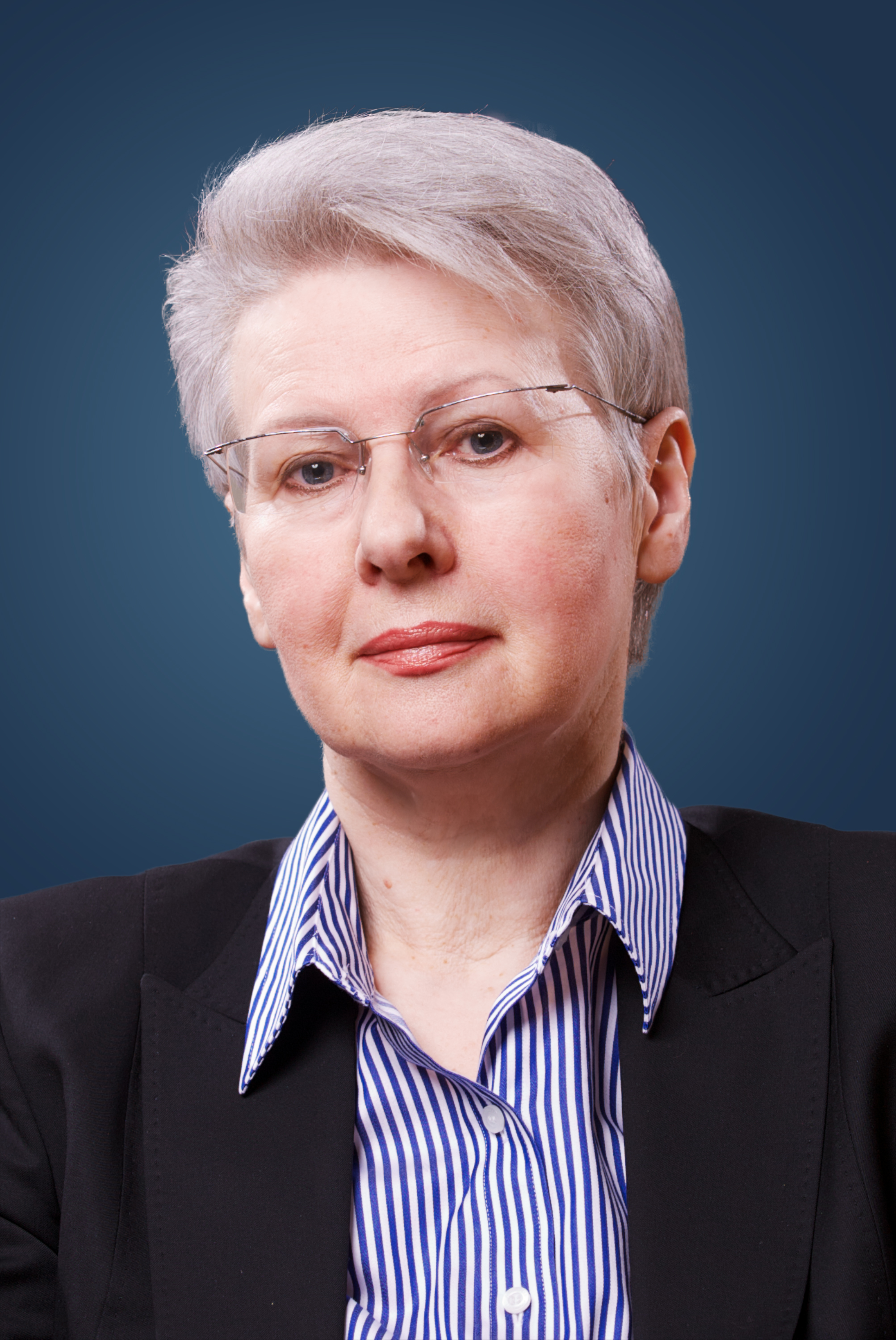
Former Senior Associate, Russian Domestic Politics and Political Institutions Program, Moscow Center
Shevtsova chaired the Russian Domestic Politics and Political Institutions Program at the Carnegie Moscow Center, dividing her time between Carnegie’s offices in Washington, DC, and Moscow. She had been with Carnegie since 1995.
Recent Work
Lilia Shevtsova
Lilia Shevtsova
Carnegie does not take institutional positions on public policy issues; the views represented herein are those of the author(s) and do not necessarily reflect the views of Carnegie, its staff, or its trustees.
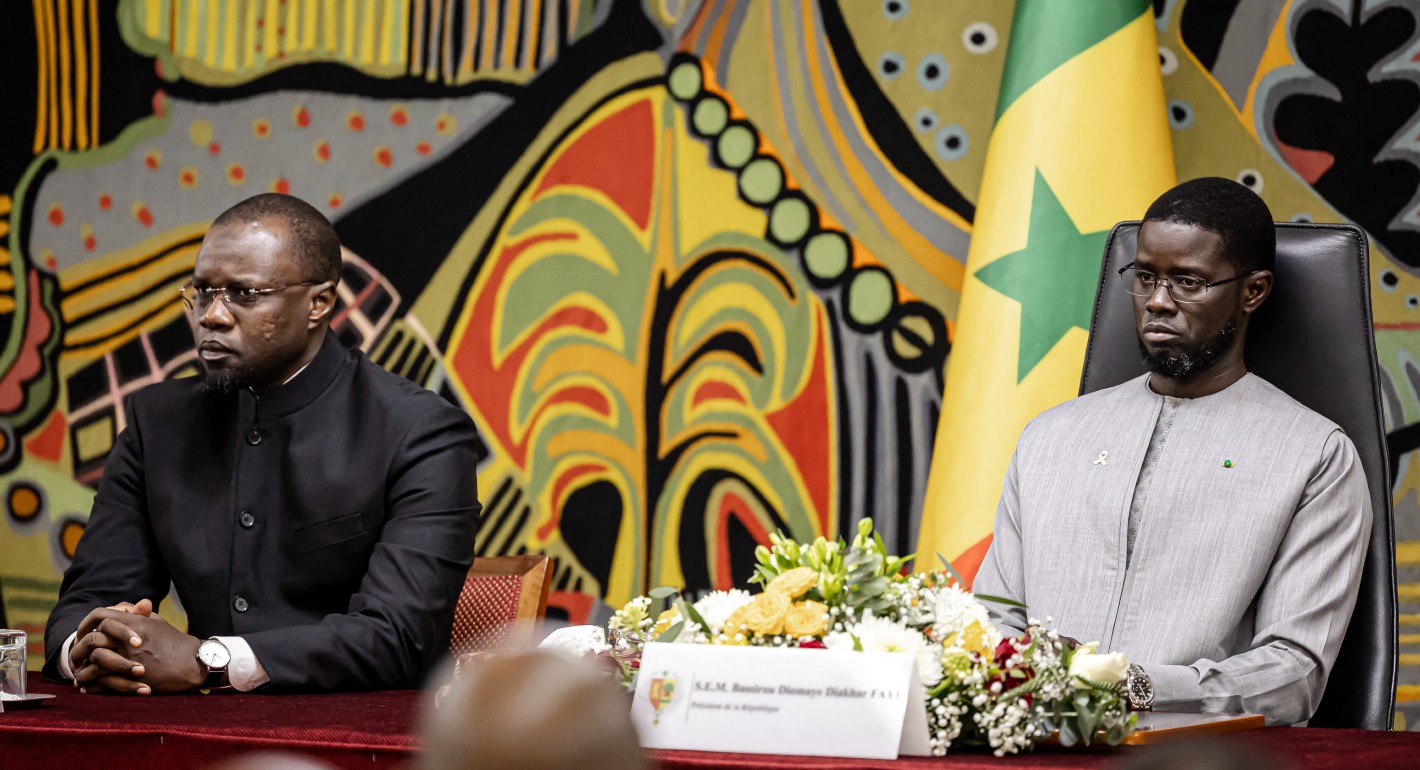
The impacts of the Faye-Sonko rupture could go well beyond the country’s borders.

Lesley Anne Warner
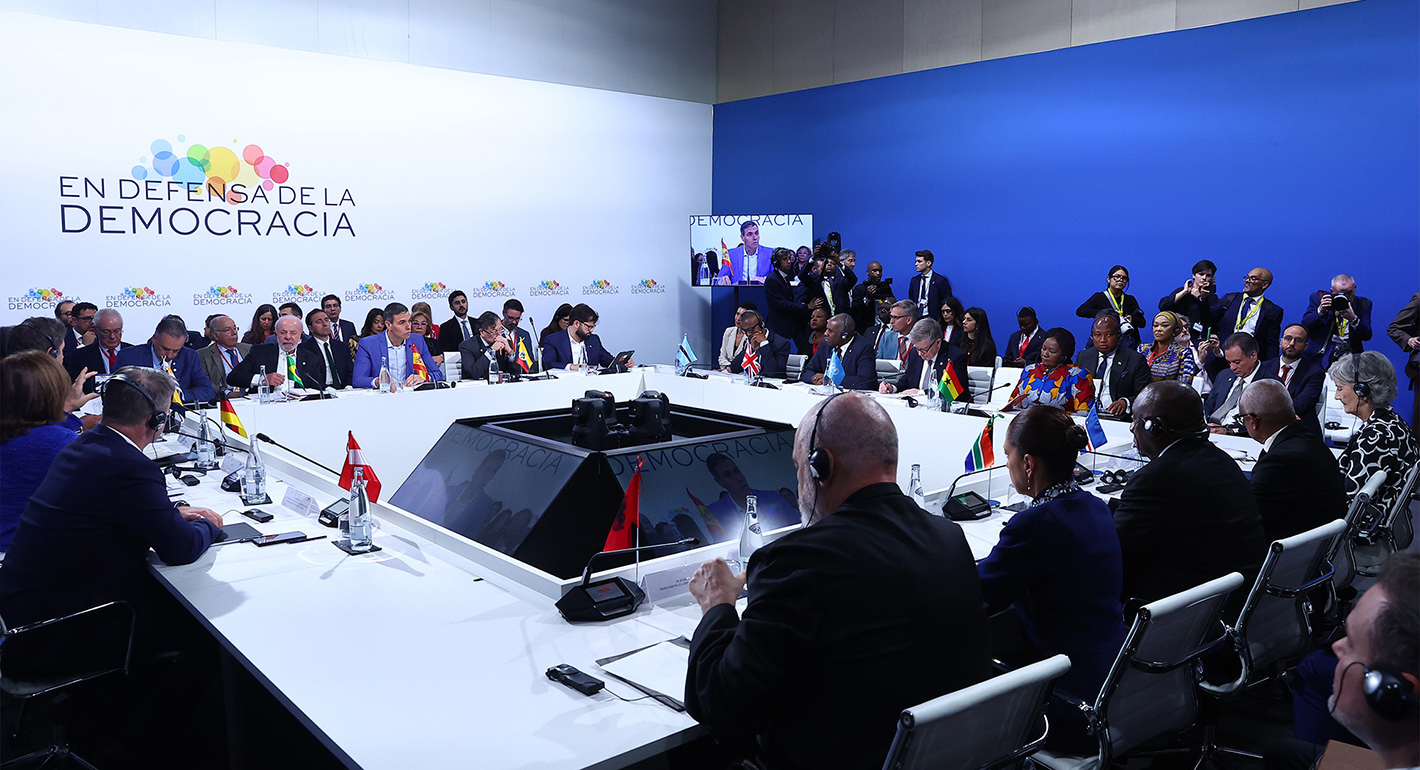
The reinvention of democracy support needs to be carried forward without the clear leadership of one dominant player.


Richard Youngs, Thomas Carothers
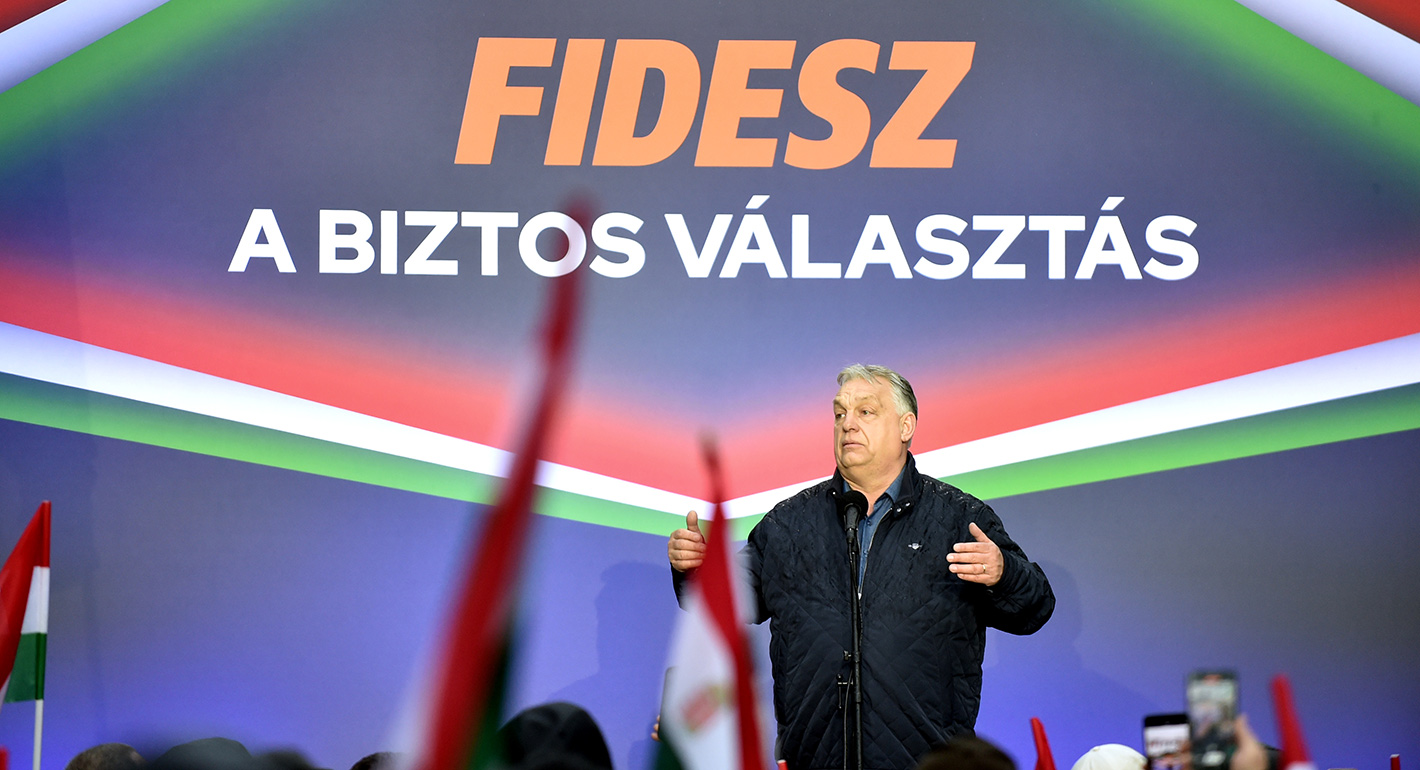
Hungary under Viktor Orbán deployed right-wing populism as a foreign policy strategy, embedding the country in a web of illiberal transnational networks whose legacy will endure even after his April 2026 electoral defeat.
Zsuzsanna Végh
By fueling the arguments of both supporters and opponents of Armenian Prime Minister Nikol Pashinyan, Azerbaijan wants to ensure he is re-elected with a weaker mandate.

Bashir Kitachaev
A much-discussed disagreement over internet restrictions in Russia was never an existential threat for Putin: It was about elite groups protecting their interests.

Alexandra Prokopenko