• Research
  • Emissary
  • About
  • Experts
Carnegie Global logoCarnegie lettermark logo
DemocracyIran
  • Donate
Reinterpreting China’s Success Through the New Economic Geography

Source: Getty

Paper
Carnegie China

Reinterpreting China’s Success Through the New Economic Geography

China has capitalized on its huge population and geographic size to become the world’s most efficient assembler and exporter of manufactured goods, but China’s transformation is now reaching a critical turning point.

Link Copied
By Yukon Huang
Published on Nov 10, 2010

Additional Links

Full Text
Program mobile hero image

Program

Asia

The Asia Program in Washington studies disruptive security, governance, and technological risks that threaten peace, growth, and opportunity in the Asia-Pacific region, including a focus on China, Japan, and the Korean peninsula.

Learn More

China has capitalized on its huge population and geographic size to become the world’s most efficient assembler and exporter of manufactured goods, but China’s transformation is now reaching a critical turning point.

In a paper, Yukon Huang explains how China relied on lower transportation costs and a concentration of economic activities to foster rapid—albeit unbalanced—growth. If China builds on its recent success and adopts a more flexible exchange rate system, the four major policy questions that are now dominating the debate over China’s economic future can be answered as follows:

  • Will China’s economic growth slow down in the coming years? Lower investment rates and reduced trade surpluses point to slower GDP growth, but if China can increase productivity and consumption, the decline will be modest. Such an outcome would be more sustainable and beneficial to workers.

  • Is an appreciation of the yuan in the interest of the United States or China? A major one-time revaluation of the yuan would not be in the interests of the United States or China, but greater flexibility—in both directions—is in the interests of China and indirectly of America and the rest of the world.

  • Will China’s growth be driven by exports, investment, or consumption? A healthier balance between all three will be restored. Wages and consumption rise as a share of income, with investment declining to more sustainable levels. Trade surpluses will moderate but remain positive.

  • Can China continue to grow quickly while also reducing income inequalities? As growth centers shift gradually inland, poorer rural inhabitants move to the cities, and wages rise, income disparities will decline.

“Forces are now coming into play that will reshape China’s economic landscape during the coming years in ways that should help harmonize the impact on the global economy of China’s growth, which currently is rattling global trade and commodity markets,” writes Huang.    

About the Author

Yukon Huang

Senior Fellow, Asia Program

Huang is a senior fellow in the Carnegie Asia Program where his research focuses on China’s economy and its regional and global impact.

    Recent Work

  • Commentary
    Three Takeaways From the Biden-Xi Meeting

      Yukon Huang, Isaac B. Kardon, Matt Sheehan
  • Commentary
    Europe Narrowly Navigates De-risking Between Washington and Beijing

      Yukon Huang, Genevieve Slosberg

Yukon Huang
Senior Fellow, Asia Program
Yukon Huang
East AsiaChinaNorth AmericaEconomyTrade

Carnegie does not take institutional positions on public policy issues; the views represented herein are those of the author(s) and do not necessarily reflect the views of Carnegie, its staff, or its trustees.

More Work from Carnegie Endowment for International Peace

  • Japanese Prime Minister Sanae Takaichi delivers a speech during the graduation ceremony at the National Defense Academy of Japan on March 14, 2026 in Yokosuka, Kanagawa Prefecture, Japan.
    Article
    Revisiting Japan’s Non-Nuclear Principles: Between a Nuclear Allergy and Umbrella

    Japan’s prime minister, Takaichi Sanae, may kickstart a discussion on Japan’s non-nuclear principles.

      Shizuka Kuramitsu
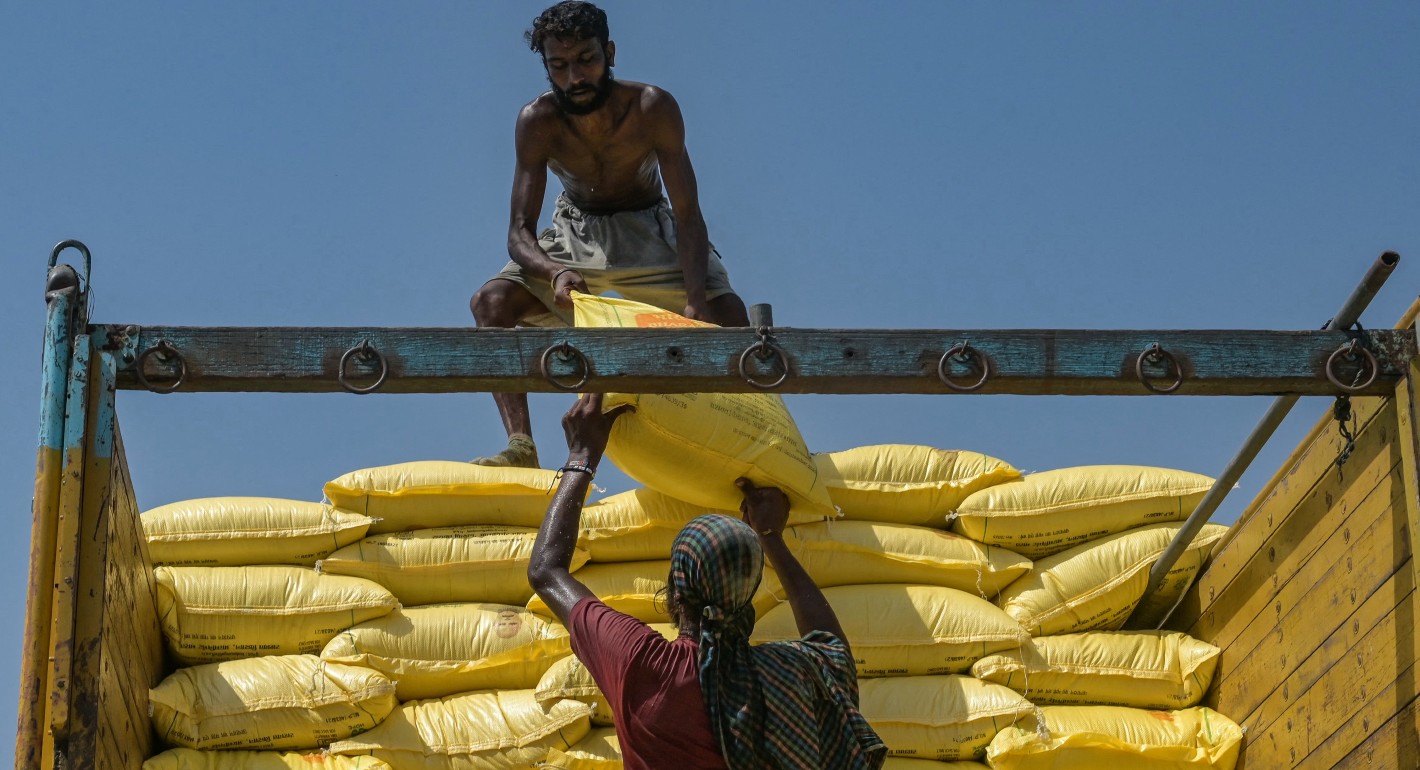
  • One man tossing a sack to another to stack on a truck
    Commentary
    Emissary
    The Other Global Crisis Stemming From the Strait of Hormuz’s Blockage

    Even if the Iran war stops, restarting production and transport for fertilizers and their components could take weeks—at a crucial moment for planting.

      • Noah  Gordon ​​​​

      Noah Gordon, Lucy Corthell

  • Trump United Nations multilateralism institutions 2236462680
    Article
    Resetting Cyber Relations with the United States

    For years, the United States anchored global cyber diplomacy. As Washington rethinks its leadership role, the launch of the UN’s Cyber Global Mechanism may test how allies adjust their engagement.


      • Christopher Painter

      Patryk Pawlak, Chris Painter

  • People visit the World Artificial Intelligence Conference (WAIC) at the Shanghai World Expo and Convention Center in Shanghai on July 28, 2025.
    Article
    China’s AI-Empowered Censorship: Strengths and Limitations

    Censorship in China spans the public and private domains and is now enabled by powerful AI systems.

      Nathan Law
  • Commentary
    Carnegie Politika
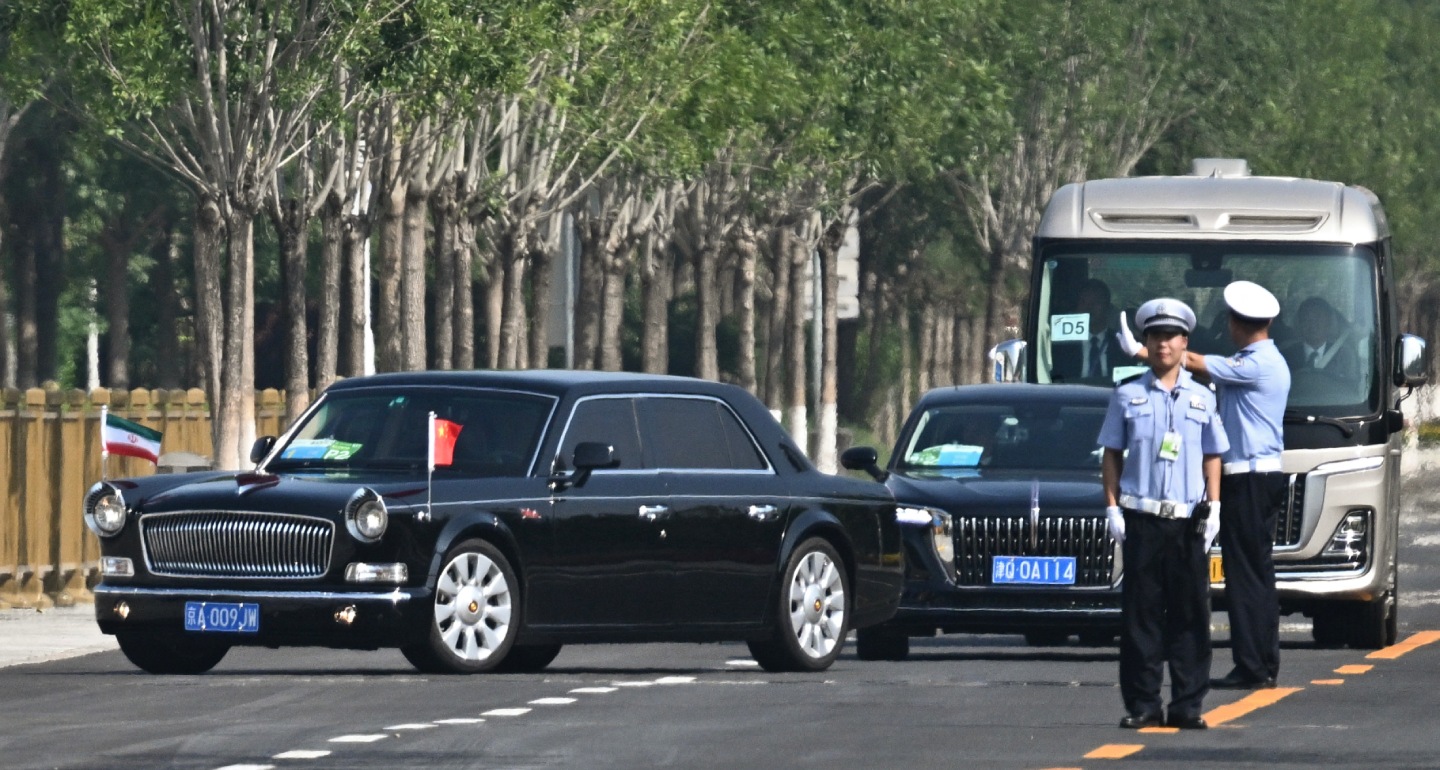
    Why Are China and Russia Not Rushing to Help Iran?

    Most of Moscow’s military resources are tied up in Ukraine, while Beijing’s foreign policy prioritizes economic ties and avoids direct conflict.   

      • Alexander Gabuev

      Alexander Gabuev, Temur Umarov

Get more news and analysis from
Carnegie Endowment for International Peace
Carnegie global logo, stacked
1779 Massachusetts Avenue NWWashington, DC, 20036-2103Phone: 202 483 7600Fax: 202 483 1840
  • Research
  • Emissary
  • About
  • Experts
  • Donate
  • Programs
  • Events
  • Blogs
  • Podcasts
  • Contact
  • Annual Reports
  • Careers
  • Privacy
  • For Media
  • Government Resources
Get more news and analysis from
Carnegie Endowment for International Peace
© 2026 Carnegie Endowment for International Peace. All rights reserved.