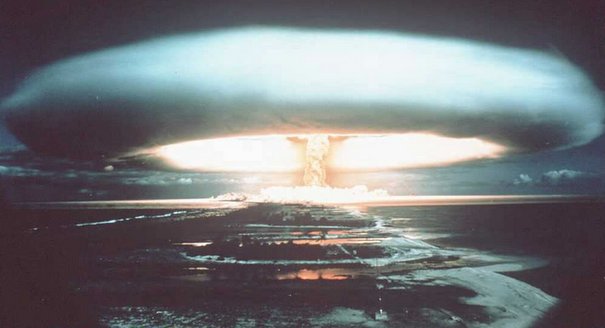
In the midst of a financial crisis of existential proportions for the euro, nuclear issues have been pushed to the margins of the European political debate. This is understandable, but it cannot be allowed to continue. The world faces potential new nuclear arms races and Europe systematically underestimates both the scale of the problem and the scale of its ability and responsibility to act.
To the extent that European policymakers have been paying attention to this agenda at all in recent years, they have been justifiably preoccupied with Iran. A nuclear Iran would cause enormous instability in the Middle East and could lead to a wider regional proliferation cascade. Even more terrifying, a nuclear stand-off between Iran and Israel would be one between states that have no hotline for crisis communication—and in fact have no direct communication with each other at all. Terrorist organizations, supported but not wholly controlled by Iran, could also play a critical role in turning a future crisis situation into a catastrophe.
Iran, however, is only one small part of the problem. Despite the fact that the global stockpile of nuclear weapons has declined from around 70,000 in the mid-1980s to around 23,000 today, and despite the welcome signing of New START between the United States and Russia, nuclear modernization or force build-up programs are underway in all of the currently nuclear armed states. Almost all have recently produced, or are planning, new or modernized nuclear warheads and better and more dangerous delivery systems. This applies to the United States and Russia, to China, India, Pakistan, France, the United Kingdom, and, reportedly, Israel. Recently, North Korea has been discovered to have uranium enrichment facilities of a far greater scale and sophistication than anything previously imagined by the international community.
While the total number of nuclear weapons in the world has gone down, the number of nuclear weapon states has gone up and—crucially—nuclear armed states now exist in some of the most unstable and conflict-prone regions in the world. The situation surrounding the North Korean program and its potential implications for stability across wider Northeast Asia remains serious. In South Asia, India and Pakistan, two countries that have fought three wars with each other and at least one other major skirmish in recent decades, are not only locked in an adversarial relationship but are reportedly developing smaller warheads for “tactical” use in war-fighting scenarios.
While attention has been focused on the newer challenges of globalization, the rationale for these nuclear force programs indicates the persistence of deterrence as a key concept shaping the defense policies of the major powers. The Russian program is said to be a response to concerns over U.S. ballistic missile defense, advanced conventional capabilities like Conventional Prompt Global Strike, and improved U.S. intelligence and surveillance hardware. The Chinese program is justified by reference to U.S. and Indian forces, and India’s program is driven by fear over both Pakistan and China. French nuclear weapons modernization has been justified by President Nicolas Sarkozy explicitly as a response to stockpiles elsewhere that “keep on growing,” while in the United Kingdom the weapons are seen as an insurance policy against the possible long-term re-emergence of a state-based nuclear threat to UK national security. While policymakers might wish to delude themselves into thinking the nuclear problem ended with the Cold War, the truth is that the nuclear problem remains with us and has never gone away.
What, if anything, can Europe and European leaders do about this?
First, Europe has to acknowledge that it has a significant responsibility to act. Too many on the continent behave as though this is an issue for the United States and Russia alone. This is far from the truth. The United States and Russia possess over 95 percent of the world’s nuclear weapons but European countries themselves occupy an enormously influential position in the U.S.-Russia relationship. What the European member states of NATO say and do in relation to Russia, for example, can either empower the United States to be bold in building cooperation with Moscow or be a major constraint on the progress that can be achieved. Europeans should seek to exert their influence to speed up, not slow down, cooperation.
They can do this through the European Union, where the Europeans have an opportunity to build a genuinely cooperative and influential relationship with Russia in their own right across the fields of trade, energy, and environmental cooperation. But they can also do this through influencing the ongoing NATO Deterrence and Defence Posture Review. This review may lay the foundation for the transatlantic and European security architecture for many years to come. There is a strong case in this context for European states acknowledging that NATO’s non-strategic nuclear weapons in Europe have lost their original role of deterring massive Soviet conventional superiority. The European members of NATO should be willing in the circumstances to support—if not a full withdrawal—then a further reduction and consolidation of these weapons into fewer bases in Europe while also encouraging the broadest possible security dialogue with Russia across ballistic missile defense cooperation, the conventional force imbalance in Europe, and the issue of the frozen conflicts in the Russian near abroad.
Second, while the United States and Russia turn inward for presidential elections in 2012, France and the United Kingdom should seek to drive diplomatic energy into an initiative to map out how the nuclear disarmament talks can be multi-lateralized. Working out how this could be done, the issues that would need to be addressed, and the obstacles that would need to be overcome in some detail would be a worthwhile British and French contribution in 2012.
Third, Europe needs systematically to identify, assess, and improve the disarmament and nonproliferation contribution of a wide range of European institutions from national governments, to EU institutions, and to the European nuclear industry. Some European institutions are well placed to promote disarmament; some are well placed to strengthen nonproliferation, and some to provide technical, human, and financial support to others in support of initiatives like United Nations Resolution 1540 which aims to address the threat of nuclear terrorism. Others still are in a position to shape, influence, or implement wider legal regimes that can make illicit trading in nuclear materials more difficult, and sanctions against nuclear regime violators more effective.
As Europeans we need to ask ourselves how effective are our contributions across this agenda today? Is enough being done? Are some countries and institutions showing more leadership than others? Is the EU playing a constructive role? Where is there a need and realistic opportunity for European institutions to do more?
Fourth, Europeans need to promote the idea of a Weapons of Mass Destruction‒Free Zone in the Middle East. The 2010 Non-Proliferation Treaty Review Conference clearly underlined its support for efforts to create such a zone. The agreement to hold a conference in 2012, attended by all Middle Eastern states and hosted, we now know, by Finland, provides a window of both responsibility and opportunity to make progress. The EU’s External Action Service and European governments should therefore be exerting all the pressure they can behind the attempt to get a serious diplomatic process underway. There are plenty of people who like to say progress in this area is impossible, but those same people are largely bankrupt when it comes to offering other workable ideas on how to prevent nuclear proliferation in the Middle East.
Europe can and must play a central role in addressing the nuclear dangers we have described. It has the opportunity and responsibility to do so but first it must acknowledge the scale of the problem being faced. European policy, in short, must include but go well beyond a concern with a nuclear Iran.
Lord (Des) Browne of Ladyton is the former UK Secretary of State for Defence and Ian Kearns is chief executive of the European Leadership Network.
To reinvigorate debate over European foreign policy and Europe’s role in the world, Carnegie Europe is publishing a series of essays from leading policymakers, diplomats, experts, and journalists on Strategic Europe over the coming weeks. A new essay will appear every day.