• Research
  • Emissary
  • About
  • Experts
Carnegie Global logoCarnegie lettermark logo
DemocracyIran
  • Donate
Ukraine, NATO, and War Termination
Research

Ukraine, NATO, and War Termination

It is imperative that the end of the war include safeguards for Ukraine’s sovereignty and security while signaling to Russia and other adversaries that there is a heavy price to be paid for attempting to change borders through force.

Link Copied
By Eric Ciaramella and Eric Green
Published on Feb 17, 2025
Program mobile hero image

Program

Russia and Eurasia

The Russia and Eurasia Program continues Carnegie’s long tradition of independent research on major political, societal, and security trends in and U.S. policy toward a region that has been upended by Russia’s war against Ukraine.  Leaders regularly turn to our work for clear-eyed, relevant analyses on the region to inform their policy decisions.

Learn More
Project hero Image

Project

Ukraine Initiative

The United States and its allies and partners need a sustainable, long-term policy framework to defeat Russia’s aggression and help ensure a future for Ukraine as a resilient democracy anchored firmly in Europe. Carnegie has launched a multiyear initiative that will contribute policy and analytical heft to these efforts, in partnership with Ukrainian scholars.

Learn More
Read the Publication

About the Authors

Eric Ciaramella

Senior Fellow and Ukraine Initiative Director, Russia and Eurasia Program

Eric Ciaramella is a senior fellow in the Russia and Eurasia program at the Carnegie Endowment for International Peace. His work focuses on Ukraine and Russia.
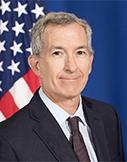
Eric Green

Nonresident Scholar, Russia Eurasia Program

Eric Green is a nonresident scholar at the Carnegie Endowment for International Peace.

Authors

Eric Ciaramella
Senior Fellow and Ukraine Initiative Director, Russia and Eurasia Program
Eric Ciaramella
Eric Green
Nonresident Scholar, Russia Eurasia Program
Eric Green
RussiaRussia and EurasiaUkraineEuropeEastern EuropeUnited StatesNATOSecurityForeign Policy

Carnegie does not take institutional positions on public policy issues; the views represented herein are those of the author(s) and do not necessarily reflect the views of Carnegie, its staff, or its trustees.

More Work from Carnegie Endowment for International Peace

  • Commentary
    Emissary
    The Iran War Is Uncovering the Weakness in U.S.-Gulf Ties

    Neither the Abraham Accords nor the presence of large U.S. bases are enough to protect Arab Gulf states.

      Marwan Muasher

  • Commentary
    Carnegie Politika
    The Afghanistan–Pakistan War Poses Awkward Questions for Russia

    Not only does the fighting jeopardize regional security, it undermines Russian attempts to promote alternatives to the Western-dominated world order.

      Ruslan Suleymanov

  • Article
    Rewiring the South Caucasus: TRIPP and the New Geopolitics of Connectivity

    The U.S.-sponsored TRIPP deal is driving the Armenia-Azerbaijan peace process forward. But foreign and domestic hurdles remain before connectivity and economic interdependence can open up the South Caucasus.

      • Areg Kochinyan

      Thomas de Waal, Areg Kochinyan, Zaur Shiriyev

  • U.S. President Donald Trump (C) oversees "Operation Epic Fury" with (L-R) Central Intelligence Agency Director John Ratcliffe, U.S. Secretary of State Marco Rubio and White House Chief of Staff Susie Wiles at Mar-a-Lago on February 28, 2026 in Palm Beach, Florida. President Trump announced today that the United States and Israel had launched strikes on Iran targeting political and military leaders, as well as Iran’s ballistic missile and nuclear programs. (Photo by Daniel Torok/White House via Getty Images)
    Paper
    Operation Epic Fury and the International Law on the Use of Force

    Assessing U.S. compliance with the international laws of war is essential at a time when these frameworks are already fraying.

      • Federica D'Alessandra

      Federica D’Alessandra

  • Commentary
    Strategic Europe
    Is France Shifting Rightward?

    The far right failed to win big in France’s municipal elections. But that’s not good news for the country’s left wing, which remained disunited while the broader right consolidated its momentum ahead of the 2027 presidential race.

      Catherine Fieschi

Get more news and analysis from
Carnegie Endowment for International Peace
Carnegie global logo, stacked
1779 Massachusetts Avenue NWWashington, DC, 20036-2103Phone: 202 483 7600Fax: 202 483 1840
  • Research
  • Emissary
  • About
  • Experts
  • Donate
  • Programs
  • Events
  • Blogs
  • Podcasts
  • Contact
  • Annual Reports
  • Careers
  • Privacy
  • For Media
  • Government Resources
Get more news and analysis from
Carnegie Endowment for International Peace
© 2026 Carnegie Endowment for International Peace. All rights reserved.