

Commentary
Despite public disputes over trade and immigration, the strategic partnership’s foundations remain sturdy.
Sameer Lalwani
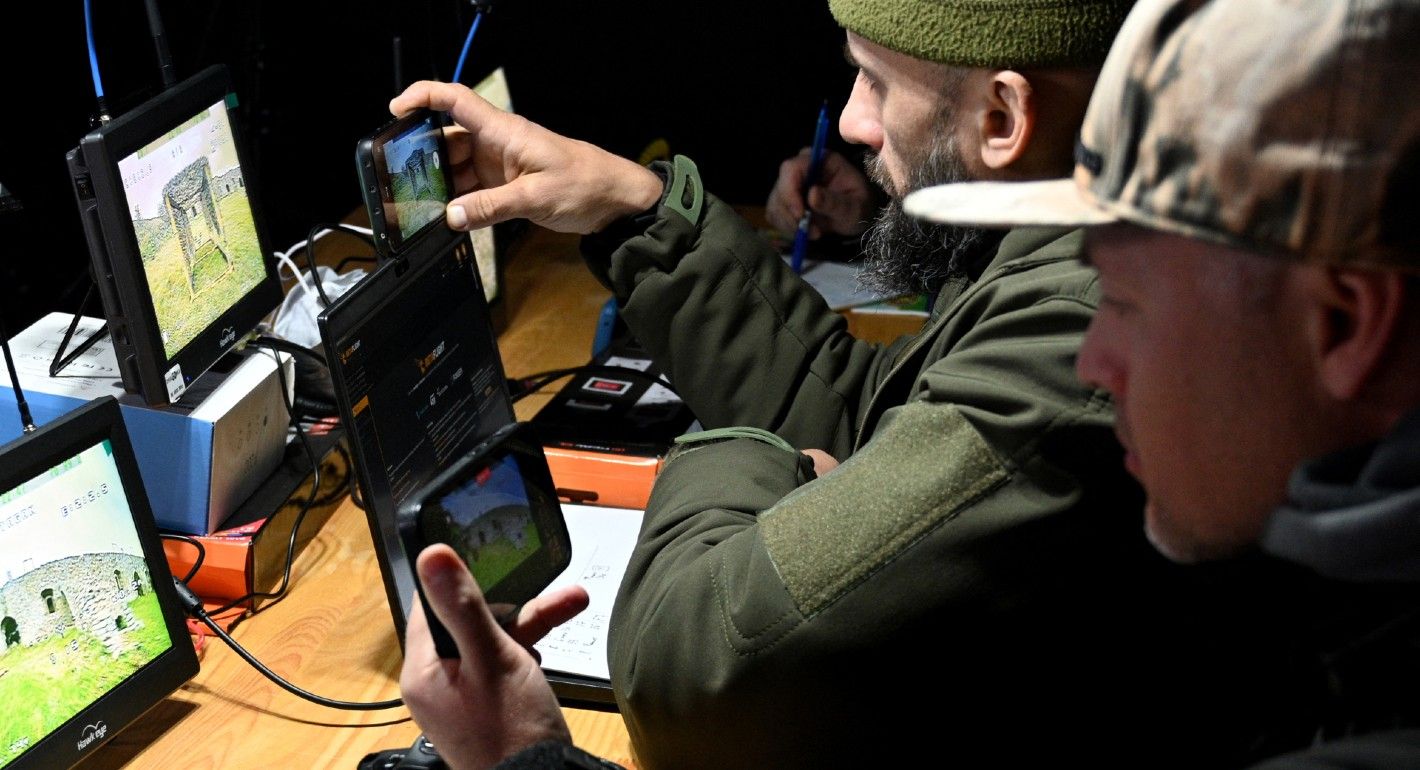
Source: Getty
Ukraine’s war offers a window into how governments’ growing reliance on defense firms is eroding national sovereignty, security, and accountability.
This is part of a series on “The Digital in War: From Innovation to Participation,” co-produced by Carnegie’s Democracy, Conflict, and Governance Program and Swedish Defense University.
The war in Ukraine affords a window into how private tech companies are reshaping states’ sovereign control over military power. State-centric models of war, where sovereign states control the battlefield and determine the technologies deployed within it, are being redefined by militaries’ growing reliance in the battlespace on commercial datafication software and hardware. The war in Ukraine signals a shift in the character of armed conflict. Militaries are simultaneously decentralizing distributed decisionmaking closer to the warfighter and centralizing command and control through dependence on private tech companies that produce essential tools, including cloud computing; intelligence, surveillance, and reconnaissance (ISR) analytics; and scalable machine learning platforms for AI.1
The war in Ukraine is forcing conflict analysts and others to reimagine traditional state-centric models of war, as it demonstrates that militaries are no longer primarily responsible for defining the challenges of the modern battlespace and then producing tenders for technological fixes. Instead, private tech companies increasingly explain the ideal battlespace to militaries, offering software and hardware products needed to establish real-time information edges. In the Russia-Ukraine war, private companies have sought to shape Ukrainian intelligence requirements. At the beginning of Russia’s invasion in February 2022, Ukraine’s armed forces could not manage essential intelligence tasks. Ukraine’s military lacked its own software and hardware for real-time information dominance and instead accepted support from private tech companies. These companies provide AI and big data tools that fuse intelligence and surveillance data to enhance the military’s situational awareness. As the war has progressed, however, the Ukrainians have sought to develop their own government situational awareness and battle management platform called Delta. The platform was developed as a bottom-up solution, “initially focused on a single, highly effective application: a digital map for situational awareness.”2 Over time, it expanded into a robust software ecosystem used by most of Ukraine’s military, from frontline soldiers to top commanders. This in part reflects Ukraine’s desire to retain direct sovereign control over what the U.S. military refers to as Combined Joint All-Domain Command and Control infrastructure (CJADC2), which manages networked sensors, data, platforms, and operations to deliver information advantages across all military services and with allies.3
The war in Ukraine is forcing conflict analysts and others to reimagine traditional state-centric models of war, as it demonstrates that militaries are no longer primarily responsible for defining the challenges of the modern battlespace.
These developments are rooted in the evolution of the Internet of Things and the way that societies have embraced digital connectivity. Mass surveillance and social media now generate huge amounts of data during war. At the same time, the widespread availability of the smartphone means civilians carry around advanced sensors that can broadcast data more quickly than the armed forces themselves.4 This enables civilians to provide intelligence to the armed forces in ways that were not previously possible.5 Matthew Ford and Andrew Hoskins label this a “new war ecology” that is “weaponizing our attention and making everyone a participant in wars without end . . . [by] collapsing the distinctions between audience and actor, soldier and civilian, media and weapon.”6 In this ecology, warfare is participatory. Social media platforms such as TikTok, X (formerly Twitter), and Telegram are no longer merely tools for consuming war reportage; militaries accessing and processing open-source data from these platforms shapes the battlespace in real time by contributing to wider situational awareness.7
The widespread availability of the smartphone means civilians carry around advanced sensors that can broadcast data more quickly than the armed forces themselves.
In this “new war ecology,” Palantir Technologies is an often controversial symbol of how private tech companies and the military work together to tackle battlefield challenges.8 Since it was founded in 2003, the company has grown quickly by providing big data software solutions. Its platforms are designed to handle complex and difficult data challenges, including those experienced by Western militaries. Importantly, Palantir’s software platforms were not developed and commercialized to fulfill a military tender. They are rooted in business models prioritizing speed, flexibility, and investor return, rather than the state’s national security imperatives.
As a result of their work in Ukraine, a slew of companies like Palantir have drawn media attention.9 While commercial interests have rarely aligned neatly with geopolitics, circumstances are changing; private technology firms increasingly occupy, manage, and in some cases dominate the digital infrastructure upon which militaries now rely. States themselves have fostered this shift through selective deregulation and outsourcing of technology development. These dynamics are visible in the war in Ukraine and in the wider geopolitical contest over the global digital stack. As we argued in “Virtual Sovereignty,” a paper we published in International Affairs, this influence has major geopolitical consequences for how states use power.10
Private technology firms increasingly occupy, manage, and in some cases dominate the digital infrastructure upon which militaries now rely.
Ukraine’s “new war ecology” has attracted considerable attention. In Lessons Learned from Ukraine, for example, military scholars John Nagle and Katie Crombe argue that private and publicly listed commercial actors have been “operationally significant” in the conduct of the war,11 as has open-source intelligence (OSINT) for live, enhanced situational awareness and battlespace transparency.12 Similarly, Gabriella Boyes et al. have characterized commercial vendors supplying OSINT and digitalized big data analytics as an important feature of the war, along with military reliance on private hyperlinked communication networks.13 These authors also describe how big tech firms and ISR analytics companies stepped in soon after Russia invaded Ukraine in February 2022, providing tools and services that the Ukrainian government was either too slow or unable to deliver at scale.14 At the beginning of Russia’s invasion, this meant commercial vendors were vital to Ukraine’s war effort.
By February 2024, at least eighteen U.S. private tech companies were directly supporting Ukraine’s civilian and humanitarian needs or its war efforts. SpaceX, via its Starlink satellite constellation, has facilitated secure civilian and military communications after Ukraine’s hardware and software infrastructures were disabled.15 U.S. companies such as Maxar Technologies, Planet Labs, and BlackSky Technology supply ISR services, while PrimerAI and Recorded Future use AI-enabled software to provide intelligence analytics, with Recorded Future using data drawn from open web, dark web, and tech sources to provide threat insights.16
General Jim Hockenhull, commander of UK Strategic Command, has noted that Ukraine’s insights into Russian deployments come from its capacity to integrate commercial imagery, public data, and social media analysis with the help of commercial technology.17 Publicly available data, digitalized and processed by commercial firms, has been fed into Ukraine’s war effort at scale. Even civilians participate, with Ukraine’s Ministry of Digital Transformation launching the eVorog chatbot on Telegram to collect crowd-sourced intelligence from citizens.18 TikTok and other platforms have become sites of narrative warfare, where visual and textual accounts of the war shape global perceptions and operational decisions alike. Such narrative warfare sites have created crucial data for exploitation by Palantir’s software products and data fusion tools.
Publicly available data, digitalized and processed by commercial firms, has been fed into Ukraine’s war effort at scale.
Ukraine’s defense relies increasingly on huge volumes of civilian data stored on cloud platforms.19 An adversary’s military may supply their targeting algorithm with an individual’s location, health, and online behavior. Military actors regularly mine, analyze, and repurpose social media posts.
It is not clear, however, that the deep learning systems integral to some of these new weapons can overcome the fog of war. These systems treat all data as objective representations of reality, when in fact information drawn from social media platforms is shaped by users’ emotional and cognitive experiences in ways that can skew its utility for wartime intelligence.20 The “learned knowledge” generated by analytic systems is probabilistic, not causal—leading to the risk that algorithms are “enforc[ing] their version of ‘reality’ from patterns and probabilities derived from data.”21 AI trained on data taken from the internet or social media forces serious questions about the reliability and knowledge base of those models.22 Deep learning systems can produce only a synthetic representation of reality. In this respect, “technology designed to reduce the fog of war might only make it grow denser.”23
These systems treat all data as objective representations of reality, when in fact information drawn from social media platforms is shaped by users’ emotional and cognitive experiences.
The problem is made worse by doubts about whether militaries like Ukraine’s have the technical skills and understanding they need to properly operate these systems. Can military officers effectively evaluate the utility of heavily marketed technologies? And are they able to properly operate commercial systems already being used in the battlefield?24 Datafication is marketed as enhancing operational effectiveness through information advantage, but its strategic value for Ukraine in the war is difficult to determine.
The interdependence of state and commercial power in contemporary warfare has significant geopolitical consequences. Militaries now rely heavily on private digital infrastructures, cloud services, data analytics, AI platforms, and communications networks, to shape command, control, and perception of the battlespace. This reliance limits the decisionmaking autonomy of the state and raises new questions about sovereignty, accountability, and trust.
Global digital platforms such as TikTok and Telegram illustrate the wider environment in which these dependencies are forming. Though neither company develops military technologies, both shape the information environment surrounding war. TikTok’s recommendation algorithm influences how audiences perceive the conflict in Ukraine, shaping global narratives and public opinion. Yet its complex ownership structure, rooted in Chinese parent company ByteDance and entangled with global venture capital, has sparked geopolitical concern.25 Since 2024, U.S. policymakers have debated TikTok’s national security risks, viewing its Chinese ties as potential vectors for surveillance and influence operations.26 These concerns highlight how platforms created for civilian use can also become entangled in the political and informational dimensions of war.
However, the national security implications of global tech ownership extend far beyond TikTok. The overlapping interests of finance capital and private technology corporations transcend national borders, creating forms of influence that do not fit neatly into binary friend-or-enemy distinctions. ByteDance’s global investment network, spanning Chinese state-linked entities, American private equity funds, and international investors, illustrates this transnational ownership model. It complicates national regulatory and security responses, as policymakers must ask not merely who owns a given platform, but who controls the data, infrastructure, and decisionmaking power that states increasingly depend on.27
The overlapping interests of finance capital and private technology corporations transcend national borders, creating forms of influence that do not fit neatly into binary friend-or-enemy distinctions.
Militaries face significant challenges in directing and managing the commercial actors whose global operations underpin the digital stack on which both military and civilian life depend.28 These operational dependencies, rather than ownership structures alone, now shape the geopolitics of warfare. Microsoft’s large-scale research operations in China,29 Meta’s partnership with China Mobile to build the 2Africa undersea cable,30 Nvidia’s 2025 plan for an AI research center in Shanghai,31 and Apple’s reported AI collaboration with Alibaba have all raised alarms in Washington.32 These examples reveal how globalized research, supply chains, and infrastructure interdependence blur the boundaries between commercial innovation and national security.
Of more direct relevance to Ukraine is Telegram, a civilian encrypted messaging platform that has become central to the war’s information ecosystem.33 First associated with the 2019 Hong Kong democracy movement,34 Telegram has been heavily relied upon by both sides in the Russia-Ukraine war for information-sharing, propaganda, and coordination, often outside official military channels.35 Ukraine banned its official use in September 2024 because of Russia’s ability to intercept or exploit data from the platform.36 Russian authorities have likewise imposed restrictions on Telegram’s functioning.37 Telegram thus represents not a traditional defense contractor, but a global communications platform repurposed by wartime actors, highlighting how commercial technologies can be drawn into the conduct and perception of war despite their ostensibly civilian purposes.
Historically, commercial and government interests have not always aligned neatly. Yet the interdependence of state and commercial power in contemporary warfare has significant geopolitical consequences. States have encouraged this through decades of deregulation and outsourcing, but the scale, immediacy, and global reach of digital dependencies in the current era are unprecedented. The war in Ukraine exposes how the state’s reliance on global commercial technologies both in defense and in information has created new vulnerabilities and blurred the boundaries of sovereignty. In response, Ukraine has sought and achieved retention of some sovereign control by utilizing its locally developed situational awareness and battle management platform, Delta, which has evolved in direct response to battlespace requirements.38 The coming years will reveal how other armed forces adapt to the processes unleashed by the datafication of the battlefield.
The war in Ukraine exposes how the state’s reliance on global commercial technologies both in defense and in information has created new vulnerabilities and blurred the boundaries of sovereignty.
Commercial actors directly embedded in Ukraine’s war economy, such as Palantir, are neither neutral suppliers nor patriotic agents of state policy. Their primary motivations are commercial, shaped by venture capital imperatives, shareholder expectations, and market valuations. Analysts such as Clay Huffman and Margarita Konaev have expressed concern that firms providing essential digital capabilities for warfare may shift political or strategic allegiances if future commercial gains lie elsewhere.39 Understanding these dynamics requires tracing the interlocking networks of global finance, political patronage, and tech entrepreneurship, linkages between U.S. tech billionaires, Silicon Valley venture capital, and political figures such as President Donald Trump, that shape how technology and national security now intersect.40
The growth of private capital in defense technology is striking. Bain & Company reports that between 2014 and 2023, the value of venture capital deals in the defense sector grew eighteenfold, outpacing other industries.41 The Sagamore Institute notes that American venture capital and private equity firms have invested nearly $130 billion into defense tech since 2021—a 145 percent increase over 2017–2020 levels.42 Much of this investment involves companies like Palantir and SpaceX, which supply operational software and infrastructure directly used in warfighting, rather than traditional Big Tech firms such as Microsoft or Amazon that provide general-purpose technologies.
These venture-backed firms view contemporary conflicts as live testing grounds. Ukraine offers both a proving space and a marketing opportunity: a site to demonstrate products under combat conditions and advertise them as “battle-tested.” For instance, Palantir has claimed that its software drives most targeting in Ukraine (though independent verification remains limited).43 It promotes its Gotham platform as capable of “harness[ing] billions of data points” to create an “AI-powered kill chain,” derived from experience in the global War on Terror and Afghanistan.44
Venture-backed firms view contemporary conflicts as live testing grounds.
This illustrates a deeper shift in the relationship between the market and the military. The problem is not that defense firms are publicly traded—Lockheed Martin and General Dynamics have been for decades—but that contemporary defense-tech companies retain proprietary control over data-driven systems central to military operations. Their technologies are not merely delivered to the state; the companies are embedded in the decisionmaking architecture of warfare. When a firm’s market value depends on its perceived wartime success, its incentives may diverge from those of the state it ostensibly serves. This intertwining of commercial strategy, military dependency, and investor confidence represents a new kind of vulnerability for states.
Scholars such as Elke Schwarz and Mark Howard argue that such firms are driven more by growth metrics than by public accountability or ethical restraint.45 Even “precision targeting,” marketed as reducing collateral damage, has not prevented devastating civilian casualties in Ukraine.46 Decisions about civilian deaths remain political, but are increasingly mediated by opaque corporate algorithms and data systems beyond direct state oversight. In this sense, the private sector’s integration into the machinery of war represents not merely outsourcing but a redistribution of sovereign authority, away from the state and toward corporate actors governed by transnational capital.
Decisions about civilian deaths remain political, but are increasingly mediated by opaque corporate algorithms and data systems beyond direct state oversight.
In 2025, well over three years into the war, Ukraine continues to face an existential struggle. Despite advances in ISR, datafication, AI, and predictive analytics, warfare remains kinetic, chaotic, and destructive. Technology has shaped decisions but not eliminated the fog or friction of war.
What is at stake, beyond the conflict itself, is the nature of state sovereignty. The ability of states to govern, defend, and act independently is increasingly mediated by private technology firms and global finance. This is not entirely new. States have long relied on private contractors, but the kind of dependency has changed. Unlike traditional arms manufacturers, today’s defense-tech firms control the digital platforms, data flows, and algorithmic systems that underpin military decisionmaking. At the same time, civilian platforms like Telegram and TikTok shape the informational terrain of conflict, influencing how wars are perceived and fought.
In these circumstances, national security is no longer manufactured solely by the state. It is co-produced with private firms whose commercial interests are transnational. The challenge for states is no longer simply to confront adversaries, but to navigate their growing reliance on powerful, globally networked technology companies that underpin military and informational infrastructures alike.47 To build the digital foundations of future warfare, militaries must understand these dependencies, and their implications for governance, accountability, and sovereignty itself.
The research documented here by academics at Flinders University has been funded by the Australian Defence Science and Technology Group since 2018 under the Strategic Research Investment-Modelling Complex Warfighting grant DST-RA-8381 and Agile Command and Control STaR Shot Theatre-level Enhanced Strategic Awareness grant DSP-RA-11320. The views expressed here are the authors’ own and in the case of Emily Bienvenue do not represent the official view of the Australian Defence Department. With thanks to Steve Feldstein; Matthew Ford; participants at the Connectivity, Innovation and the Conduct of War Workshop, CEIP, Washington, DC, January 16–18, 2024; and Victor Zagorodnyuk, Flinders-DSTG research team.
Emily Bienvenue
Emily Bienvenue is a strategic advisor and research analyst with over a decade of experience supporting defense and national security decisionmaking through advanced socio-technical and strategic AI/ML risk-management frameworks. She specializes in helping organizations harness emerging technologies responsibly—balancing innovation, governance, and trust to deliver measurable capability outcomes across complex, high-stakes environments.
Maryanne Kelton
Maryanne Kelton is a senior lecturer in international relations at Flinders University. Since 2016, she has worked together with Australia’s Department of Defence in analyzing strategic and situational awareness in the digital terrain.
Zac Rogers
Zac Rogers is a senior researcher based at Flinders University in Adelaide, Australia, currently working on a defense-funded research project examining the use of advanced data-driven decisionmaking tools by the military.
Michael Sullivan
Michael Sullivan is an adjunct lecturer in international relations at the College of Business, Government and Law, Flinders University.
Matthew Ford
Matthew Ford is an associate professor in war studies at the Swedish Defence University in Stockholm. Matthew’s latest book, War in the Smartphone Age: conflict, connectivity and the crises at our fingertips, came out with Oxford University Press in September 2025.
Carnegie does not take institutional positions on public policy issues; the views represented herein are those of the author(s) and do not necessarily reflect the views of Carnegie, its staff, or its trustees.

Despite public disputes over trade and immigration, the strategic partnership’s foundations remain sturdy.

Sameer Lalwani
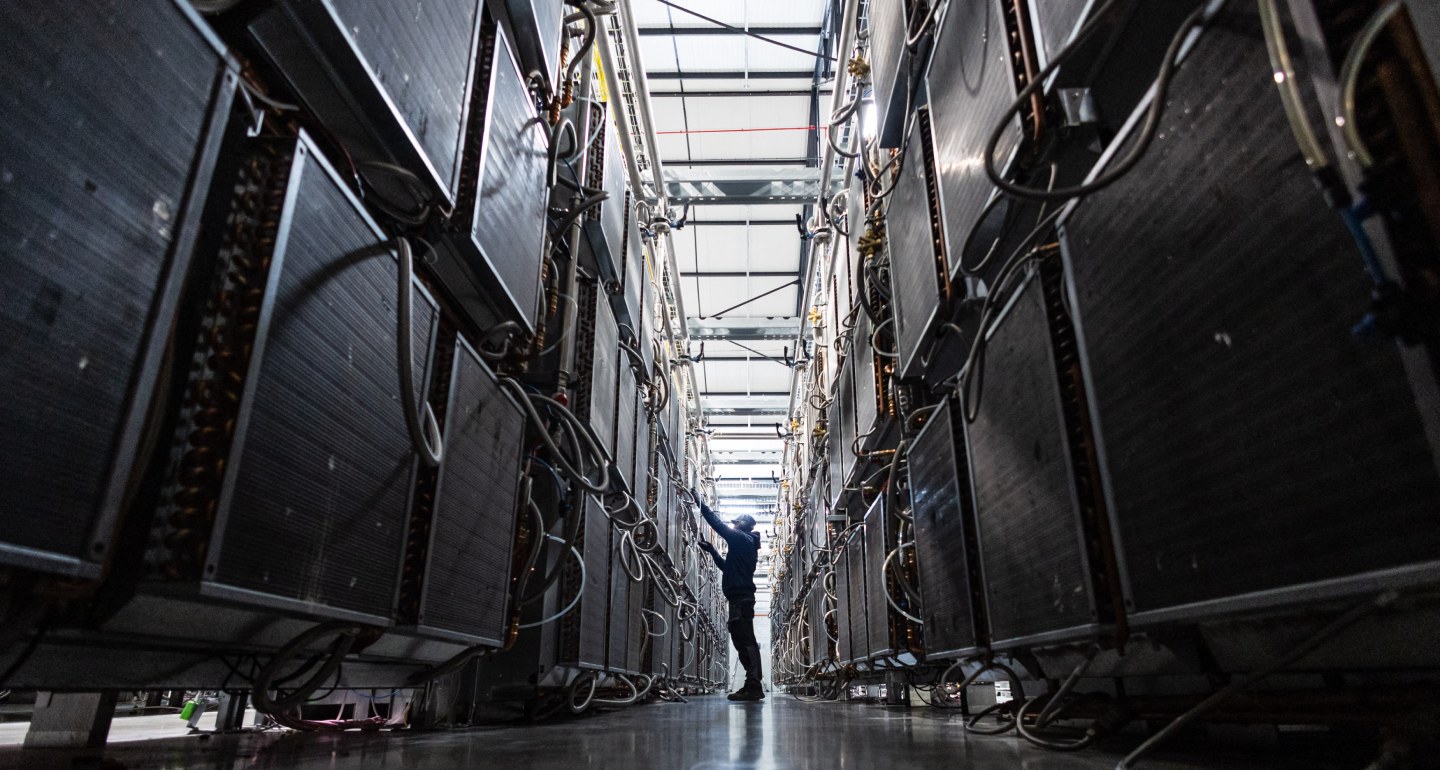
Russia spent years building a “sovereign internet,” concentrating web infrastructure exclusively within Russian territory. Ukrainian drone attacks have shown how vulnerable that approach has left the Russian internet.

Maria Kolomychenko
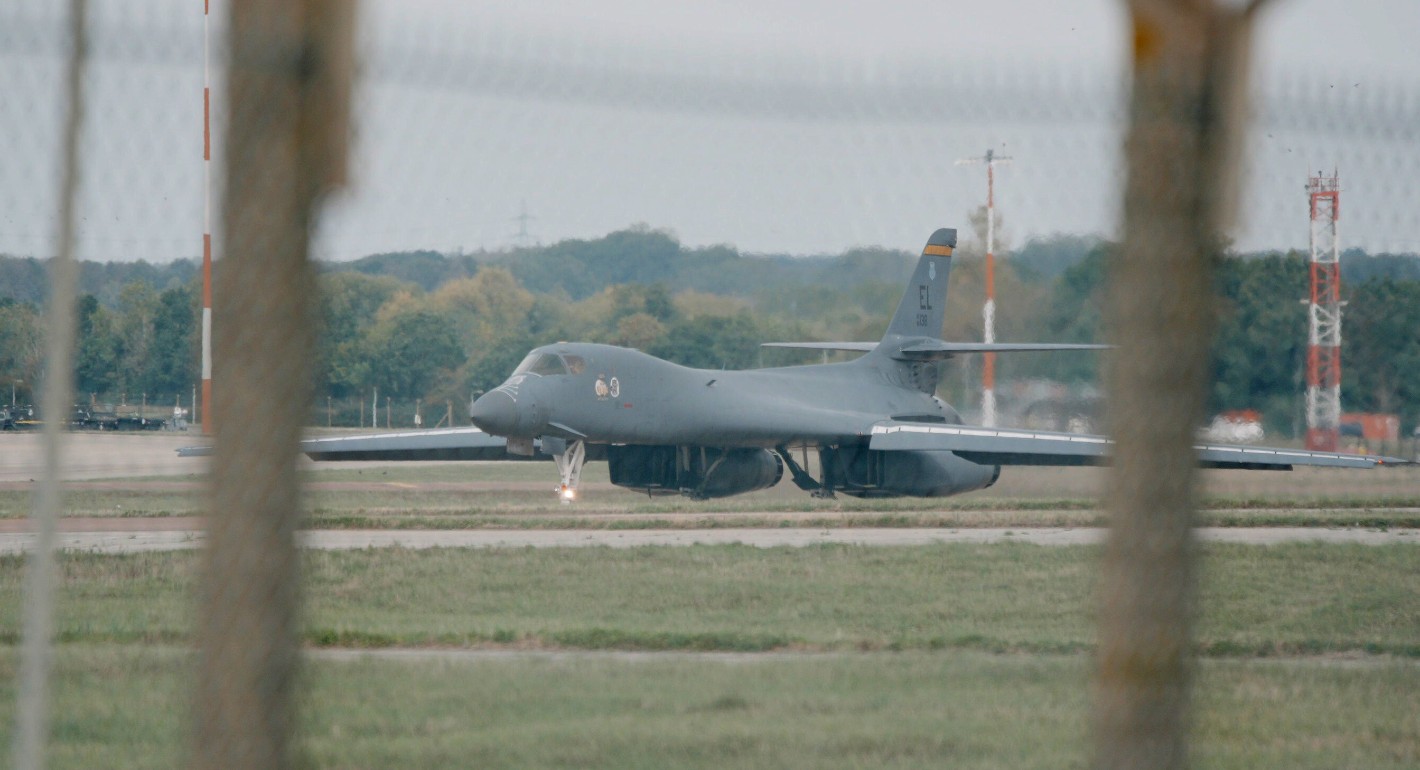
It signals a new era of tech diffusion and warfare.

Steve Feldstein

Russia’s AI-driven propaganda campaigns operate in a fragmented, chaotic, and often illogical manner. That’s not necessarily a problem for the Kremlin, though: It’s much easier to mimic genuine public debate that way.

Ilya Klishin

Ahead of a tough winter for Ukraine, Donald Trump’s swing back toward Russia bodes ill. But instead of panicking, Kyiv’s European allies are focusing on action.

Rym Momtaz