

Commentary
Democrats now have the gavel and the purse, but the executive branch still pulls the levers on the U.S. role in the world.
- +10
James M. Acton, Dan Baer, Mark Baldassare, …
Source: Getty
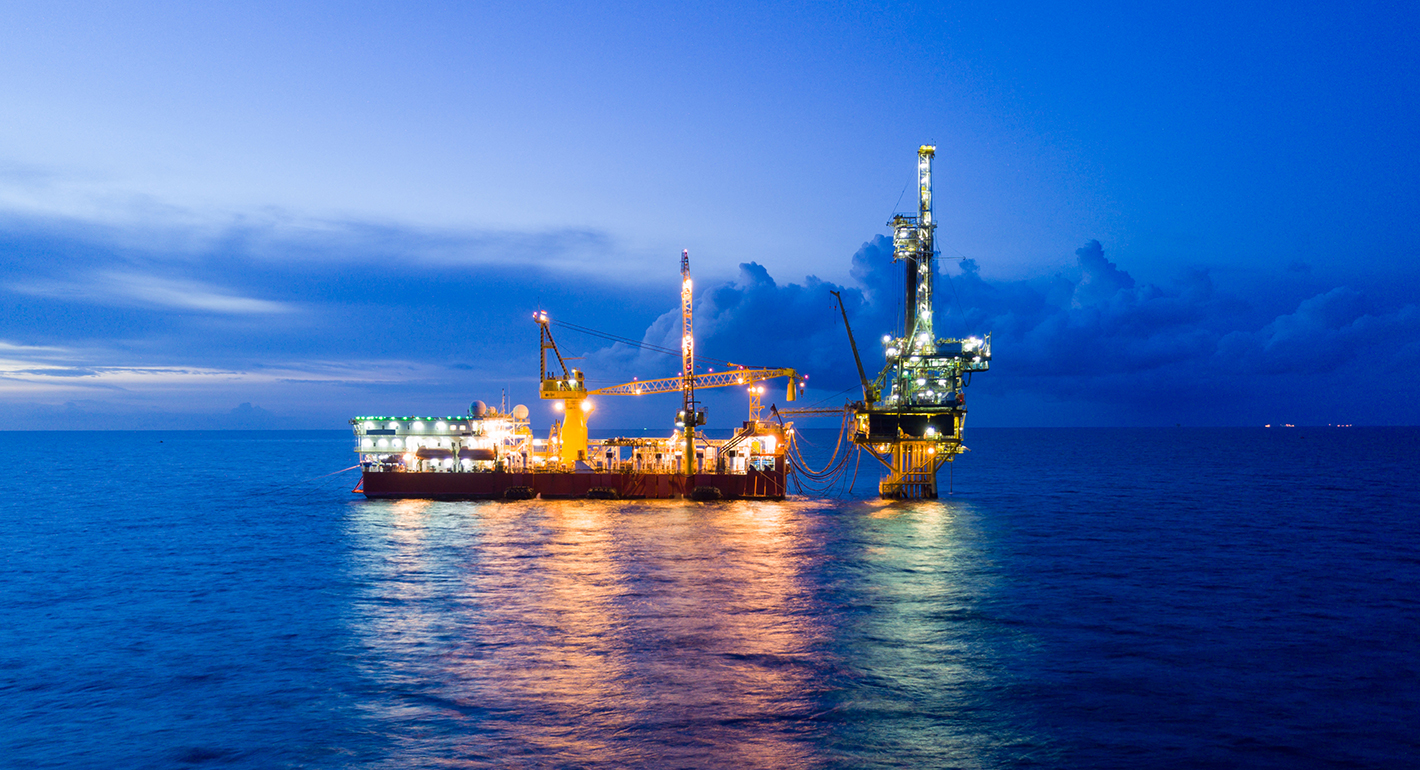
Two decades since Washington elevated West African oil as a strategic priority, the frontier has reemerged as a promising alternative for U.S. energy security.
West African energy production is suddenly strategic again. Some two decades ago, U.S. policymakers were inundated with a frenzy of reports, assessments, and testimonials about this region. The National Intelligence Council in 2000 assessed that West Africa would play an increasingly important role in global energy markets, providing 25 percent of North American oil imports by 2015. It spurred the U.S. government to elevate the Gulf of Guinea—defined in its broadest terms as stretching from Mauritania to South Africa—as a strategic energy frontier, driven in part by the need to diversify away from Middle Eastern oil dependence. However, U.S. imports of West African crude and petroleum products reached less than 3 percent in 2015, and the much-touted realignment never came to fruition. Over the intervening years, a combination of record-breaking domestic oil production in the United States and interlocking regulatory and security challenges in West Africa foreclosed this highly touted opportunity.
But today’s geopolitical turmoil has reopened it. Between Russia’s full-scale invasion of Ukraine that began in 2022 and the U.S.-Israel war with Iran this year, global energy markets are experiencing continuous shock waves. The International Energy Agency executive director Fatih Birol said that the Middle East conflict constitutes “the greatest threat to global energy security in history”—and that was before the Yemeni Houthis’ latest squeeze of the Bab el-Mandeb Strait left exports even more constrained. These disruptions have supercharged efforts already underway by oil companies to address declining reserves and accelerate exploration after a lull in activities linked to low oil prices in 2015. With energy reserves at their lowest point in four decades and crude prices hovering around $100 per barrel, there is—once again—a U.S. national security imperative to reduce energy market vulnerability to geopolitical conflict. Accordingly, the Economist recently indicated that big oil is “flooding back in” to Africa. This time, though, the Gulf of Guinea’s governments are better equipped to manage persistent challenges and capitalize on renewed interest.
The Gulf of Guinea includes sub-Saharan Africa’s top two hydrocarbon producers, Nigeria and Angola, and a handful of smaller countries that are developing new gas finds or discovering more hydrocarbons near mature fields. A combined 2.7 percent of global gas reserves and 4.5 percent of global oil reserves reside in this region, which also holds significant untapped offshore potential in deepwater blocks. Located on the Atlantic Ocean, Gulf of Guinea producers can supply European and American markets without transiting the chokepoints that a hostile state or nonstate actor can exploit. Importantly, from Washington’s standpoint, no rival holds structural leverage over the region the way that Russia does over Central Asian pipelines or that Iran does over parts of the Middle East. The Gulf of Guinea’s hydrocarbon grade is also attractive to importers. Much of its crude oil is light and sweet, commanding premium prices on global markets and requiring less complex refining than the heavier, sour crudes that dominate much of the Middle East’s export slate.
These advantages had set off a new wave of exploration even before the recent disruptions increased the urgency to secure alternative energy sources. Despite inconsistent interest from the United States, there has been massive growth in West Africa’s oil sector. The discovery of Ghana’s Jubilee field marked the first major breakthrough in 2007, followed by large gas discoveries off the coasts of Mauritania and Senegal in the 2010s, major finds off Angola and Côte d’Ivoire, and, farther south along Africa’s Atlantic basin, Namibia’s landmark discoveries in 2022. Now, oil companies are leveraging new technologies, including advanced seismic imaging and improved deepwater drilling, to unlock areas that had yielded little despite decades of seismic surveys and exploration. New licensing rounds are opening acreage in Benin, Cameroon, Gabon, The Gambia, Guinea-Bissau, Liberia, Nigeria, São Tomé and Príncipe, and Sierra Leone.
Many countries in the region are implementing sweeping, often politically difficult, reforms to make their oil-rich economies more investable. Nigeria and Angola, in particular, have made oil sector reform a centerpiece of their economic development strategies, while newer producers such as Mauritania have sought to build investment regimes more hospitable to international capital. The cumulative regulatory reforms and security investments have contributed to a more welcoming, and potentially more durable, operating environment throughout the Gulf of Guinea. That marks a significant departure from the early 2000s, when the promise of production was limited by a complex regulatory, political, and economic environment.
Nigeria has overhauled its oil sector with the passage of the 2021 Petroleum Industry Act (PIA), giving it much-needed regulatory clarity and institutional rigor. The PIA established separate regulatory bodies for upstream and midstream/downstream activities and created the Nigerian National Petroleum Company Limited to commercialize the state-owned oil company, alongside broader sector-wide reforms. In 2024, a series of presidential directives provided tax incentives and eased operational costs for foreign entrants in deepwater offshore production while also supporting local oil companies onshore. These reforms have complemented significant international interest in deepwater production, most notably Shell’s $5 billion Bonga North deepwater project announced in 2024 and ExxonMobil’s commitment of $1 billion as part of an infill drilling project at the Usan deepwater oil field. Downstream, an indigenous refinery, the Dangote Refinery, is transforming the sector. The 650,000-barrel-per-day (BPD) refinery has made Nigeria a top supplier of jet fuel to Europe.
Angola has made similar strides in rejuvenating its oil sector. After years of declining oil production and severe debt challenges afflicting the state-owned oil behemoth Sonangol, the country introduced reforms in 2019. It established the National Agency for Petroleum, Natural Gas and Biofuels to take over regulation of the sector from Sonangol and launched a six-year strategy that established predictable, regular bidding windows for oil block auctions and licensing procedures. Angola has implemented macroeconomic policies to stabilize its economy, including a more flexible and transparent exchange rate regime; introducing a value-added tax; reforming fuel subsidies; trimming the public sector; rationalizing the financial system; and introducing a cash transfer program. To solidify these reforms, the government set an ambitious goal of raising $70 billion in oil sector investments by 2030. In one early success, Chevron announced in August 2026 that it had discovered oil and gas condensate at an exploration well and is continuing to explore several Angolan blocks.
Mauritania has swiftly established itself as a dependable investment destination. After Kosmos Energy discovered the Greater Tortue Ahmeyim (GTA), a natural gas field on its maritime border with Senegal in 2015, the Mauritanian government subsequently advanced a series of legal and regulatory reforms to improve the investment climate. It also partnered with Extractive Industries Transparency Initiative to establish a data submission portal and “Data Warehouse,” which systematically consolidates all extractive sector data published by private companies and governments. These steps have encouraged more exploration, building on the success of the GTA project. Mauritania recently welcomed Qatar Energy’s exploration and signed a major deal with a Saudi Arabian company to develop, finance, and operate a $700 million power plant.
Regionally, some meaningful cooperation has made the Gulf of Guinea’s waters safer for operations. Twenty-five West and Central African states signed the 2013 Yaoundé Code of Conduct to advance a coordinated approach to maritime security through a memorandum of understanding between the relevant subregional bodies and the Gulf of Guinea Commission. The UN Security Council credited the architecture with a measurable decline in piracy incidents since 2021. Most recently, in June 2026, six Gulf of Guinea countries launched the Combined Maritime Task Force to establish a collaborative, rapid response mechanism to deploy the kinetic force needed to effectively combat threats identified under the Yaoundé Architecture.
To be sure, the region is not free from insecurity, and policy gains are easily reversible. Each maritime security initiative struggles with persistent underfunding, staffing shortfalls, and unclear divisions of labor among its components. But, together, they comprise an African-led framework that did not exist in the 2000s.
Despite this progress, the region faces enduring socioeconomic and policy challenges. Regulatory reform has only made incremental improvements in addressing deep-seated corruption issues. Revenues are frequently siphoned off projects—casting a shadow over exploration opportunities in smaller markets such as Liberia and looming over the more established producers like Nigeria and Angola. Decades of mismanagement of state-owned oil companies have perpetuated Africa’s climate of high-risk investment. Resource nationalism remains a thorny issue to navigate: Last year in Senegal, the former energy minister talked openly about potentially nationalizing the Yakaar-Teranga gas project, operated by Kosmos, a move that would limit private development. The government also has criticized its contract with BP as “unfair.”
And security threats linger. Kidnapping for ransom plagues oil-producing regions like the Niger Delta and its offshore waters. Community tensions stem from decades of oil pollution, which has destroyed local fisheries and therefore livelihoods. An already weak pipeline infrastructure is vulnerable to vandalism by militant groups. In Nigeria, especially, these challenges routinely compound to limit crude production. Though 2026 has shown record success in oil production, the country missed its 1.5 million BPD quota (mandated by the Organization of the Petroleum Exporting Countries) in all but three months in 2025, accumulating losses worth about $1.31 billion.
The global energy transition further complicates the oil sector’s revival in West Africa, requiring new projects to compete amid tightening emissions standards, shifting demand, and growing pressure to decarbonize. Nigeria, alongside its “Decade of Gas” initiative, pledged to reach net-zero carbon emissions by 2060 and launched a series of green energy transition initiatives in solar photovoltaic technology and hydropower, among others. At the 2026 Africa Oil Week in Accra, Ghanaian Minister for Energy and Green Transition John Abdulai Jinapor emphasized the need to invest in energy transition technology to secure Africa’s energy supply, though significant deepwater exploration agreements also featured prominently at the conference.
Moreover, the energy sector is not immune to geopolitical rivalries. In addition to the Persian Gulf states, China has deepened its commercial involvement in Africa’s energy production. It is especially entrenched in Angola, which has historically signed billions in oil-backed borrowing agreements from China. Nigerian entities are hiring Chinese companies for infrastructure development, equipment, and engineering, including for the Dangote Refinery and the Ogidigben Gas Revolution Industrial Park. Mauritania signed an agreement last year with the Chinese company United Energy Group to produce 1 million tonnes of green ammonia annually. China’s foothold in the energy sector’s infrastructure and financing crowds out U.S. investment and operations.
No oil-producing region is risk-free, but the relative reward the Gulf of Guinea offers is meaningful. It is time for U.S. stakeholders to return their focus to the region, especially in the wake of the current global energy crisis. Stakeholders across the U.S. government, private sector, and academia can take several steps to better understand regional dynamics, catalyze investments, and strengthen relations with African counterparts.
Two decades ago, Washington’s enthusiasm for the Gulf of Guinea dissipated almost as swiftly as it emerged. An opportunity was lost to increase investments, strengthen partnerships, and diversify access to vital energy sources. Today, the price at the pump evokes renewed urgency to build energy resilience. The Gulf of Guinea provides a viable pathway. The United States should not make the same mistake twice by ignoring this region. It must think creatively and act decisively alongside African partners to realize a shared ambition to increase reliable energy production, strengthen African energy industries, and contribute additional supply to global markets.
This monthly newsletter is a careful curation of the Carnegie Africa Program’s work and interests. We track key trends within the U.S., on the African continent, in Asia, Europe and around the world as they relate to Africa. We announce upcoming events and share information about recent publications.

Nonresident Scholar, Africa Program
Judd Devermont is a nonresident scholar in the Carnegie Africa Program.
Gabrielle Posner
Growth and Strategy Manager, Fraym
Gabrielle Posner is the growth and strategy manager at Fraym.
Carnegie does not take institutional positions on public policy issues; the views represented herein are those of the author(s) and do not necessarily reflect the views of Carnegie, its staff, or its trustees.
Democrats now have the gavel and the purse, but the executive branch still pulls the levers on the U.S. role in the world.



James M. Acton, Dan Baer, Mark Baldassare, …
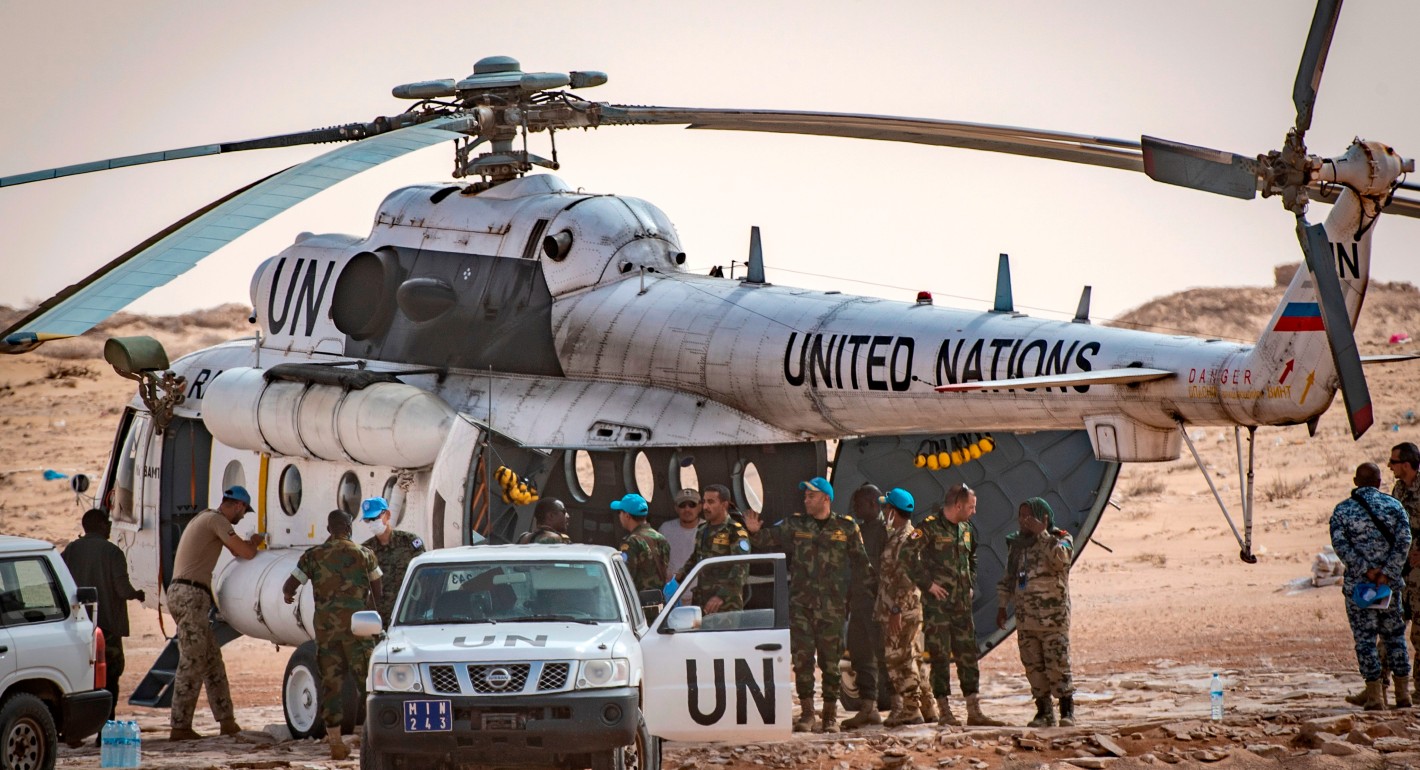
MINURSO’s renewal by the Security Council became highly politicized. Its expiration brings concerns of renewed violence and the future of demining efforts.

Sarah Yerkes
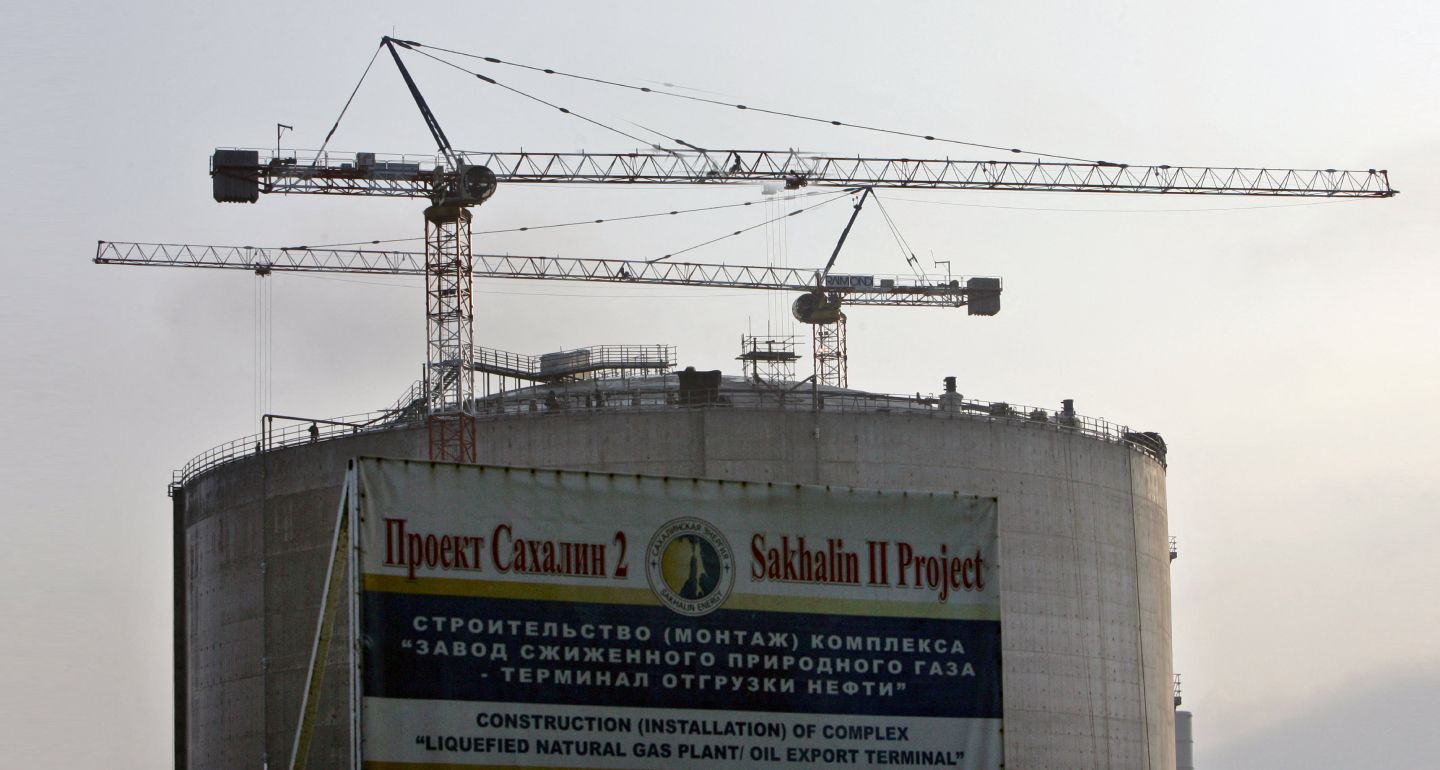
Russia does not have to treat Western companies as equal partners. A centralized regime built on a foundation of oil and gas income was never going to relinquish what it saw as sovereign control.

Edward C. Chow
Geoengineering is becoming a geopolitical question as much as a climate one. The way states and the private sector pursue these technologies, assess risks, and drive research increasingly appears focused on gaining a strategic edge. In a field where governance in lagging behind, Europe should keep track of the geopolitical implications if it is to develop effective regulatory frameworks.

Olivia Lazard, ed.

The global hydrocarbon order is changing. Economic diversification and developing productive economies have become essential for Middle Eastern and North African states, requiring them to address social and political challenges and rethink domestic, regional, and global settlements.



Nur Arafeh, Ishac Diwan, Hamza Meddeb, …