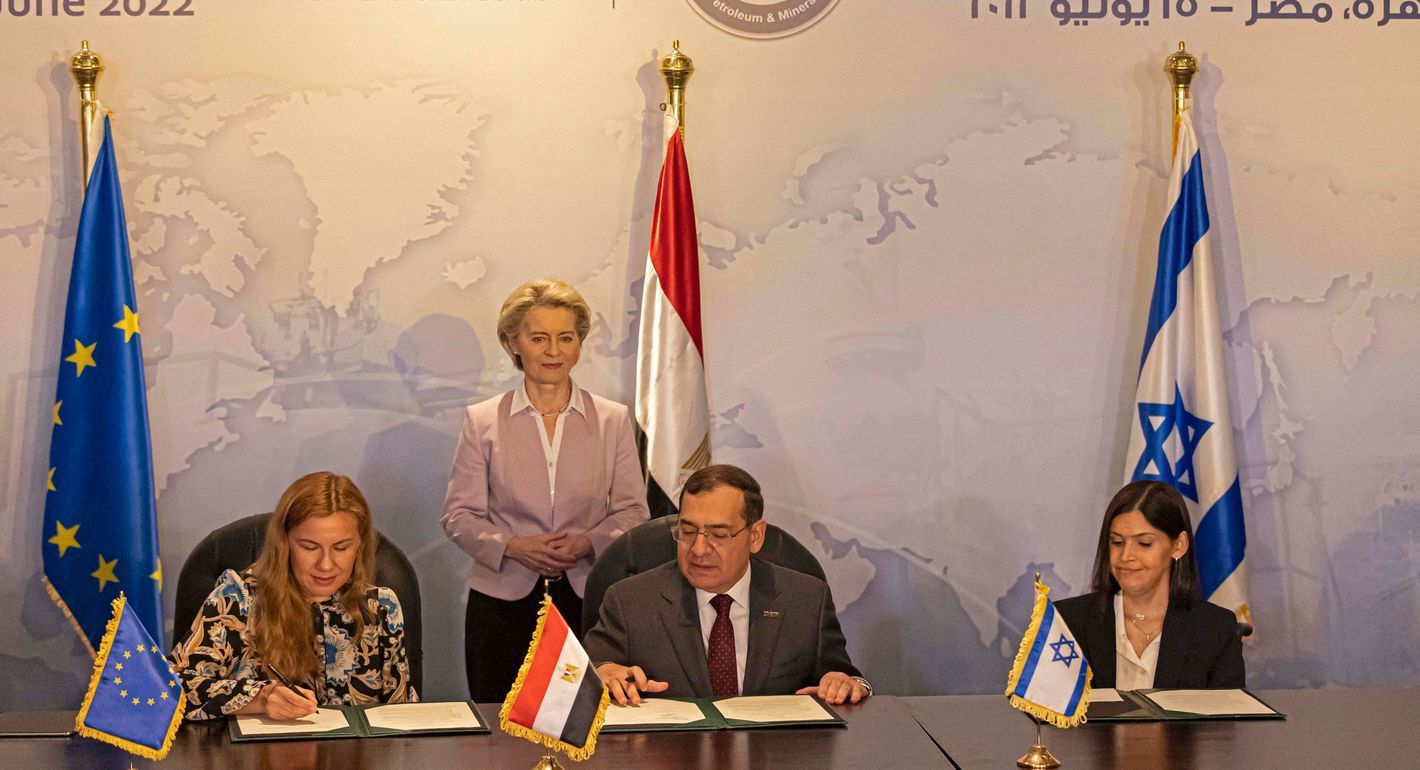
After years of rhetoric about the need for a pan-Arab satellite television framework, Arab information ministers on February 12, 2008 adopted a charter that provides the tools to penalize broadcasters who attack leaders or air socially unacceptable content. The charter is broad ranging, covering news, political shows, and entertainment—even sports programs. In the weeks before the emergency meeting in Cairo, the Egyptian and Saudi information ministers lobbied their colleagues to pass the document, prepared by a committee of experts during the preceding six months. Even Syria, currently engaged in a media war with Saudi Arabia over Lebanon, signed off on the charter.
While the charter’s passage seemed sudden, momentum toward action against satellite media has been building since the 2006 Lebanon war. When hostilities broke out, Egyptian and Saudi leaders at first condemned Hizbollah’s “adventurism,” then back-pedaled in light of Hizbollah’s resilience and the mounting civilian casualties of Israel’s onslaught. In the meantime, Hizbollah’s al-Manar television climbed to the top ten in pan-Arab ratings, and live talk-show hosts struggled to prevent callers from heaping verbal abuse on pro-U.S. Arab leaders. Though not criticized as harshly as the Saudi government, the Egyptian government has been contending with an increasingly media-savvy Muslim Brotherhood whose views are aired on al-Jazeera, Hamas’s al-Aqsa television, and throughout the Arabic-language blogosphere. Thus placing political restrictions on Arab airwaves was a shared Saudi-Egyptian interest.
The resulting charter attempts to appeal to several constituencies. By penalizing content that allegedly promotes sexual activity and alcohol consumption, it placates socially conservative Islamists, including Egypt’s Brotherhood, which for years has advocated such restrictions. By purporting to protect “Arab identity from the harmful effects of globalization,” it appeals to Arab nationalists as well as Islamists. Finally, the charter has a populist provision, stipulating Arab viewers’ rights to information, including the right to watch some sports competitions on free-to-air government channels even when commercial channels hold exclusivity agreements. In addition to reasserting the rights of state television channels, this gives the charter some street credibility with Arab publics.
The core of the charter is the prohibition of content that would “damage social harmony, national unity, public order, or traditional values”—echoing media laws in most Arab countries, virtually all of which have ambiguously worded language that penalizes criticism of leaders and thereby buttresses authoritarian rule. The ominous catchall provision against harming “national reputation” justifies a wide range of repressive measures. The charter also affirms current practice; several Arab states have revoked Arab satellite channels’ licenses to report from their territories.
However consistent the charter may be with current laws and practices, implementation is likely to be uneven among Arab countries. Egypt and Saudi Arabia own Nilesat and Arabsat and can in theory disconnect undesirable channels. Although such actions carry political and business risks, Egypt has already demonstrated its intent to implement the charter by closing down the business channel al-Baraka on a flimsy pretext on February 24. But Qatar declined to sign the charter, citing potential conflict with its own laws, and the Lebanese Information Minister called the charter a “guiding, not binding” document. Journalist unions are up in arms, and many writers are expressing suspicion that the charter is intended to silence criticism of U.S. policy and align Arab countries further with the U.S.-Israel axis in order to counter the rise of Iran. Responding to these accusations, Saudi Information Ministry Director Abdullah al-Jasir explained that the charter “distinguishes between incitement to violence and resistance to occupation.” Journalists are asking whether the charter will be applied to foreign Arabic-language satellite channels such as the U.S. al-Hurra, the Kremlin’s Russia Today, and Iran’s al-‘Alam. Also, commercial channels are likely to sue governments for infringing on their exclusive sports agreements.
It remains unclear whether the charter is merely a symbolic gesture or whether it constitutes a concrete step toward a repressive pan-Arab media policy regime. With over 400 channels peddling fortune-tellers, alternative medicines, Jihadi ideas, titillating bodies, and stock market schemes alongside more mainstream news and entertainment, a regulatory framework is not in itself a bad idea. But Arab governments’ record on finding the fine line between preventing harmful content and protecting freedom of expression is dismal. With growing harassment and arrest of bloggers in Egypt, Saudi Arabia, and elsewhere, there is the troubling possibility of similarly sweeping charters regulating the Arab internet and mobile phones.
Syrian comedian Durayd Lahham once quipped that “the only Arab officials who can agree on things are interior ministers,” who exchange information in order to harass each others’ dissidents as well as terrorists. Journalists, intellectuals, and dissidents are now worried that although Arab regimes disagree on many issues, their information ministers are finding common ground on muzzling speech.
Marwan M. Kraidy is an expert on Arab media and Associate Professor at the University of Pennsylvania’s Annenberg School for Communication.