

Commentary
From anime heroes to online gaming communities, Morocco’s Gen Z is building a new protest culture. What does this digital imagination reveal about youth politics, and how should institutions respond?
Abdelilah Farah
{
  "authors": [
    "Haidar Najem"
  ],
  "type": "commentary",
  "blog": "Sada",
  "centerAffiliationAll": "",
  "centers": [
    "Carnegie Endowment for International Peace",
    "Malcolm H. Kerr Carnegie Middle East Center"
  ],
  "collections": [],
  "englishNewsletterAll": "",
  "nonEnglishNewsletterAll": "",
  "primaryCenter": "Carnegie Endowment for International Peace",
  "programAffiliation": "",
  "programs": [],
  "projects": [],
  "regions": [
    "Middle East",
    "Iraq",
    "Levant"
  ],
  "topics": [
    "Political Reform"
  ]
}
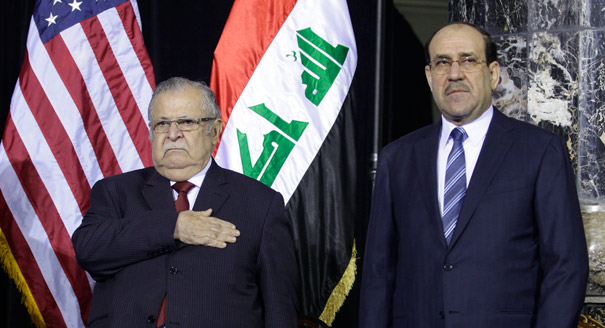
Source: Getty
Renewed calls for a majority government in Iraq are gaining momentum, but will this vision ever see the light of day?
Debate in Iraq over the formation of a majority government reemerged at the end of October, revealing a divide over whether to continue with the current national unity government that includes all major political factions. Backers of Prime Minister Nuri al-Maliki, who support the idea of a majority government, are driven by a desire to exclude their opponents. Those opponents were imposed on them during the formation of the current government and they oppose laws and legislation that support the government. Momentum appears to be shifting in favor of supporters of a majority government—parliamentarians are aligning with al-Maliki and against the opposition led by Iyad Allawi. The Kurds, meanwhile, have yet to take a clear stance on the idea of a majority government. The majority faction is attempting to pave the way for this type of government to become standard practice, without reverting to the sectarian quota governments, particularly since there is little to lose if their bid is unsuccessful.
Hints by al-Maliki and his supporters in parliament that they will seek a majority government have become more frequent, even as news reports say that the president of the Kurdistan region, Masoud Barzani, has been leading a movement alongside Allawi and others to thwart al-Maliki’s efforts to create such a government. Al-Maliki has also been quick to respond to his political opponents’ threats to oppose his running for a third four-year term in 2014. Discussion of a majority government emerged earlier in the year from within al-Maliki’s camp, as a response to threats of a motion of no confidence issued by his opponents in parliament, specifically members in Allawi’s coalition and the parliamentary faction supporting Barzani.
There are three likely scenarios that could play out as a push for a majority government grows, beyond the maintenance of the status quo. The first, as some of al-Maliki’s supporters have speculated, would be that some members of the Iraqiya and Kurdish parliamentary coalition join elements of the Shiite coalition to form a majority government that maintains at least a minimum level of sectarian and ethnic representation. However, the viability of this scenario is uncertain, at least in the current parliamentary session, and it is even less likely given the lack of international and American support.
The second scenario would be the resurrection of the 2005 Shia-Kurdish coalition which would keep Iraqiya out of the government and maintain the historical Shiite-Kurdish alliance. If this were to occur, it would completely exclude the bloc that represents the Arab Sunni population from the government and could possibly lead to the return of armed Sunni rebellion—something al-Maliki’s ally, former Prime Minister Ibrahim Jafari, has warned of.
The third scenario would be the revival of the “Erbil Alliance” between the Kurds, Sunnis, and the Sadrist bloc. However, this possibility already failed earlier in the year and does not currently have much resonance among politicians or the media, due to the prevailing mistrust between the three parties in this alliance.
Support for the first scenario has been growing day by day and the idea is now being looked at favorably by a number of political figures that until recently were staunchly opposed to it. Such figures include member of parliament, former minister, and secretary-general of the People’s Current Ali Al-Dijri, as well as deputies from the White Iraqiya and Free Iraqiya blocs which broke off from the original Iraqiya coalition, and some independent deputies. These politicians are looking to jump on the bandwagon of the government majority likely to be formed if President Jalal Talabani’s efforts to resolve current tensions fail. Since last December, disagreements between Allawi and al-Maliki’s factions have increased; the Kurds have also been drawn in by refusing to hand over former Vice President Tariq Al-Hashimi and growing military tension in disputed areas.
Supporters of a majority government have been throwing their weight around since they have caught wind that members of Allawi’s parliamentary coalition would not hesitate to join a majority government should one be formed, in order to avoid losing the positions they held during the past two years. Furthermore, the idea of a majority government has been gaining traction within the principal factions in the Shiite alliance, even among leaders who had once opposed this idea. Head of the Supreme Islamic Council, Ammar al-Hakim, justified this changed position by arguing that a government with universal participation was necessary at the time. Al-Hakim has recently expressed his support for calls to form a majority government.
Possibly enhancing the chances of majority government are the disagreements within the Kurdish camp and the divisions between the three main parties in Kurdistan, one headed by Iraqi president Jalal Talabani, one by Barzani, and the Kurdish opposition within the Movement for Change (Gorran) led by Nawshirwan Mustafa. Al-Maliki is working hard to exploit this division and win over Kurdish factions opposed to President Barazani. Despite these disagreements, al-Maliki has run up against the strength of the Kurdish coalition unified by its shared goal of an independent Kurdistan. However, the fact that some Kurdish political players appear less susceptible to external pressures, while others are eager to claim their share of the pie in a future majority government, may mean that the proposed ruling majority could succeed.
According to sources close to al-Maliki, supporters have been working hard at seeking U.S. support for the proposal. There are indications of ongoing dialogue with U.S. officials about a majority proposal, even before the U.S. presidential election. Local political observers see implicit support from the White House for the pro-majority government camp, with al-Maliki’s adversaries fragmented, specifically Allawi’s coalition, which has been described as “having a Shiite head and a Sunni body.” However, it seems that indirect support is not enough, and explicit approval from the United States is needed to push for a majority government. U.S. support will also help bring in Kurdish opposition leaders, who remain hesitant about the idea of a majority government—although none of them have officially rejected it. However, if the United States gives clear signals to go forward, it would be seen as a guarantee that there would be amenable solutions to issues with the central government in Baghdad.
There are also those who believe that agreement about a majority government option amongst the ruling coalition could guarantee its success, given the fragmentation of the opposition. This is especially true of Allawi’s allies, many of whom are currently questioning the wisdom of staying in a splintered coalition. The current urge to establish a majority government is likely to keep resurfacing. However, the concept of majority rule—which could have an impact at the community level—could, if handled carelessly, engulf the country in intractable conflict once again.
Haidar Najem is Baghdad-based Iraqi journalist covering the country’s political developments.
*This article was translated from Arabic.
Haidar Najem
Carnegie does not take institutional positions on public policy issues; the views represented herein are those of the author(s) and do not necessarily reflect the views of Carnegie, its staff, or its trustees.
From anime heroes to online gaming communities, Morocco’s Gen Z is building a new protest culture. What does this digital imagination reveal about youth politics, and how should institutions respond?
Abdelilah Farah
In a volatile Middle East, the Omani port of Duqm offers stability, neutrality, and opportunity. Could this hidden port become the ultimate safe harbor for global trade?
Giorgio Cafiero, Samuel Ramani
Is Morocco’s migration policy protecting Sub-Saharan African migrants or managing them for political and security ends? This article unpacks the gaps, the risks, and the paths toward real rights-based integration.
Soufiane Elgoumri
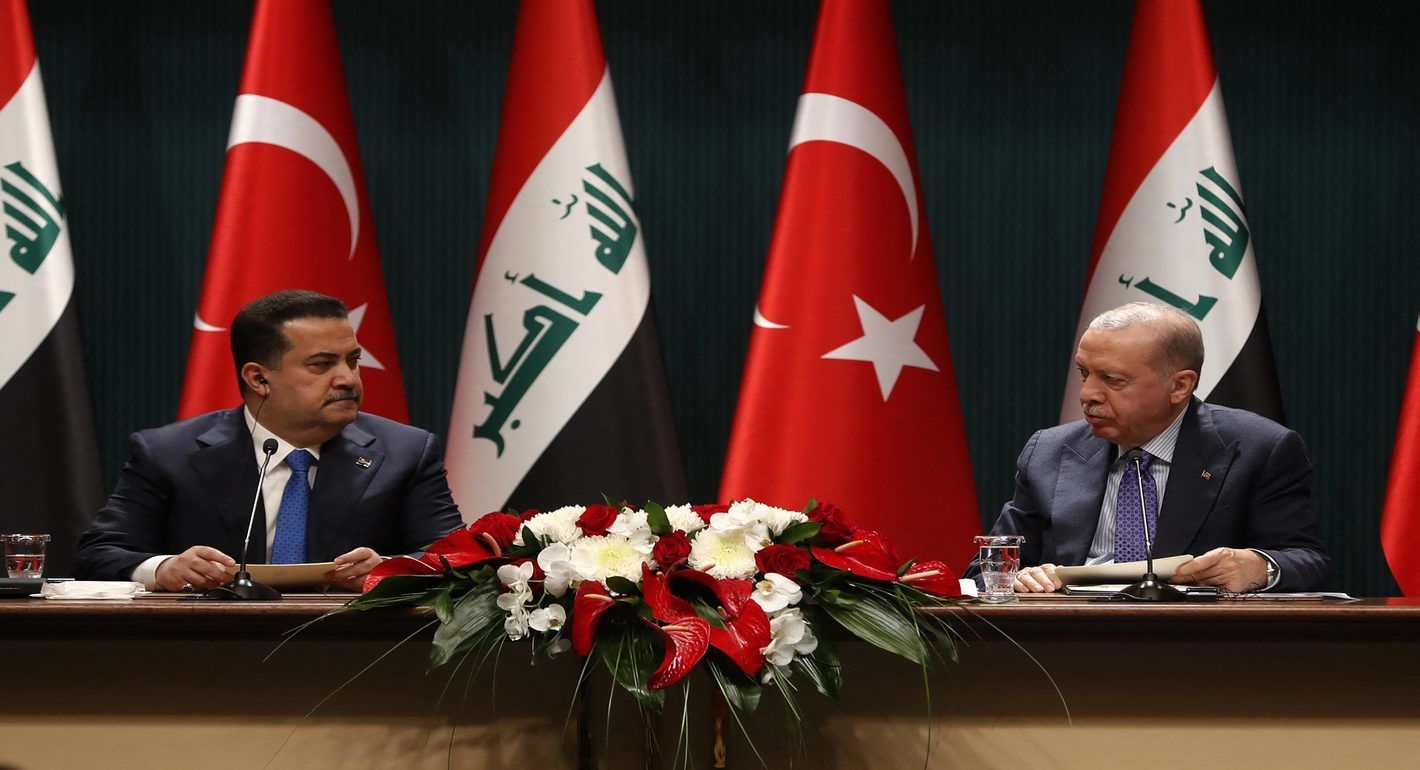
Iraq’s foreign policy is being shaped by its own internal battles—fractured elites, competing militias, and a state struggling to speak with one voice. The article asks: How do these divisions affect Iraq’s ability to balance between the U.S. and Iran? Can Baghdad use its “good neighbor” approach to reduce regional tensions? And what will it take for Iraq to turn regional investments into real stability at home? It explores potential solutions, including strengthening state institutions, curbing rogue militias, improving governance, and using regional partnerships to address core economic and security weaknesses so Iraq can finally build a unified and sustainable foreign policy.
Mike Fleet
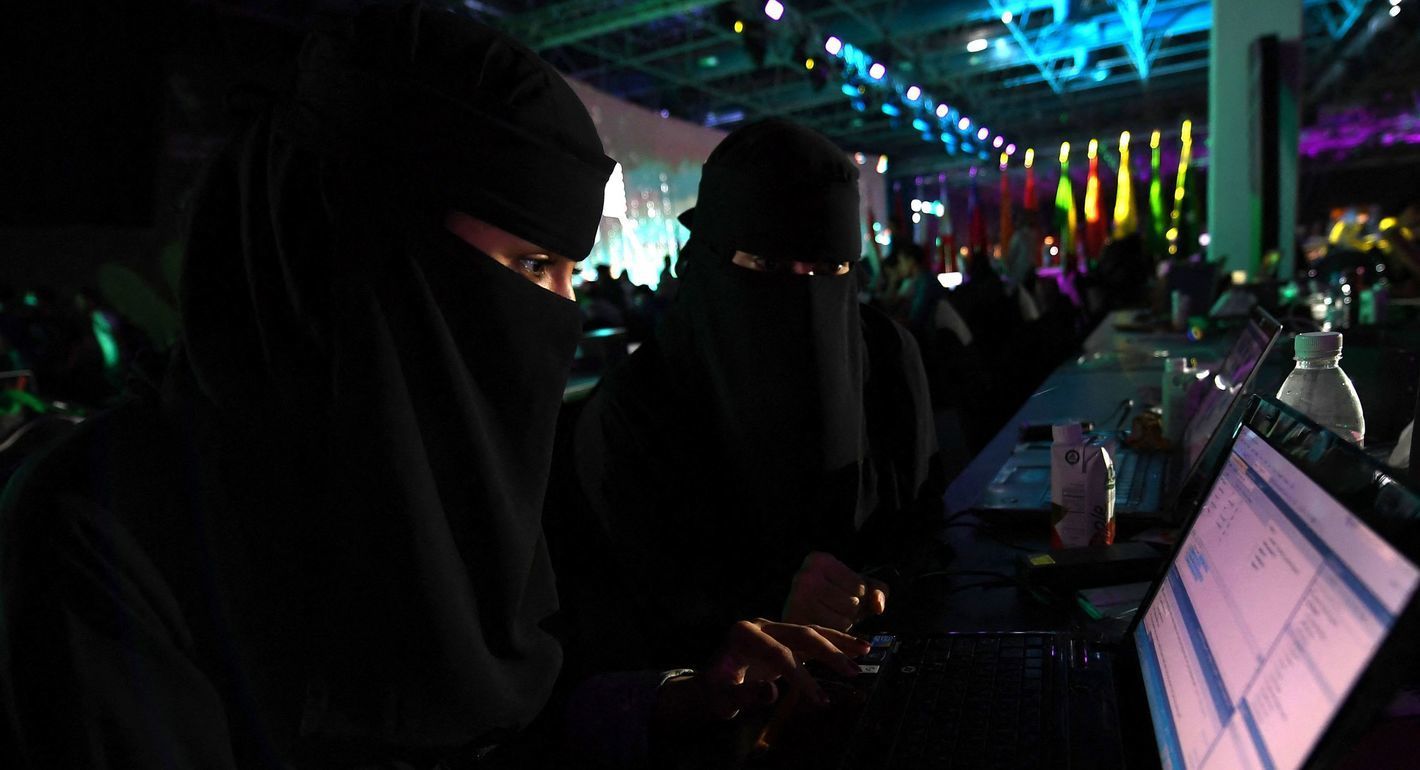
How can Saudi Arabia turn its booming e-commerce sector into a real engine of economic empowerment for women amid persistent gaps in capital access, digital training, and workplace inclusion? This piece explores the policy fixes, from data-center integration to gender-responsive regulation, that could unlock women’s full potential in the kingdom’s digital economy.
Hannan Hussain