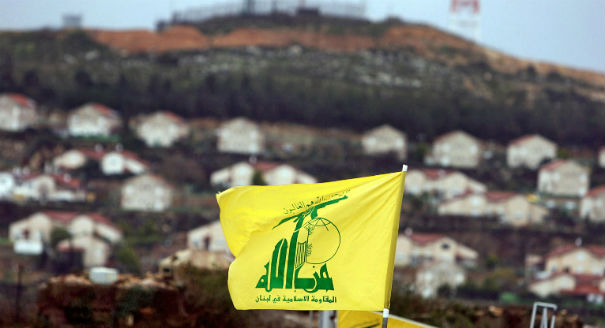
The Syrian civil war is gradually altering the dynamic relationship between Hezbollah and Israel. Over the past decades, this relationship morphed from an asymmetrical confrontation between a conventional army and a sectarian militia to an ongoing conflict between a state and a quasi-army, regulated by de facto mutual deterrence. Now, with Hezbollah deeply involved in supporting Bashar al-Assad’s regime in its bloody internal war, the Lebanese-Shia organization has focused its energies on the Syrian front. Israel, for its part, developed a minimalist policy aimed at preserving the quiet with its northern neighbors while avoiding direct intervention in Syria. That policy has also incurred an active component—as confirmed by a number of unclaimed aerial strikes on Hezbollah targets within Syria—with Israel delivering a clear red line to both Hezbollah and the Assad regime by asserting its willingness to intervene to stop transfers of advanced weaponry to Hezbollah.
Since its creation, Hezbollah’s main purpose has been to confront Israel by repelling the Israeli Defense Force (IDF) presence in Lebanon, with the broader ideological aspiration to fight for the liberation of Palestine. Following the end of the Lebanese civil war, the pattern of engagement between Israel and Hezbollah shifted from open war to more restrained confrontation, mostly focused in the Israeli-occupied “security zone.” After two escalations in the 1990s, the rules of engagement became further institutionalized through an unsigned arrangement based on mutual restraint and reciprocity. That agreement came to an end rather abruptly in the summer of 2006 with the “34-day War.” Though the likely result of an initial miscalculation, the war represented a rupture in the rules of engagement, with Israel deciding to address what it saw as an erosion of its deterrence by escalating its response and engaging in a broad military operation. Since the end of that war, the relationship between Hezbollah and Israel has been regulated by mutual deterrence.
Conscious that the next round of confrontation is only likely to be more devastating and intense, both parties have displayed a shared interest in preventing escalations and defusing tensions, while at the same time quietly preparing for the next round of confrontation at the military level. Even with the beginning of the Syrian civil war, the parameters of engagement between Hezbollah and Israel have not changed dramatically in terms of refraining from any direct cross-border engagement or attacks in Lebanon proper. By confining the range and scope of the military operations against Hezbollah to only those preventing advanced arms transfers to Hezbollah from Syria, Israel signaled its interest in preserving the rules of the game intact along the “Blue Line.” The fact that also neither Israel nor Hezbollah acknowledged such attacks were taking place further confirmed the parties’ interest in sticking to the existing framework.
However, the reported Israeli attack against Hezbollah targets in Lebanon on February 24 represented the first clear departure from the pre-established rules. This is the case even though the operation itself is not necessarily an indication of a desire to escalate the conflict. Rather, it was likely guided by the perception that Hezbollah’s deep military involvement in Syria and its growing preoccupation with local Salafi-jihadi challengers in Lebanon would prevent it from forcefully responding to a limited Israeli attack. Yet it was a risky move for Israel. Even though Hezbollah initially denied that the attack had occurred, it later changed its tune and promised retaliation. And in the past two months, there have been a number of attacks against Israel possibly organized by Hezbollah, including a rocket attack, a reported attempt to place an explosive device along the Israeli border, and finally a successful bomb on March 18 that wounded four IDF soldiers.
These attacks all originated from the Syrian Golan, and although Hezbollah did not officially claim responsibility for any of these operations, the IDF referred to the group as the potential culprit—yet another change in previous pattern of mutual denial. By targeting Israel through the Golan, Hezbollah may be warning them against broadening Israeli involvement in Syria. Israel, in its response to the March 18 attack, targeted the Syrian Army in the Golan in turn, warning Damascus against allowing armed attacks to originate from within Syrian territory. However, the limited nature of both the attack and Israel’s response indicates that neither party is deliberately attempting to escalate the confrontation.
In addition to these attacks, another roadside bomb was detonated on March 14 in the Shebaa farms area. If perpetrated by Hezbollah, as the Israeli army suspects, this attack would be an even stronger indication of Hezbollah’s willingness to respond to the February 24 Israeli attack and, in doing so, further erode the post-2006 rules of engagement. Indeed, no attack on the Shebaa Farms had taken place since the July 2006 war.
The situation is currently extremely fragile as, despite their shared interest in preventing another all-out war, both Israel’s and Hezbollah’s tit-for-tat actions—likely ironically aimed at restoring mutual deterrence—are instead bringing both parties closer to another undesirable escalation.
Benedetta Berti is a research fellow at the Institute for National Security Studies, a lecturer at Tel Aviv University, and the author of Armed Political Organizations.