At a time when its economic interests are threatened both by Saudi Arabia’s attempts to develop economic cooperation with Iraq and the likelihood of renewed sanctions following the U.S. withdrawal from the Joint Comprehensive Plan of Action, Iran is increasingly focused on securing its access to the Iraqi market, the second biggest importer of Iranian non-oil commodities. The success of Hadi al-Amiri’s Tehran-linked Fatah Alliance, which came in second to Moqtada al-Sadr’s Sairoon in Iraq’s parliamentary elections on May 12, offers Tehran leverage to install a loyal Iraqi politician to the premiership. Iranian major-general Qasem Soleimani of the Islamic Revolutionary Guard Corps (IRGC) is reportedly shuttling between politicians in Baghdad to try to include the Fatah Alliance within a broad parliamentary coalition. Yet even before the elections, Tehran had been pushing to empower its networks of loyal paramilitary forces in the country, in part to entrench its control over Iraqi economic policy, which Tehran has little influence over compared to security and national politics.
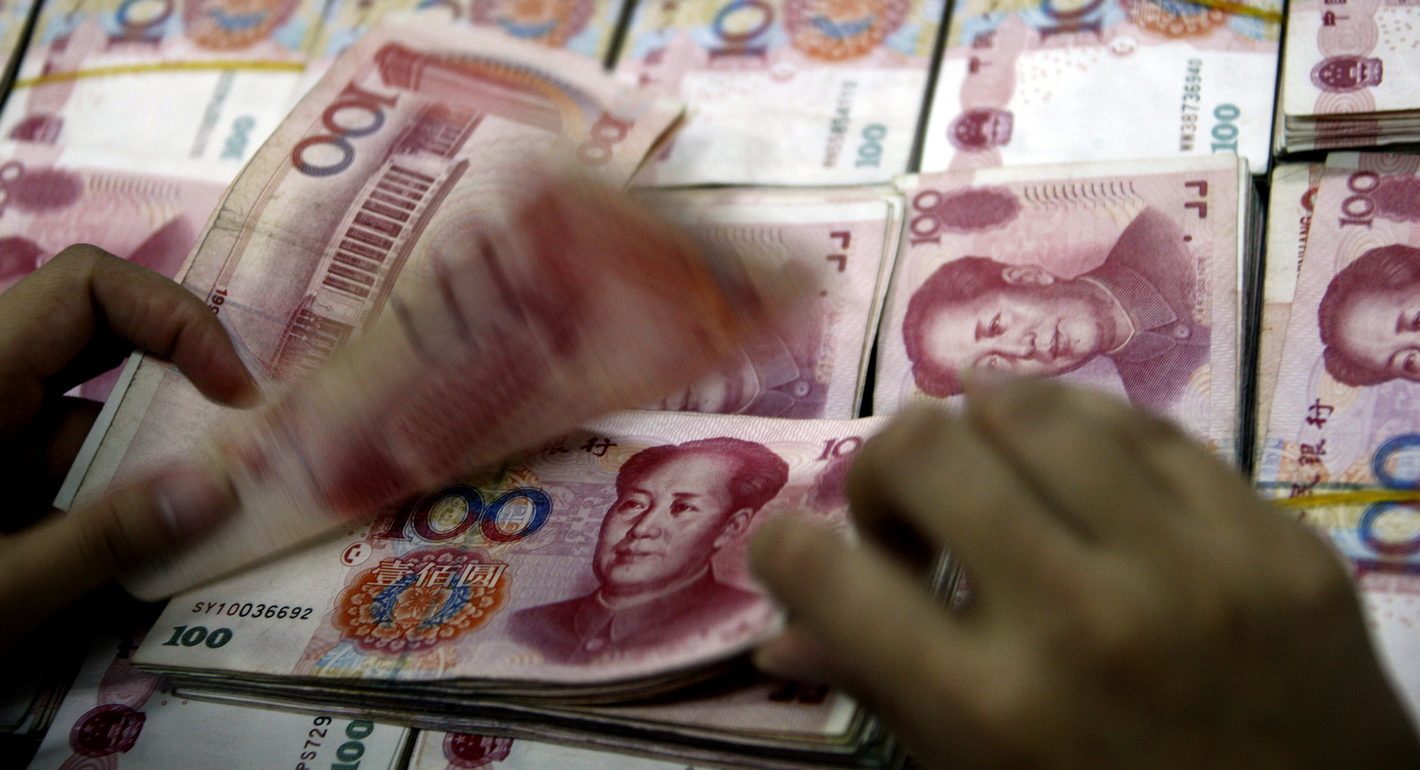
Tehran has stepped up its efforts to compensate for losses in revenue by stepping up economic cooperation with Iraq since the Kurdish independence referendum in September 2017, when Iran blocked border crossings with the Kurdistan Region of Iraq (KRI). According to the Iran Trade Promotion Organization, the total value of Iranian non-oil exports to Iraq grew 13 percent in the first seven months of Persian year 1396 (March 21, 2017 – March 20, 2018) compared to the same months the previous year. However, following the Kurdish referendum, the year-on-year growth dropped to negative 1 percent by the end of the first ten months of 1396 (corresponding to mid-January 2018).
The U.S. withdrawal from the JCPOA on May 8, which will likely decrease Iran’s revenues from crude oil exports and foreign trade, pushes Tehran not only to compensate for its trade losses through the KRI but also to further project economic influence in Iraq and beyond in war-ridden Syria, Iran’s geostrategically indispensable ally. Iran’s backbone of the non-oil economy, its domestic housing sector, will likely stagnate again under sanctions and have knock-on effects on an array of linked non-oil industries, from cement and steel to petrochemicals. Stagnant domestic consumption will push Iran to scale up non-oil exports, where neighboring and allying countries like Iraq and Syria will be top priorities.
One way Iran has been trying to increase its economic role in Iraq is through funding efforts for reconstruction in which its non-oil industries could play an important role. Iranian Foreign Minister Mohamed Javad Zarif led a delegation to the Kuwait International Conference for the Reconstruction of Iraq, held on February 12-13. Although Zarif’s delegation did not pledge aid at the time, Iran’s Vice President, Eshaq Jahangiri, pledged a $3 billion credit line to Iraq’s reconstruction during a visit to Baghdad on March 7. The amount falls short of what Turkey pledged at the Kuwait conference but surpasses what Saudi Arabia promised. Subsequently, Iran’s Defense Minister, Amir Hatami, visited his counterpart in Baghdad on April 18 for the first Joint Defense Cooperation Commission, commenting that it is Iran’s responsibility to take part in Iraq’s reconstruction. However, due to its own difficult financial situation—likely to worsen under renewed sanctions—Iran is likely unable to afford funding substantial reconstruction projects in Iraq. Because of this, the Iranian leadership is perhaps relying on offering loans instead of grants, hoping that Iraq’s own debt burdens will dissuade Baghdad taking Tehran up on them.
Furthermore, Tehran is also seeking to spend on economic schemes that can sustain Iranian leverage in Iraq by helping to establish economic foundations—and develop existing welfare programs—linked with loyal paramilitary forces within the Popular Mobilization Units (PMU), such as Asaib Ahl al-Haq (AAH) and Harakat Hezbollah al-Nujaba. By doing so, Tehran hopes to replicate the experience of the Basij, the volunteer paramilitary arm of the IRGC, who were heavily involved in domestic reconstruction after the Iran-Iraq war through the famous Jihad-e Sazandegi organization. The Basij, upon which Iraq’s PMU is structurally modelled, has an important economic component that makes it more self-sufficient and therefore also more resilient to the U.S.-dominated global economic system.
Iran has already tried to replicate the Basij model in Lebanon, where generous Iranian funding in 1988 allowed Hezbollah to found the Jihad al-Bina organization, which aims to provide developmental assistance and further Iranian soft power. Similar to Hezbollah’s experience, Iran-backed paramilitary forces had already established small foundations in Iraq, notably AAH’s Shuhada Ahl al-Haq, which provides assistance to the families of AAH members killed in battle. In Lebanon, such entities have reinforced local dependencies by further cultivating clientelistic networks, but their scope has been limited by the country’s relative lack of economic opportunities. In oil-rich Iraq, these foundations might be sub-contracted by state agencies to accomplish projects, which will boost their size and capabilities. For instance, while they currently focus on welfare services such as building schools and running clinics, with Iranian backing and access to Iraq’s banking system, they could expand into more sophisticated projects such as building bridges and repairing electricity and water services. And while local differences matter, since the IRGC successfully replicated the organizational aspect of an Iranian security model it could also easily replicate its affiliated economic model.
In the long run, Iran probably hopes that Iraq’s “high economic potential” given its oil resources, cultural significance, and need for reconstruction will allow Iranian organizations to channel soft power by lending their technical expertise to expand the economic involvement of such Iraqi paramilitary entities, which would therefore be more competitive than other organizations. Iran hopes that because of Iraq’s poor governance these entities would have more sway to influence economic policy in favor of Iranian exporters and investors over other international companies, against whom Iranian firms do not currently effectively compete in the market.
According to Hamid Hosseini, the head of the Iran–Iraq Joint Chamber of Commerce, Iran aspires to increase its non-oil exports to Iraq to around $15 billion within the next two years, up from the current $10 billion. Yet in addition to bilateral banking problems stemming from limited access to third-party currencies such as the dollar, Iranian exports to Iraq face high tariffs and quotas. Iranian trade officials often imply that the trade policies that currently limit exports to Iraq are beyond Iran’s influence because Iraqi state institutions and ministries are spread across so many divergent political parties that influencing any policies requires having ties with a wide range of actors.
Loosely incorporating these foundations or entities into the state structure, for example under a government-supported reconstruction umbrella for independent Iraqi foundations, may encourage the Iraqi government to open the door to Iraqi auxiliary economic entities, of which many will be linked to Tehran, to facilitate their ability to contribute to reconstruction. With pressure from the Iran-backed paramilitary actors, this could include reducing tariffs on importing construction materials from Iran or, more importantly, employing Iranian engineering services. This would boost investments and exports to the Iraqi market and open up further opportunities for IRGC and Basij-linked foundations and firms to play a pivotal advisory role to their sister Iraqi entities, boosting Iran’s non-military influence in the country.
Iran’s efforts to gradually re-shape the institutional sphere increasingly includes endowing loyal political and security actors with new economic powers. Greater leverage for Tehran-linked paramilitary forces in the Iraqi parliament and government may allow this to develop further.
Tamer Badawi is a research fellow at the Istanbul-based Al-Sharq Forum. Follow him on Twitter @TamerBadawi1.