On April, United Nations Security Council Resolution on Western Sahara renewed the UN peacekeeping observer mandate (MINURSO) for six months, instead of the customary one-year extension. The move indicates the return of a more assertive geopolitical role of Russia in this regional contest rather than a genuine signal for the resumption of direct talks.
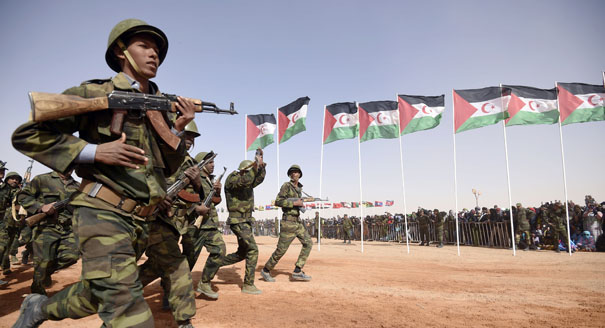
In contrast with last year’s tension with Mauritania at the Guerguerat border post in southern Western Sahara—which Morocco triggered and which led to Polisario’s retaliatory repositioning of forces within a restricted zone—this year witnessed a measured escalation between the two parties based on the conflagration of three nearly simultaneous events. First was an unconfirmed report of a breach of the 1991 ceasefire provisions by Polisario’s military or unarmed elements’ incursions into the neutral buffer zone west of the defensive wall that separates Moroccan and Polisario forces in the northeastern corner of Western Sahara (Mahbas); second was the presence of Polisario elements within the buffer strip in Guerguerat in conjunction with an off-road car rally going through the border post; and finally a statement by Polisario indicating its decision to move its defense and administrative headquarters from its base in southwestern Algeria to an area east of the defensive wall under its de facto control.
In Guerguerat, Polisario is caught in an operational quandary: Guerguerat lies on a section of the defensive wall that runs parallel to the border with Mauritania and leaves no narrow swath of the Western Sahara land that it could control and from which to stage observation points (unlike most of the defensive wall that runs a roughly north–south line of which 20 percent of the Western Sahara territory is under Polisario control).
Notwithstanding Morocco and Polisario’s conflicting interpretations of the ceasefire and subsequent military agreements, this limited escalation of forces on both sides of the wall has prompted the UN to call on parties to exercise restraint and maintain the status quo. The mediator on Western Sahara, former German President Horst Köhler, has sensed from his initial consultations with major regional and international stakeholders that a spirit of compromise and realism should prevail for the resumption of direct negotiations and as a guarantee for the emergence of a new dynamic. Raised tensions on the eve of UN discussions on renewing MINURSO’s mandate also highlighted the lack of effective joint monitoring and verification mechanisms for the ceasefire and the implementation of military agreements (an outcome of the 1990 UN design of the mission’s mandate) that would facilitate on the ground conflict resolution and prevent escalation.
While in last year’s discussions on the resolution Russia adopted softer language criticizing Polisario for its handling of the Guerguerat crisis, the new resolution singled out Polisario twice for its role in Guerguerat and its intention to relocate headquarters east of the defensive wall. Historically, Russia has been fairly neutral and balanced on the Western Sahara issue, having interests on both sides. However, in this year’s geopolitical context, it adopted a more assertive posture. Russia gave Morocco one directly positive mention (measured response to tensions) and one indirect new sign of support (“recommitting to UN efforts in a spirit of realism and compromise” as opposed to any role for the African Union that Moscow and Algiers support). Yet, Russia’s effective pressure was best at play in the reduction of the MINURSO mandate to six months. The decision has no clear explanation in the absence of direct talks or even in the run-up to expected new round of negotiations (the six-month mandates were only twice voted in 2006 and 2007 within the context of direct talks).
The French ambassador to the United Nations remarked that the six-month extension—which aims to further mobilize the Security Council in support of a political process—was an exception to the rule that an annual mandate renewal is the best guarantee for the stability of peacekeeping operations. The statement could be seen as implying that the six-month extension was as much a reflection of the U.S. call to reenergize Security Council’s members engagement on the Western Sahara issue as part of a deal to secure Russia’s and other concerned states’ (like China, Sweden or Ethiopia) support for the resolution without further amendments. Though Russia criticized the six-month reduction, Sweden—whose opposition party put forth a proposal to the Swedish government in 2012 to officially recognize the Sahrawi Arab Democratic Republic—welcomed it as a way to address at a later stage the lack of sufficient balance in the current resolution. Russia’s tougher posture on Western Sahara is a direct response to tensions with the United States and France in Syria, and despite recent reenergized diplomacy between Rabat and Moscow, Russia still favors Algeria which received 78 percent of Russia’s arms transfers to Africa from 2013–2017.
Shortly after the UN vote renewing MINURSO’s mandate for six months, Morocco announced that it had ceased diplomatic relations with Iran over accusations that Iran facilitated weapons delivery as well as logistic and technical support to Polisario via Iran’s embassy in Algiers and through its Lebanese proxy Hezbollah. Polisario and Algiers denied the allegations and warned that Rabat’s intention, with accusations of Iran–Polisario collusion, is to limit the possibility of direct talks. The announcement prompted quick endorsement by Saudi Arabia and the United Arab Emirates. Morocco’s announcement may have been motivated primarily by Rabat’s eagerness to demonstrate strategic relevance in the context of renewed U.S. opposition to Iran, in particular Tehran’s support for terrorism and destabilization of the Middle East, following Washington’s withdrawal from the JCPOA nuclear accord.
Saudi Arabia and the United Arab Emirates, together with Morocco, have been supportive of the French-backed G-5 Force for the Sahel in a bid to compete with Iran’s growing investment and influence in the region while financially supporting Sahel states’ recent counterterrorism efforts. Morocco’s statement may also help prevent any change in the U.S. position on Western Sahara following the appointment of John Bolton as national security adviser. Bolton is known for supporting a self-determination referendum for Western Sahara, as advocated by Polisario and Algeria, and years ago called for a withdrawal of MINURSO as a way to pressure Morocco and Polisario to work out a deal on the final status of Western Sahara. The six-month reduction also bears the mark of Bolton, who does not want a “business as usual” approach on Western Sahara and would like to see more involvement from the UN Security Council than from the usual deferment to the mediator. Russia actually resented the lack of consultation on the part of the U.S. regarding the six-month reduction, but this works in its favor and its support of Polisario.
The timing of Morocco’s announcement of reports of Iran support to Polisario also has some obvious (perhaps too obvious for Polisario and Algeria) impact on Western Sahara: Rabat has effectively preempted any forthcoming direct talks with Polisario. While Polisario has repeatedly stated its readiness to start negotiations with Morocco without preconditions, Morocco has articulated a number of guiding principles for future talks, including respect for Moroccan sovereignty in the Western Sahara as well as autonomy. Morocco hardly needed to add a new obstacle to rejoining the negotiation table. Chances are that a six-month mandate will prove too short for any meaningful progress on clarifying preconditions for direct talks as any outside pressure on Morocco to soften its stand on sovereignty and autonomy would have to first dispel Tehran’s alleged involvement with the Polisario.
Jacques Roussellier teaches international relations at American Military University and is co-editor of the book Perspectives on Western Sahara: Myths, Nationalism and Geopolitics (Rowman & Littlefield: New York, 2014).