

{
  "authors": [
    "تيم الحاج"
  ],
  "type": "commentary",
  "blog": "صدى",
  "centerAffiliationAll": "dc",
  "centers": [
    "Carnegie Endowment for International Peace"
  ],
  "collections": [],
  "englishNewsletterAll": "menaTransitions",
  "nonEnglishNewsletterAll": "",
  "primaryCenter": "Carnegie Endowment for International Peace",
  "programAffiliation": "MEP",
  "programs": [
    "Middle East"
  ],
  "projects": [],
  "regions": [],
  "topics": []
}
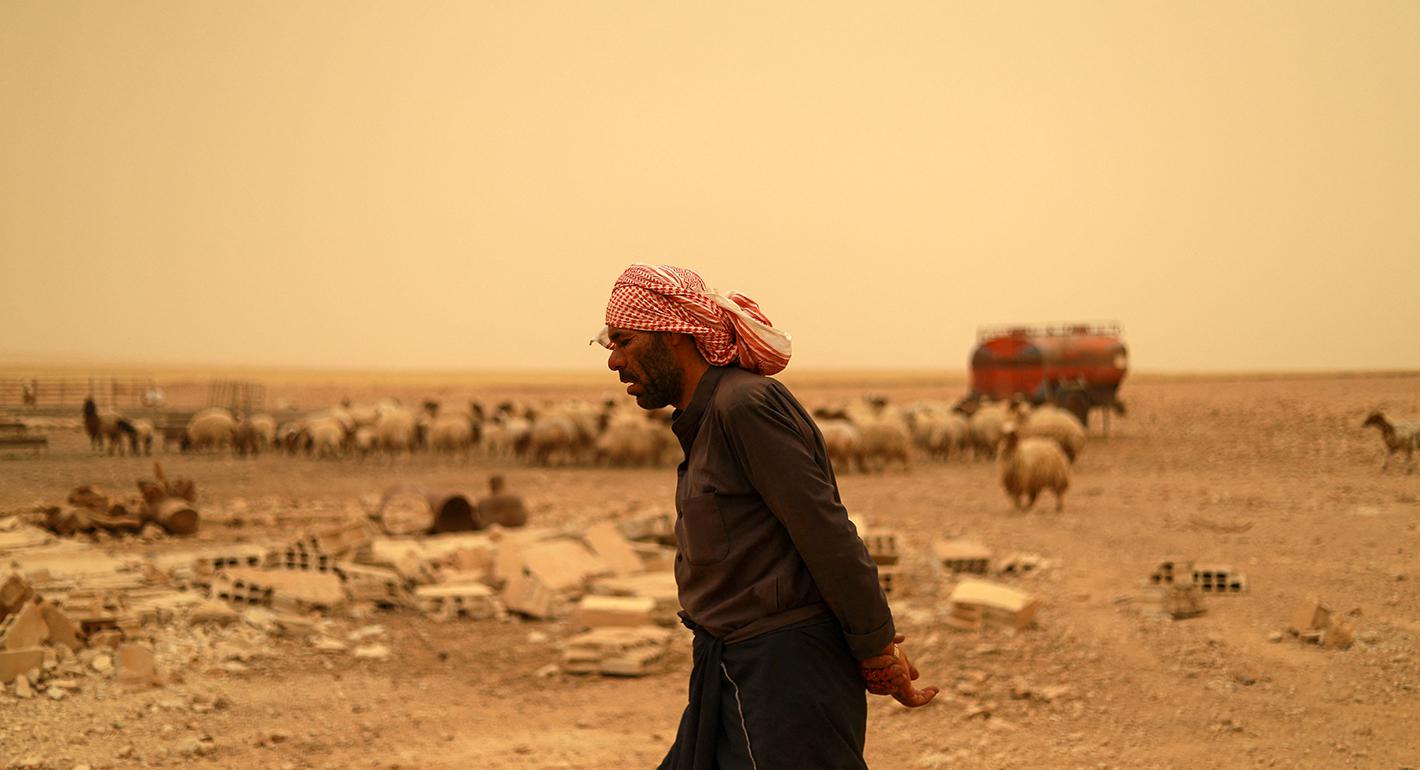
المصدر: Getty
الجفاف يهدد المجتمعات الرعوية في سوريا
أشد ما يفتك بالثروة الحيوانية في سوريا هو الأمراض التي تنتشر في أوقات الجفاف في ظل عجز الرعاة عن تأمين الدواء لارتفاع أسعاره.
عانت سوريا ثلاث موجات جفاف منذ عام 1980، كان أشدها بين 2006 و2010، بحسب دراسة لمنظمة باكس للسلام الهولندية. ولكن في صيف عام 2021 شهدت سوريا مستويات قياسية منخفضة من هطول الأمطار، وتراجع حاد في تدفق المياه إلى نهر الفرات.
انعكس ذلك على تربية الماشية، إذ لم يكن هناك أي نمو في الغطاء النباتي في ربيع وصيف العام 2021، ما يعني أن مئات الآلاف من الأغنام والأبقار والماعز والإبل تفتقر إلى المراعي والوصول إلى مصادر المياه.
تضيف الدراسة أن "المجتمعات الرعوية في سوريا تكافح بشكل متزايد، مع تأثير تغير المناخ مع انخفاض أسعار الماشية، والظروف الجوية المتقلبة التي تؤثر في أسعار الماشية، ما يدفع هذه المجتمعات إلى حافة الفقر".
تكاليف مرهقة
راعيا الأغنام محمد خلف المحير وعلي السوادي من ريف محافظة الحسكة شمال شرقي سوريا، تحدثا مفصلا في مقابلة مع صدى خلال إعداد فيلم وثائقي عن مشاكل المناخ في سوريا، عن أزمة الجفاف التي تشهدها سوريا وانعكاساتها الكبيرة والمتعددة على الثروة الحيوانية، وخاصة في مايتعلق بتوفير الأعلاف والمياه والدواء للاستمرار في رعاية الماشية.
ويحتاج الرأس الواحد من الماشية إلى 3 كيلوغرامات من العلف يوميا، ثمنها دولار واحد، كما أن عشرة رؤوس ماشية تشرب مياه شهريا بـما تقدر قيمته ب 10 دولارات. إضافة إلى أن علبة دواء واحدة تكفي فقط 10 رؤوس من الماشية وثمنها 8 دولارات، وطبعا هذه الأسعار غير ثابتة وتتصاعد بشكل كبير مع ازدياد الطلب عليها. تعد هذه أرقام كبيرة جدا بالنسبة للعاملين في الرعي، في بلد يعاني من أزمات حادة في المعيشة، وتصنف الأمم المتحدة 90 بالمئة من سكانه تحت خط الفقر.
الدعم وانتشار الأمراض
ينقل الراعيان شكوى أقرانهم الرعاة من فقدانهم الدعم الحكومي من قبل المسؤولين عن الثروة الحيوانية، ويطالبون بتوفير الدعم الكافي من الأعلاف وحتى من المياه، ومراقبة أسعار الدواء التي تفرضها العيادات والصيدليات البيطرية. لعل أشد ما يفتك بالثروة الحيوانية هو الأمراض التي تنتشر في أوقات الجفاف أمام عجز الرعاة عن تأمين الدواء لارتفاع أسعاره.
ووفق المُتَحدثين، فإن موجات الجفاف تعني انتهاء الرعي الطبيعي وذلك يحرم الماشية من الفيتامينات والمناعة المكتسبة، ويجعلها معرضة للإصابة بمختلف أنواع الحمى كـ المالطية والقلاعية والزائلة، إلى جانب إصابتها بنقص الأملاح والديدان الكبدية ومرضي دودة الرأس والجرب وداء الباستوريلا.
كما أن من مشكلات الجفاف المستمرة انتهاء الرعي الطبيعي، ما يعني الاعتماد على الأعلاف الاصطناعية التي قد تكون تحتوي على مركبات كيماوية تُضر بالماشية، وتنقص من مناعتها ومقاومتها للأمراض.
الحلول ليست محلية
يقول وزير الزراعة والإصلاح الزراعي السوري، محمد حسان قطنا في مقابلة تلفزيونية، إن مواجهة التغيرات المناخية ممكنة، ولكن ليس على المستوى المحلي، بل على المستوى الإقليمي. ويوضح أنه يجب أن يكون هناك مشاريع وبرامج مشتركة مع الأردن ولبنان والعراق، مع ضرورة أن تتبنى هذه البرامج المنظمات الدولية، المعنية بالتغيرات المناخية.
والتغير المناخي لا يعرف حدودا وفق الوزير قطنا، لأنه أحدث تراجعا كبيرا في الغطاء النباتي في البادية والغابات، مما أثر بشكل كبير على الثروة الحيوانية، نتيجة عدم توفر الكلأ والمياه التي تحتاجها الماشية. في قمة المناخ الأخيرة، التي عقدت في مدينة شرم الشيخ المصرية في نوفمبر الماضي، حذر الأمين العام للأمم المتحدة أنطونيو غوتيريس، من أن العالم يعيش "فوضى مناخية" ويتجه نحو "الجحيم المناخي".
تيم الحاج، صحفي استقصائي سوري مهتم بالتحليل السياسي.
عن المؤلف
تيم الحاج
لا تتخذ كارنيغي مواقف مؤسسية بشأن قضايا السياسة العامة؛ الآراء المعبر عنها هنا هي آراء المؤلف(ين) ولا تعكس بالضرورة آراء كارنيغي أو موظفيها أو أمنائها.