The chasm between the Palestinian diaspora and the Palestinian Authority (PA) is no longer a subtle crack but a gaping void. Once the torchbearers of a shared national struggle, these two entities now stand worlds apart—alienated by years of institutional decay, failed leadership, and the slow-motion disintegration of the Palestinian state project. As bombs fell over Gaza and Palestinian civilians faced unimaginable suffering, the PA’s voice was conspicuously absent, drowned out by internal power struggles and global indifference. In this fractured landscape, one question looms large: Can the diaspora, unmoored from official leadership, become the cornerstone of a reimagined Palestinian national cause?
The Palestinian diaspora has long been the backbone of the national struggle, funding liberation movements, advocating on international platforms, and spearheading solidarity campaigns. During the Palestine Liberation Organization’s (PLO) zenith, exiled Palestinians united through transnational networks, amplifying their collective voice for self-determination. However, this cohesion has frayed. The erosion of trust in the PA—plagued by corruption, autocracy, and failed governance —has pushed the diaspora to redefine its role. With nearly 50 percent of Palestinians now living outside of Palestinian Territories, this global community has shifted course from state-building ambitions to grassroots mobilization and international advocacy, signaling both a rupture and a recalibration of its historical mission.
The gulf between the Palestinian diaspora and the PA is both a tragedy and a reckoning. The PA’s leadership failures are glaring: amid the Gaza war, the its disengaged response left even allies questioning its legitimacy. Frustration with President Mahmoud Abbas’s administration, tainted by autocracy and accused of embezzling public funds, has spurred protests in Ramallah and beyond. Rampant corruption and ineffective governance have eroded public trust. Surveys indicate that 87 percent of Palestinians perceive the PA as corrupt, and 78 percent want Abbas to resign. Meanwhile, power struggles between the PA in the West Bank and Hamas in Gaza have paralyzed governance—their infighting has fractured Palestinian unity, leaving no coherent leadership to represent a common cause.
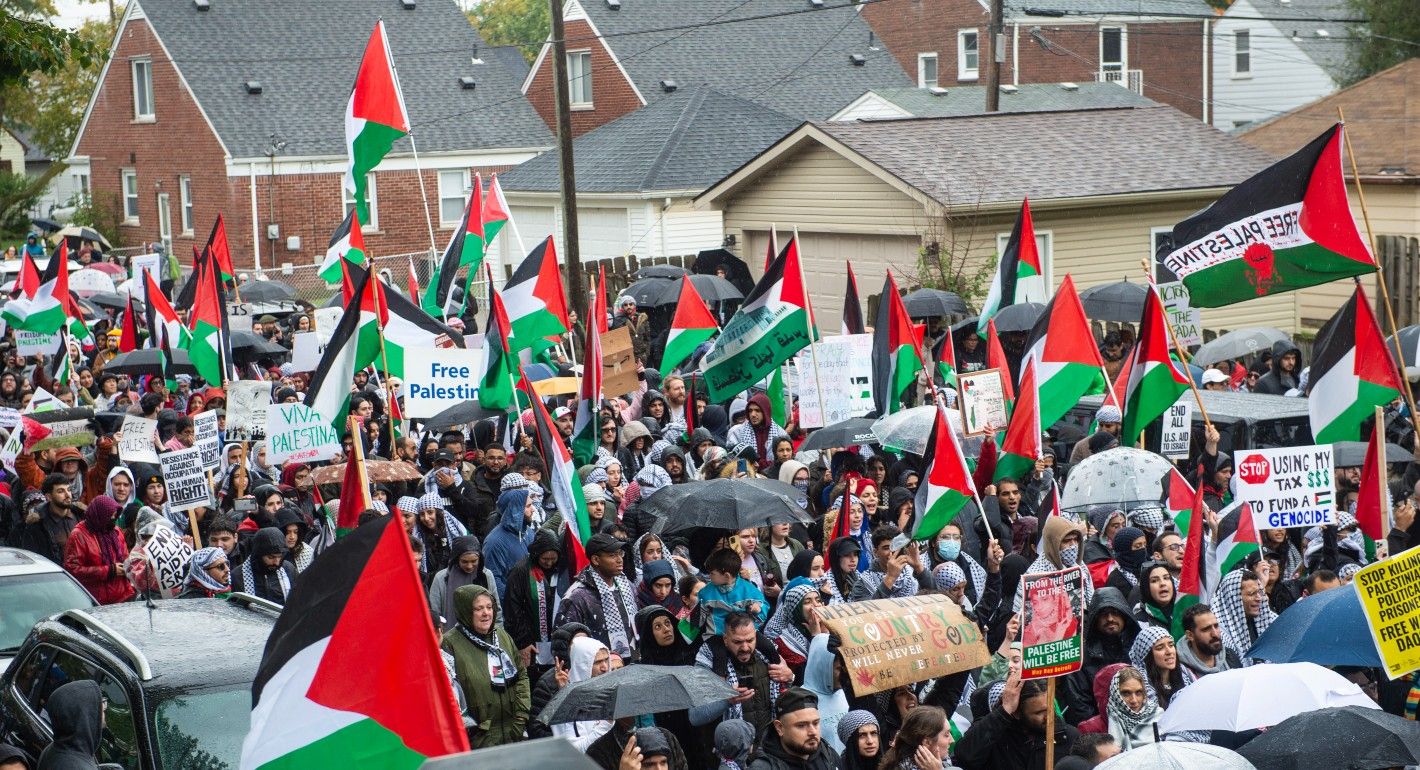
In stark contrast, the diaspora has embraced dynamic (and often decentralized) activism. It has historically been instrumental in supporting the Palestinian cause through financial contributions, advocacy, and solidarity efforts. Initiatives like the Palestinian Youth Movement’s global campaigns on social media have galvanized popular support for Gaza, bypassing official channels. In recent years, Palestinian Americans have mobilized to raise record funds for Gaza amid humanitarian crises, with organizations like the Palestine Children’s Relief Fund and Anera witnessing unprecedented donation levels.
As the PA flounders, the Palestinian diaspora has stepped onto the global stage with unmatched vigor, shaping international policy and discourse. In the corridors of power, diaspora-led organizations like Americans for Justice in Palestine Action and the Institute for Middle East Understanding (IMEU) have reframed narratives on the Israeli occupation, often challenging entrenched narratives in Western media and lobbying governments to revisit decades-old policies on military aid to Israel.
Diaspora advocacy has kept the Palestinian right of return alive in global discourse. The UK-based Palestinian Return Centre, for instance, has campaigned relentlessly for refugee rights, gaining special consultative status with the UN Economic and Social Council in 2015. Meanwhile, the Global Campaign to Return to Palestine, operating across forty-five countries, drives worldwide events to ensure the issue remains on the international agenda. These efforts ensure the right of return remains not just a memory but a movement.
Momentum for change is already building. The Palestinian Popular Campaign’s call to democratize the PLO represents a turning point. A unified leadership, working hand in hand with an empowered diaspora, could transform disjointed activism into a formidable force for justice. Anything less risks leaving Palestine’s future as fragmented as its present.