

Article
Marina Ottaway, Omar Hossino
{
  "authors": [
    "Marina Ottaway"
  ],
  "type": "commentary",
  "blog": "Sada",
  "centerAffiliationAll": "",
  "centers": [
    "Carnegie Endowment for International Peace"
  ],
  "collections": [],
  "englishNewsletterAll": "",
  "nonEnglishNewsletterAll": "",
  "primaryCenter": "Carnegie Endowment for International Peace",
  "programAffiliation": "",
  "programs": [],
  "projects": [],
  "regions": [
    "Middle East",
    "North Africa",
    "Palestine",
    "Saudi Arabia"
  ],
  "topics": [
    "Political Reform",
    "Foreign Policy"
  ]
}

REQUIRED IMAGE
Arabs often question the United States' commitment to promoting democracy in the Middle East, arguing its policies are inconsistent and even hypocritical. In reality, the commitment to democracy by President George W. Bush and Secretary of State Condoleezza Rice is unquestionable, based on a genuine conviction that a democratic Middle East serves the security interests of the United States.
Arabs often question the United States' commitment to promoting democracy in the Middle East, arguing its policies are inconsistent and even hypocritical. In reality, the commitment to democracy by President George W. Bush and Secretary of State Condoleezza Rice is unquestionable, based on a genuine conviction that a democratic Middle East serves the security interests of the United States. But U.S. policy toward the region tries to balance the new post-September 11 perception of a democratic imperative with old concerns about access to oil and U.S. and Israeli security. Furthermore, not all agencies of the U.S. government have embraced the democracy agenda with the same fervor, with the Department of Defense in particular remaining somewhat skeptical about the link between democracy and U.S. security. Tensions created by these disparate interests and commitments lead to policy outcomes that do not always help the promotion of democracy.
The old concerns that guided U.S. policy in the Middle East are well known: security, oil and Israel. All U.S. administrations have—understandably—sought to prevent threats to U.S. security emanating from the region. During the Cold War, the perceived threat was the possibility of close relations between the Soviet Union and Arab regimes, which led the United States to be tolerant of autocratic but reliably anti-Soviet governments. With the Soviet Union gone, the perceived threat is now terrorism. The policy response to this new threat has been somewhat contradictory. On the one hand, the Bush administration takes the position that lack of democracy is a major cause of terrorism and castigates Arab regimes for authoritarianism. On the other hand, as in Cold War days, the United States remains well disposed toward regimes that side with it in the fight against terrorism and is willing to overlook shortcomings in their domestic policies when they cooperate. The ambiguity of the policy is seen clearly in relations with Egypt. Washington needs and appreciates Egyptian cooperation against terrorism and thus wants to maintain strong relations with the Mubarak government. It also wants the country to reform politically, convinced that in the long run this would prevent terrorism. As a result, Egypt is receiving mixed messages from the United States.
Availability of oil at stable prices is another constant concern. U.S. dependence on Middle East oil remains high, despite the growing importance of supplies from West Africa and the Caspian Sea, and the United States cannot afford to alienate oil producers in the region. The contradictions caused by oil dependence are most evident in the policy toward Saudi Arabia. The kingdom is seen as major source of terrorism, directly through the propagation of Wahhabism and indirectly because of its repressive domestic policies. But Saudi Arabia has huge oil reserves, excess production capacity that until recently helped moderate increases in oil prices, and furthermore is reasonably cooperative in the war on terrorism. As a result, Saudi Arabia has been the target of much criticism but U.S. policy toward it remains cautious.
Finally, all U.S. administrations have been committed to the security of Israel, although this commitment has led to different policies over time. For the Carter administration, guaranteeing Israel 's security meant pushing the peace process forward, even if this entailed putting pressure on Israel to accept compromises. Other administrations have been content to back Israel in all its policies. During George W. Bush's first term in office, the peace process was neglected, and the Sharon government received unconditional support. There has been no real change in the second term so far.
The new commitment to democracy has not eliminated previous concerns, but added a fourth element to this already complex picture, creating new contradictions. In the short and even medium run, processes of democratization can be extremely destabilizing. Thus, there is real fear in the Bush administration that the political transformation of the Middle East could lead to outcomes that threaten U.S. interests, such as the rise to power of radical Islamists in some countries or extreme instability in others. As a result, the United States wants democratic processes to unfold in the region, but slowly, and it also wants to be sure that outcomes will be acceptable. For example, it wants elections, but it does not want to see the victory of Islamist parties, and least of all of organizations such as Hamas and Hezbollah, which have much popular support but are hostile to Israel and have armed wings.
The ideological and moral commitment of the Bush administration to democracy in the Middle East is now beyond doubt. What is still in doubt is whether a policy that has to satisfy many conflicting goals can achieve coherence and have a positive overall effect on the democratic transformation of the region.
Marina Ottaway is a senior associate at the Carnegie Endowment for International Peace and co-editor (with Thomas Carothers) of Uncharted Journey: Promoting Democracy in the Middle East (Carnegie Endowment for International Peace, 2005).

Former Senior Associate, Middle East Program
Before joining the Endowment, Ottaway carried out research in Africa and in the Middle East for many years and taught at the University of Addis Ababa, the University of Zambia, the American University in Cairo, and the University of the Witwatersrand in South Africa.
Recent Work
Marina Ottaway, Omar Hossino
Marina Ottaway
Carnegie does not take institutional positions on public policy issues; the views represented herein are those of the author(s) and do not necessarily reflect the views of Carnegie, its staff, or its trustees.
From anime heroes to online gaming communities, Morocco’s Gen Z is building a new protest culture. What does this digital imagination reveal about youth politics, and how should institutions respond?
Abdelilah Farah
In a volatile Middle East, the Omani port of Duqm offers stability, neutrality, and opportunity. Could this hidden port become the ultimate safe harbor for global trade?
Giorgio Cafiero, Samuel Ramani
Is Morocco’s migration policy protecting Sub-Saharan African migrants or managing them for political and security ends? This article unpacks the gaps, the risks, and the paths toward real rights-based integration.
Soufiane Elgoumri
Iraq’s foreign policy is being shaped by its own internal battles—fractured elites, competing militias, and a state struggling to speak with one voice. The article asks: How do these divisions affect Iraq’s ability to balance between the U.S. and Iran? Can Baghdad use its “good neighbor” approach to reduce regional tensions? And what will it take for Iraq to turn regional investments into real stability at home? It explores potential solutions, including strengthening state institutions, curbing rogue militias, improving governance, and using regional partnerships to address core economic and security weaknesses so Iraq can finally build a unified and sustainable foreign policy.
Mike Fleet
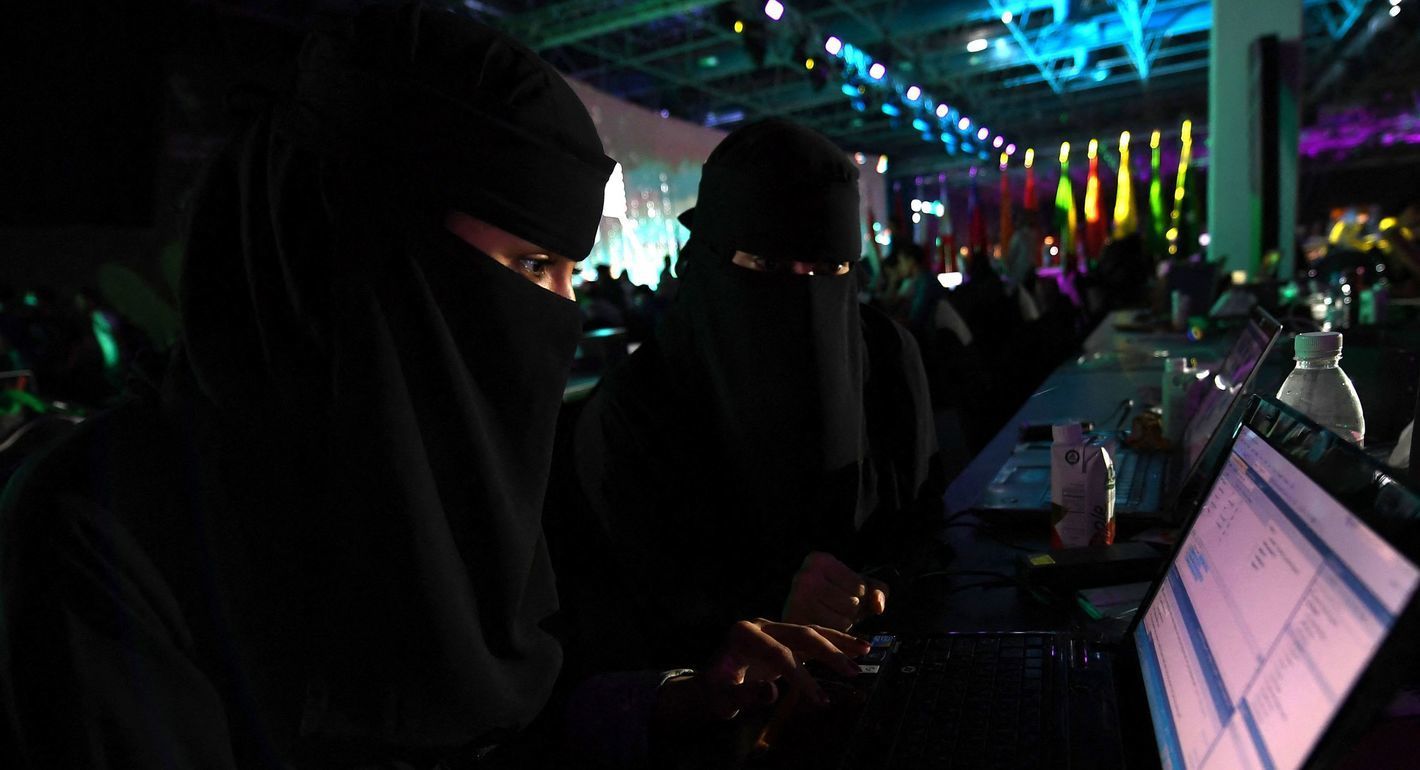
How can Saudi Arabia turn its booming e-commerce sector into a real engine of economic empowerment for women amid persistent gaps in capital access, digital training, and workplace inclusion? This piece explores the policy fixes, from data-center integration to gender-responsive regulation, that could unlock women’s full potential in the kingdom’s digital economy.
Hannan Hussain