
• Research
  • Emissary
  • About
  • Experts
Carnegie Global logoCarnegie lettermark logo
DemocracyIran
  • Donate
{
  "authors": [
    "Gilles Dorronsoro"
  ],
  "type": "other",
  "centerAffiliationAll": "dc",
  "centers": [
    "Carnegie Endowment for International Peace",
    "Carnegie Russia Eurasia Center"
  ],
  "collections": [],
  "englishNewsletterAll": "ctw",
  "nonEnglishNewsletterAll": "",
  "primaryCenter": "Carnegie Endowment for International Peace",
  "programAffiliation": "SAP",
  "programs": [
    "South Asia"
  ],
  "projects": [
    "Eurasia in Transition"
  ],
  "regions": [
    "North America",
    "United States",
    "South Asia",
    "Afghanistan",
    "Western Europe"
  ],
  "topics": [
    "Political Reform",
    "Democracy",
    "Security",
    "Military",
    "Foreign Policy"
  ]
}
Source: Getty

Other

Focus and Exit: An Alternative Strategy for the Afghan War

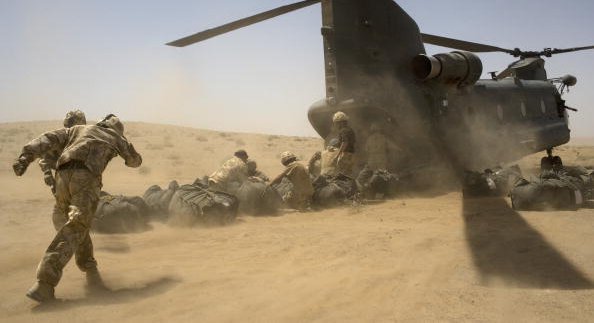
The debate in Washington and European capitals has recently centered on how many more troops will be sent to Afghanistan in 2009 as part of a military surge. The real question, however, is how combat troops should be used - to pursue the Taliban, or secure key areas to allow institutions to develop. The main policy objective must be the development of a government that can survive U.S. withdrawal.

Link Copied
By Gilles Dorronsoro
Published on Jan 15, 2009
Program mobile hero image

Program

South Asia

The South Asia Program informs policy debates relating to the region’s security, economy, and political development. From strategic competition in the Indo-Pacific to India’s internal dynamics and U.S. engagement with the region, the program offers in-depth, rigorous research and analysis on South Asia’s most critical challenges.

Learn More
Project hero Image

Project

Eurasia in Transition

Learn More

After seven years of war, the international community has failed to create the conditions for a sustainable Afghan state. The reality is that the international coalition now has limited resources and a narrow political time frame to create lasting Afghan institutions. Yet building such institutions is our only realistic exit strategy.

The debate in Washington and European capitals has recently centered on how many more troops will be sent to Afghanistan in 2009 as part of a military surge. Such a tactical adjustment is unlikely to make much of a difference in a country where the basic population-to-troops ratio is estimated at approximately 430 people per foreign soldier.

The real question is how combat troops should be used. The two choices we face are whether to continue playing offense by going after the Taliban, especially in the south and the east, and spreading troops thin; or whether to adopt a new strategy focusing on protecting strategic sites, namely, urban centers and key roads, to allow for the development of a strong core of Afghan institutions.

Key conclusions:
  • Objectives in Afghanistan must be reconciled with the resources available to pursue them.
  • The mere presence of foreign soldiers fighting a war in Afghanistan is probably the single most important factor in the resurgence of the Taliban.
  • The best way to weaken, and perhaps divide, the armed opposition is to reduce military confrontations.
  • The main policy objective should be to leave an Afghan government that is able to survive a U.S. withdrawal.
  • Strategy should differentiate three areas and allocate resources accordingly: strategic cities and transportation routes that must be under total Afghan/alliance control; buffers around strategic areas, where NATO and the Afghan Army would focus their struggle against insurgents; and opposition territory, where NATO and Afghan forces would not expend effort or resources.
  • Withdrawal will allow the United States to focus on the central security problem in the region: al-Qaeda and the instability in Pakistan.

About the Author

Gilles Dorronsoro

Former Nonresident Scholar, South Asia Program

Dorronsoro’s research focuses on security and political development in Afghanistan. He was a professor of political science at the Sorbonne in Paris and the Institute of Political Studies of Rennes.

    Recent Work

  • Paper
    Waiting for the Taliban in Afghanistan

      Gilles Dorronsoro

  • Paper
    Afghanistan: The Impossible Transition

      Gilles Dorronsoro

Gilles Dorronsoro
Former Nonresident Scholar, South Asia Program
Gilles Dorronsoro
Political ReformDemocracySecurityMilitaryForeign PolicyNorth AmericaUnited StatesSouth AsiaAfghanistanWestern Europe

Carnegie does not take institutional positions on public policy issues; the views represented herein are those of the author(s) and do not necessarily reflect the views of Carnegie, its staff, or its trustees.
More Work from Carnegie Endowment for International Peace

  •  A machine gun of a Houthi soldier mounted on a police vehicle next to a billboard depicting the U.S. president Donald Trump and Mohammed Bin Salman, the Crown Prince and Prime Minister of Saudi Arabia, during a protest staged to show support to Iran against the U.S.-Israel war on March 27, 2026 in Sana'a, Yemen.
    Collection
    The Iran War’s Global Reach

    As the war between the United States, Israel, and Iran continues, Carnegie scholars contribute cutting-edge analysis on the events of the war and their wide-reaching implications. From the impact on Iran and its immediate neighbors to the responses from Gulf states to fuel and fertilizer shortages caused by the effective shutdown of the Strait of Hormuz, the war is reshaping Middle East alliances and creating shockwaves around the world. Carnegie experts analyze it all.

  •  A machine gun of a Houthi soldier mounted on a police vehicle next to a billboard depicting the U.S. president Donald Trump and Mohammed Bin Salman, the Crown Prince and Prime Minister of Saudi Arabia, during a protest staged to show support to Iran against the U.S.-Israel war on March 27, 2026 in Sana'a, Yemen.
    Article
    Amid Iran War, Gulf Countries Slow the Pace of Reforms

    The return of war as the organizing factor in Middle Eastern politics has predictable consequences: governments are prioritizing regime stability and becoming averse to political and social reform.

      • Sarah Yerkes

      Sarah Yerkes, Amr Hamzawy

  • Commentary
    Carnegie Politika
    Power, Pathways, and Policy: Grounding Central Asia’s Digital Ambitions

    Central Asia’s digital ambitions are achievable, but only if policy is aligned with the region’s physical constraints.

      Aruzhan Meirkhanova

  • Commentary
    Strategic Europe
    Taking the Pulse: Can NATO Survive the Iran War?

    Donald Trump has repeatedly bashed NATO and European allies, threatening to annex Canada and Greenland and deploring their lack of enthusiasm for his war of choice in Iran. Is this latest round of abuse the final straw?

      • Rym Momtaz

      Rym Momtaz, ed.

  • A person faces away from the camera wearing a yellow jacket with "PRESS" printed across the back
    Paper
    The Impact of Ending U.S. International Media Assistance

    The future looks bleak for independent media worldwide, but there is a robust infrastructure of knowledge, organizations, and people to build upon.

      Daniel Sabet, Susan Abbott

Get more news and analysis from
Carnegie Endowment for International Peace
Carnegie global logo, stacked
1779 Massachusetts Avenue NWWashington, DC, 20036-2103Phone: 202 483 7600Fax: 202 483 1840
  • Research
  • Emissary
  • About
  • Experts
  • Donate
  • Programs
  • Events
  • Blogs
  • Podcasts
  • Contact
  • Annual Reports
  • Careers
  • Privacy
  • For Media
  • Government Resources
Get more news and analysis from
Carnegie Endowment for International Peace
© 2026 Carnegie Endowment for International Peace. All rights reserved.







