• Research
  • Emissary
  • About
  • Experts
Carnegie Global logoCarnegie lettermark logo
DemocracyIran
  • Donate
{
  "authors": [
    "James F. Collins",
    "Dimitri Simes"
  ],
  "type": "legacyinthemedia",
  "centerAffiliationAll": "dc",
  "centers": [
    "Carnegie Endowment for International Peace",
    "Carnegie Russia Eurasia Center"
  ],
  "collections": [],
  "englishNewsletterAll": "ctw",
  "nonEnglishNewsletterAll": "",
  "primaryCenter": "Carnegie Endowment for International Peace",
  "programAffiliation": "russia",
  "programs": [
    "Russia and Eurasia"
  ],
  "projects": [],
  "regions": [
    "North America",
    "United States",
    "Middle East",
    "Iran",
    "South Asia",
    "Afghanistan",
    "Caucasus",
    "Russia"
  ],
  "topics": [
    "Security",
    "Foreign Policy",
    "Nuclear Policy"
  ]
}
REQUIRED IMAGE

REQUIRED IMAGE

In The Media

Worldwise: Russian Relations

Russia and the United States are not likely to come to agreement on the best way to approach Iran’s nuclear ambitions any time soon. This issue is likely to be at the top of Secretary Clinton’s agenda during her time in Moscow.

Link Copied
By James F. Collins and Dimitri Simes
Published on Oct 12, 2009
Program mobile hero image

Program

Russia and Eurasia

The Russia and Eurasia Program continues Carnegie’s long tradition of independent research on major political, societal, and security trends in and U.S. policy toward a region that has been upended by Russia’s war against Ukraine.  Leaders regularly turn to our work for clear-eyed, relevant analyses on the region to inform their policy decisions.

Learn More

Source: Bloggingheads.tv

When Secretary Clinton arrives in Moscow on October 13 to speak with President Medvedev and Foreign Minister Lavrov, her priorities will include addressing the situation in Afghanistan, strategic arms reductions, missile defense, nonproliferation and strengthening U.S.-Russian relations. One of her most important concerns, however, will engaging her Russian counterparts in a discussion of Iran and possible sanctions against it.

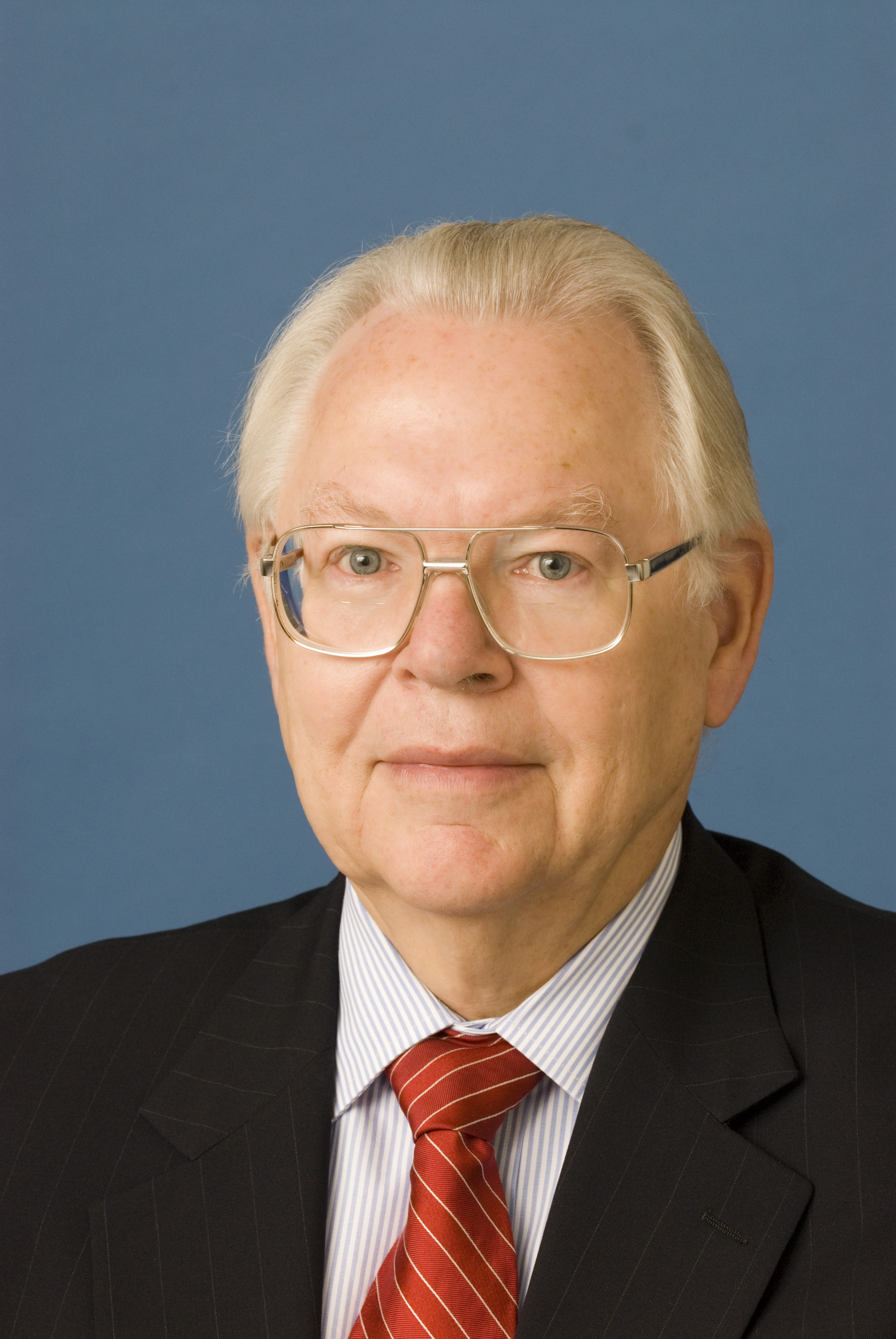
Ambassador Collins states that, "I think we still have a great deal of ground to cover before we’re going to be of one mind on Iran and how to approach it.  But I do think that the meeting in Geneva recently and the apparent opening to have better inspections of Iranian facilities may also provide some basis for Washington and Moscow to look at this, to find a way to agree on at least some next steps, where they can say if nothing else, we all have to ensure that Iran is abiding by its commitments.  I would hope that at a minimum we’ll see some work on that score.  But we have a long way to go before we’re going to see the American and Russian sides agree on sanctions: I think it’s a tough issue.”

About the Authors

James F. Collins

Nonresident Senior Fellow, Russia and Eurasia Program; Diplomat in Residence

Ambassador Collins was the U.S. ambassador to the Russian Federation from 1997 to 2001 and is an expert on the former Soviet Union, its successor states, and the Middle East.

Dimitri Simes

Dimitri Simes is President of the Center for the National Interest.

Authors

James F. Collins
Nonresident Senior Fellow, Russia and Eurasia Program; Diplomat in Residence
James F. Collins
Dimitri Simes

Dimitri Simes is President of the Center for the National Interest.

SecurityForeign PolicyNuclear PolicyNorth AmericaUnited StatesMiddle EastIranSouth AsiaAfghanistanCaucasusRussia

Carnegie does not take institutional positions on public policy issues; the views represented herein are those of the author(s) and do not necessarily reflect the views of Carnegie, its staff, or its trustees.

More Work from Carnegie Endowment for International Peace

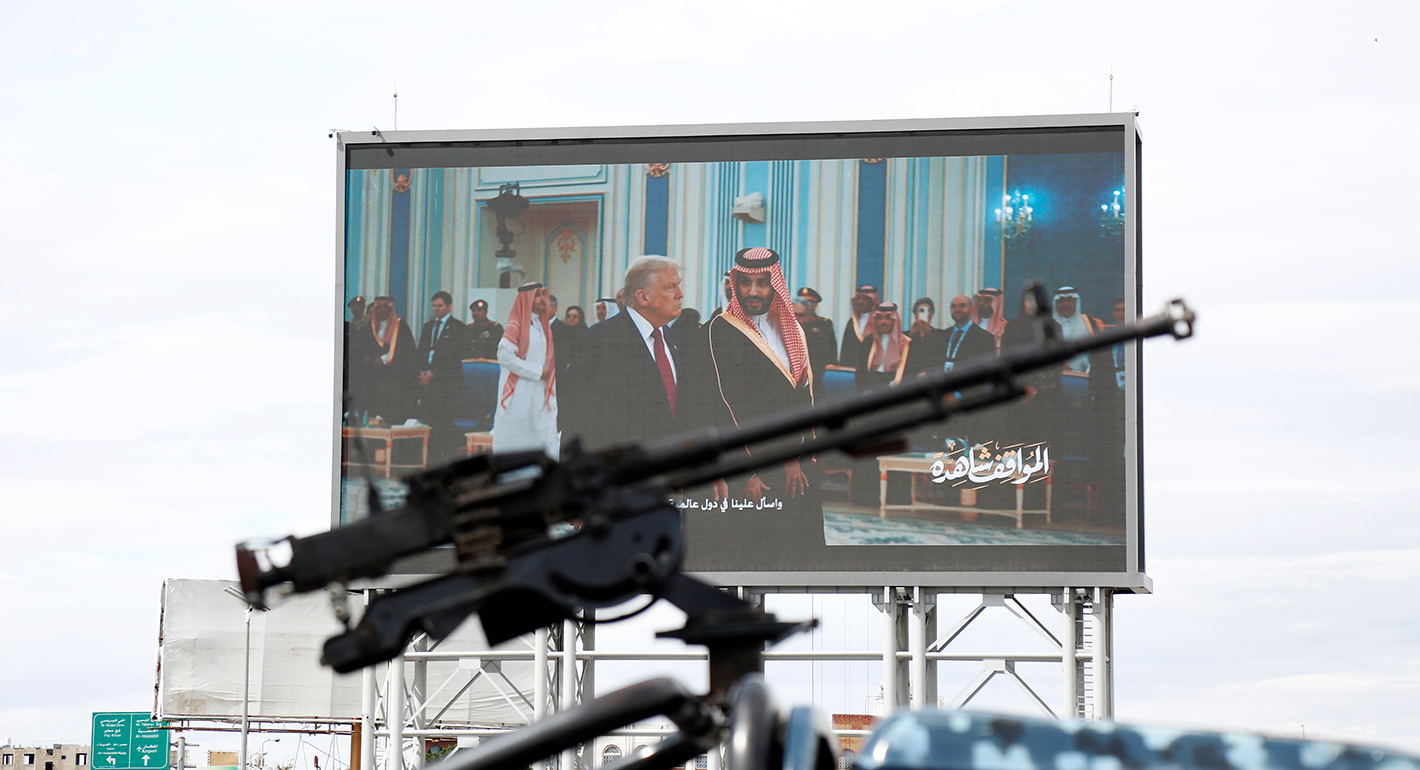
  •  A machine gun of a Houthi soldier mounted on a police vehicle next to a billboard depicting the U.S. president Donald Trump and Mohammed Bin Salman, the Crown Prince and Prime Minister of Saudi Arabia, during a protest staged to show support to Iran against the U.S.-Israel war on March 27, 2026 in Sana'a, Yemen.
    Collection
    The Iran War’s Global Reach

    As the war between the United States, Israel, and Iran continues, Carnegie scholars contribute cutting-edge analysis on the events of the war and their wide-reaching implications. From the impact on Iran and its immediate neighbors to the responses from Gulf states to fuel and fertilizer shortages caused by the effective shutdown of the Strait of Hormuz, the war is reshaping Middle East alliances and creating shockwaves around the world. Carnegie experts analyze it all.
  •  A machine gun of a Houthi soldier mounted on a police vehicle next to a billboard depicting the U.S. president Donald Trump and Mohammed Bin Salman, the Crown Prince and Prime Minister of Saudi Arabia, during a protest staged to show support to Iran against the U.S.-Israel war on March 27, 2026 in Sana'a, Yemen.
    Article
    Amid Iran War, Gulf Countries Slow the Pace of Reforms

    The return of war as the organizing factor in Middle Eastern politics has predictable consequences: governments are prioritizing regime stability and becoming averse to political and social reform.

      • Sarah Yerkes

      Sarah Yerkes, Amr Hamzawy

  • Commentary
    Carnegie Politika
    Power, Pathways, and Policy: Grounding Central Asia’s Digital Ambitions

    Central Asia’s digital ambitions are achievable, but only if policy is aligned with the region’s physical constraints.

      Aruzhan Meirkhanova

  • Commentary
    Strategic Europe
    Taking the Pulse: Can NATO Survive the Iran War?

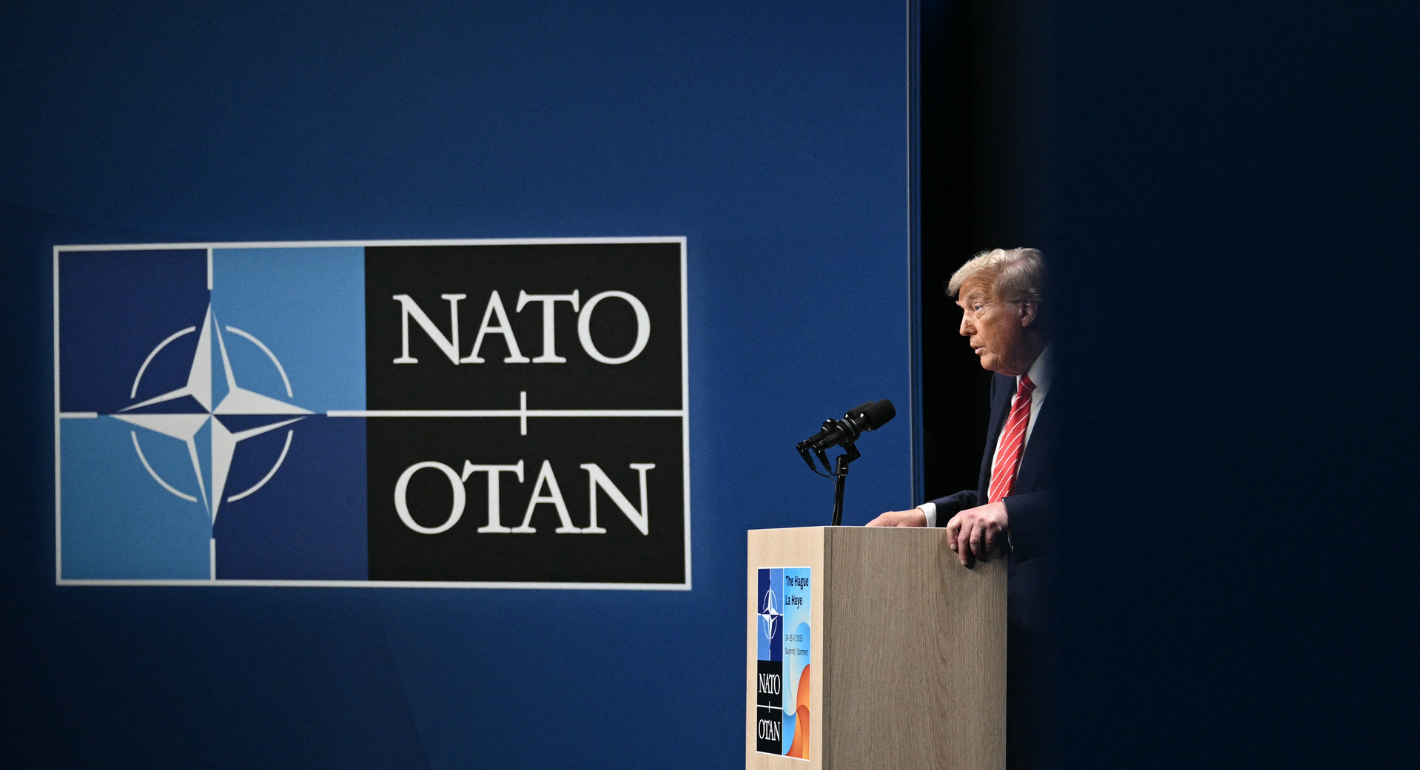
    Donald Trump has repeatedly bashed NATO and European allies, threatening to annex Canada and Greenland and deploring their lack of enthusiasm for his war of choice in Iran. Is this latest round of abuse the final straw?

      • Rym Momtaz

      Rym Momtaz, ed.

  • A person faces away from the camera wearing a yellow jacket with "PRESS" printed across the back
    Paper
    The Impact of Ending U.S. International Media Assistance

    The future looks bleak for independent media worldwide, but there is a robust infrastructure of knowledge, organizations, and people to build upon.

      Daniel Sabet, Susan Abbott

Get more news and analysis from
Carnegie Endowment for International Peace
Carnegie global logo, stacked
1779 Massachusetts Avenue NWWashington, DC, 20036-2103Phone: 202 483 7600Fax: 202 483 1840
  • Research
  • Emissary
  • About
  • Experts
  • Donate
  • Programs
  • Events
  • Blogs
  • Podcasts
  • Contact
  • Annual Reports
  • Careers
  • Privacy
  • For Media
  • Government Resources
Get more news and analysis from
Carnegie Endowment for International Peace
© 2026 Carnegie Endowment for International Peace. All rights reserved.