

Commentary
Russia’s AI-driven propaganda campaigns operate in a fragmented, chaotic, and often illogical manner. That’s not necessarily a problem for the Kremlin, though: It’s much easier to mimic genuine public debate that way.
Ilya Klishin
{
  "authors": [],
  "type": "other",
  "centerAffiliationAll": "dc",
  "centers": [
    "Carnegie Endowment for International Peace",
    "Carnegie Europe",
    "Malcolm H. Kerr Carnegie Middle East Center"
  ],
  "collections": [],
  "englishNewsletterAll": "menaTransitions",
  "nonEnglishNewsletterAll": "",
  "primaryCenter": "Carnegie Endowment for International Peace",
  "programAffiliation": "MEP",
  "programs": [
    "Middle East"
  ],
  "projects": [],
  "regions": [
    "United States",
    "Middle East",
    "Egypt",
    "Gulf",
    "Levant",
    "Maghreb",
    "North America"
  ],
  "topics": [
    "Political Reform",
    "Security",
    "Economy"
  ]
}
REQUIRED IMAGE
Marwan Muasher, a prominent Jordanian diplomat and politician who served as Jordan’s foreign minister and deputy prime minister, will join the Carnegie Endowment. As vice president for studies, Muasher will oversee the work of the Endowment’s Middle East Program in Washington and its Middle East Center in Beirut.
WASHINGTON, Apr 7—Marwan Muasher, a prominent Jordanian diplomat and politician who served as Jordan’s foreign minister and deputy prime minister, will join the Carnegie Endowment. As vice president for studies, Muasher will oversee the work of the Endowment’s Middle East Program in Washington and its Middle East Center in Beirut.
Making the announcement, Jessica Mathews, president of the Endowment, said:
“The unique, collaborative work of an established and leading program in Washington and our flourishing regional Center in Beirut—recently voted the leading think tank in the Middle East and North Africa—requires top level leadership and direction. There is no one better suited to provide that than Marwan Muasher. His unique understanding of the political, economic, and social needs of the region and the United States will provide critical direction to our research and ensure it offers practical, workable solutions for policy makers around the world. We are honored to have him join us.”
Muasher said:
“I am delighted to join Carnegie and look forward to building on the success in Washington and the Middle East. With the launch of its Middle East Center in Beirut three years ago, the Carnegie Endowment is unique among think tanks in offering research and analysis from both the region and the United States. Such collaboration among scholars beyond Washington, D.C., is essential for providing solutions to the challenges facing policy makers in both parts of the world. With Marina Ottaway and Paul Salem, I look forward to continuing with and building upon the exceptional caliber of research that has defined Carnegie’s analysis on the Middle East, particularly in the area of political reform.”
Muasher, who will join the Endowment in August, currently serves as senior vice president of external affairs at the World Bank. His long career has spanned the areas of diplomacy, development, civil society, and communications. Muasher served as his country’s spokesman and member of the delegation to the peace talks with Israel, and in 1995 opened Jordan’s first embassy in Israel. While serving as the Jordanian ambassador to Washington (1997–2002), the first free trade agreement between the United States and an Arab nation was signed.
As foreign minister, he played a key role in developing and promoting the Arab Peace Initiative. As deputy prime minister, he led a national, participatory effort to produce “The National Agenda,” a blueprint for political, economic, and administrative reform in the country. It proposed changes to the electoral law, elimination of all legal discrimination against women, legislation to allow civil society to operate with no government interference, and proposals to address the country’s biggest economic challenges—rising deficits and energy bills. The document is the first such pioneering and comprehensive effort in the Arab world.
###
NOTES
Carnegie does not take institutional positions on public policy issues; the views represented herein are those of the author(s) and do not necessarily reflect the views of Carnegie, its staff, or its trustees.

Russia’s AI-driven propaganda campaigns operate in a fragmented, chaotic, and often illogical manner. That’s not necessarily a problem for the Kremlin, though: It’s much easier to mimic genuine public debate that way.

Ilya Klishin

Ahead of a tough winter for Ukraine, Donald Trump’s swing back toward Russia bodes ill. But instead of panicking, Kyiv’s European allies are focusing on action.

Rym Momtaz

Despite its flop at the box office, the film raises important questions for the climate community to answer.

Leonardo Martinez-Diaz
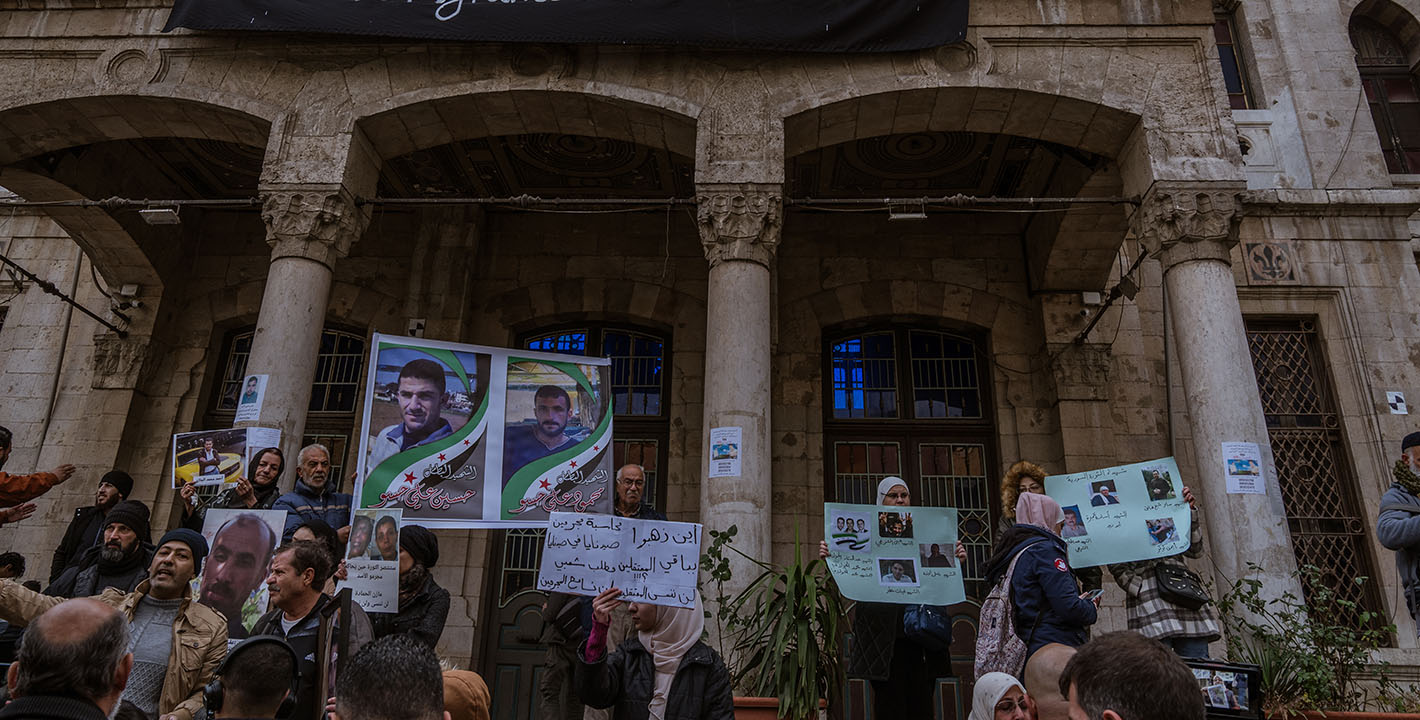
Reconciliation councils are emerging throughout the country to mediate in intracommunal disputes, many from the war years.
Natacha Danon

Russian strikes are weakening the economy sustaining Ukraine’s war effort. Closing the growing funding gap will require more European support and politically contentious reforms in Kyiv.

Balázs Jarábik