

Research
- +10
Rosa Balfour, Frances Z. Brown, Yasmine Farouk, …
{
  "authors": [
    "Moisés Naím"
  ],
  "type": "legacyinthemedia",
  "centerAffiliationAll": "",
  "centers": [
    "Carnegie Endowment for International Peace",
    "Carnegie Russia Eurasia Center"
  ],
  "collections": [],
  "englishNewsletterAll": "",
  "nonEnglishNewsletterAll": "",
  "primaryCenter": "Carnegie Endowment for International Peace",
  "programAffiliation": "",
  "programs": [],
  "projects": [],
  "regions": [
    "North America"
  ],
  "topics": [
    "Economy"
  ]
}
Source: Getty
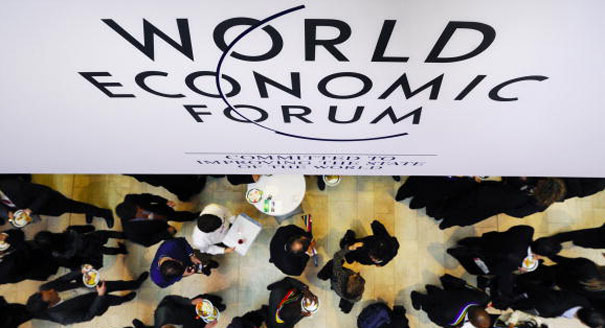
Despite its impressive list of attendees, the World Economic Forum—known simply as “Davos”—is neither as exclusive or conspiratorial as its critics claim nor as world-transforming as its supporters imagine.
Source: The Washington Post

Not really. While chief executives of the world's top companies are the largest single group attending the World Economic Forum, over the years they've been joined by religious leaders, scientists, politicians, artists, academics, social activists, journalists and heads of nongovernmental organizations from across the globe. These newer participants account for about half of those who go to Davos. You're just as likely to run into Umberto Eco, Bono or Nadine Gordimer as Bill Gates, George Soros or PepsiCo chief executive Indra Nooyi.
Such diversity was not always a Davos trait. Founded in 1971 by German business professor Klaus Schwab, the gathering was initially dubbed the European Management Forum and catered to European executives worried about U.S. competitors. But over time, Schwab broadened the scope and participation, and since the 1990s, panels on poverty, climate change and military conflict have been as common as ones on business and management.
Of course, the dirty little secret of Davos is that the sessions in the formal program - with grand names such as "Engineering a Cooler Planet" and "Constructing the Ephemeral: Light in the Public Realm" - are not the main draw. It's all about networking. Casual hallway conversations and informal coffees with international bigwigs account for much of the forum's continuing ability to attract extremely busy people to a cold, inconvenient spot in the Swiss Alps.
When billionaires and politicians huddle in a remote location surrounded by armed guards, it's hardly surprising that conspiracy theorists imagine that this small clique is running the world, protecting its privileges and concocting decisions that will transform all our lives. And the forum itself is keen to show that its meetings matter; its oft-stated mission, emblazoned on tote bags and brochures, is "committed to improving the state of the world."
So, what happens at Davos? Forum boosters point to significant moments, such as when Turkey and Greece signed a declaration in 1988 dispelling the risk of war; or the unprecedented meeting a year later of representatives from North and South Korea; or the encounter, also in 1989, between East German Prime Minister Hans Modrow and West German Chancellor Helmut Kohl to discuss reunification. It was also in Davos in 1992 that Nelson Mandela and South African President F.W. de Klerk first appeared together at an international gathering.
But, however fun it is to speculate, it is hard to assess which critical political decisions or business deals emerge from Davos - or how often they would have happened elsewhere regardless. My impression, based on two decades worth of Davos meetings, is that heads of state don't attend to negotiate deals. Rather, they use Davos as a platform to burnish their internationalist credentials, to impress audiences back home - or simply to hang out with their friends.
The late Harvard professor Samuel Huntington coined the term "Davos Man" in 2004 to criticize members of a global elite who "have little need for national loyalty, view national boundaries as obstacles that thankfully are vanishing, and see national governments as residues from the past whose only useful function is to facilitate the elite's global operations."
Huntington (who often attended Davos) was correctly describing a strand of thought common among many business leaders, at Davos and elsewhere. But the "Davos Man" characterization feels dated today. Executives from India and China - countries where the state plays a more dominant role in economic affairs - have been going to Davos in increasing numbers in recent years and might frown on the idea that national loyalties and governments are losing importance. Similarly, non-business attendees take the stage at the forum to offer critiques of free markets that are as damning as they are eloquent. Economic nationalism is alive and well - even in Davos.
The experts convened at Davos did not see the coming collapse of the Soviet Union. They failed to predict the Latin American, Russian and Asian financial crises of the 1990s, or the bursting of the tech bubble at the end of that decade. They didn't forecast the Great Recession. In other words, as far as experts go, they are fairly normal.
Why would we assume that if credit-rating agencies, banks, governments, think tanks, academics, intelligence agencies, pundits and the entire economic forecasting profession failed to anticipate these crashes, the people meeting at Davos would do a better job of warning the world? After all, the Davos crowd includes most of these experts. The mood in Davos does not drive the elite consensus, but merely reflects it.
Davos has gotten too large. Too packed with celebrities. Too lacking in substance.
These frequent criticisms are one reason that other gatherings for world leaders have proliferated. For example, the Clinton Global Initiative, launched in 2005 by former president Bill Clinton, was reportedly born out of his frustration at conferences that were more talk than action. CGI participants are expected not just to discuss problems such as pandemics or Haiti's earthquake tragedy but to make concrete commitments to address them. The TED talks - a small conference started in 1984 to discuss technology, entertainment and design - have developed large international audiences that follow them live online. The Wall Street Journal, Atlantic Monthly and other publications have launched similar events. And a coalition of left-leaning activist organizations, political groups and NGOs from around the world have formed an annual World Social Forum, also scheduled early in the year and billing itself as the anti-Davos.
Yet, despite the critics and competitors, there is no evidence that Davos has lost its allure. Like every other year, in 2010 more than 30 heads of state showed up, as did more than 50 top officials of multilateral agencies, chiefs of the world's most significant nongovernmental organizations, editors and columnists for leading publications, hundreds of experts from academia and think tanks, many Nobel Prize winners, and leaders in other fields. Plus, of course, the chief executives of 1,400 of the planet's largest companies.
I imagine that this year, for better or worse, the numbers will be similar - as will the criticisms.

Distinguished Fellow
Moisés Naím is a distinguished fellow at the Carnegie Endowment for International Peace, a best-selling author, and an internationally syndicated columnist.
Recent Work



Rosa Balfour, Frances Z. Brown, Yasmine Farouk, …
Moisés Naím
Carnegie does not take institutional positions on public policy issues; the views represented herein are those of the author(s) and do not necessarily reflect the views of Carnegie, its staff, or its trustees.
U.S. trading partners in Asia are closely watching the dispute for signs of how it may affect their own interests.
Barbara Weisel

Amid celebrations of bilateral ties was a deeper focus on stability in the Middle East.

Amr Hamzawy
Xi, Putin, and other regional leaders are back-slapping in Bishkek, but the SCO has yet to answer the most serious questions about continental Asia's economic future.

Evan A. Feigenbaum

The conflict has sent economic and political shock waves through a country with no representation at the negotiating table—and Kenya is not alone.
Georgia Schaefer-Brown, Jane Munga

China’s banking crisis in the 2000s was resolved by transferring the costs to households through financial repression—a decision that recapitalized the banks while exacerbating the structural imbalances that continue to shape the Chinese economy today.

Michael Pettis