

Paper
Producing nuclear fuel quickly enough remains a major risk factor for the emerging advanced reactor industry.
Elmer W. Dyke
Source: Getty
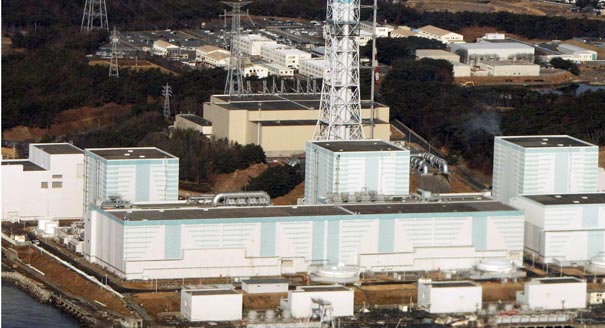
Amidst the drama of the worst seismic catastrophe in Japan’s recorded history, the Japanese government and its nuclear industry have been struggling to prevent a power reactor core melt accident similar to that which occurred at Three Mile Island in the United States three decades ago.
Amidst the drama of the worst seismic catastrophe in Japan’s recorded history, the Japanese government and its nuclear industry have been struggling since last Friday to meet their greatest-ever challenge: preventing a power reactor core melt accident similar to that which occurred at Three Mile Island in the United States three decades ago.
The scope of this challenge to Japan is almost inconceivable. When a force 9.0 earthquake struck off the Pacific coast on Friday, March 11, two nuclear power stations, Fukushima-Daiichi and Fukushima-Daini, with a total of ten reactors, suffered a loss of external power. Shortly after the seven operating reactors at these stations shut down automatically in response to the shock, emergency cooling systems—needed to remove decay heat from the reactors’ radioactive fuel—ceased operating. Without external power, the cooling systems were reliant on local backups that, according to Japanese experts, were damaged by the devastating tsunami that followed the earthquake.
Since Friday afternoon in Japan, Japanese authorities and the plant’s utility owner have been implementing a strategy to provide backup power and coolant water to the beleaguered reactors. The objective is to lower the temperature and pressure inside the reactor vessels, assure that the fuel is covered by water, avert significant fuel melting, and minimize the consequences if it does occur.
Thus far we know very little about how Japanese authorities managed this accident. Until Sunday, the world had very little information about whether authorities were taking concrete measures to get the situation under control. With events at the site still unfolding, that could be troubling because Japan’s nuclear sector does not have a history of alacrity about its problems and transgressions of regulations by plant owners.
But given the shock, uncertainty, and massive overall logistical challenges faced by Japan beginning on Friday, we should not expect perfection in how information was made available to the outside world in this case. It may turn out that Japan’s government and industry in fact supremely rose to the challenge and responded to the meltdown threat by taking effective and well-coordinated action.
Recognizing that it is going to take many months to fully understand what has transpired in Fukishima, there nevertheless are a few preliminary conclusions one may draw from these events:

Jessica T. Mathews Chair, Co-director, Nuclear Policy Program
Acton holds the Jessica T. Mathews Chair and is co-director of the Nuclear Policy Program at the Carnegie Endowment for International Peace.

Senior Fellow and Co-director, Nuclear Policy Program
Toby Dalton is a senior fellow and co-director of the Nuclear Policy Program at the Carnegie Endowment. An expert on nonproliferation and nuclear energy, his work addresses regional security challenges and the evolution of the global nuclear order.

Nonresident Senior Fellow, Nuclear Policy Program
Hibbs is a Germany-based nonresident senior fellow in Carnegie’s Nuclear Policy Program. His areas of expertise are nuclear verification and safeguards, multilateral nuclear trade policy, international nuclear cooperation, and nonproliferation arrangements.
Senior Fellow, Nuclear Policy Program, Technology and International Affairs Program
Levite was the principal deputy director general for policy at the Israeli Atomic Energy Commission from 2002 to 2007.

Japan Chair for a World Without Nuclear Weapons, Senior Fellow
George Perkovich is the Japan Chair for a World Without Nuclear Weapons and a senior fellow in the Carnegie Endowment for International Peace’s Nuclear Policy Program. He works primarily on nuclear deterrence, nonproliferation, and disarmament issues.
Carnegie does not take institutional positions on public policy issues; the views represented herein are those of the author(s) and do not necessarily reflect the views of Carnegie, its staff, or its trustees.

Producing nuclear fuel quickly enough remains a major risk factor for the emerging advanced reactor industry.
Elmer W. Dyke

A deep dive into the policy ecosystems behind battery development in China, South Korea, Japan, the European Union (including some of its member states), the United States, Canada, and India.



Milo McBride, Herbert Crowther, Darcie Draudt-Véjares, …

The Plaza Accord was not an externally imposed punishment of Japan but part of a broader restructuring that Japanese economists and policymakers themselves recognized was necessary. Its effects were undermined, however, when Tokyo responded to the resulting slowdown with policies that exacerbated investment, credit expansion, and the very imbalances the adjustment was intended to resolve.

Michael Pettis

The real test may come after the leaders leave the room.



Sheena Chestnut Greitens, Oriana Skylar Mastro, Yukon Huang, …

The nuclear relationship between China and the United States is increasingly shaped by widening perception gaps rather than deliberate strategic design.

Tong Zhao